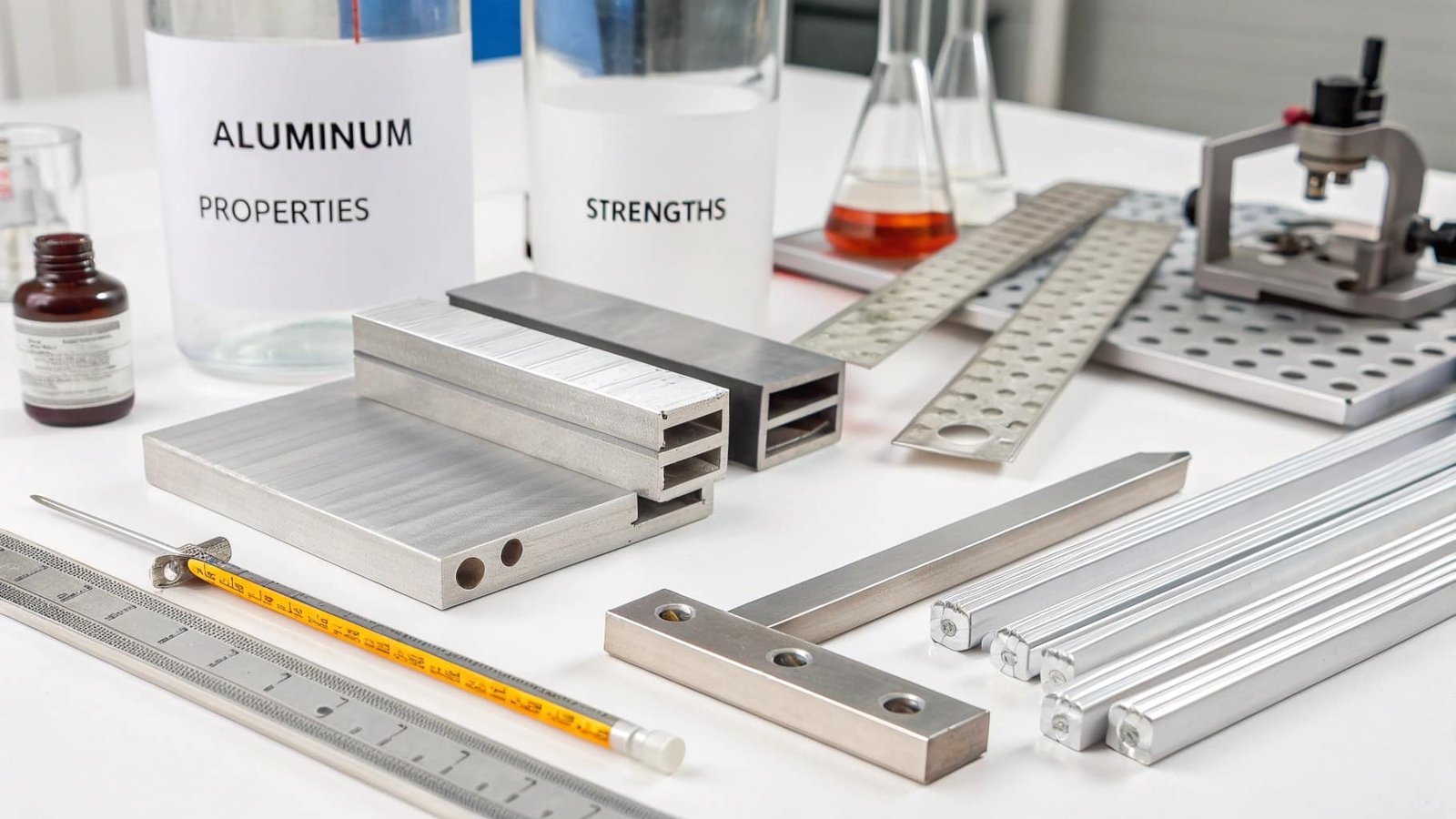
Are you choosing between 6061 and 6063 aluminum1 for your project and unsure which offers the best performance? Let's compare these popular alloys and discover when custom forging from SWA provides a distinct advantage.
When comparing 6061 and 6063 aluminum, it's crucial to understand their distinct properties: 6061 offers superior strength and toughness, making it ideal for structural and load-bearing applications, while 6063 excels in formability and surface finish for architectural uses. For critical applications requiring higher performance, custom forged solutions from SWA offer enhanced strength and tailored properties.
Many of our clients come to SWA Forging because they've encountered the limitations of standard aluminum bars, especially when their projects demand more than what common alloys like 6063 can offer. They might be looking for enhanced structural integrity, better resistance to stress, or components that can withstand higher loads. While 6063 is excellent for many general purposes, the superior mechanical properties of 6061, and even more so, the tailored strengths achievable through forging, often become essential for critical applications in industries like automotive, aerospace, and heavy manufacturing.
Is 6063 aluminum stronger than 6061?
No, 6061 aluminum is generally stronger than 6063 aluminum. The difference lies in their alloy composition, which impacts their mechanical properties.
6061 aluminum is stronger than 6063 aluminum. The 6061 alloy contains higher levels of magnesium and silicon, along with the addition of copper. This composition, especially when heat-treated to the T6 temper, results in significantly higher tensile and yield strengths compared to 6063, which is optimized for extrudability and surface finish.

Understanding the relative strengths of common aluminum alloys2 is fundamental to selecting the right material for a given application. At SWA Forging, this knowledge helps us guide clients who need more than standard mill products can provide. While 6063 is excellent for its aesthetic qualities and ease of fabrication, 6061’s superior strength makes it a more suitable choice for many structural and critical components. When even 6061 isn't enough, our forging capabilities can further enhance material performance.
Here’s a look at why 6061 is stronger:
- Alloy Composition: 6061 contains magnesium, silicon, and copper. The presence of copper, even in small amounts, significantly increases its strength and hardness compared to 6063, which primarily contains magnesium and silicon.
- Heat Treatment: Both alloys are heat-treatable, but 6061 responds more effectively to precipitation hardening (aging) to achieve higher strength levels. For example, 6061-T6 typically offers a tensile strength of around 310 MPa and a yield strength of 270 MPa, whereas 6063-T5 typically has a tensile strength of around 210 MPa and a yield strength of 180 MPa.
- Applications: Due to its higher strength, 6061 is preferred for structural applications, frames, automotive parts, and general fabrication where load-bearing capacity is important. 6063 is favored for architectural extrusions, window frames, and trim where excellent surface finish and ease of forming are key.
While 6063 is excellent for many purposes, 6061 stands out when strength and durability are paramount.
What are the advantages of 6061 aluminum?
6061 aluminum is a highly versatile alloy known for its excellent combination of strength, corrosion resistance, weldability, and formability.
The main advantages of 6061 aluminum include its excellent strength-to-weight ratio, superior corrosion resistance3 (especially in marine environments), good weldability, and ease of machining. It is also readily formable and can be heat-treated to achieve higher mechanical properties, making it a popular choice for a wide range of structural and industrial applications.

When clients consider materials for their projects, understanding the benefits of each alloy is essential. At SWA Forging, we often work with 6061 because its inherent advantages make it a reliable foundation for our custom forged components. Its balance of properties means that whether we're forging a ring or a disc, we can be confident in its ability to perform well under various conditions. This versatility makes 6061 a staple in many industries.
Here are some key advantages of 6061 aluminum:
- High Strength-to-Weight Ratio: Like most aluminum alloys, 6061 is lightweight yet strong, making it ideal for applications where reducing weight is important without sacrificing structural integrity.
- Excellent Corrosion Resistance: The presence of magnesium and silicon makes 6061 highly resistant to corrosion, particularly in atmospheric and marine environments. This makes it suitable for outdoor applications and marine structures.
- Good Weldability: 6061 can be easily welded using various standard methods, such as gas metal arc welding (GMAW) and gas tungsten arc welding (GTAW).
- Good Formability and Machinability: It can be readily formed through bending, stamping, and other fabrication processes. It also machines well, allowing for precise component manufacturing.
- Heat Treatability: 6061 can be heat-treated to achieve a range of tempers (like T4, T6) that significantly enhance its strength and hardness, further expanding its application range.
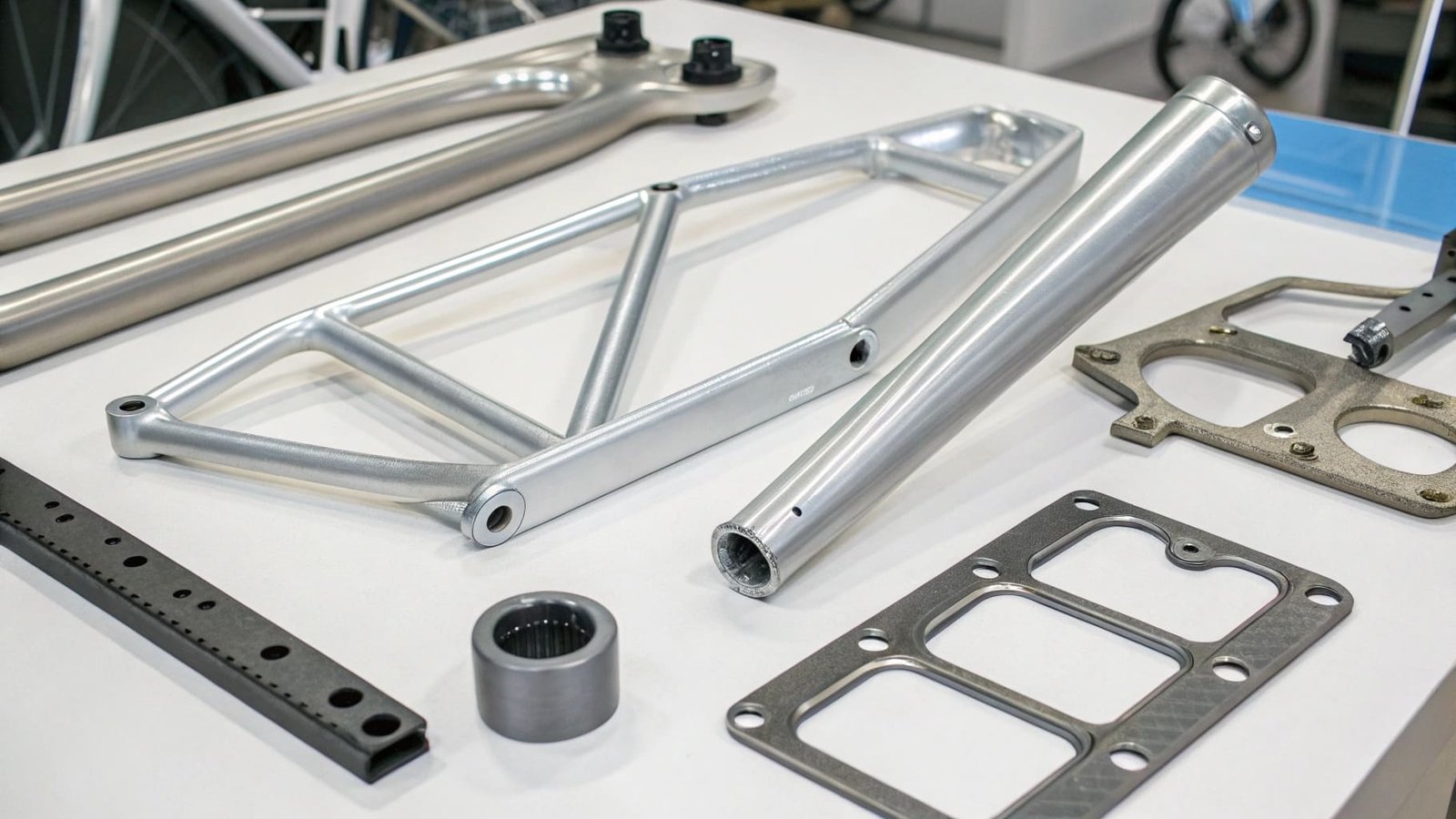
These combined advantages make 6061 a workhorse alloy, suitable for everything from aircraft structures to bicycles, automotive parts, and custom industrial components.
What is the best aluminum for strength?
The strongest aluminum alloys are generally found in the 7xxx series, particularly when they are heat-treated to achieve their peak mechanical properties.
The strongest aluminum alloys are primarily from the 7xxx series, such as 7075 and 7050. These alloys, alloyed mainly with zinc, offer the highest tensile and yield strengths among all aluminum types, especially when subjected to appropriate heat treatments like T6 or T7351. They are often used in aerospace and high-stress applications where maximum strength-to-weight ratio is critical.

When clients approach SWA Forging with requirements for extreme strength, the discussion inevitably leads to the 7xxx series alloys. These materials represent the pinnacle of aluminum strength, and our forging capabilities allow us to further optimize their properties for highly demanding applications. Understanding the strengths of these alloys helps our clients make informed decisions about their component design and material selection.
Here's why the 7xxx series is considered the strongest:
- High Zinc Content: Zinc is the primary alloying element in the 7xxx series. When combined with magnesium and copper, it forms strong metallic bonds that significantly increase the alloy's tensile and yield strength.
- Precipitation Hardening: These alloys are heat-treatable and respond exceptionally well to precipitation hardening. This process strengthens the aluminum matrix by forming uniformly dispersed fine precipitates, significantly increasing hardness and strength.
- Aerospace Applications: The high strength-to-weight ratio of 7xxx series alloys makes them indispensable in the aerospace industry for critical components like aircraft structures, wings, and fuselages.
- Comparison to Other Series: While 2xxx series alloys (aluminum-copper) also offer high strength, the 7xxx series generally surpasses them in overall tensile strength. 6xxx series alloys (aluminum-magnesium-silicon) offer a good balance of strength and corrosion resistance but are not as strong as the 7xxx series.
For applications where sheer strength is the absolute top priority, the 7xxx series alloys are the clear choice.
What are the grades of aluminum forging?
Aluminum forging grades refer to the specific aluminum alloys used for forging, each offering a different combination of strength, ductility, corrosion resistance, and machinability.
The grades of aluminum forging are determined by the specific aluminum alloy used, with common alloys like 1100, 3003, 5052, 6061, 7075, and 2024 being frequently forged. Each grade offers a unique balance of properties; for example, 6061 is chosen for its strength and versatility, while 7075 is selected for maximum strength applications.

At SWA Forging, we work with a variety of aluminum alloy grades to meet the diverse needs of our clients. The choice of grade is paramount, as it dictates the material's performance characteristics and suitability for specific applications. Understanding the properties associated with each grade allows us to effectively guide our clients towards the optimal solution, whether they need a component with high strength, excellent corrosion resistance, or superior formability.
Here are some common aluminum alloys used for forging and their typical characteristics:
- 1xxx Series (e.g., 1100): Commercially pure aluminum. Offers excellent corrosion resistance, formability, and weldability, but low strength. Often forged for applications requiring chemical resistance or electrical conductivity.
- 3xxx Series (e.g., 3003): Aluminum-Manganese alloys. Moderate strength with good formability and corrosion resistance. Suitable for applications like kitchenware, chemical equipment, and general sheet metal work.
- 5xxx Series (e.g., 5052, 5083): Aluminum-Magnesium alloys. Known for excellent corrosion resistance, good weldability, and moderate to high strength. Frequently forged for marine applications, automotive parts, and tanks.
- 6xxx Series (e.g., 6061): Aluminum-Magnesium-Silicon alloys. A very popular choice due to its excellent combination of strength, corrosion resistance, weldability, and formability. Widely forged for structural components, aerospace parts, automotive frames, and general industrial use.
- 2xxx Series (e.g., 2024): Aluminum-Copper alloys. Offer very high strength and good fatigue resistance, commonly used in aerospace for structural parts. They have lower corrosion resistance and are more difficult to weld.
- 7xxx Series (e.g., 7075): Aluminum-Zinc alloys. Provide the highest strength among aluminum alloys. Used in critical aerospace applications4, high-performance sporting goods, and military equipment where maximum strength-to-weight is essential.
The choice of forging grade is a critical step in ensuring the final component meets all performance and durability requirements.
Conclusion
When comparing aluminum alloys like 6061 and 6063, the distinction in strength is clear, with 6061 being the superior choice for robust applications. For critical needs that demand even greater performance, tailored properties, and enhanced durability, custom forged aluminum components from SWA are the ideal alternative to standard bars and tubing.
-
Learn about the benefits of 6063 aluminum, especially in architectural applications, to see if it's right for your project. ↩
-
Explore the different types of aluminum alloys to find the best fit for your project needs. ↩
-
Investigate the corrosion resistance of 6061 aluminum, especially in marine environments, for outdoor applications. ↩
-
Discover why 6061 aluminum is favored in aerospace applications for its strength and reliability. ↩