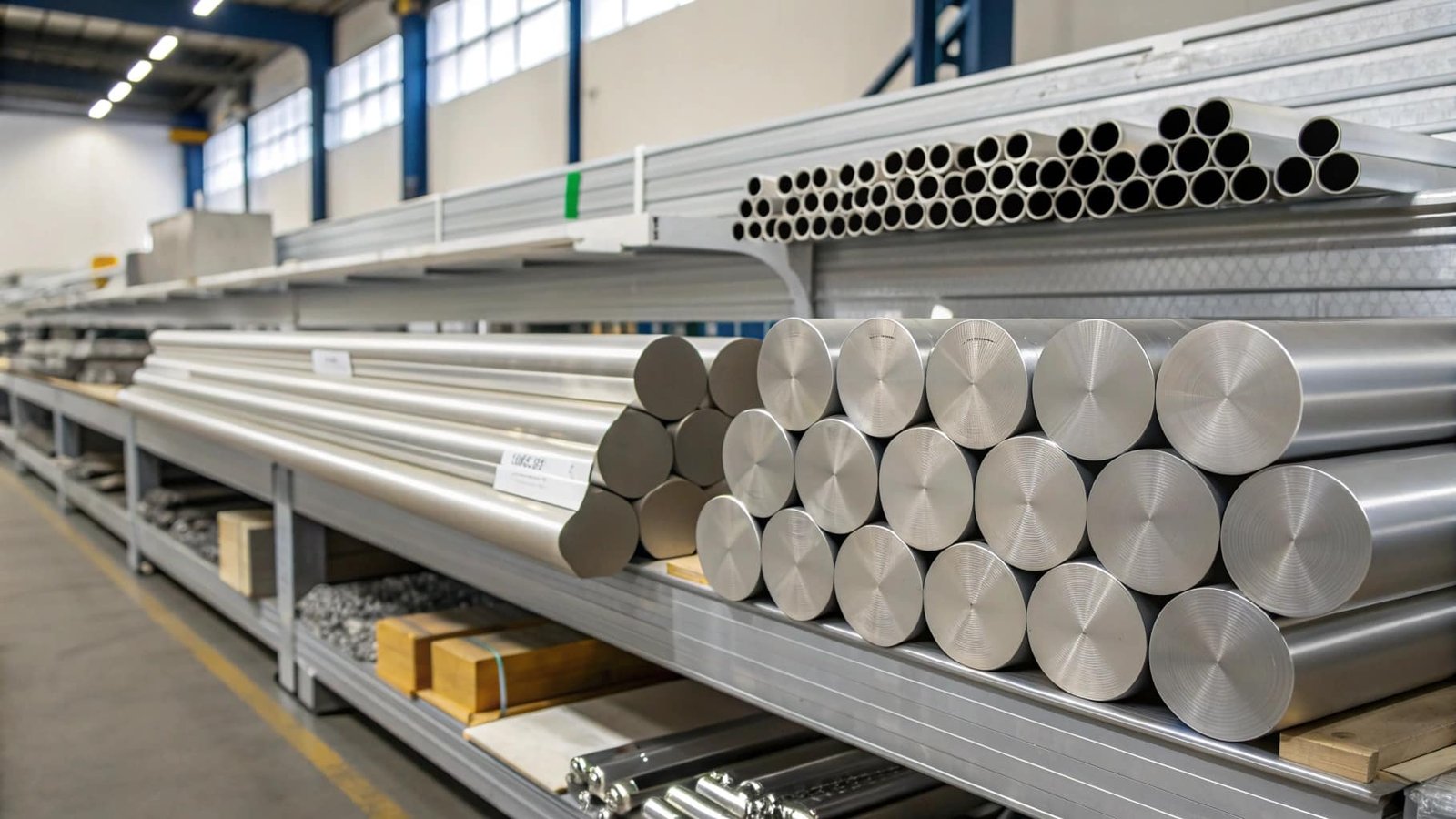
When extreme strength and performance are non-negotiable, the 7000 series aluminum alloys1 rise to the occasion, dominating critical applications.
The 7000 series aluminum alloys are renowned for their exceptionally high tensile strength and yield strength, making them some of the strongest aluminum alloys available. This remarkable strength is primarily achieved by alloying aluminum with zinc, typically as the main alloying element, often combined with magnesium and copper. These alloys are heat-treatable, allowing their mechanical properties to be significantly enhanced through specific thermal processing, such as solution treatment and aging. While incredibly strong, their corrosion resistance is generally lower than that of other aluminum series, particularly in certain environments, and they can be more challenging to weld. The series boasts excellent fatigue resistance, a critical factor in applications subjected to repetitive stress cycles. SWA Forging has mastered the 7000 series alloys, delivering forged rings and components with superior strength and fatigue resistance, specifically engineered for aerospace and high-performance applications, allowing us to push innovation boundaries.
At SWA Forging, we specialize in harnessing the incredible properties of the 7000 series alloys. Our expertise in forging allows us to create components, such as large-diameter rings, that not only possess the inherent high strength and fatigue resistance of these alloys but are precisely tailored for the extreme demands of aerospace and other high-performance industries, ensuring our clients receive the absolute best in material performance.
What are the properties of 7000 series aluminium alloy?
The 7000 series aluminum alloys are celebrated for their exceptional qualities. What are the key properties that define this high-performance group of alloys?
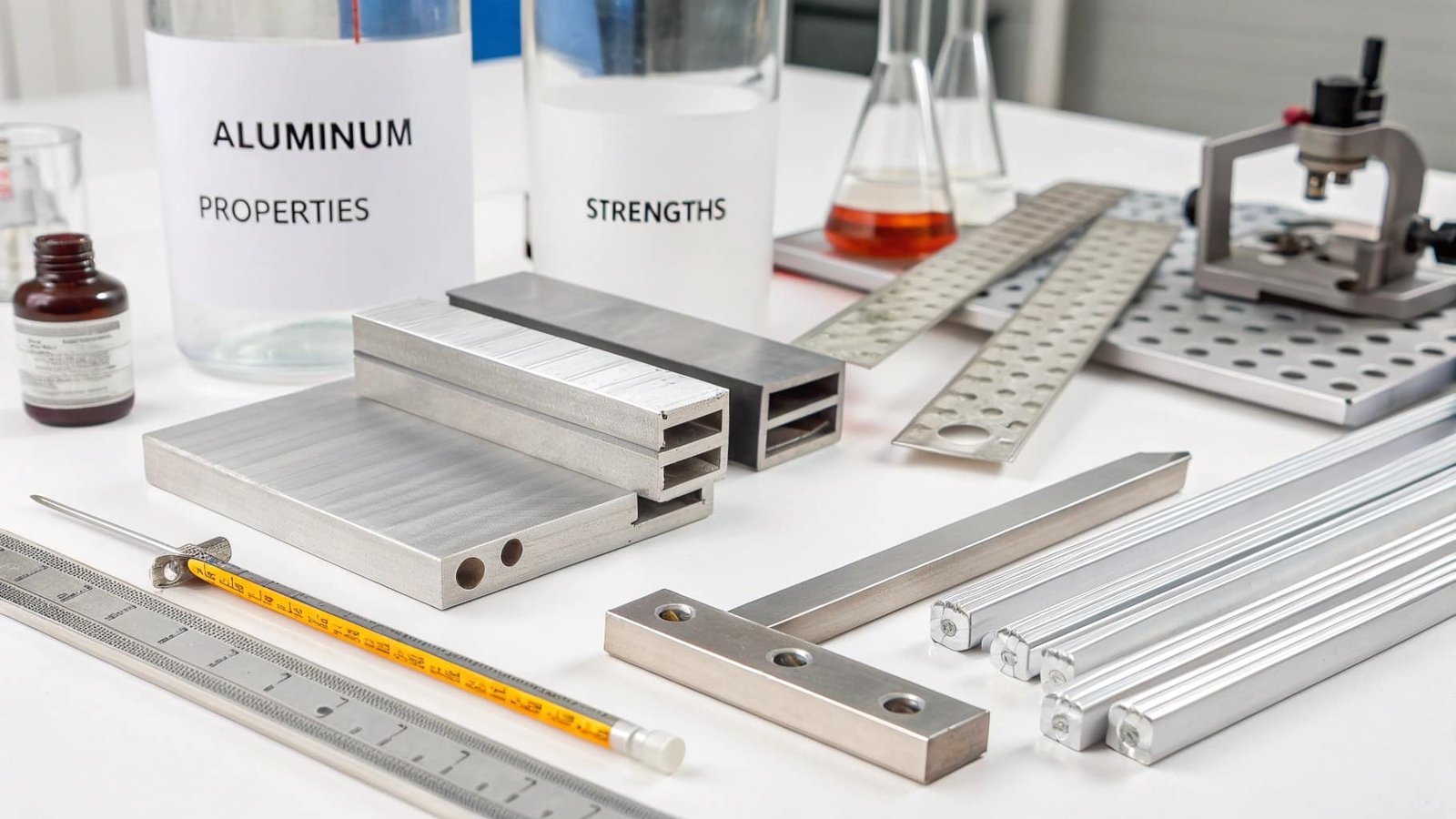
The defining property of 7000 series aluminum alloys is their exceptionally high tensile and yield strength, often rivaling that of some steels. This strength is achieved through the addition of significant amounts of zinc, along with magnesium, copper, and chromium. These alloys are heat-treatable, meaning their mechanical properties can be significantly improved through controlled heating and cooling processes (aging), leading to their status as high-strength alloys. They exhibit excellent fatigue strength, which is their ability to withstand repeated cycles of stress without fracturing – a crucial characteristic for dynamic applications. However, a trade-off for this high strength is typically reduced corrosion resistance compared to other aluminum series, especially in aggressive environments. Weldability can also be a challenge, often requiring specialized techniques and post-weld heat treatment to maintain strength. Despite these challenges, their superior mechanical properties make them indispensable in high-stress applications.
| Key Property | Description | Significance |
|---|---|---|
| High Tensile Strength | Possesses very high ultimate tensile strength, able to withstand significant pulling forces before fracturing. | Allows for the creation of lightweight yet incredibly strong components critical for aerospace, defense, and high-performance sporting goods. |
| High Yield Strength | Can withstand high levels of stress before permanent deformation occurs, making them ideal for structural integrity. | Ensures components maintain their shape and function under high load conditions, reducing the risk of bending or failure. |
| Excellent Fatigue Strength | Highly resistant to failure caused by repeated cycles of stress, a common cause of failure in dynamic applications. | Essential for components in aircraft, vehicles, and machinery that experience constant vibration, shock, or cyclic loading, improving lifespan and safety. |
| Heat Treatable | Can be significantly strengthened through solution heat treatment and aging processes. | Allows for tailoring the alloy's properties to specific performance requirements, optimizing strength and hardness as needed. |
| Lower Corrosion Resistance | Generally less resistant to corrosion than aluminum alloys from other series (e.g., 5xxx or 6xxx), especially 2xxx and some 7xxx alloys in certain environments. | Requires careful selection of specific alloys within the series and often protective coatings or surface treatments for corrosive environments. |
| Challenging Weldability | Welding can compromise the heat-treated strength and may require specific procedures and post-weld heat treatment. | Often used in applications where welding is minimized or other joining methods are preferred to maintain peak mechanical properties. |
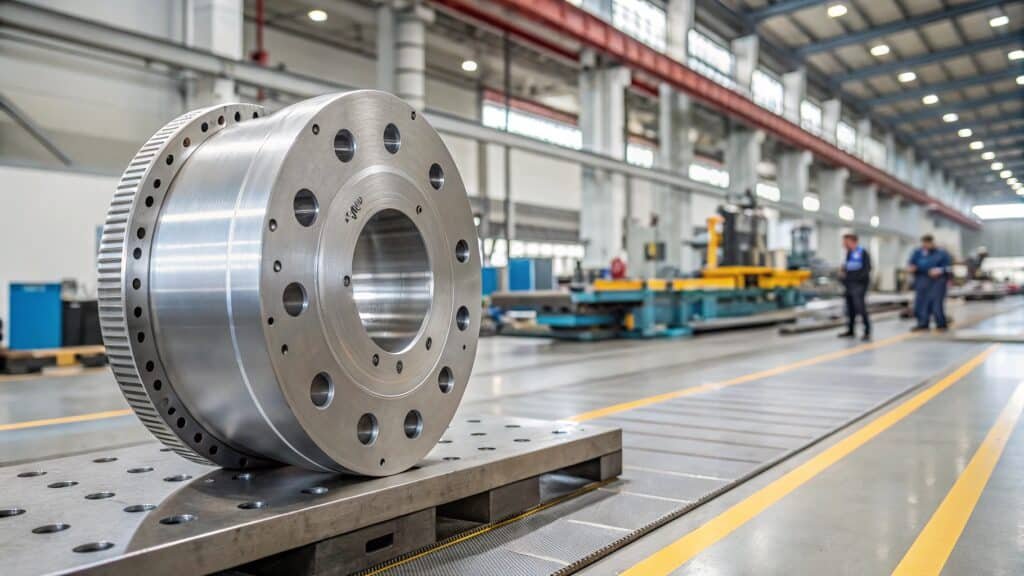
At SWA Forging, we excel in working with these demanding 7000 series alloys. Our forging processes are meticulously controlled to maintain and even enhance the inherent high strength and fatigue resistance. This means that the forged rings and discs we produce are perfectly suited for applications where standard materials simply won't suffice, providing the critical mechanical performance that defines the 7000 series.
What are the properties and applications of aluminium alloy?
Aluminum alloys, as a broad category, offer a fantastic spectrum of properties. What are these general advantageous properties, and what diverse range of products and industries benefit from them?
Aluminum alloys offer a remarkable combination of beneficial properties, making them incredibly versatile. Their low density is a cornerstone, leading to lightweight designs that improve fuel efficiency and ease of handling in many products. They exhibit good thermal and electrical conductivity, essential for applications like heat sinks and power lines. Aluminum alloys form a protective oxide layer on their surface, granting them excellent corrosion resistance, which translates to longer product life and reduced maintenance. Furthermore, they are highly malleable and ductile, allowing them to be easily formed into complex shapes through processes like extrusion, rolling, and forging. This adaptability, combined with their inherent strength (especially in specific alloy series), recyclability, and non-magnetic nature, opens them up to a vast array of applications. They are fundamentally used in transportation (automotive, aerospace), construction (building facades, window frames), packaging (cans, foil), electrical transmission, consumer goods (cookware, electronics), and industrial machinery.
| Property Category | Specific Properties | Key Application Areas Driven by These Properties |
|---|---|---|
| Mechanical | Low Density, High Strength (varies by series), Good Fatigue Resistance, Good Ductility/Malleability. | Transportation (lightweight vehicles, aircraft), Aerospace, Industrial Machinery, Construction, Sporting Goods. |
| Thermal & Electrical | Good Thermal Conductivity, Good Electrical Conductivity. | Electronics (heat sinks), Electrical (power lines, wiring), Cookware, Radiators. |
| Durability & Resilience | Excellent Corrosion Resistance (especially in specific alloys), Recyclability. | Construction, Marine applications, Packaging, Automotive body panels, Outdoor structures. |
| Fabrication & Form | High Malleability & Ductility, Ease of Extrusion, Castability, Forgeability. | Complex product shapes, extrusions (window frames), drawn wire, forged components, intricate castings. |
| Other Desirable Traits | Non-magnetic, Non-toxic, Aesthetically pleasing (can be finished in many ways). | Electronics, Medical equipment, Consumer goods, Building facades, Food packaging. |
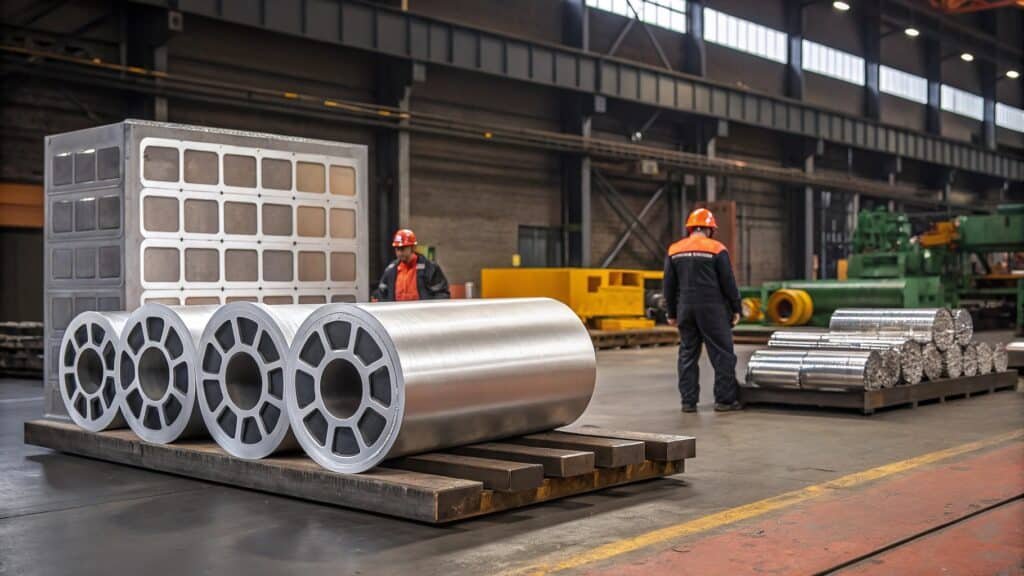
At SWA Forging, we specialize in leveraging these beneficial properties, particularly focusing on the mechanical and durability aspects through our advanced forging techniques. When clients require components with exceptional strength, fatigue resistance, and precise formability for demanding industrial uses, we select and optimize appropriate aluminum alloys, including those from the 7000 series, to meet those stringent requirements.
What are the properties of 7075 aluminum alloy?
As one of the most prominent members of the 7000 series, 7075 aluminum alloy is famed for its extreme characteristics. What specific properties define this high-strength alloy?
Aluminum alloy 7075 is celebrated as one of the strongest commercially available aluminum alloys, belonging to the 7xxx series primarily alloyed with zinc. Its most outstanding property is its exceptional tensile and yield strength, particularly in its heat-treated tempers like T6 and T73. For example, 7075-T6 typically boasts an ultimate tensile strength around 570 MPa (83 ksi) and a yield strength around 500 MPa (72 ksi), making it comparable to many steels. This incredible strength-to-weight ratio is a primary reason for its extensive use in aerospace and high-performance applications. 7075-T6 also exhibits very good fatigue strength, meaning it can withstand significant cyclic loading without failing. However, this high strength comes with some compromises: its corrosion resistance is fair to good and significantly lower than alloys like 5052 or 6061, often requiring protective coatings. Its weldability is also poor in heat-treated conditions, as welding can significantly reduce its strength in the heat-affected zone, so it's often joined by mechanical fasteners. Its ductility is moderate; it can be formed but is less forgiving than softer alloys.
| Property | Description | Significance |
|---|---|---|
| Ultimate Tensile Strength | ~570+ MPa (~83+ ksi) for T6 temper. | Maximum load-bearing capacity; ideal for high-stress structural parts. |
| Yield Strength | ~500+ MPa (~72+ ksi) for T6 temper. | Resistance to permanent deformation under load; ensures structural integrity. |
| Fatigue Strength | High resistance to failure from repeated loading cycles. | Crucial for aerospace (wings, fuselage) and high-performance components needing longevity. |
| Density | ~2.81 g/cm³ (slightly higher than some lower series alloys). | Still significantly lighter than steel, contributing to its high strength-to-weight ratio. |
| Corrosion Resistance | Fair to Good; inferior to many other aluminum alloys (e.g., 6xxx). | Requires protective coatings (anodizing, painting) for many environments to prevent degradation. |
| Weldability | Poor in heat-treated conditions; reduces strength. | Typically joined by rivets, bolts, or adhesives in structural applications. |
| Formability/Ductility | Moderate; less formable than softer aluminum alloys. | Can be machined efficiently but requires careful forming to avoid cracking. |
| Machinability | Excellent. | Can be machined into complex shapes with good surface finish. Most common tempers are free-machining. |
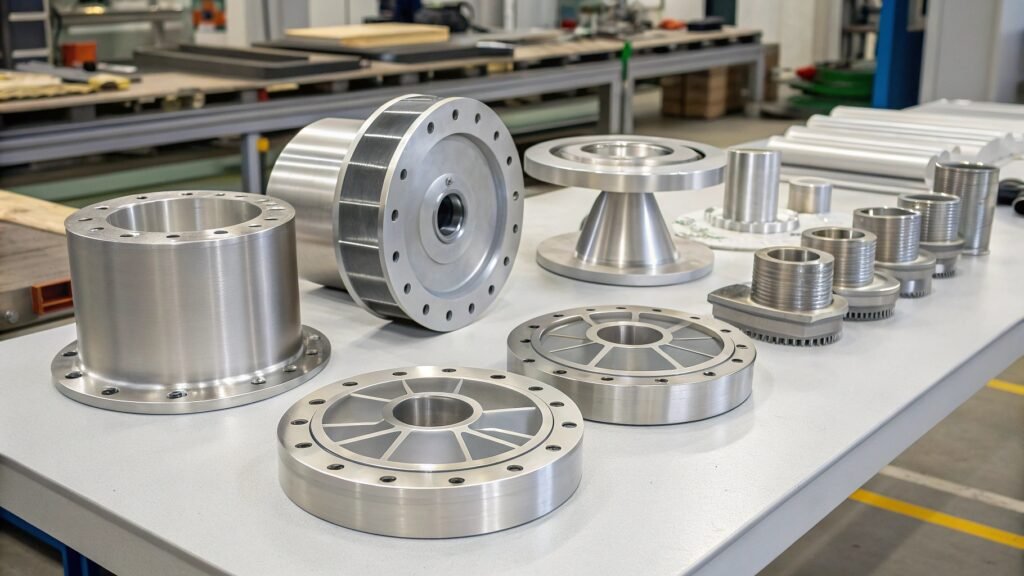
At SWA Forging, we specialize in working with premium alloys like 7075. Our forging process is specifically designed to maximize its already impressive strength and fatigue resistance, creating large-diameter rings and discs that are essential for the most demanding aerospace and high-performance applications where these specific properties are absolutely critical for safety and performance.
What is the difference between 6061 and 7000 aluminum alloy?
While both 6061 and the 7000 series are popular and versatile aluminum alloys, they serve different purposes due to distinct property profiles. What are the primary differences?
The main difference between 6061 aluminum alloy and the 7000 series aluminum alloys lies in their primary alloying elements, resulting in vastly different mechanical properties and application suitability. 6061 is a workhorse alloy from the 6xxx series, primarily alloyed with magnesium and silicon. It offers a good balance of moderate strength, excellent corrosion resistance, good weldability, and excellent formability, making it a versatile choice for a wide range of general structural and engineering applications. In contrast, the 7000 series alloys, such as 7075, are primarily alloyed with zinc (along with magnesium and copper). This composition grants them exceptionally high tensile and yield strength, making them among the strongest aluminum alloys available. However, this superior strength often comes at the cost of reduced corrosion resistance and more challenging weldability compared to 6061. Therefore, 6061 is chosen for general-purpose applications where a balance of properties is key, while 7000 series alloys are reserved for high-stress, performance-critical applications like aerospace and high-performance sporting equipment, where maximum strength and fatigue resistance are paramount.
| Feature | Aluminum 6061 | 7000 Series Aluminum (e.g., 7075) | Key Differences & Implications |
|---|---|---|---|
| Primary Alloying Element | Magnesium, Silicon | Zinc (plus Magnesium, Copper, etc.) | Dictates inherent strength and processing characteristics. |
| Strength | Moderate strength (e.g., 6061-T6 UTS ~310 MPa) | Very High strength (e.g., 7075-T6 UTS ~570+ MPa) | 7000 series is significantly stronger, suitable for critical structural loads where 6061 would not suffice. |
| Corrosion Resistance | Good | Fair to Good (generally lower than 6061, especially in specific environments) | 6061 is more suitable for applications exposed to harsh environmental conditions without extensive protective measures. |
| Weldability | Good (with post-weld heat treatment needed for full strength recovery) | Poor (welding significantly degrades strength in heat-affected zone) | 6061 is preferred for structures requiring extensive welding; 7000 series often uses mechanical fastening. |
| Formability & Ductility | Excellent | Moderate | 6061 is easier to shape and form; 7000 series requires more careful forming processes. |
| Typical Applications | General structures, window frames, bicycle frames, automotive parts, moderate-stress components. | Aerospace structures, aircraft fuselage/wings, high-stress sporting goods, defense equipment. | 6061 is for broader, balanced-property needs; 7000 series is for extreme performance requirements. |
| Cost | Generally more economical | Generally more expensive | The higher cost of 7000 series reflects its specialized processing and superior mechanical performance. |
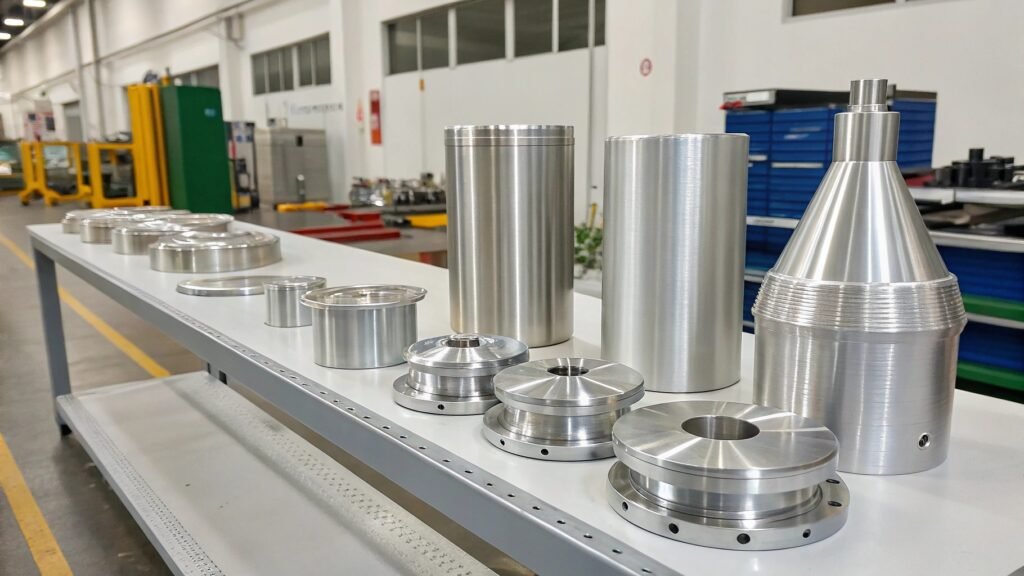
At SWA Forging, we are adept at selecting and processing the correct alloy for the job. When the application demands higher strength and fatigue resistance than 6061 can provide, we turn to the 7000 series. Our expertise in forging these advanced alloys ensures that components fabricated from them will meet the extreme performance requirements, offering the superior strength that distinguishes the 7000 series from alloys like 6061, thereby supporting the most critical engineering and aerospace needs.
Conclusion
7000 series aluminum alloys offer unparalleled strength and fatigue resistance, driven by zinc alloying, making them ideal for aerospace and high-stress applications, distinct from the balanced properties of 6061, and SWA Forging masters their forging for innovation and performance.
-
Explore the unique advantages of 7000 series aluminum alloys, known for their strength and performance in critical applications. ↩