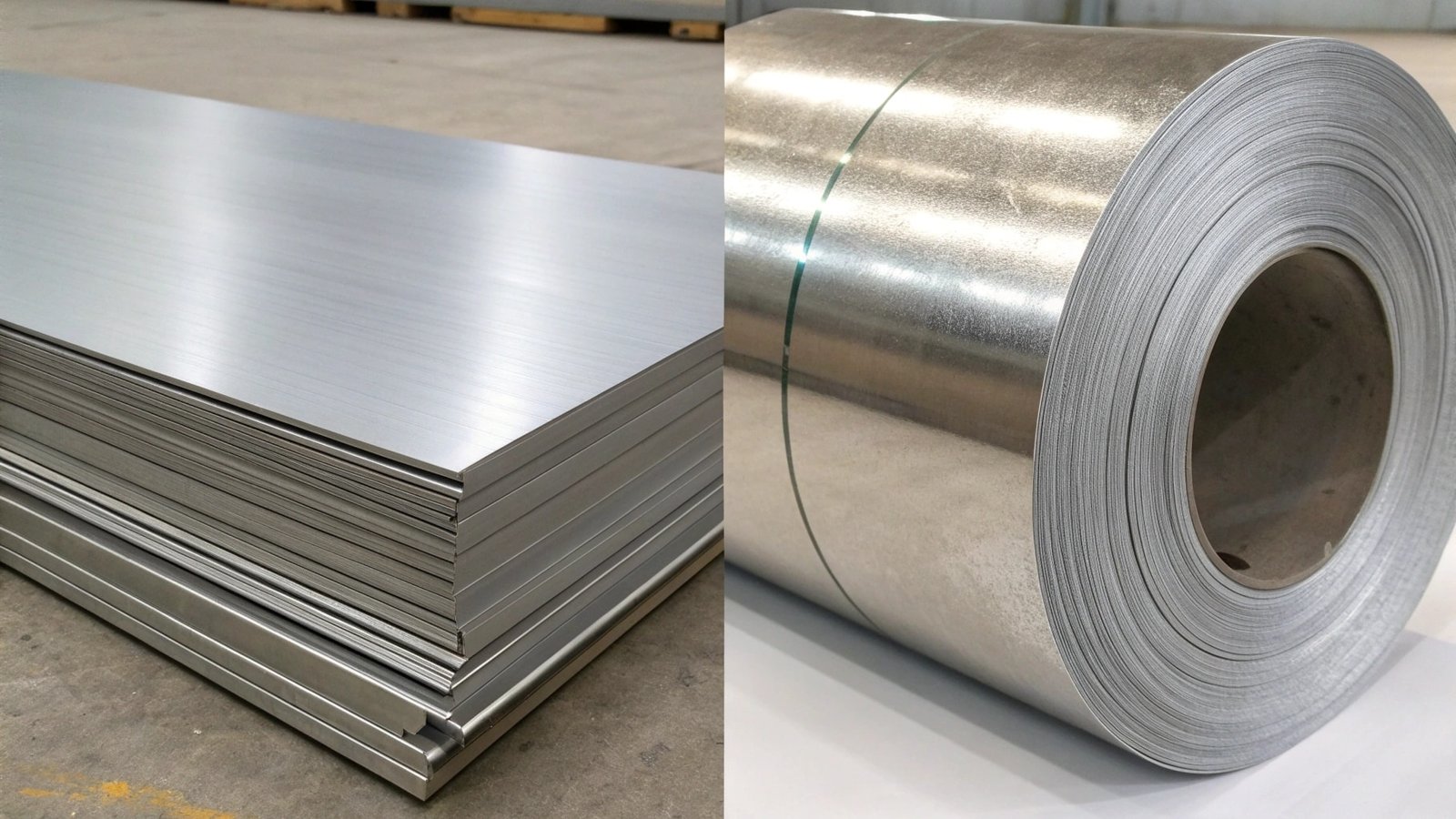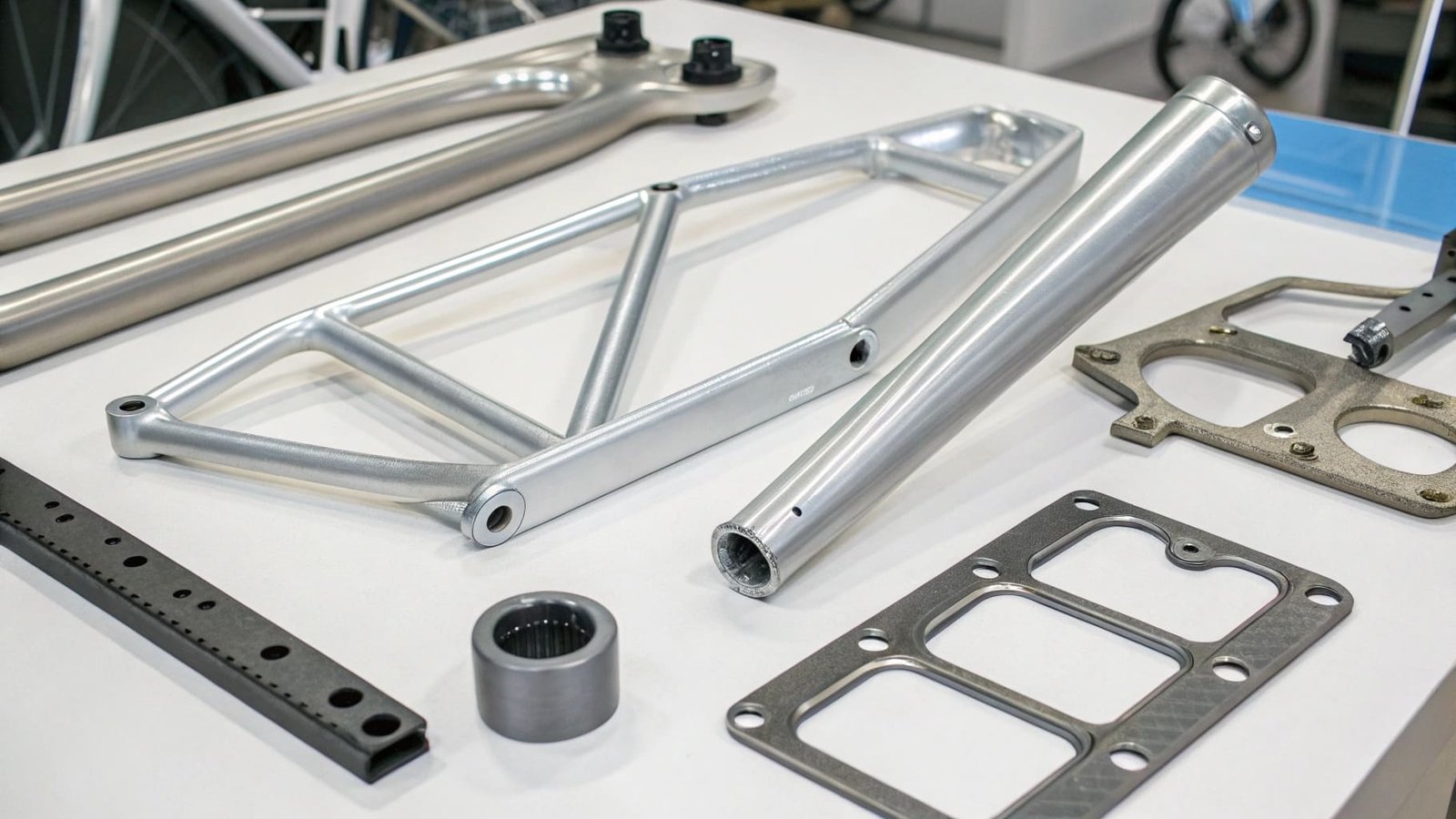
Choosing the wrong aluminum for aerospace can lead to costly failures. Are you struggling to decide between 7075 and 7050? We can help you make the right choice.
7050 aluminum generally offers better toughness, stress corrosion cracking resistance, and properties in thicker sections compared to 7075. However, 7075 provides higher strength in certain tempers. The best choice depends on the specific application's demands.
Selecting the right material is crucial for performance and safety in aerospace. As a supplier dealing with both traders and machining companies here at SWA Forging, I often get asked about these two specific alloys. They seem similar at first glance, but their differences matter a lot depending on the job. Let's break down their differences further so you can feel confident about your material choice.
What is the difference between 7050 and 7075 aluminum?
Confused about 7050 and 7075? Selecting incorrectly impacts performance and safety. We'll clarify the key differences so you can choose confidently for your project or your customer's needs.
The main differences are in toughness, corrosion resistance, and performance in thick sections. 7050 excels in these areas, especially stress corrosion cracking resistance (SCC). 7075 offers higher peak strength but can be more susceptible to cracking under stress in corrosive environments.
!
Diving Deeper into 7050 vs 7075
Let's look closer at what sets these two strong aluminum alloys apart. Their chemical makeup is slightly different, and that small change has a big impact on how they perform.
Chemical Composition Nuances
Both alloys are in the 7xxx series, meaning zinc is the primary alloying element. They also contain magnesium and copper. However, 7050 has tighter controls on impurities and slightly different ratios of the main elements compared to 7075. Specifically, 7050 often has a higher copper content relative to zinc and magnesium. This chemistry is key to its improved properties.
Mechanical Properties Comparison
While 7075-T61 offers very high strength, 7050 (often used in the T7451 temper) provides a better balance, especially regarding toughness and resistance to crack growth.
Here's a general comparison (typical values can vary):
| Property | 7075-T651 | 7050-T7451 | Key Difference Highlight |
|---|---|---|---|
| Ultimate Tensile Strength | ~572 MPa (83 ksi) | ~510 MPa (74 ksi) | 7075-T6 is stronger |
| Yield Strength | ~503 MPa (73 ksi) | ~448 MPa (65 ksi) | 7075-T6 has higher yield strength |
| Fracture Toughness | Lower | Higher | 7050 is tougher |
| SCC Resistance | Fair (Poor in T6) | Excellent | 7050 much better against SCC |
Corrosion Resistance Focus
Stress Corrosion Cracking (SCC)2 is a major concern in aerospace. This is where 7050 really shines compared to 7075, especially 7075 in the T6 temper. The T74 temper for 7050 was specifically developed to provide excellent SCC resistance while maintaining good strength. 7075 can be treated to T73 tempers for better SCC resistance, but this reduces its strength significantly, often below that of 7050-T7451.
Performance in Thick Sections
Aluminum alloys can lose strength in thicker parts because the core doesn't cool quickly enough during heat treatment (quenching). 7050 has lower "quench sensitivity" than 7075. This means 7050 maintains its strength and toughness properties better in thick sections (like the large forged rings and discs we produce at SWA Forging), often defined as over 3 inches (76 mm). This is critical for large structural components. I remember a machining client needing large forged discs for landing gear parts; 7050-T74513 was the clear choice because of the thickness and the absolute need for SCC resistance.
What is the best aluminum alloy for aerospace?
Choosing the single "best" aerospace aluminum is impossible. Different parts have different needs, stress levels, and environments. We help you navigate the options to find the ideal alloy for your specific application.
There isn't one "best" alloy that fits all aerospace needs. High-strength alloys like 7075 and 7050 are common for structural parts. But 2xxx series alloys (like 2024) offer good fatigue resistance for skins. The choice depends on strength, weight, temperature, corrosion, and cost needs.

Diving Deeper into Aerospace Alloy Selection
The question of the "best" alloy is one I hear often, both from traders looking to stock materials and machining customers needing specific performance for a part they're manufacturing. The truth is, aerospace engineers use a range of aluminum alloys4.
Common Aerospace Alloys
Besides the 7xxx series (7075, 7050), other families are vital:
- 2xxx Series (Aluminum-Copper): Known for good fatigue strength5 and damage tolerance. Alloy 2024 is a classic example, often used for fuselage skins and lower wing surfaces where fatigue is a primary concern. They generally have lower corrosion resistance than 7xxx or 6xxx series.
- 6xxx Series (Aluminum-Magnesium-Silicon): Alloys like 6061 offer good corrosion resistance, formability, and weldability. They aren't as strong as 2xxx or 7xxx alloys, so they're used for less critical structural parts, fittings, or interior components.
- Newer Alloys: Aluminum-Lithium (Al-Li) alloys (like 2090 or 8090 series) offer lower density (lighter weight) and high stiffness but are generally more expensive.
Key Selection Factors
Engineers weigh several factors: - Static Strength: Ability to withstand loads without deforming permanently. (7xxx excels here)
- Fatigue Life: Resistance to cracking under cyclic loading (wings flexing, pressurization cycles). (2xxx is often preferred)
- Damage Tolerance/Fracture Toughness: Ability to resist crack growth from existing flaws. (7050 better than 7075-T6)
- Corrosion Resistance: Including general corrosion and SCC. (7050-T74, 6061 good)
- Operating Temperature: Performance can degrade at high temperatures.
- Manufacturability: Ease of machining, forming, joining.
- Cost: Material price and processing costs.
Here's a very simplified comparison:
| Alloy Series | Primary Strength | Primary Weakness | Example Use |
|---|---|---|---|
| 7xxx | Very High Static Strength | Lower Toughness (7075-T6), SCC (7075-T6), Poor Weldability | Wing Structures, Frames |
| 2xxx | Good Fatigue Strength | Lower Corrosion Resistance | Fuselage Skins, Lower Wings |
| 6xxx | Good Corrosion Resistance, Weldability | Lower Strength | Secondary Structures, Fittings |
SWA Forging's Role
At SWA Forging, we specialize in high-quality forged aluminum, particularly large rings and discs often made from 7xxx series alloys like 7050 and 7075. We work closely with clients to understand their specific needs – whether it's a trader needing reliable stock with proper certifications or a machining company requiring precise dimensions and guaranteed properties for a critical aerospace component. Our expertise ensures the material supplied meets the demanding requirements of the aerospace industry.
What are the disadvantages of 7075 aluminum?
7075 aluminum is strong, but it has drawbacks you must know about. Ignoring these can lead to design issues or unexpected failures later on. Let's look at the potential downsides you need to consider.
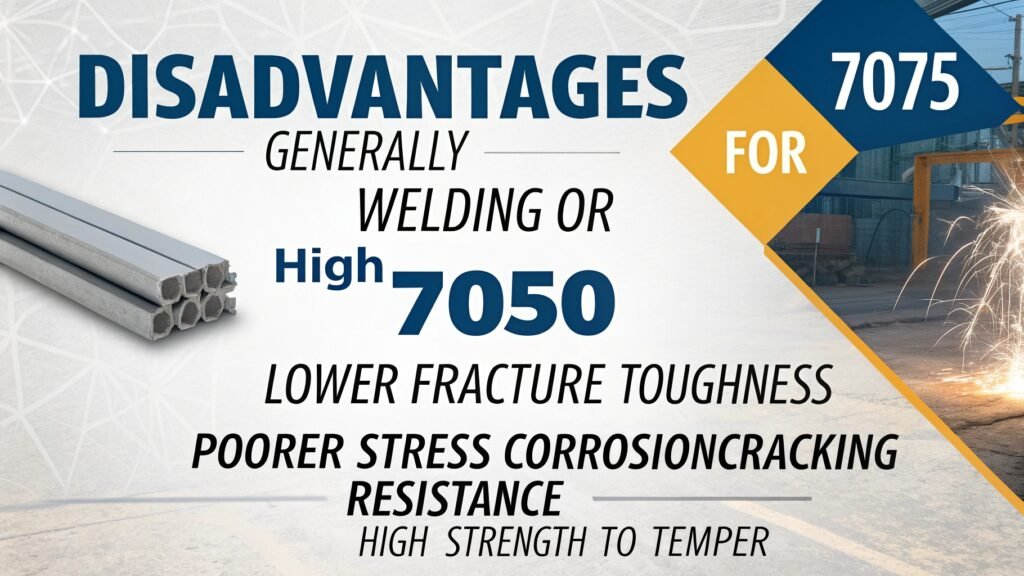
The main disadvantages of 7075 include lower fracture toughness and poorer stress corrosion cracking (SCC) resistance compared to 7050, especially in the high-strength T6 temper. It's also generally unsuitable for applications involving welding or high temperatures.
Diving Deeper into 7075's Limitations
While 7075's high strength is attractive, especially in the T6 temper, it comes with trade-offs that are critical in aerospace design. Understanding these helps explain why alloys like 7050 were developed.
Stress Corrosion Cracking (SCC)
This is arguably the most significant disadvantage, particularly for the 7075-T6 temper. SCC can occur when a susceptible material is under tensile stress (pulled apart) in a corrosive environment (even just humid air). It can lead to sudden, unexpected failure. While the T73 and T7351 tempers were developed for 7075 to improve SCC resistance, they achieve this by sacrificing some of its peak strength. Even then, its SCC resistance is generally considered inferior to 7050 in its optimized tempers (like T7451).
Fracture Toughness6
Fracture toughness measures a material's resistance to the propagation of a crack. 7075 generally has lower fracture toughness than 7050. This means if a small flaw or crack exists (from manufacturing or in-service damage), it's more likely to grow rapidly to failure under load in 7075 compared to 7050. This is a vital consideration for damage-tolerant designs common in aircraft structures.
Weldability7
Like most high-strength 7xxx series aluminum alloys, 7075 is generally considered not weldable using common fusion welding techniques (like MIG or TIG). The heat of welding can cause issues like solidification cracking and significant loss of mechanical properties in the heat-affected zone. Some resistance welding methods might be possible, but joining is typically done mechanically (rivets, bolts).
Temperature Limitations
7075 loses a significant amount of its strength at elevated temperatures. It's generally not recommended for applications where service temperatures consistently exceed about 125°C (257°F).
Machinability Considerations
While generally having good machinability, the high strength of 7075-T6 can lead to higher tool wear compared to softer alloys. The T73/T7351 tempers are slightly easier to machine. As suppliers, we often advise our machining clients on the best temper choice to balance the needed strength with efficient production. For traders supplying various customers, knowing these limitations helps them guide downstream users effectively.
What grade of aluminum is used in aerospace?
Wondering which specific aluminum grades take flight? The choices can seem complex with all the numbers and letters. We'll break down the common aerospace grades and explain why they are selected.
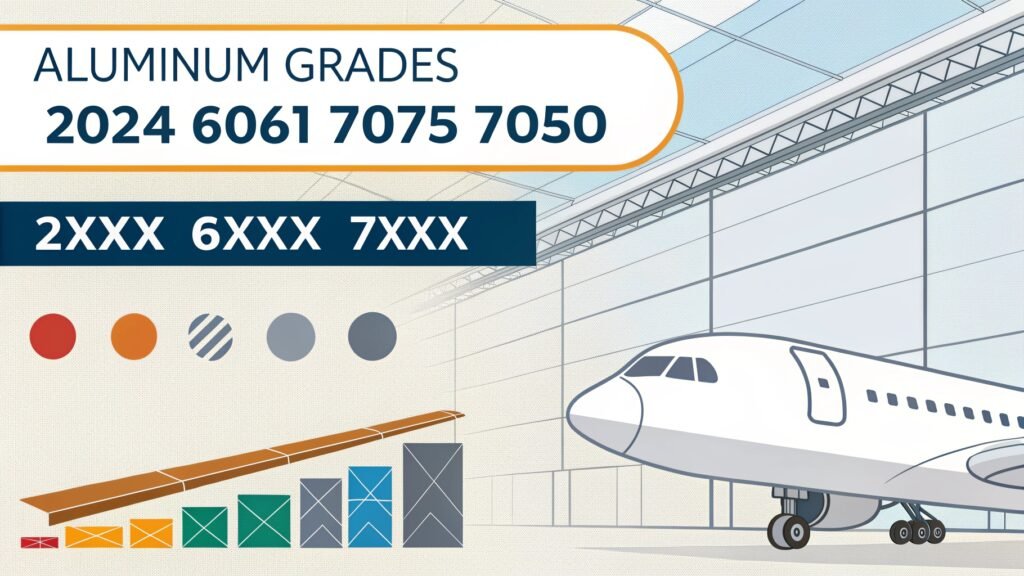
Aerospace primarily uses high-purity aluminum grades from the 2xxx, 6xxx, and 7xxx series. Specific grades like 2024, 6061, 7075, and 7050 are frequently chosen for their unique combinations of strength, weight, fatigue resistance, and corrosion properties.
Diving Deeper into Specific Aerospace Grades
It's not just about the series (2xxx, 6xxx, 7xxx); specific grades within those series are qualified and commonly used for aerospace applications. The "grade" usually refers to the specific alloy designation and its temper (heat treatment condition).
Key Aerospace Aluminum Series and Grades
- 7xxx Series (Al-Zn-Mg-Cu): The strength leaders.
- 7075:The workhorse high-strength alloy. Often used in T6 temper (highest strength, lower toughness/SCC resistance) or T73/T7351 (better toughness/SCC, lower strength). Common for wing skins (upper surface), stringers, fuselage frames.
- 7050: Developed for improved toughness, SCC resistance, and properties in thick sections compared to 7075. Often used in T7451 temper. Ideal for thick plate applications, fuselage frames, wing spars, landing gear components. Our large forged rings and discs at SWA Forging frequently use this grade.
- 7475: A modification of 7075 with improved fracture toughness, often used in T761 temper.
- 2xxx Series (Al-Cu): Known for fatigue performance.
- 2024: A long-established alloy with good fatigue resistance and strength. Often used in T3 temper. Common for fuselage skins and lower wing surfaces (tension loaded). Requires protective cladding (Alclad) for corrosion resistance.
- 2124, 2324: Higher toughness variants of 2024.
- 6xxx Series (Al-Mg-Si): Good formability and corrosion resistance.
- 6061: Very versatile, good corrosion resistance, weldable (though properties decrease near weld). Lower strength than 2xxx/7xxx. Used in T6 temper for secondary structures, floor beams, fittings.
Application-Specific Choices
The choice is highly specific:
- 6061: Very versatile, good corrosion resistance, weldable (though properties decrease near weld). Lower strength than 2xxx/7xxx. Used in T6 temper for secondary structures, floor beams, fittings.
| Grade | Key Property | Typical Aerospace Application | Temper Examples |
|---|---|---|---|
| 7075 | Highest Strength | Upper Wing Skins, Stringers, Frames | T6, T7351 |
| 7050 | Toughness, SCC Resistance | Thick Frames, Spars, Bulkheads, Landing Gear | T7451 |
| 20248 | Fatigue Resistance | Fuselage Skin, Lower Wing Skin | T3, T351 |
| 60619 | Versatility, Corrosion Res. | Fittings, Secondary Structures, Fairings | T6, T651 |
Quality Assurance Importance
Aerospace demands rigorous quality control. This isn't just about picking the right grade; it's about ensuring the material meets the exact specifications every time. This includes chemical composition, mechanical properties, dimensional tolerances, and freedom from defects. That's why certifications like our ISO 9001 at SWA Forging, along with product quality certificates and options for third-party inspections (SGS, BV, TUV), are essential. Both our trader clients and machining customers rely on this assurance for safety-critical applications.
Conclusion
Choosing between 7050 and 7075 requires balancing strength, toughness, and corrosion needs. Many grades serve aerospace; understanding specific properties ensures the best material selection for safety and performance in flight.
-
Discover the unique properties and applications of 7075-T6, a widely used aluminum alloy known for its strength. This resource will enhance your knowledge. ↩
-
Understanding SCC is crucial for aerospace applications, as it significantly impacts the performance and safety of aluminum alloys. Explore this link to learn more. ↩
-
Learn why 7050-T7451 is preferred in aerospace for its toughness and SCC resistance, making it a vital material for structural components. ↩
-
Exploring various aluminum alloys can help you choose the right material for specific aerospace applications, enhancing performance and safety. ↩
-
Learning about fatigue strength is essential for ensuring the longevity and reliability of aerospace components under cyclic loading conditions. ↩
-
Fracture Toughness is vital for safety in aerospace applications. Learn more about its implications for material selection. ↩
-
Weldability issues can significantly impact design choices. Discover the challenges and alternatives for working with 7075 aluminum. ↩
-
Learn about the fatigue resistance and strength of 2024 aluminum alloy, which makes it a popular choice in aerospace engineering. ↩
-
Discover the versatility and corrosion resistance of 6061 aluminum alloy, essential for various aerospace structures and components. ↩