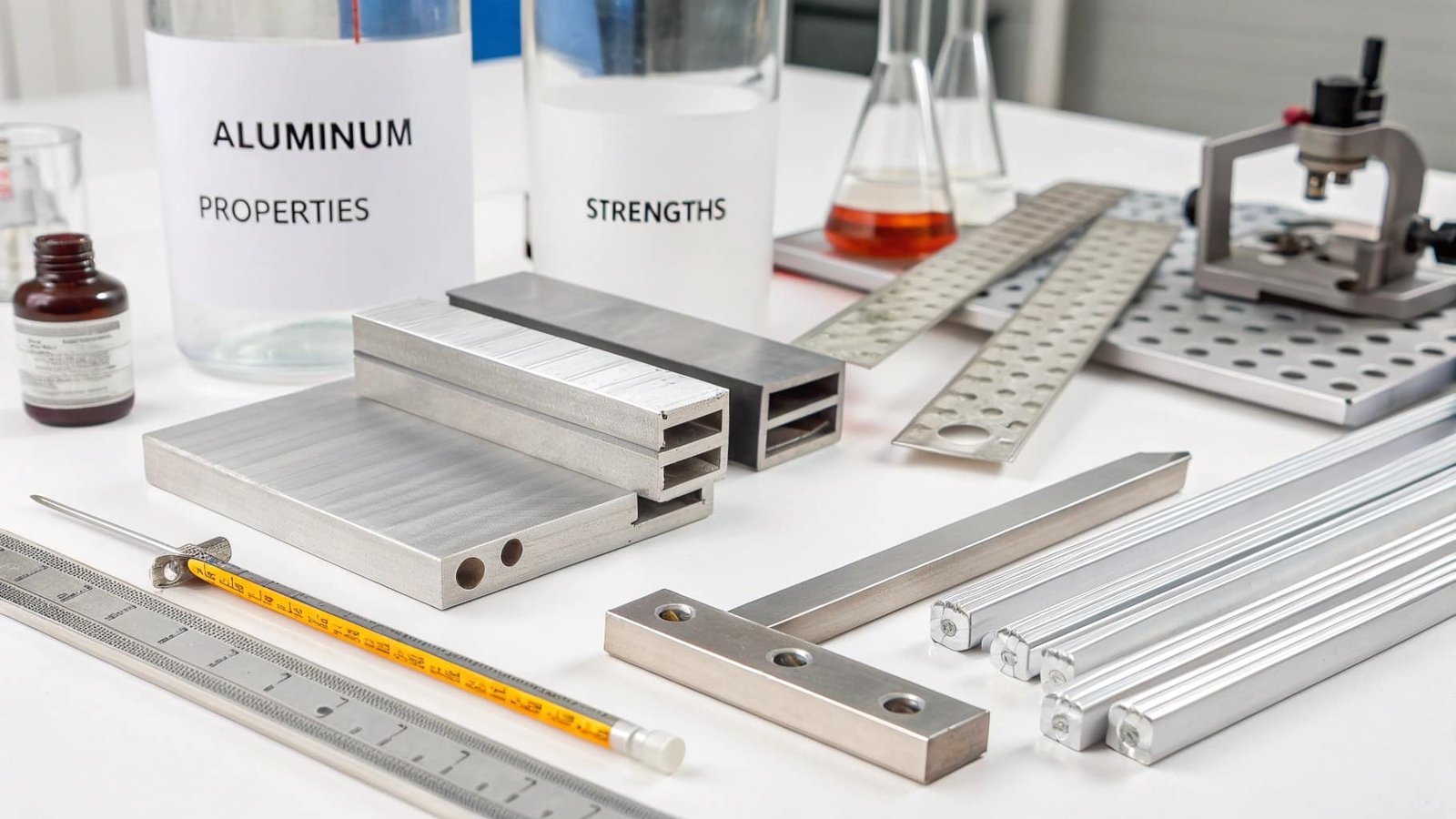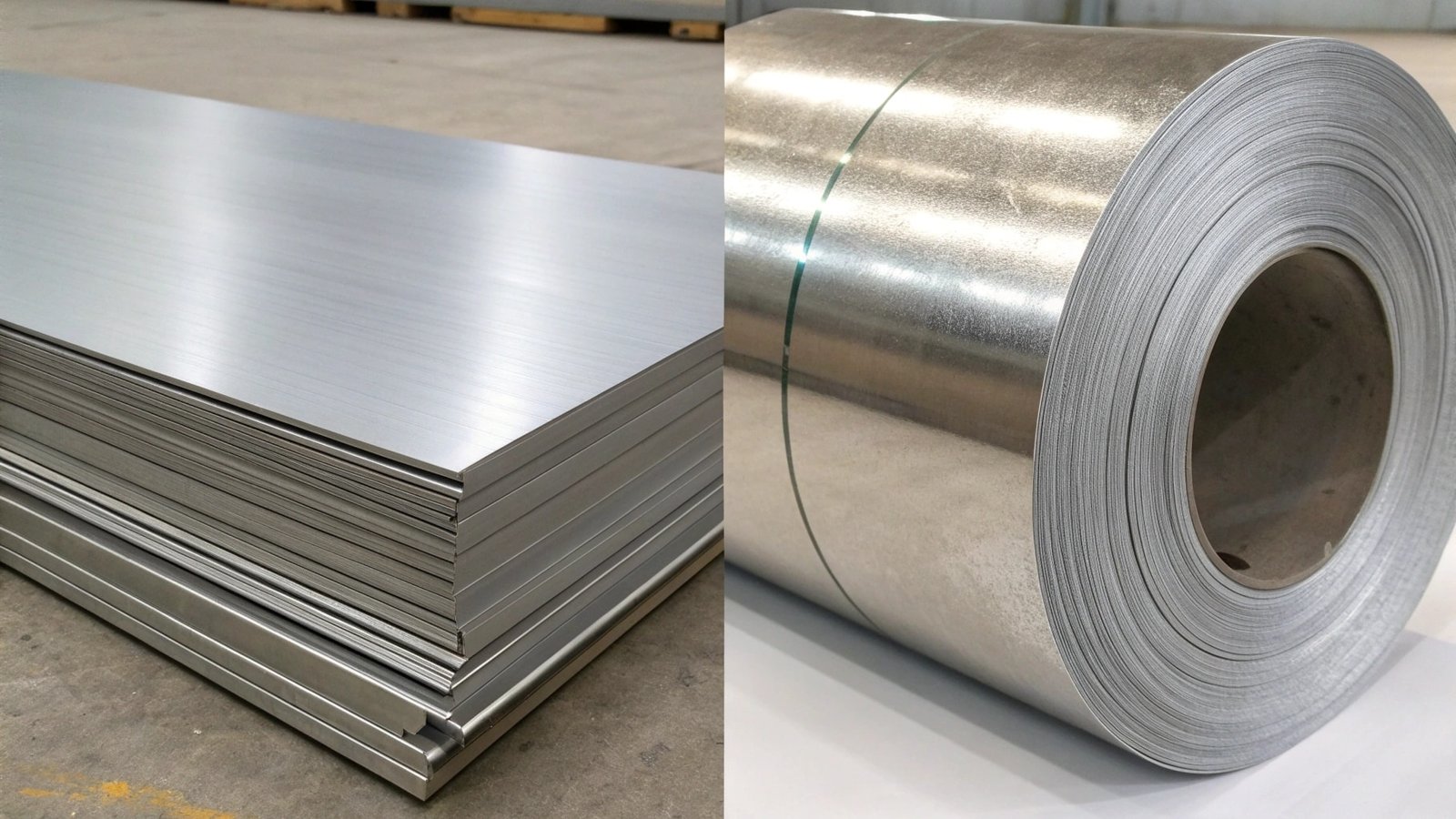
Ever wondered what makes a simple sheet of aluminum strong enough to fly? Not all aluminum is created equal, especially when it comes to aviation. An aircraft-grade aluminum sheet is a specialized material.
An aircraft-grade aluminum sheet is a high-purity aluminum alloy, manufactured and certified to meet stringent aerospace specifications for strength, fatigue resistance, corrosion resistance, and consistency. These sheets are used for constructing various parts of an aircraft's airframe and components.
At SWA Forging, while we specialize in forged aluminum rings and discs, the principles of material integrity and performance are very familiar to us. The same demand for top-tier material properties that goes into an aircraft sheet is what we aim for in our forged products for critical industries. Understanding these specialized materials is key, whether it's a sheet forming the skin of a wing or a forged part in a landing gear.
What is aircraft grade aluminum?
Heard the term "aircraft grade aluminum" but not sure what it really means? It’s more than just a marketing buzzword; it signifies a material meeting very high standards. This type of aluminum is specifically chosen for flight.
Aircraft-grade aluminum refers to specific aluminum alloys known for their high strength-to-weight ratio, excellent fatigue resistance, and good corrosion resistance, all certified to meet rigorous aerospace industry specifications like those from ASTM or AMS.
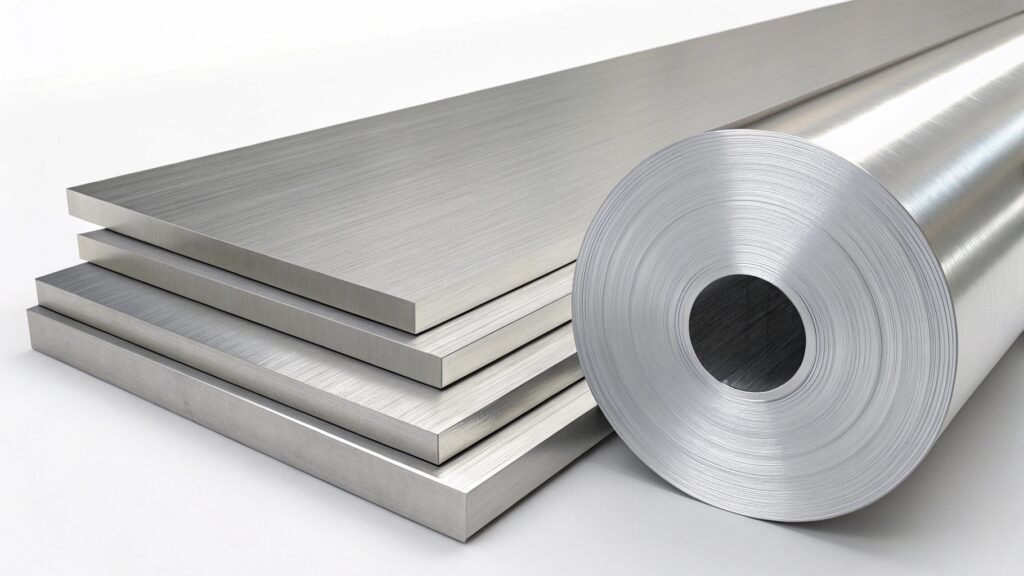
When we talk about "aircraft grade," we're not referring to just any aluminum off the shelf. These are alloys that have been meticulously developed and tested for aerospace applications. Think of alloys like 2024, 6061, and 7075. Each has a unique set of properties due to its specific alloying elements. For instance, 2024 (often alloyed with copper) is known for its high strength and excellent fatigue resistance, making it suitable for fuselage and wing structures that experience cyclic loading. 7075 (alloyed with zinc) is one of the highest strength aluminum alloys available and is used in highly stressed parts. 6061 (magnesium and silicon) offers good strength, corrosion resistance, and weldability, finding uses in more general aircraft structures.
These materials must demonstrate:
- High Strength-to-Weight Ratio: Aircraft need to be as light as possible without compromising strength.
- Fatigue Resistance: Components must withstand repeated stresses over many flight cycles.
- Corrosion Resistance: Protection against environmental factors is crucial for longevity.
- Consistency and Traceability: Every batch must meet exact specifications, with full documentation.
At SWA Forging, even though we produce forged parts, this dedication to material quality and certification (like our ISO 9001) mirrors what's required for aircraft-grade materials.
Is 5052 aluminum aircraft grade?
Wondering if the common 5052 aluminum1 alloy makes the cut for aircraft construction? While versatile, not every good alloy is suited for primary aircraft structures. 5052 has specific uses, but it's not a primary structural aircraft alloy.
No, 5052 aluminum is generally not considered a primary "aircraft grade" aluminum for critical structural components like wing spars or fuselage skins. While it has excellent corrosion resistance and formability, it lacks the high strength of designated aircraft alloys like 2024 or 7075.
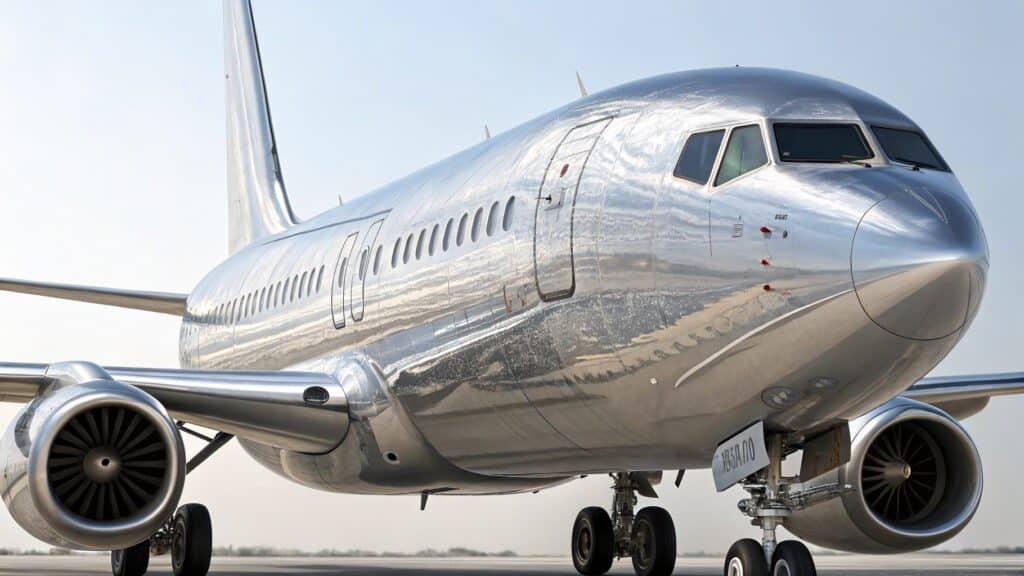
5052 aluminum is a non-heat-treatable alloy, primarily alloyed with magnesium. Its strengths lie in its excellent corrosion resistance, especially in marine environments, good weldability, and superior formability compared to many higher-strength aircraft alloys. You'll often find 5052 used for sheet metal work requiring intricate bends and shapes. In an aircraft, you might find 5052 used for non-structural or secondary components. This could include things like fuel tanks (due to its corrosion resistance and formability), fairings, access panels, or internal fittings where the stresses are not as high. However, for primary load-bearing structures that demand the utmost in strength and fatigue resistance, aerospace engineers will typically specify alloys like 2024-T3, 7075-T6, or sometimes 6061-T6. The "T" designations indicate specific heat treatments that significantly boost the strength of these alloys, something 5052 does not undergo to the same extent. So, while 5052 is a fantastic and versatile aluminum alloy, it doesn't possess the high mechanical properties required for the most demanding aircraft structural applications.
What are the different grades of aluminium sheet?
Feeling overwhelmed by the sheer number of aluminum grades available in sheet form? It's true, there are many, each designed for different purposes. They are systematically categorized.
Aluminum sheet grades are primarily differentiated by their alloying elements, designated by a four-digit numbering system (e.g., 1xxx, 2xxx, up to 7xxx series). Each series offers distinct properties like strength, corrosion resistance, formability, and weldability.
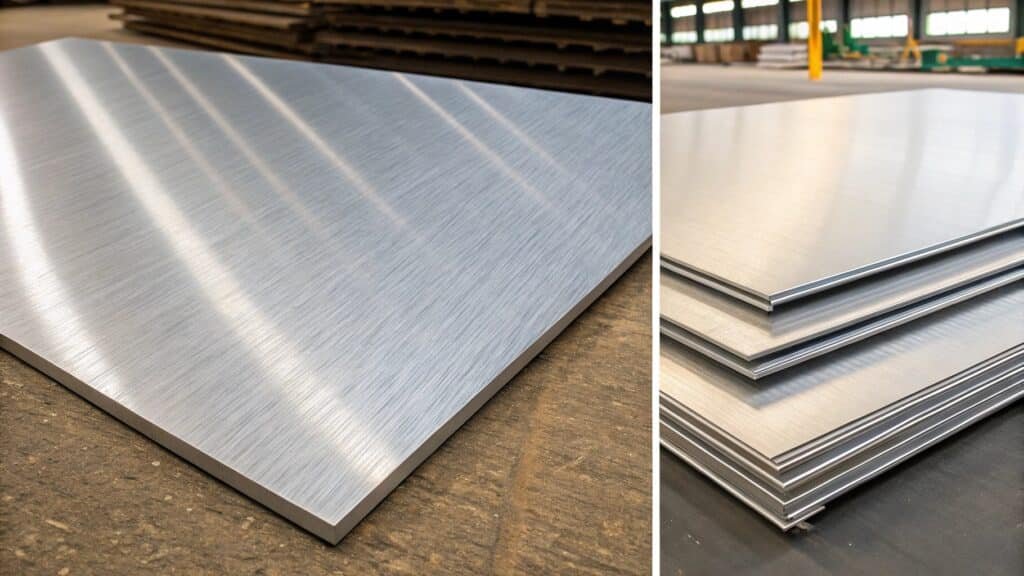
Aluminum alloys are broadly grouped into series, and you can find sheets made from many of these. Here's a brief overview:
- 1xxx Series: These are nearly pure aluminum (99% minimum). They are highly corrosion-resistant, have excellent workability, and good electrical/thermal conductivity, but low strength. Used for chemical equipment, reflectors, and food packaging.
- 2xxx Series: Copper is the main alloying element. These are heat-treatable and offer high strength and good fatigue resistance, but generally lower corrosion resistance than other series. This series includes key aircraft alloys like 2024.
- 3xxx Series: Manganese is the main alloying element. These are non-heat-treatable, have moderate strength, good workability, and good corrosion resistance. 3003 is common for cooking utensils and general sheet metal work.
- 4xxx Series: Silicon is the main alloying element. Often used as welding wire and brazing alloys due to their lower melting point.
- 5xxx Series: Magnesium is the main alloying element. These are non-heat-treatable, offer good weldability, excellent corrosion resistance (especially in marine environments), and moderate to high strength. 5052 is a prime example.
- 6xxx Series: Magnesium and silicon are the main alloying elements. These are heat-treatable, offering good strength, good corrosion resistance, formability, and weldability. 6061 is a very popular and versatile alloy in this series, used in aircraft structures and many other applications. We at SWA Forging frequently work with 6061 for our forged rings and discs.
- 7xxx Series: Zinc is the main alloying element. These are heat-treatable and include some of the highest strength aluminum alloys. 7075 is a key aircraft alloy, prized for its exceptional strength.
Not all of these are "aircraft grade," but this system helps categorize the vast array of aluminum sheets available.
Is aircraft grade aluminum stronger than steel?
Thinking about strength and assuming steel always wins? When it comes to aircraft, the answer is more nuanced than a simple yes or no. It's about strength for a given weight.
On a direct pound-for-pound basis (strength-to-weight ratio), high-strength aircraft-grade aluminum alloys are often "stronger" (provide more strength for less weight) than many common steels. However, some specialized steels have higher absolute tensile strength than aluminum alloys.
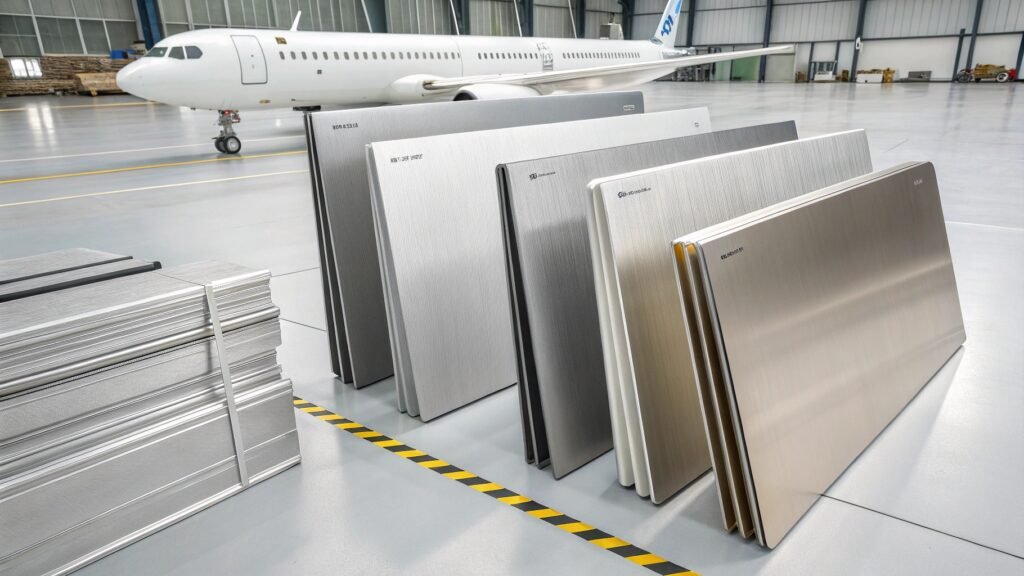
This is a common question, and the key is understanding what we mean by "stronger." If you take a bar of high-strength aircraft aluminum like 7075-T6 and a bar of common mild steel of the exact same size, the steel bar will likely have a higher ultimate tensile strength (the maximum stress it can withstand before breaking). For example, 7075-T6 might have a tensile strength around 70-80 ksi (thousand pounds per square inch), while a strong alloy steel could exceed 150 ksi or much more.
However, aluminum is about one-third the density of steel. This is where the strength-to-weight ratio becomes critical, especially for aircraft. If you compare a kilogram of 7075-T6 aluminum to a kilogram of typical structural steel, the aluminum will provide more structural performance for that kilogram. This is why aluminum is a dominant material in aerospace. Aircraft need to be light to fly efficiently. While some steel alloys are undeniably stronger in absolute terms, their weight penalty is too high for many aircraft applications.
So, if the question is "which material can carry more load for the same amount of weight?", aircraft-grade aluminum often comes out on top compared to many steels. If the question is purely "which material has the highest possible breaking point regardless of weight?", then certain high-alloy steels would win. In our forging business, we see clients choose aluminum for its excellent balance of properties, especially when weight saving is a design driver.
Conclusion
Aircraft-grade aluminum sheets are specialized high-performance alloys. They are chosen for their superior strength-to-weight ratio, fatigue resistance, and strict adherence to aerospace quality standards, crucial for safe flight.
-
This link will clarify the specific applications of 5052 aluminum in aviation and why it may not be ideal for primary structures. ↩