Skip to content
Many industries need strong, lightweight metal parts. But casting or machining alone can't always deliver the best strength or complex shapes. Forging offers a powerful alternative.
Aluminum forgings are made by applying immense pressure to solid aluminum, often heated, to shape it using hammers or presses with specialized dies. This process refines the grain structure, making the part exceptionally strong.
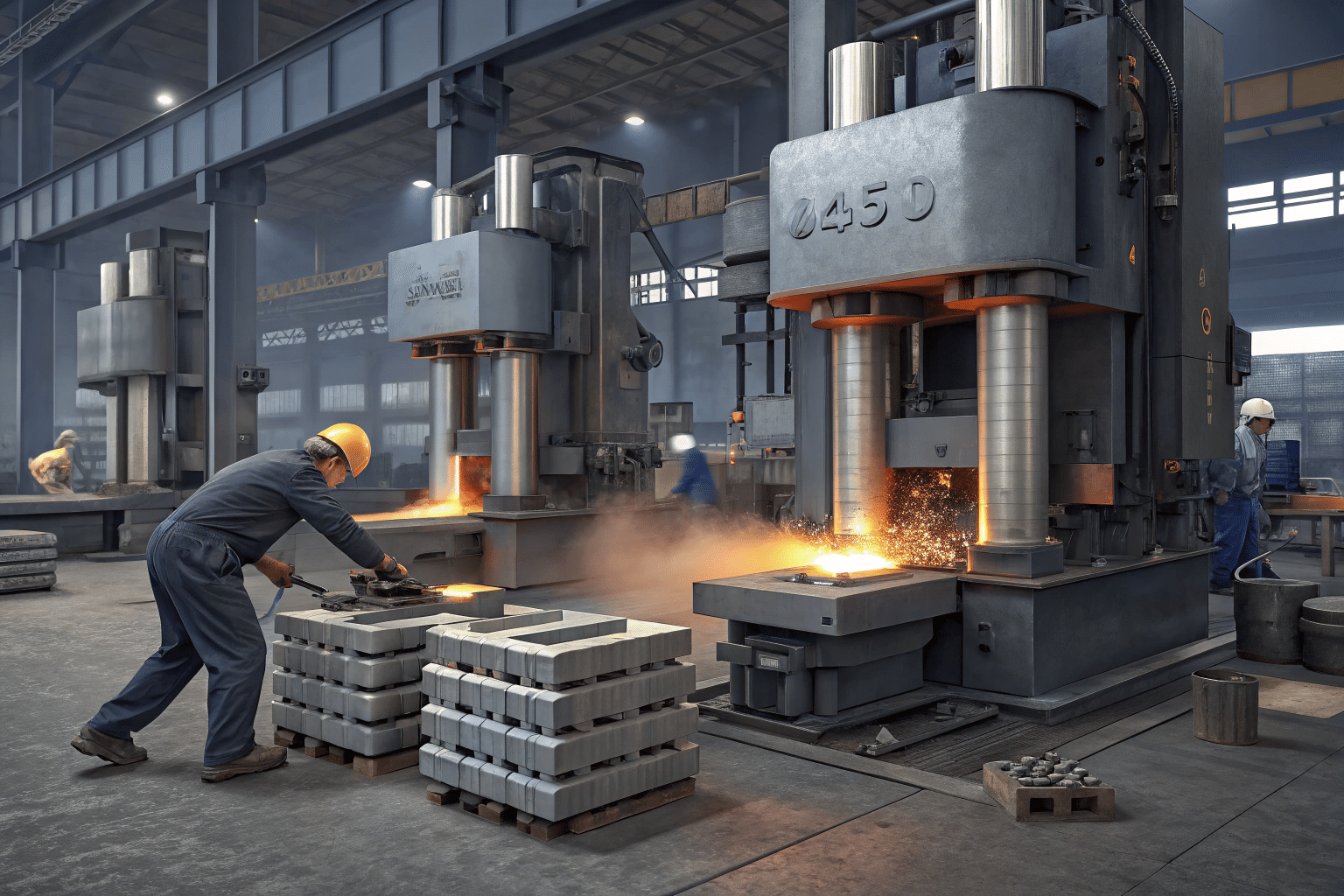
When people ask me what we do at SWA Forging, I often start by explaining the magic of forging. It's a bit like a blacksmith shaping metal, but on a much larger, more precise industrial scale. We take a solid piece of aluminum and, through carefully controlled force and heat, transform it into something much stronger and more reliable than its original form. I've seen countless times how a forged component can outperform other manufacturing methods, especially when the application demands durability and safety. It's a fascinating process, and I'm always happy to share how we create these high-performance parts.
What is the Actual Process of Aluminum Forging?
Creating a high-strength aluminum part isn't just about hitting metal. It involves precise steps and careful control. Understanding this process reveals why forgings are superior for many uses.
The aluminum forging process involves cutting raw material, heating it to a specific temperature, pressing or hammering it between dies to achieve the desired shape, then cooling and finishing the part.
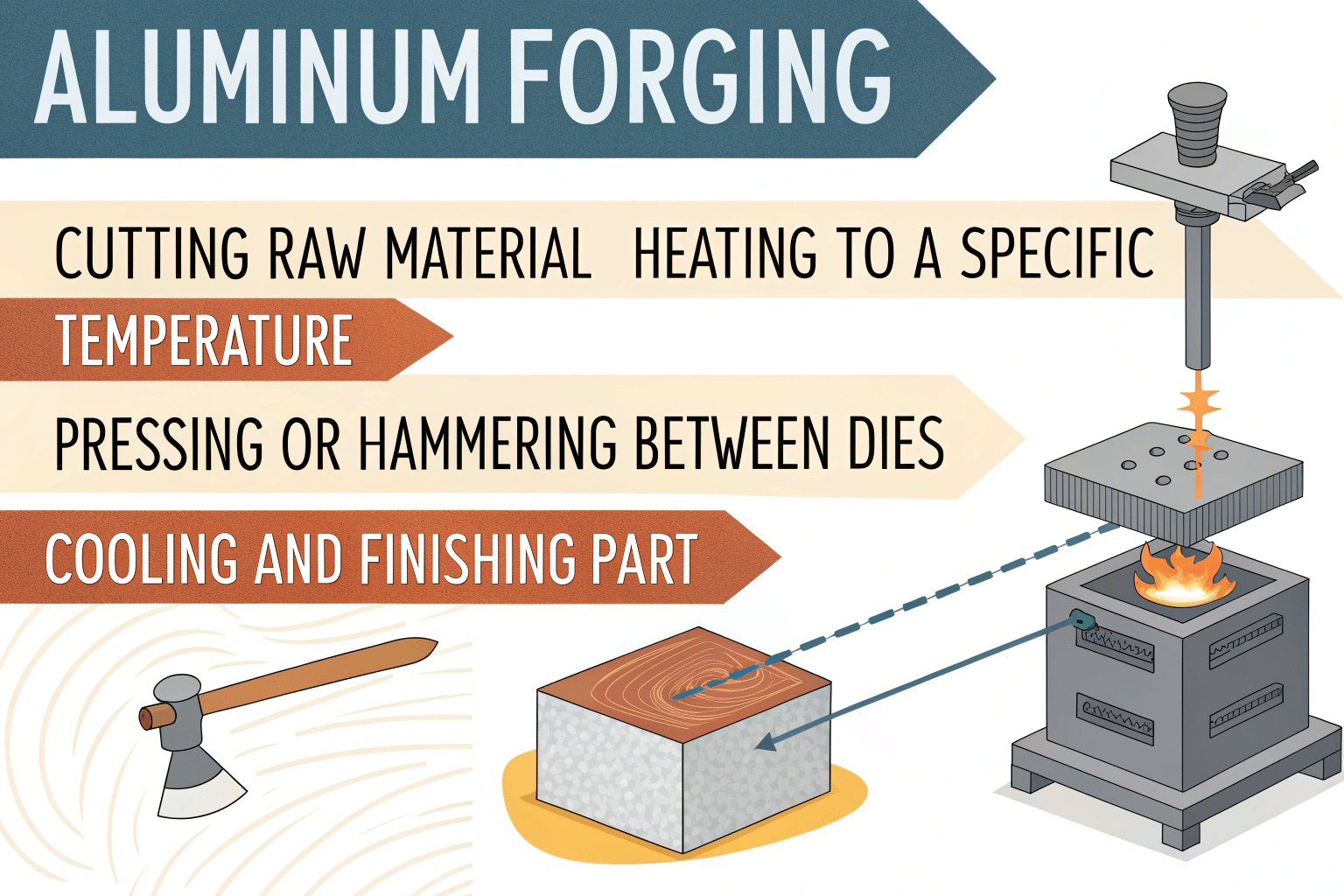
At SWA Forging, turning a block of aluminum into a high-performance component like a large-diameter forged ring involves several key stages. It all starts with the raw material. We select high-quality aluminum alloys, often specific grades like 6061 or 7075, depending on the client's needs—whether it's for a trader needing versatile stock or a machining company requiring specific properties for an aerospace part. The material is typically in billet or ingot form and is cut to the appropriate size for the part we're making.
Next comes heating. The aluminum is heated in a furnace to a precise temperature, making it more malleable but not molten. This temperature control is critical; too hot, and the material properties can be damaged; too cold, and it's harder to forge and can crack. Once at the right temperature, the aluminum goes to the forging press or hammer. This is where the intense pressure is applied. For our large rings and discs, we use powerful presses that force the heated aluminum into dies. These dies are specially designed tool steel molds that define the final shape. The force causes the aluminum to flow and fill the die cavity, and importantly, refines its internal grain structure, aligning it with the shape of the part. This grain flow is what gives forgings their exceptional strength and fatigue resistance. After forging, the part is cooled (sometimes in a controlled way), and then it often undergoes secondary operations like heat treatment (like the T6 temper) to achieve final strength, followed by machining, inspection, and any necessary certifications, like the product quality certificates we provide with every order, or third-party reports from SGS or BV if requested by the client.
What Are the Main Types of Forging Processes Used?
Not all forging is done the same way. Different part complexities and production volumes require different methods. Knowing these types helps choose the best process for a specific need.
The main forging types include open-die forging (for large, simpler shapes), closed-die (impression-die) forging (for complex shapes and high volume), roll forging (for long shapes with varying cross-sections), and ring rolling (for seamless rings).
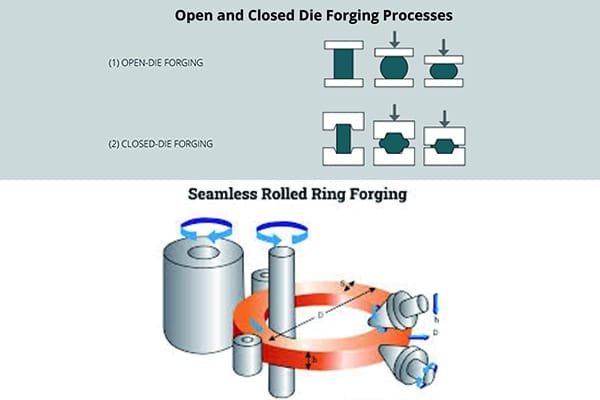
When we discuss forging, it's not a one-size-fits-all technique. There are several methods, and the one we choose at SWA Forging depends heavily on the component's design, the quantity needed, and the specific properties required by our clients. Here are the common types:
-
Open-Die Forging: Imagine a blacksmith with a hammer and anvil – that's the basic idea. The aluminum billet is placed between two flat or simply shaped dies and hammered or pressed. The metal is free to flow laterally. This is great for large, relatively simple shapes like our large-diameter forged discs or shafts before they are machined further. It allows for significant deformation and improves the grain structure. It's flexible and doesn't require expensive, complex dies for each part.
-
Closed-Die Forging (or Impression-Die Forging): This is what most people picture. The aluminum is placed between two custom dies that have impressions machined into them, forming a cavity in the shape of the desired part. When the dies close, the metal is forced to fill this cavity. It produces parts with excellent dimensional accuracy and complex geometries. This method is often used for higher volume production due to the cost of the dies.
-
Roll Forging: This process reduces the cross-sectional area and changes the shape of a bar or billet by passing it between two grooved rolls. It's good for producing long, slender parts that might have varying thicknesses, like axles or levers.
-
Ring Rolling: This is a specialized type of forging that we use extensively for our large-diameter forged rings. A pre-formed, donut-shaped piece of aluminum is heated and placed over a mandrel. As rollers apply pressure, the ring is thinned out and its diameter increases, creating a seamless ring with an excellent, circumferentially aligned grain structure. This is ideal for applications requiring high tangential strength.
Here's a quick comparison:
| Forging Type | Complexity of Shape | Tooling Cost | Production Volume | Typical SWA Application |
|---|---|---|---|---|
| Open-Die | Simple to Moderate | Low | Low to Medium | Large discs, shafts |
| Closed-Die | Moderate to Complex | High | Medium to High | Custom shaped parts |
| Roll Forging | Long, varied section | Moderate | Medium to High | (Less direct for us) |
| Ring Rolling | Seamless Rings | Moderate | Low to High | Large-diameter rings |
Understanding these helps us guide our clients, whether they are traders looking for standard sizes or machining companies needing a near-net shape for a complex component.
How Exactly Are Forged Components Made Step-by-Step?
Transforming a simple block of metal into a high-strength, precisely shaped part seems complex. Breaking it down shows the careful engineering that creates superior components.
Forged components are made by first heating a metal billet, then using immense compressive force from a hammer or press to shape it within dies. This refines the grain structure, creating a strong, durable part.
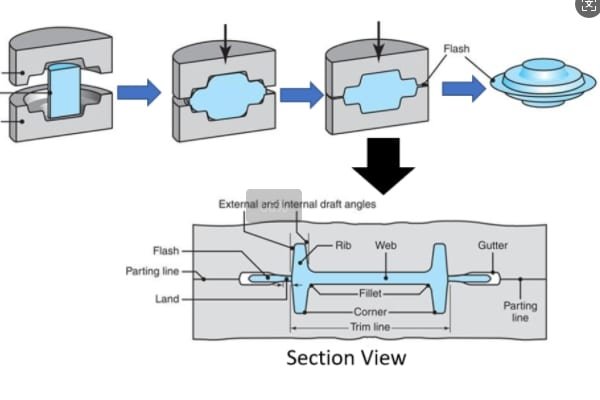
My insight that "Aluminum forgings are produced by applying pressure, either by hammering or using dies, to solid aluminum pieces to reshape them into the desired form" perfectly captures the essence. Let's look at it from the perspective of the component itself. We start with a carefully selected aluminum alloy billet – a solid chunk of metal. This isn't just any aluminum; it's chosen for its specific properties that will be enhanced by the forging process. I've often advised clients on the best alloy, say a 6061 for good all-around properties or a 7000 series for super high strength.
The billet is then heated. For aluminum, this is typically between 300°C to 500°C (570°F to 930°F), well below its melting point. The goal is to make it plastic enough to deform without cracking. Then comes the "pressure" part. Using either a powerful hydraulic or mechanical press, or a massive forging hammer, we squeeze or strike the heated billet between dies. These dies are the heart of the operation. They are made from hardened tool steel and are machined to have a cavity that is the negative of the part we want to make. As the press closes or the hammer strikes, the aluminum is forced to flow and fill every nook and cranny of the die cavity. This is where the magic happens internally: the coarse grain structure of the billet is broken down and reformed, aligning with the contours of the part. This refined, continuous grain flow is what gives forgings their superior mechanical properties – increased strength, ductility, and resistance to impact and fatigue – compared to cast or machined parts. After the shaping, the part might undergo trimming to remove any excess material (flash), followed by heat treatment, and then often precision machining to achieve final dimensions. We provide quality certificates because this entire process is about achieving a superior end product.
Is Aluminum Considered Easy to Forge?
Some metals are notoriously difficult to work with. Knowing aluminum's behavior under forging conditions is key for manufacturers. So, how cooperative is aluminum in this process?
Yes, aluminum is generally considered easy to forge. Its good ductility and lower forging temperatures compared to steel make it highly suitable for various forging processes, producing strong, lightweight parts.
From my experience at SWA Forging, dealing with aluminum alloys day in and day out, I can say that yes, aluminum is generally a very forgeable material. This is one of its big advantages. Compared to steel, aluminum requires significantly lower temperatures for forging. While steels might need to be heated above 1000°C (1800°F), many aluminum alloys forge beautifully in the 350°C to 500°C (660°F to 930°F) range. This lower temperature means less energy consumption, less wear and tear on the dies and equipment, and often a better surface finish on the forged part.
Aluminum also has excellent ductility, especially alloys like the 6000 series (such as 6061, which we use extensively for forged rings and discs). Ductility is the ability of a material to deform under tensile stress without fracturing, which is exactly what you want in forging. It allows the aluminum to flow smoothly into complex die cavities, creating intricate shapes with good precision. This makes it ideal for producing near-net shape forgings, which require less subsequent machining, saving time and material. This is something our machining customers really appreciate.
However, "easy" doesn't mean careless. Precise temperature control is still crucial. If you overheat aluminum, you can degrade its properties. Some high-strength aluminum alloys, like certain 7000 series grades, can be a bit more challenging and require more carefully controlled parameters due to their higher strength and slightly lower ductility at forging temperatures. But overall, the inherent characteristics of aluminum make it a preferred material for forging when lightweight, high-strength components are needed. Our expertise lies in understanding the nuances of each specific alloy to get the best possible forged product.
Conclusion
Aluminum forging is a vital process. It uses heat and immense pressure to shape aluminum into strong, lightweight components with superior grain structure, ideal for demanding applications across many industries.