You need aluminum parts with very specific properties – maybe extreme hardness, or perhaps easier formability. Just picking an alloy isn't enough; the real magic often happens with how it's treated. Without the right treatment, the material might not perform as expected.
Aluminum heat treatment is a series of controlled heating and cooling processes used to alter the physical and mechanical properties of aluminum alloys. This helps achieve desired characteristics like increased strength, ductility, or machinability.
At SWA Forging, we've been producing high-quality forged aluminum rings and discs since 2012. Our clients, often traders or machining companies, rely on us for materials that meet precise specifications. Understanding heat treatment is fundamental because it unlocks the full potential of the aluminum alloys we forge, ensuring they have the right strength and durability for demanding applications. We provide product quality certificates for every order, and the heat treatment process is a critical part of that quality assurance.
What are the types of heat treatment process for aluminum?
You know heat treatment can change aluminum, but what are the actual processes involved? Knowing the different types can help you understand what's possible and what to specify for your parts.
The main types of heat treatment for aluminum are annealing (to soften), solution heat treatment (to dissolve alloying elements), quenching (to trap them), and aging (precipitation hardening – natural or artificial – to strengthen).
Aluminum heat treatments can be broadly categorized, each serving a distinct purpose in modifying the alloy's microstructure and properties.
- Annealing: This process involves heating the aluminum to a specific temperature and holding it there, followed by slow cooling. The main goal of annealing is to soften the aluminum, relieve internal stresses (often from previous cold working), and improve its ductility and formability. It essentially resets the material to its softest, most workable state. I remember a client who needed intricate machining on a part; we supplied it in an annealed state to make their job easier before they applied a final strengthening treatment.
- Solution Heat Treatment (Solutionizing): This is the first step in the hardening process for heat-treatable alloys. The aluminum is heated to a high temperature (e.g., around 450-540°C or 840-1000°F, depending on the alloy) to dissolve the alloying elements into a solid solution within the aluminum matrix. The temperature and time are critical to ensure full dissolution without overheating.
- Quenching: Immediately after solution heat treatment, the aluminum is rapidly cooled, usually in water, but sometimes in air or other media. This rapid cooling "traps" the dissolved alloying elements in a supersaturated solid solution. The cooling rate is vital to prevent premature precipitation of these elements.
- Aging (Precipitation Hardening): After quenching, the alloy is in an unstable state. Aging allows the dissolved alloying elements to precipitate out as very fine, uniformly dispersed particles within the aluminum grains. These precipitates impede dislocation movement, significantly increasing the alloy's strength and hardness.
- Natural Aging: Occurs at room temperature over several days.
- Artificial Aging (Age Hardening): Involves reheating the quenched alloy to a lower temperature (e.g., 120-190°C or 250-375°F) for a specific time to accelerate and control the precipitation process. This generally results in higher strength.
| Treatment Type | Purpose | Process Steps | Resulting Property Change |
|---|---|---|---|
| Annealing | Soften, relieve stress, improve ductility | Heat, hold, slow cool | Softer, more ductile |
| Solution Heat Treatment | Dissolve alloying elements | Heat to high temp, hold | Prepares for hardening |
| Quenching | Trap dissolved elements | Rapid cool after solution treatment | Supersaturated solution |
| Aging (Precipitation) | Strengthen and harden | Hold at room temp (natural) or elevated temp (artificial) | Increased strength, hardness |
Which aluminium alloys are heat treatable?
You want to strengthen an aluminum part, but does your chosen alloy even respond to heat treatment? Not all aluminum alloys can be hardened this way, and using the wrong one means wasted effort.
The primary heat-treatable aluminum alloys are those in the 2xxx (Al-Cu), 6xxx (Al-Mg-Si), and 7xxx (Al-Zn-Mg-Cu) series. Some 8xxx series alloys are also heat-treatable. These alloys can be significantly strengthened by precipitation hardening.
Aluminum alloys are broadly divided into two categories based on how they achieve their strength: heat-treatable and non-heat-treatable.
Heat-Treatable Alloys:
These alloys contain alloying elements (like copper, magnesium, silicon, and zinc) whose solubility in aluminum increases significantly with temperature. This characteristic allows them to be strengthened by the solution heat treatment, quenching, and aging processes described earlier, a mechanism known as precipitation hardening.
- 2xxx Series (e.g., 2024, 2618): Primary alloying element is copper. Known for high strength.
- 6xxx Series (e.g., 6061, 6082): Primary alloying elements are magnesium and silicon (forming magnesium silicide). Good strength, formability, and corrosion resistance. This is a very common series we forge at SWA Forging.
- 7xxx Series (e.g., 7075, 7050): Primary alloying element is zinc, often with magnesium and copper. These are the highest strength aluminum alloys.
- Some 8xxx Series: These are more specialized alloys; some can be heat-treated.
Non-Heat-Treatable Alloys:
These alloys derive their strength primarily from solid solution strengthening (the effect of the alloying elements themselves) and strain hardening (cold working). They do not respond significantly to precipitation hardening.
- 1xxx Series (e.g., 1100): Commercially pure aluminum (99.0% or higher). Excellent corrosion resistance and workability, but low strength.
- 3xxx Series (e.g., 3003): Primary alloying element is manganese. Moderate strength, good workability.
- 4xxx Series (e.g., 4043): Primary alloying element is silicon. Often used as filler material for welding or brazing due to lower melting point. Some are heat-treatable if they also contain copper or magnesium.
- 5xxx Series (e.g., 5052, 5083): Primary alloying element is magnesium. Good strength (from work hardening and magnesium content), excellent corrosion resistance, especially in marine environments.
Understanding this distinction is crucial when specifying materials for our clients' forged rings and discs.
Can 6061 aluminum be heat treated?
You're considering 6061 aluminum1, a very popular alloy. Can you make it stronger through heat treatment? This is a key question for many applications that need good strength and versatility.
Yes, 6061 aluminum is a prime example of a heat-treatable alloy. It is commonly subjected to solution heat treatment and artificial aging to achieve the T6 temper, which provides excellent mechanical properties.
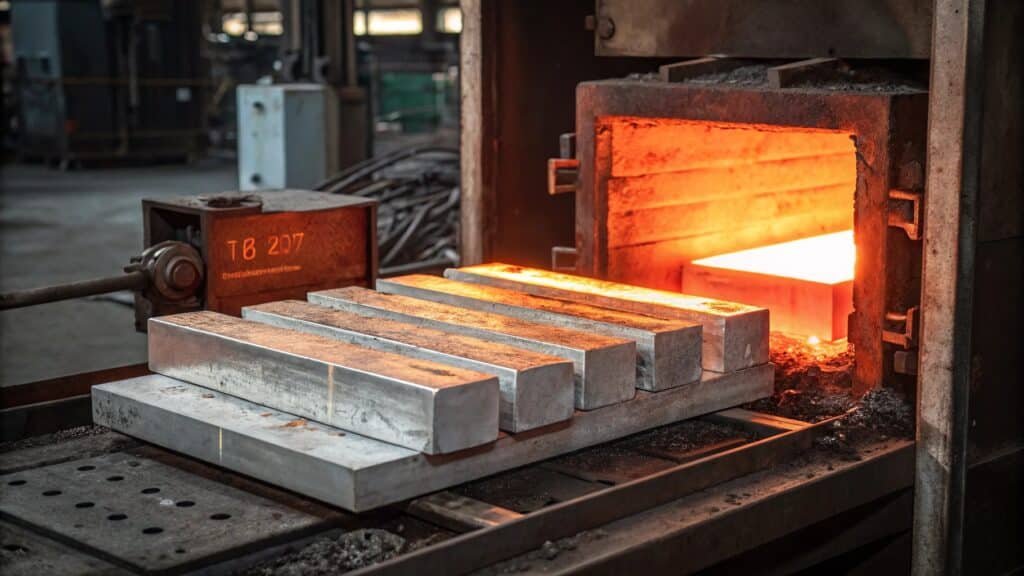
Aluminum alloy 6061 is one of the most widely used heat-treatable alloys due to its great combination of strength, corrosion resistance, weldability, and machinability. The T6 temper is very popular and significantly enhances its strength.
The process to achieve the 6061-T6 condition typically involves:
- Solution Heat Treatment: Heating the 6061 aluminum to around 530°C (985°F) and holding it there for a sufficient time (this can depend on the thickness of the part) to allow the magnesium and silicon to dissolve fully into the aluminum.
- Quenching: Rapidly cooling the material, usually in water, to room temperature. This traps the magnesium and silicon in a supersaturated solution.
- Artificial Aging (Precipitation Hardening): Heating the quenched material to a lower temperature, typically around 160-175°C (320-350°F), and holding it for a specific duration (often 8-12 hours, but can vary). During this "baking" process, fine particles of magnesium silicide (Mg₂Si) precipitate throughout the aluminum matrix. These tiny particles act as obstacles to dislocation movement, which is what gives the 6061-T6 its characteristic strength and hardness.
At SWA Forging, many of the forged rings and discs we produce from 6061 alloy are supplied in the T6 condition. Our clients in machining and various industrial sectors rely on the consistent properties achieved through this precise heat treatment, which we ensure through rigorous quality control and provide certification for.
Is 5052 aluminum alloy heat treatable?
You're looking at 5052 aluminum2, known for its good formability and corrosion resistance. Can you also strengthen it through heat treatment like you can with 6061? This is an important distinction to make.
No, 5052 aluminum alloy is not heat-treatable in the sense of precipitation hardening. Its strength is primarily achieved through strain hardening (work hardening) from cold working (designated by H tempers) and solid solution strengthening from its magnesium content.
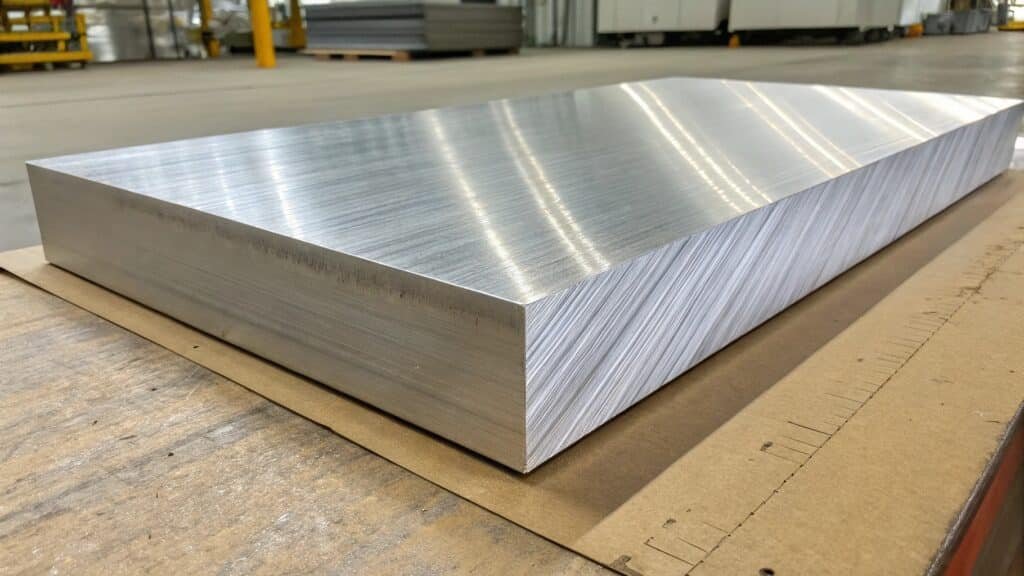
Alloy 5052 belongs to the 5xxx series, where magnesium is the principal alloying element. These alloys are considered non-heat-treatable because they do not form the necessary fine precipitates during an aging process to significantly increase their strength.
The strength of 5052 aluminum is primarily controlled by:
- Solid Solution Strengthening: The magnesium atoms dissolved in the aluminum lattice inherently strengthen the material. 5052 has a moderate amount of magnesium (typically around 2.2-2.8%).
- Strain Hardening (Work Hardening): This is the main way to increase the strength of 5052. When the material is cold worked (e.g., rolled, drawn, or bent at room temperature), dislocations are generated and interact, making the material harder and stronger, but also less ductile. The degree of strain hardening is indicated by H tempers, such as H32, H34, etc. For example, 5052-H32 is strain-hardened and then stabilized (low-temperature thermal treatment).
While you can't use solution treatment and aging to strengthen 5052, it can be annealed. Annealing 5052 (often designated as 'O' temper) involves heating it to around 345°C (650°F) and then cooling. This process softens the material, relieves stresses from previous work hardening, and restores its ductility, making it easier to form. So, while it's "heat-treated" during annealing, this is for softening, not for the kind of strengthening seen in 6061-T6.
Conclusion
Understanding aluminum heat treatments like annealing, solutionizing, and aging is key. These processes tailor alloys like 6061 for strength, while non-heat-treatable alloys like 5052 rely on work hardening.