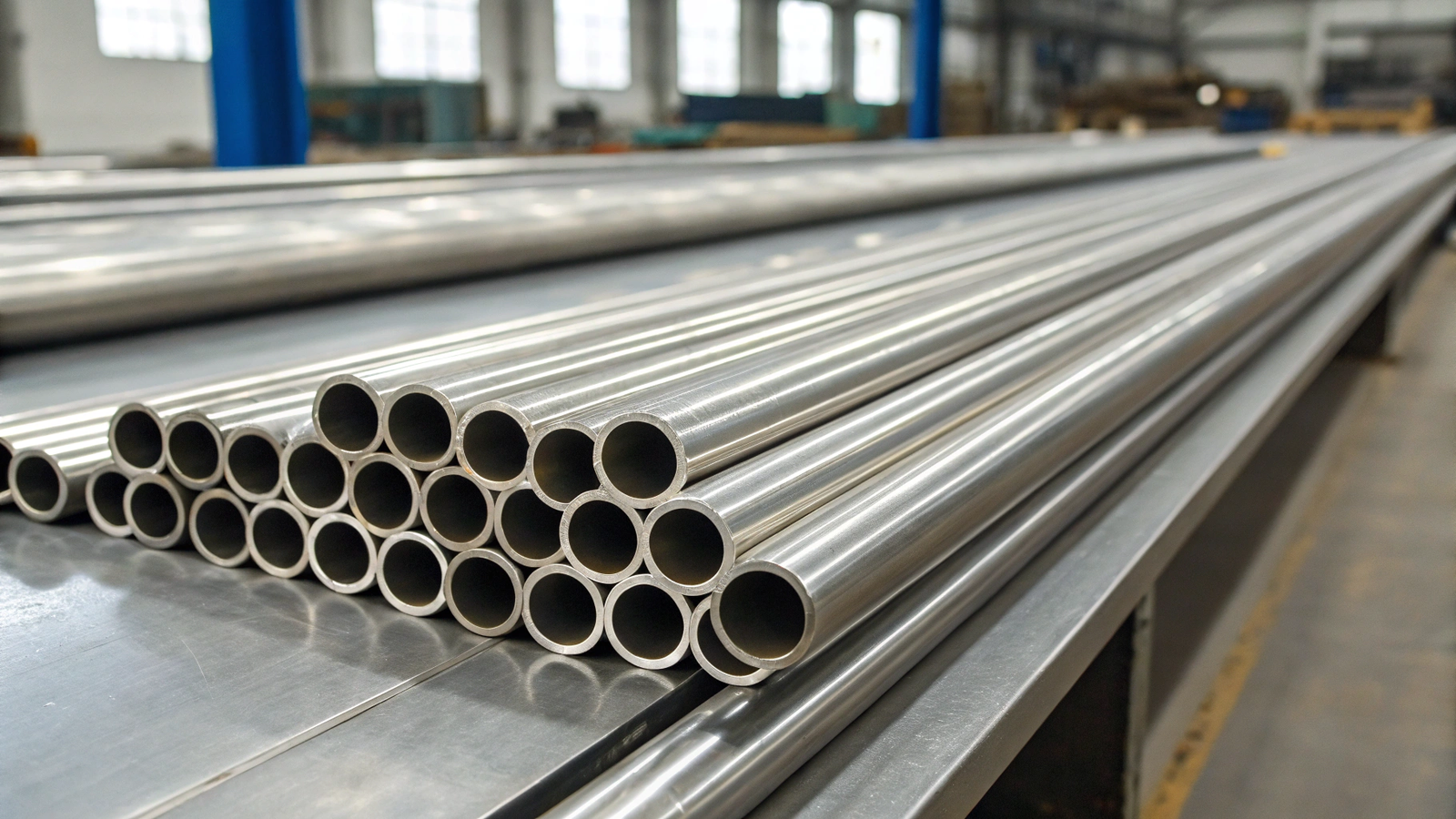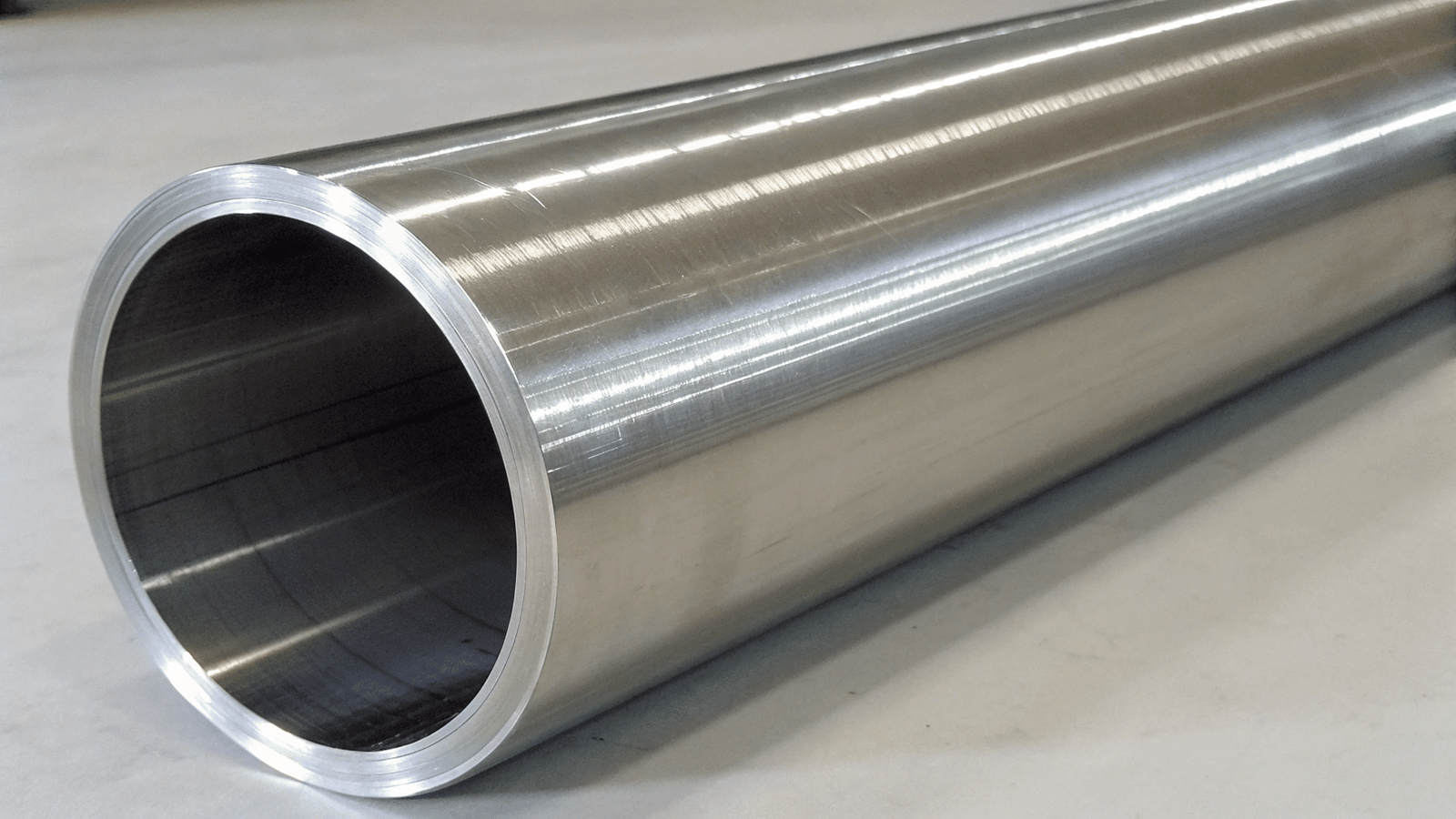
Have you ever wondered about the specifics of aluminum round tubing1, especially a common size like 1/2 inch? It's a versatile material, but its properties depend on how it's made and what alloy it is.
Aluminum round tubing, like a 1/2-inch size, is a lightweight and corrosion-resistant material widely used in various applications due to its excellent strength-to-weight ratio. Its specific mechanical properties, such as strength, bendability, and ease of cutting, depend entirely on the aluminum alloy (e.g., 6061, 3003) and its temper (e.g., T6, H14).
As a specialist in aluminum materials, I know that "aluminum tubing" is a broad term. The details matter when you choose the right product.
Are you confused about the terms "pipe" and "tube" when it comes to aluminum? It's a common point of confusion, but there's a distinct difference in industry use.
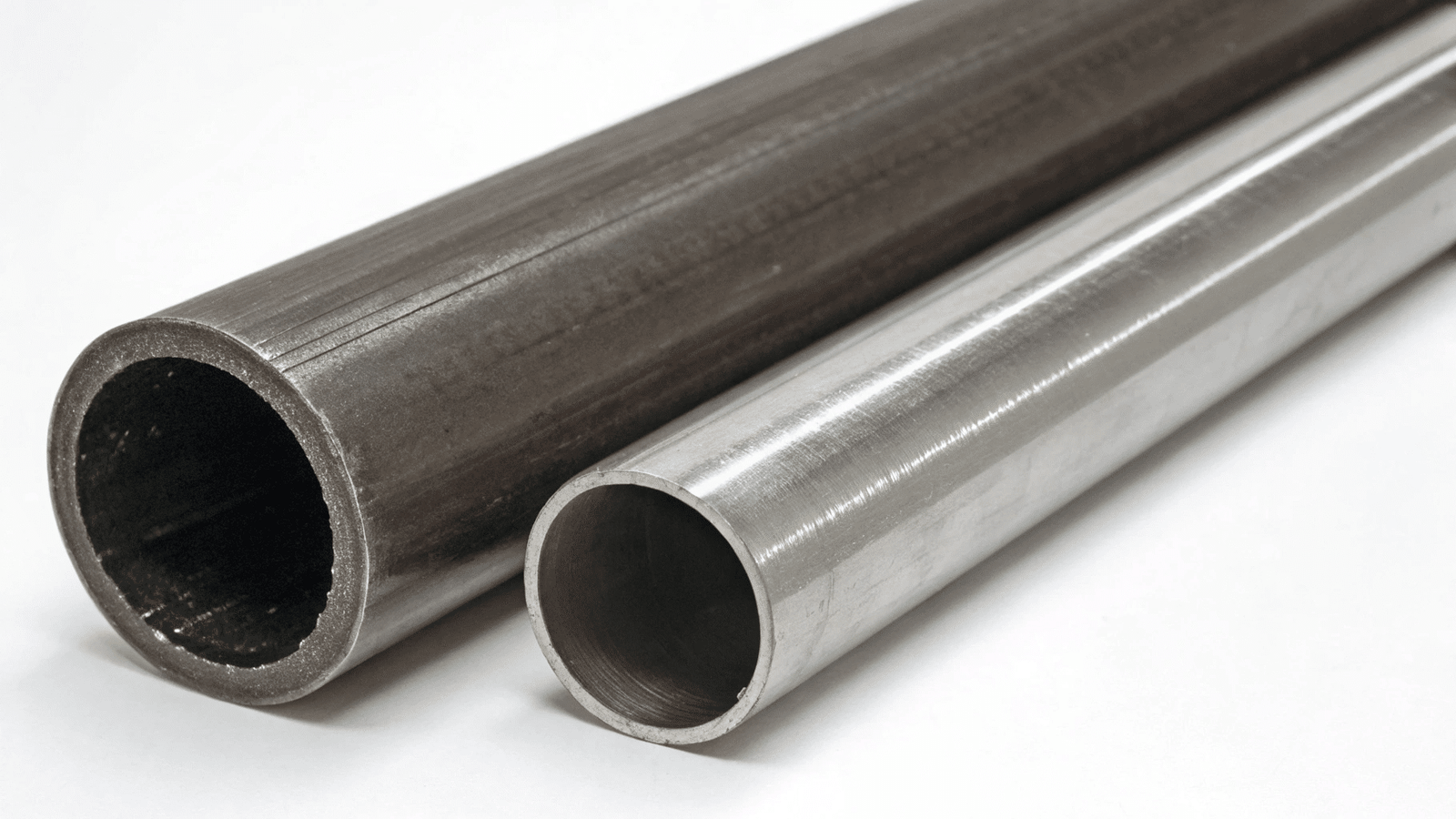
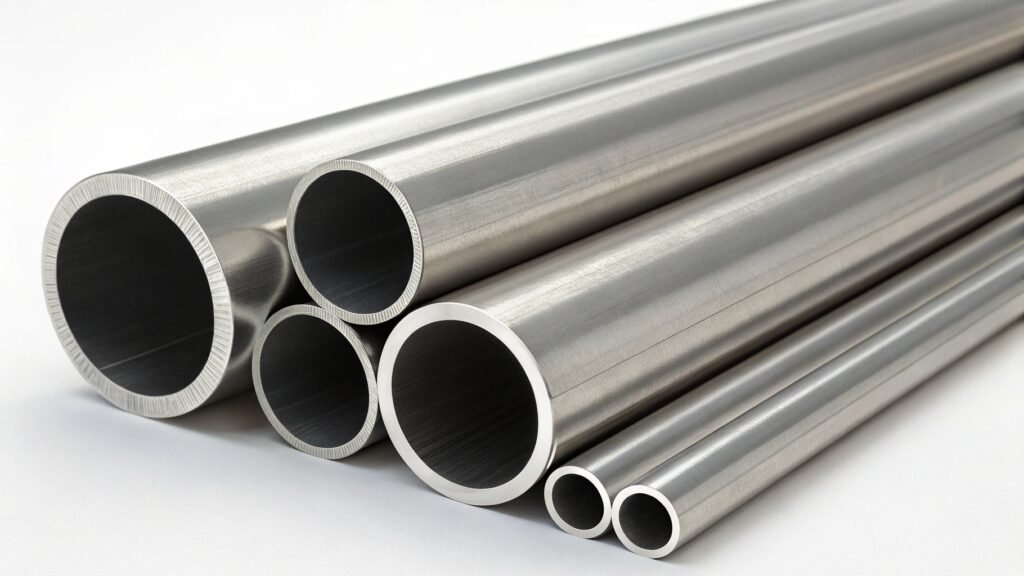
The primary difference between aluminum pipe and aluminum tube lies in their intended use and how their dimensions are specified. Aluminum pipe typically refers to cylindrical hollow sections used for fluid or gas transport, with dimensions specified by nominal pipe size (NPS) and schedule (wall thickness). Aluminum tube, on the other hand, usually refers to structural or aesthetic applications, with dimensions specified by actual outside diameter (OD) and wall thickness.
I often clarify this for clients. Choosing the right one ensures the part functions as intended and is cost-effective.
Understanding Pipe vs. Tube Terminology
While both pipe and tube are hollow cylinders, their naming conventions and typical applications differ significantly.
- Aluminum Pipe:
- Purpose: Primarily designed for conveying fluids (liquids or gases) or semi-solids. They are engineered to handle internal pressure.
- Dimensioning: Specified by Nominal Pipe Size (NPS) and Schedule (SCH). NPS is a non-specific reference to the internal diameter, not an actual measurement. The Schedule number relates to the wall thickness, which changes with the NPS. For example, a 1/2" NPS SCH 40 pipe will have a specific OD and wall thickness, but the "1/2 inch" is only nominal. The actual OD will be around 0.840 inches.
- Common Alloys: Often 6063 or 6061, chosen for their weldability and corrosion resistance.
- Manufacturing: Usually extruded.
- Aluminum Tube:
- Purpose: Generally used for structural applications, frames, aesthetics, or for conveying purposes where precise outside dimensions are critical. They are often used where they can be seen or form part of an assembly.
- Dimensioning: Specified by exact Outside Diameter (OD) and Wall Thickness. For example, a 1/2" OD x 0.065" wall tube means the outside diameter is precisely 0.500 inches, and the wall is 0.065 inches thick.
- Common Alloys: A wider range, including 6061, 6063, 2024, and 7075, depending on the strength and formability requirements.
- Manufacturing: Can be extruded, drawn, or sometimes welded from flat sheet.
- Appearance: Pipe usually has a rougher finish and less strict tolerances on OD and straightness. Tube typically has a smoother finish and tighter dimensional tolerances.
| Feature | Aluminum Pipe | Aluminum Tube |
|---|---|---|
| Primary Application | Fluid/gas conveyance, pressure systems | Structural, aesthetic, precise dimensions |
| Dimension Specification | Nominal Pipe Size (NPS) + Schedule (SCH) | Actual Outside Diameter (OD) + Wall Thickness |
| OD Precision | Nominal (varies with schedule) | Exact (e.g., 0.500" for 1/2" tube) |
| Wall Thickness Control | Varies with schedule | Explicitly stated |
| Finish | Often industrial, less critical | Smoother, often for visible applications |
| Common Alloys | 6063, 6061 | 6061, 6063, 2024, 7075 |
I once had a client who ordered "1-inch aluminum pipe" for a frame structure. When it arrived, they found the actual OD was too large for their fittings. We had to explain the difference. We then helped them re-order "1-inch OD aluminum tube." This simple misunderstanding cost them time and money. It taught me to always confirm exact dimensions.
Is 6061 Aluminum Tubing Bendable?
Are you considering 6061 aluminum tubing for a project that requires bending? It's a very common question, as 6061 is a popular general-purpose alloy.
Yes, 6061 aluminum tubing is bendable, but its bendability depends significantly on its temper. In its annealed (-O) temper, 6061 is highly ductile and very easy to bend. In its most common, high-strength temper, 6061-T6, it is less ductile and requires a larger bend radius to avoid cracking. However, with proper bending techniques and tooling, 6061-T6 can still be successfully formed.
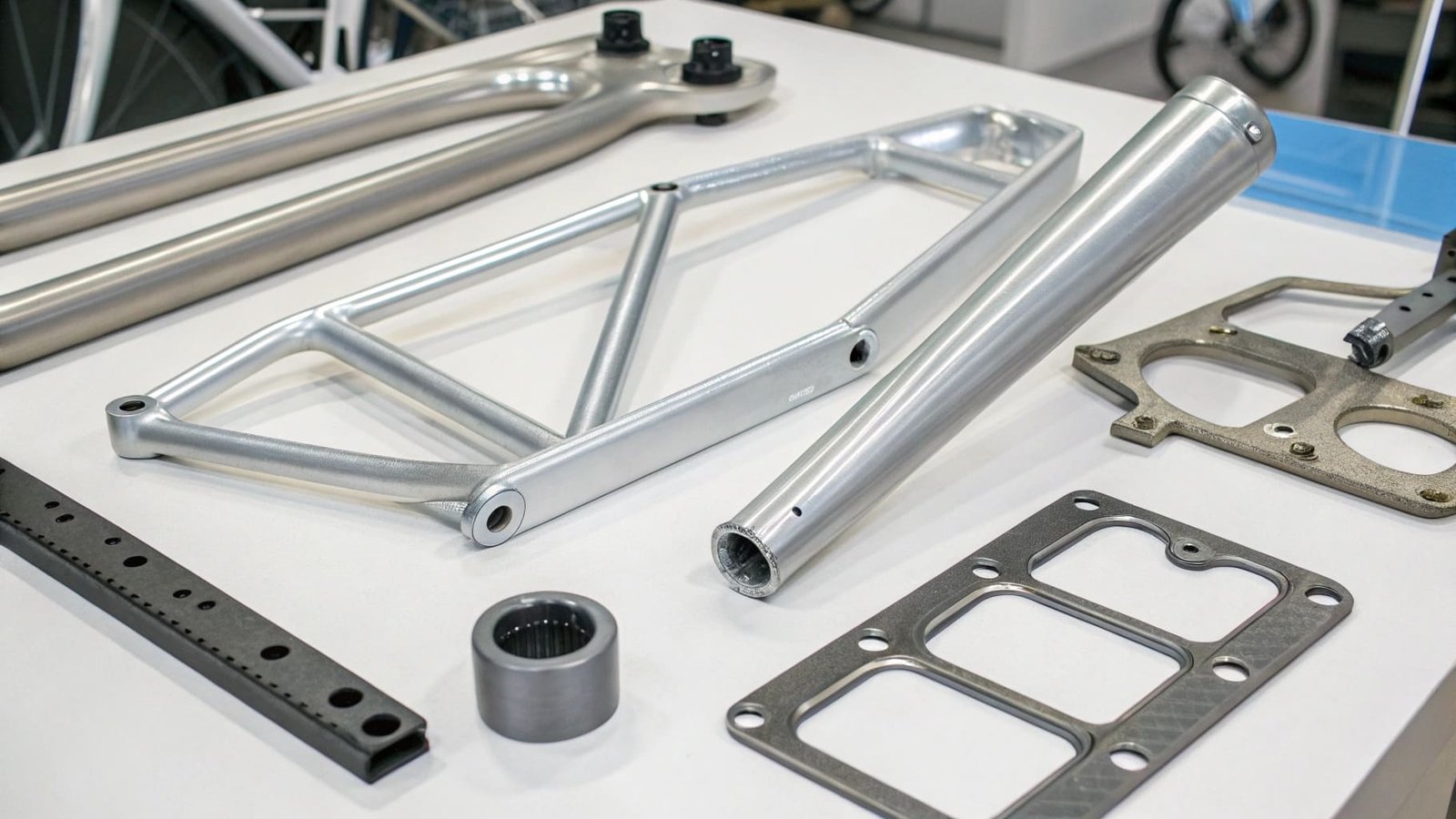
I've seen 6061 tubing used in everything from bicycle frames to aerospace parts. Its versatility in bending is a big reason for this.
Bending 6061 Aluminum Tubing Successfully
To bend 6061 aluminum tubing without failure, understanding its characteristics and proper techniques is crucial.
- Temper Matters Most:
- 6061-O (Annealed): This is the most formable temper. It can be bent to very tight radii without cracking. If you need a very tight bend or complex shape, it's often best to form in the -O temper and then heat-treat to -T6 afterward.
- 6061-T4: This temper (solution heat-treated, naturally aged) is more ductile than -T6. It offers a good balance of strength and formability.
- 6061-T6 (Solution Heat-Treated, Artificially Aged): This is the strongest and most common temper. Its ductility is significantly reduced. Bending 6061-T6 requires careful consideration of bend radius, wall thickness, and tooling. Bending too tightly will cause the outside of the bend to crack or the inside to buckle.
- Bend Radius: For 6061-T6 tubing, the minimum bend radius is typically much larger than the tube's diameter. The thinner the wall, the tighter the bend that can be achieved.
- Tooling: Using proper bending dies (e.g., mandrel benders for tighter radii) is essential to prevent collapse or wrinkling of the tube wall during bending. Mandrels support the inside of the tube, while wiper dies prevent wrinkling.
- Springback: Aluminum, like all metals, exhibits springback. This means it will spring back slightly after bending. This needs to be accounted for by over-bending the material by a calculated amount.
- Heating (for very tight bends in T6): For extremely tight bends in 6061-T6, localized heating (to around 300-400°F or 150-200°C) can temporarily increase ductility, making bending easier. However, this can affect the final mechanical properties and should be done with caution.
| Temper | Relative Bendability | Minimum Bend Radius (approx. based on tube OD) | Common Use Case |
|---|---|---|---|
| 6061-O | Excellent | 1-2x OD (very tight) | Parts formed then heat-treated, complex shapes |
| 6061-T4 | Good | 2-3x OD | Structural applications needing some bending |
| 6061-T6 | Moderate | 3-5x OD (varies with wall thickness) | General structural, frames, where strength is key |
I worked on a project to fabricate custom bicycle frames. We used 6061-T6 tubing2. The designers initially specified some very tight bends. Our shop manager correctly pointed out that these radii were too small for T6. We had two options: form the tubes in -O temper and then heat-treat, or slightly increase the bend radii in the T6. We chose the latter. This saved a process step and still met the structural requirements.
How to Cut Round Aluminum Tubing?
Are you looking for the best way to cut round aluminum tubing cleanly and efficiently? The method you choose depends on the desired finish, precision, and available tools.
You can cut round aluminum tubing using various methods, including a hacksaw, miter saw with a non-ferrous blade, tube cutter, band saw, or even abrasive saws. The best method depends on factors like the tube's wall thickness, the required cut quality, precision, and the volume of cuts. For clean, burr-free cuts, a fine-tooth blade and proper support are essential.
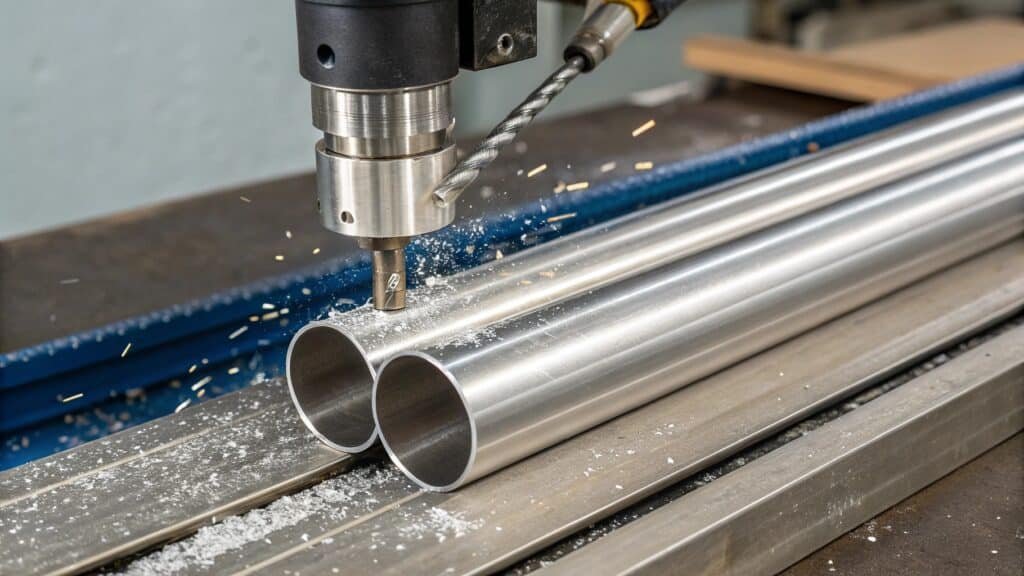
In our facility, we cut aluminum all the time. We use methods that ensure both speed and precision, as clean cuts are important for downstream processes.
Tools and Techniques for Cutting Aluminum Tubing
Choosing the right tool and technique for cutting aluminum tubing makes a big difference in the final product.
- Manual Methods:
- Hacksaw: Good for occasional cuts and thicker walls. Use a fine-tooth blade (18-24 teeth per inch) and apply light, even pressure. Clamp the tube firmly to prevent vibration. This method often leaves burrs.
- Tube Cutter (Pipe Cutter): Best for thin-walled tubing and clean, burr-free cuts. It works by scoring the tube with a small wheel. You tighten it and rotate it around the tube until it cuts through. It leaves a slight internal ridge.
- Power Tools:
- Miter Saw/Chop Saw (with correct blade): Excellent for straight, precise, high-volume cuts. Crucially, use a dedicated non-ferrous metal cutting blade. These blades have carbide tips, specific tooth geometry, and often negative hook angles to prevent the aluminum from grabbing and causing kickback. Always clamp the tubing securely.
- Band Saw: Ideal for cutting larger diameter tubing or making curved cuts. Use a fine-tooth blade specifically for aluminum. Keep the blade clean and lubricated.
- Reciprocating Saw (Sawzall): Can be used for rough cuts, especially in tight spaces. Use a metal-cutting blade with fine teeth. Not recommended for precision or clean finishes.
- Abrasive Cut-off Saw (Angle Grinder with cut-off wheel): While it can cut aluminum, it often creates a lot of heat, burrs, and dust. Not ideal for clean, precise cuts or thin-walled tubing. Use only if other options are not available and safety precautions are followed.
| Cutting Method | Advantages | Disadvantages | Best For |
|---|---|---|---|
| Hacksaw | Low cost, portable | Slow, burrs, less precise | Occasional, manual cuts |
| Tube Cutter | Clean, burr-free, good for thin walls | Only for thinner walls, internal ridge | Plumbing, small projects |
| Miter Saw (non-ferrous blade) | Fast, precise, clean cuts, high volume | Requires dedicated blade, safety gear | Production, precise cuts |
| Band Saw | Versatile, large diameters, curved cuts | Slower than miter saw, more setup | Fabrication shops, larger tubing |
| Reciprocating Saw | Portable, rough cuts | Rough finish, less precise | Demolition, quick rough cuts |
I remember a time when a new technician tried to cut some 6061-T6 tubing with a standard wood-cutting blade on a miter saw. The aluminum grabbed the blade, creating a dangerous kickback and ruining the tube. It was a stark reminder that using the right blade and proper safety protocols is paramount when working with aluminum.
Is Aluminum Stronger Than PVC?
Are you comparing aluminum and PVC for a structural application or where strength is important? It's a valid comparison, but aluminum typically has a clear advantage.
Yes, aluminum is significantly stronger and stiffer than PVC (polyvinyl chloride). Aluminum alloys have much higher tensile strength, yield strength, and modulus of elasticity compared to PVC, meaning aluminum can withstand far greater loads before deforming or breaking. PVC is valued for its flexibility, chemical resistance, and low cost, not its structural strength.
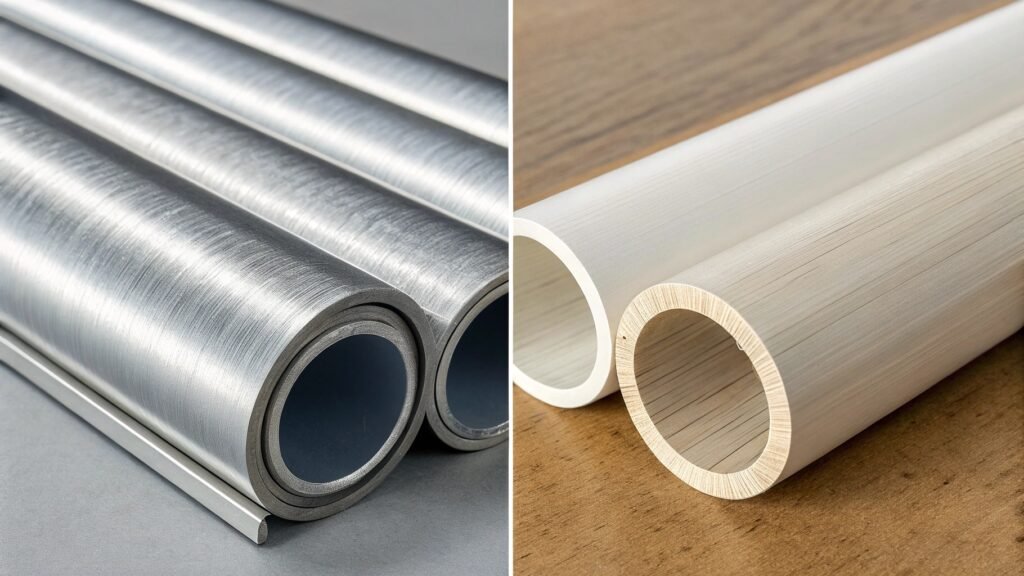
When a client asks for structural integrity, aluminum is usually my first recommendation over PVC.
Why Aluminum Outperforms PVC in Strength
The differences in material properties between aluminum and PVC are fundamental. They lead to vastly different performance characteristics.
- Tensile and Yield Strength: Aluminum alloys boast tensile strengths ranging from 90 MPa (for soft pure aluminum) to over 570 MPa (for high-strength alloys like 7075-T6). PVC's tensile strength is typically in the range of 35-55 MPa. This means aluminum can handle 2 to 16 times more pulling force before breaking, and significantly more before deforming permanently.
- Stiffness (Modulus of Elasticity): Aluminum is much stiffer. Its modulus of elasticity is around 70 GPa. PVC's modulus is typically around 2-4 GPa. This means aluminum is about 17 to 35 times stiffer than PVC. An aluminum component will deflect far less under the same load as a PVC component of the same dimensions.
- Impact Resistance: Aluminum generally has superior impact resistance compared to rigid PVC, which can become brittle, especially at lower temperatures.
- Temperature Performance: Aluminum maintains its strength over a much wider temperature range. PVC's strength and stiffness decrease significantly at higher temperatures and can become brittle at very low temperatures.
- Durability and Longevity: Aluminum is a metal. It is highly durable and maintains its properties over long periods. PVC can degrade from UV exposure over time.
- Weight (Density): While aluminum is much stronger, it is also denser than PVC. Aluminum density is around 2.7 g/cm³, while PVC is around 1.3-1.4 g/cm³. So, if weight is the absolute primary concern and minimal strength is needed, PVC might win on a weight-per-volume basis. However, an aluminum part will be much lighter than a PVC part designed to carry the same load.
| Property | Aluminum (e.g., 6061-T6) | PVC (rigid) | Implications |
|---|---|---|---|
| Tensile Strength (MPa) | 310 | 35-55 | Aluminum is much better for tension loads |
| Yield Strength (MPa) | 275 | Not typically reported for PVC, but very low | Aluminum resists permanent deformation much better |
| Modulus of Elasticity (GPa) | 69 | 2-4 | Aluminum is significantly stiffer |
| Density (g/cm³) | 2.7 | 1.3-1.4 | PVC is lighter by volume, but weaker |
| Temperature Range | Wide, -200°C to 200°C+ | Limited, -10°C to 60°C (approx.) | Aluminum retains strength better at temp extremes |
I once had a client who was using PVC pipes for a lightweight, outdoor structural support system. They frequently broke in windy conditions. We helped them switch to 6063-T6 aluminum tubing. This instantly solved their breakage issues. The aluminum provided the necessary stiffness and strength without adding excessive weight. It was a clear example of choosing the right material for the job.
Conclusion
Aluminum round tubing is versatile, with properties varying by alloy and temper. Pipes are for fluid transport (nominal size), while tubes are for structural applications (exact OD). 6061 tubing is bendable, especially in softer tempers. You can cut it with various tools like tube cutters or miter saws with specific blades. Aluminum is significantly stronger and stiffer than PVC.