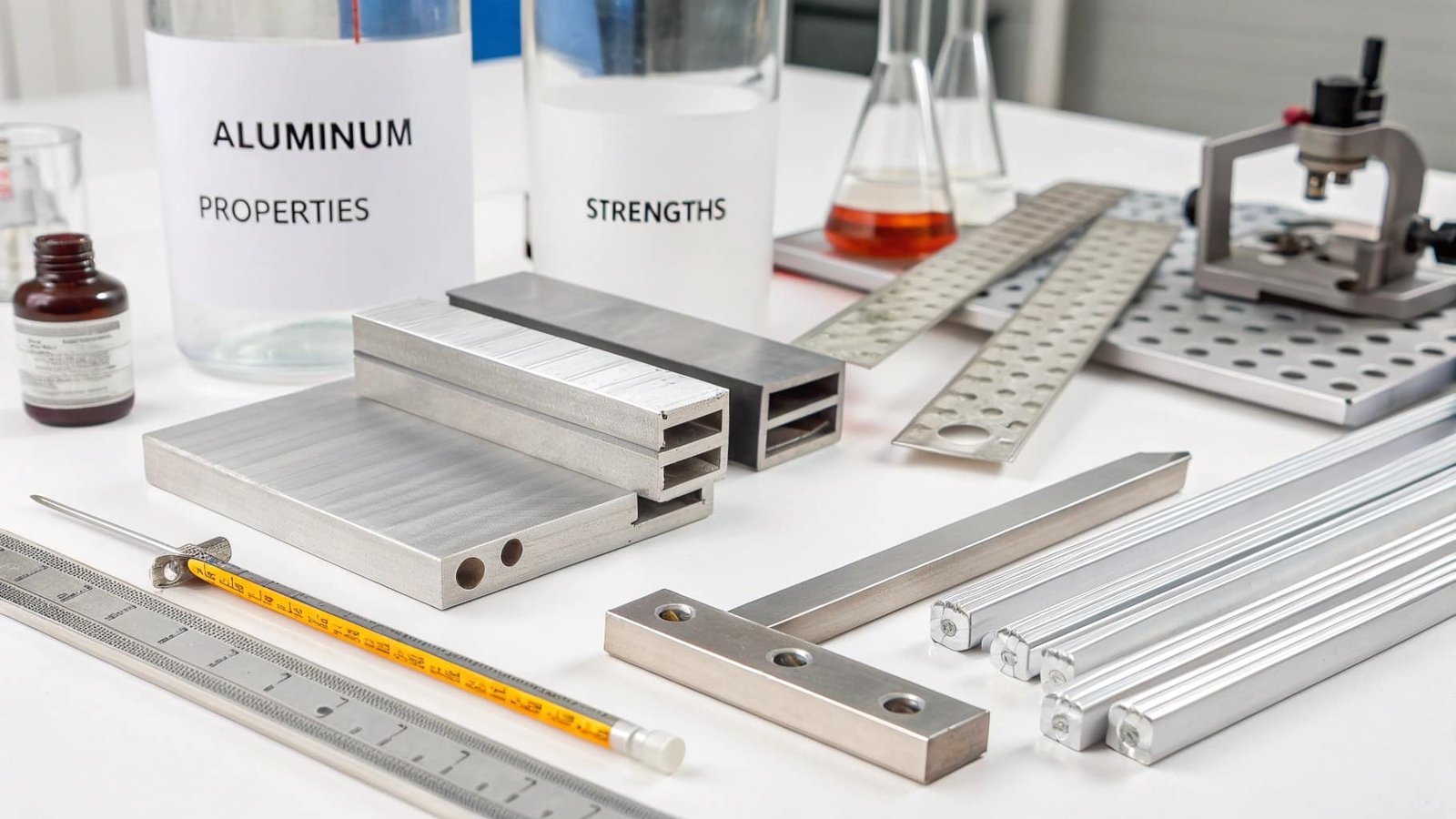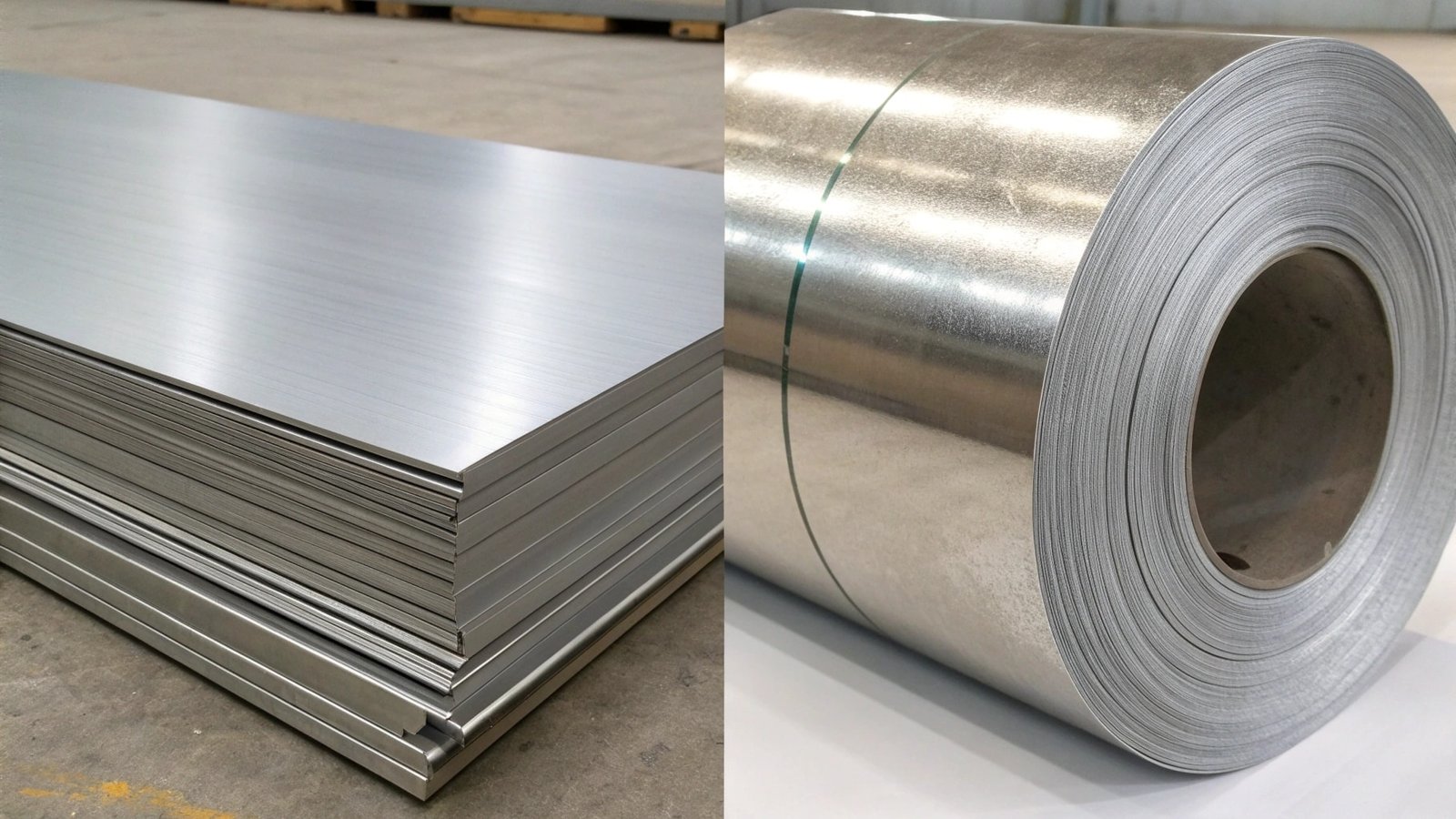
Have you ever wondered why aluminum, a relatively common element, plays such a crucial role in everything from aircraft to beverage cans? The answer lies not just in pure aluminum, but in the incredible versatility and performance of its alloys.
The advantages of aluminum alloys stem from their exceptional combination of properties, including a high strength-to-weight ratio1, excellent corrosion resistance2 (especially when anodized), good thermal and electrical conductivity, ductility, and recyclability. These attributes make them ideal for applications requiring lightweight materials with high structural integrity, such as in aerospace and automotive industries, as well as for products where durability, appearance, and energy efficiency are critical, like in construction, packaging, and electronics. The ability to tailor specific properties through alloying elements makes them highly adaptable for diverse engineering challenges.
At SWA Forging, we specialize in enhancing these advantages through our forging process. We take high-quality aluminum alloys and transform them into large, durable components, maximizing their inherent benefits for our clients' demanding applications.
What are the advantages of milling aluminum?
Are you considering machining aluminum and wondering what benefits milling, specifically, brings to the table? Milling aluminum leverages its inherent machinability to create precise and complex parts efficiently.
The advantages of milling aluminum primarily revolve around its excellent machinability, which allows for high material removal rates, precise dimensional accuracy, and good surface finishes. Aluminum's relatively low hardness compared to steels means it can be cut quickly with less tool wear, leading to shorter cycle times and reduced manufacturing costs. Additionally, its good thermal conductivity helps dissipate heat from the cutting zone, further improving tool life and preventing material distortion. This makes milling aluminum highly efficient for producing complex geometries and tight tolerances required in various industries.
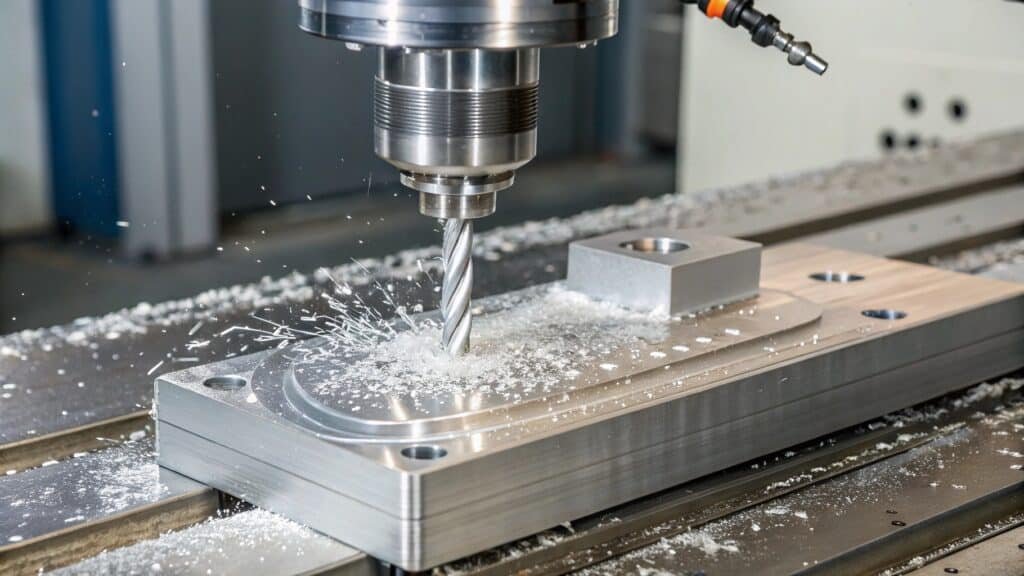
At SWA Forging, while we focus on forging, we understand the importance of subsequent machining. Our forged aluminum components are designed to have optimal internal properties that make them highly receptive to precision milling and other machining operations our clients perform.
Advantages of Milling Aluminum
Milling aluminum is a widely adopted practice due to several key benefits:
-
Excellent Machinability:
- High Material Removal Rates: Aluminum is a relatively soft metal compared to steel or titanium. This allows for higher cutting speeds and feed rates, leading to faster material removal and reduced cycle times. This directly translates to lower production costs per part.
- Low Cutting Forces: The softness also means less force is required to cut the material, which reduces stress on machining tools and machinery, extending their lifespan.
- Good Chip Formation: Aluminum tends to form small, discontinuous chips during milling, which helps in chip evacuation and prevents chip entanglement, reducing the risk of tool breakage and surface scratching.
-
Achieving High Precision and Good Surface Finish:
- Dimensional Stability: Aluminum has a relatively low density, making it less susceptible to gravitational sag during machining of large parts. Its thermal conductivity helps in dissipating heat from the cutting zone, which minimizes thermal expansion and contraction, contributing to higher dimensional accuracy.
- Smooth Surfaces: With proper tool selection, cutting parameters, and cooling, aluminum can achieve very smooth surface finishes, often reducing or eliminating the need for secondary finishing operations like grinding or polishing.
-
Extended Tool Life:
- Due to the lower cutting forces and good chip evacuation, cutting tools experience less wear when milling aluminum compared to harder materials. This leads to longer tool life and less frequent tool changes, further contributing to cost savings and increased productivity.
-
Versatility in Tooling:
- A wide range of cutting tools (end mills, face mills, drills, taps) are available and effective for aluminum, often made from high-speed steel (HSS) or carbide. Specialized coatings can further enhance performance.
-
Corrosion Resistance of Machined Parts:
- Machined aluminum parts retain the inherent corrosion resistance of the aluminum alloy, which can be further enhanced by post-machining surface treatments like anodizing.
| Advantage | Explanation | Benefit in Manufacturing |
|---|---|---|
| High Material Removal | Softness allows fast cutting speeds and feeds | Faster production, lower cost per part |
| Precision | Good thermal conductivity, stable behavior during cutting | Tight tolerances, accurate dimensions |
| Surface Finish | Ability to achieve smooth finishes with proper tools | Reduced need for secondary finishing, better aesthetics |
| Extended Tool Life | Lower cutting forces, less tool wear | Lower tooling costs, less downtime for tool changes |
| Good Chip Control | Tendency to form small, manageable chips | Easier chip evacuation, reduced risk of damage to part/tool |
These advantages make milling aluminum a cost-effective and efficient process for manufacturing a wide variety of components.
Does aluminium have good machinability?
Have you ever wondered why machinists often find aluminum a pleasure to work with, especially compared to some other metals? It boils down to a key property: machinability.
Yes, aluminum generally has very good machinability, particularly compared to materials like steel or titanium. This is attributed to its low density, relatively low hardness (especially for non-heat-treated or softer alloys), good thermal conductivity, and predictable chip formation. These properties allow for higher cutting speeds and feed rates, lower cutting forces, excellent surface finishes, and extended tool life, making aluminum efficient and cost-effective to machine for a wide range of applications. However, specific machinability can vary significantly depending on the aluminum alloy and its temper.
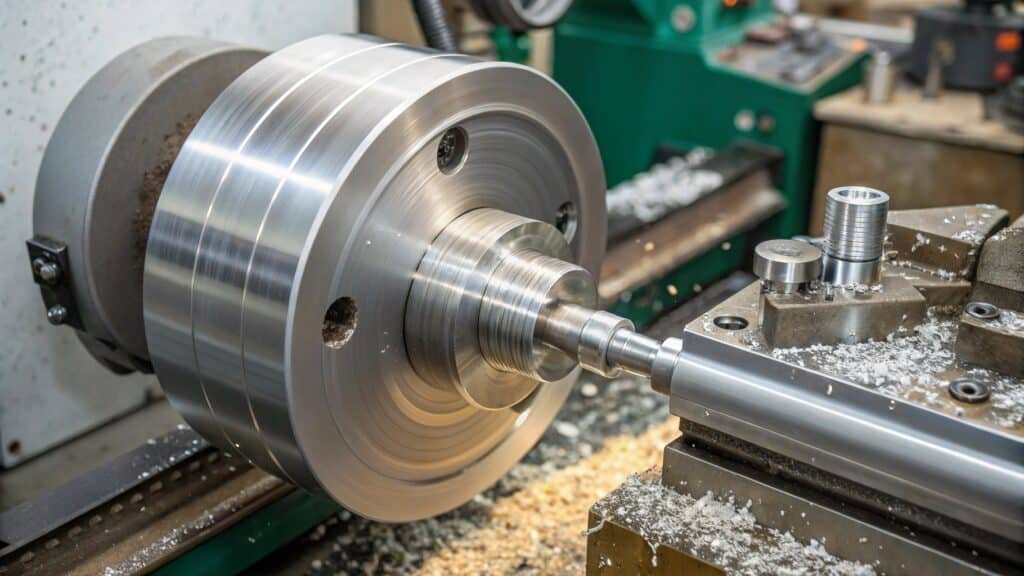
At SWA Forging, we produce large aluminum forgings, and their subsequent machinability is a crucial factor for our clients. We ensure our forged components have the optimal internal structure to allow for efficient and precise machining, enabling them to be further processed into high-precision parts.
Factors Contributing to Aluminum's Good Machinability
Let's break down the characteristics that make aluminum a machinist's friend:
-
Low Hardness:
- Pure aluminum is very soft. While alloying increases hardness, many common aluminum alloys (especially in annealed or solution-treated tempers) are still considerably softer than steels. This translates to lower cutting forces, less power consumption, and easier chip formation.
-
Good Thermal Conductivity:
- Aluminum dissipates heat very effectively. During machining, much of the heat generated by friction and deformation is carried away by the chips and the workpiece itself. This prevents excessive heat buildup at the cutting edge, which prolongs tool life and minimizes thermal distortion of the part, leading to better dimensional accuracy.
-
Predictable Chip Formation:
- Aluminum generally produces continuous or segmented chips that break easily, depending on the alloy and cutting conditions. This helps in efficient chip evacuation from the cutting zone, preventing chip entanglement around the tool or workpiece, which can otherwise lead to poor surface finish, tool breakage, or jamming.
-
Low Density:
- Being lightweight, aluminum is easier to handle, fixture, and machine, especially for larger components. The lower inertia of aluminum workpieces also allows for faster acceleration and deceleration of machining axes, contributing to faster cycle times.
-
Absence of Built-Up Edge (BUE) Tendency (with proper lubrication):
- While some softer, gummy aluminum alloys can have a tendency to form a built-up edge on the tool (which degrades surface finish and tool life), proper cutting fluids and sharp, polished cutting tools with sufficient rake angles effectively minimize this issue.
-
Good Surface Finish Potential:
- With sharp tools, high spindle speeds, and appropriate feeds, aluminum can achieve very smooth, often mirror-like, surface finishes directly from the machine, reducing or eliminating the need for secondary finishing operations.
Caveats: While generally good, machinability can vary:
- Alloy Composition: Alloys containing silicon (like 3xx.x series casting alloys) can be abrasive due to hard silicon particles, leading to increased tool wear. Alloys like 2011, 2017, and 6061 are known for excellent machinability.
- Temper: Heat-treated (T-temper) alloys are harder and thus slightly more difficult to machine than their annealed (O-temper) counterparts, but they still machine well.
- Tooling: Use of sharp, high-positive rake angle tools, polished flutes, and effective lubrication is critical for optimal results, especially with softer or "gummy" alloys.
| Property | Impact on Machinability |
|---|---|
| Low Hardness | Easy chip formation, low cutting forces, high speeds/feeds |
| Good Thermal Conductivity | Prevents heat buildup, prolongs tool life, dimensional stability |
| Predictable Chip Formation | Efficient chip evacuation, less tool/part damage |
| Low Density | Easier handling/fixturing, faster machine movements |
| Good Surface Finish Potential | Reduces need for secondary finishing |
Overall, aluminum's combination of mechanical properties makes it one of the easiest and most cost-effective materials to machine, a significant advantage in manufacturing.
What is the best aluminum alloy for machining?
Are you looking to machine aluminum and want to choose the alloy that offers the smoothest, most efficient process? While many aluminum alloys machine well, some stand out as top performers specifically for machinability.
The best aluminum alloy for machining is generally considered to be 2011 due to its exceptional free-machining characteristics. It contains lead and bismuth, which act as chip breakers and internal lubricants, allowing for very high cutting speeds, excellent chip control, and superior surface finishes without excessive tool wear. Other highly machinable alloys include 6061 (especially in T6 temper for general purpose machining with good strength), and 7075 (for higher strength applications where machinability is still critical). The choice depends on the balance between machinability requirements and the desired mechanical properties for the final application.
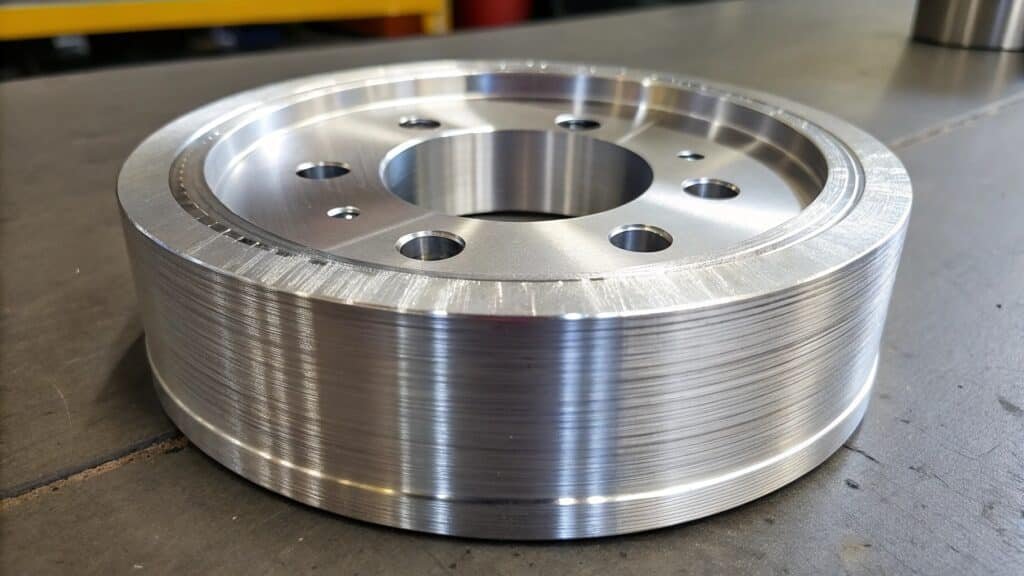
At SWA Forging, while we select alloys based on the high-strength and durability needs of our forged products, we always consider their subsequent machinability, as our clients rely on being able to precisely machine our forged rings and discs into final components.
Top Aluminum Alloys for Machining
Let's explore the leading contenders for machinability and their specific characteristics:
-
Aluminum Alloy 2011:
- Known as: The "free-machining alloy."
- Composition: Contains lead (Pb) and bismuth (Bi). These elements are insoluble in aluminum and form fine dispersions that act as chip breakers, creating small, brittle chips. They also provide some internal lubrication.
- Machinability: Exceptional. Allows for very high cutting speeds, excellent chip control, and superior surface finishes. Tool wear is minimal.
- Properties: Good strength but relatively poor corrosion resistance and weldability compared to other alloys. Not typically heat treatable for further strength.
- Typical Uses: Screw machine products, fasteners, fittings, parts requiring high production rates where material removal is significant.
-
Aluminum Alloy 6061 (especially T6 temper):
- Known as: The "general-purpose alloy."
- Composition: Contains magnesium (Mg) and silicon (Si).
- Machinability: Very good. While not as free-machining as 2011, it offers a great balance of machinability, strength, and corrosion resistance. It produces good chips, especially in the T6 temper.
- Properties: Good strength, excellent corrosion resistance, good weldability, and readily heat treatable.
- Typical Uses: Structural components, frames, fixtures, automotive parts, marine applications. This is one of the most widely used aluminum alloys globally, including for many forged parts.
-
Aluminum Alloy 7075 (especially T6 or T73 temper):
- Known as: The "high-strength alloy."
- Composition: Primarily contains zinc (Zn), with magnesium (Mg) and copper (Cu).
- Machinability: Good. Given its very high strength, its machinability is surprisingly good. It tends to produce fine, brittle chips.
- Properties: One of the strongest aluminum alloys available, with excellent strength-to-weight ratio. Good fatigue resistance. Less corrosion resistant than 6061, but T73 temper improves stress-corrosion cracking resistance.
- Typical Uses: Aerospace structures, high-stress components, military equipment, molds, and tooling.
Factors to Consider When Choosing:
- Desired Mechanical Properties: Does the part need high strength, corrosion resistance, or weldability?
- Production Volume: For very high volumes where machining time is critical, 2011 might be the best.
- Cost: The cost of the raw material and tooling can vary.
- Surface Finish Requirements: How smooth does the final surface need to be directly off the machine?
- Post-Machining Treatments: Will the part be anodized, welded, or heat treated?
| Alloy | Machinability Rating | Key Characteristics | Typical Applications |
|---|---|---|---|
| 2011 | Excellent | "Free-machining," contains Pb/Bi, high speeds/finishes | Screw machine products, fasteners, fittings |
| 6061 (T6) | Very Good | Good balance of strength, corrosion resistance, weldability | General-purpose, structural, automotive, marine |
| 7075 (T6) | Good | Very high strength, excellent for critical applications | Aerospace, high-stress components, military, molds |
Ultimately, the "best" alloy depends on balancing the specific machining requirements with the functional needs of the final component.
What is the purpose of aluminum alloy?
Have you ever considered why we bother creating aluminum alloys3 instead of just using pure aluminum? The answer lies in transforming a versatile but relatively soft metal into a powerhouse of engineering materials.
The primary purpose of aluminum alloys is to enhance and tailor the mechanical, physical, and chemical properties of pure aluminum to meet diverse engineering and industrial requirements that pure aluminum alone cannot fulfill. By strategically adding various alloying elements (such as copper, magnesium, zinc, silicon, and manganese), aluminum alloys achieve significantly higher strength, improved hardness, better machinability, enhanced corrosion resistance4 for specific environments, superior weldability, and tailored thermal or electrical characteristics. This allows for the creation of lightweight, durable, and high-performance components critical to aerospace, automotive, construction, and electronics industries.
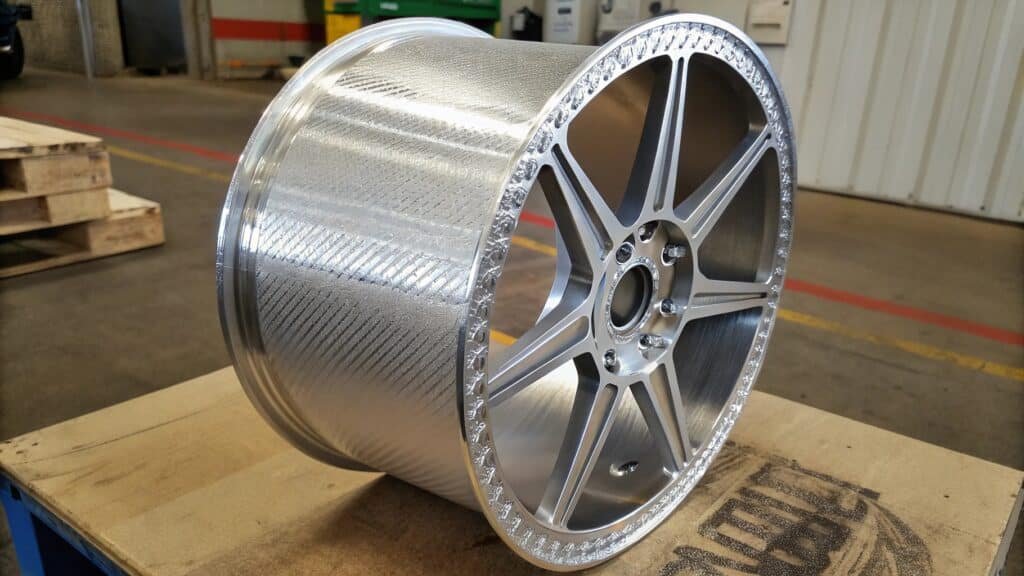
At SWA Forging, our entire business revolves around the purpose of aluminum alloys. We select specific high-performance alloys and use our forging expertise to unlock their full potential, delivering custom, high-strength large-diameter rings and discs that are essential for our clients' demanding applications.
The Strategic Purpose of Aluminum Alloys
Pure aluminum is lightweight, corrosion-resistant, and an excellent conductor. However, its low strength and softness limit its use in structural applications. Alloying changes this fundamentally:
-
Increase Strength and Hardness:
- Mechanism: This is the most crucial purpose. Alloying elements (like copper, magnesium, zinc) can form solid solutions or intermetallic compounds within the aluminum matrix. These disrupt the regular crystal lattice, hindering the movement of dislocations, which are defects that allow metals to deform. This phenomenon, often combined with heat treatment (precipitation hardening), dramatically increases tensile strength, yield strength, and hardness.
- Example: 7075 alloy (with zinc, magnesium, copper) achieves strengths comparable to some steels, enabling its use in aircraft structures.
-
Improve Machinability:
- Mechanism: Elements like lead and bismuth (in 2xxx series alloys like 2011) or silicon and magnesium (in 6xxx series) are added to promote better chip formation and reduce tool wear during machining.
- Example: 2011 alloy is specifically designed for high-speed machining, creating small, brittle chips for efficient material removal.
-
Enhance Corrosion Resistance:
- Mechanism: While aluminum naturally forms a protective oxide layer, some alloying elements (e.g., magnesium, silicon, chromium) can improve this layer's stability or create more favorable microstructures for specific corrosive environments. Others (like copper in 2xxx series) can reduce corrosion resistance but are used for strength.
- Example: 6061 alloy offers excellent general corrosion resistance, suitable for marine and architectural applications.
-
Optimize Weldability:
- Mechanism: Certain alloying elements and compositions are chosen to minimize hot cracking during welding, reduce porosity, and ensure that the welded joint retains sufficient strength and ductility.
- Example: 6xxx series alloys (e.g., 6061) are generally considered highly weldable.
-
Tailor Thermal and Electrical Properties:
- Mechanism: While alloying generally reduces electrical conductivity compared to pure aluminum, specific alloys might balance conductivity with other desired properties like strength for electrical applications (e.g., electrical conductors where strength is also needed).
- Example: Some 1xxx series alloys (high purity) are used for electrical conductors, while alloys like 6063 are used for heat sinks due to good thermal conductivity combined with formability.
-
Improve Formability (Ductility/Malleability):
- Mechanism: Some alloys (often those with lower strength or specific temper treatments) are designed to be highly formable for processes like deep drawing, bending, or extrusion.
- Example: 3003 alloy is highly formable and commonly used for cookware and heat exchangers.
| Purpose of Alloying | Alloying Elements (Examples) | Impact on Properties | Resulting Applications |
|---|---|---|---|
| Increase Strength/Hardness | Cu, Mg, Zn | Higher tensile, yield strength; increased hardness | Aerospace, automotive, structural components |
| Improve Machinability | Pb, Bi (2011); Si, Mg (6xxx series) | Better chip control, faster cutting, longer tool life | Screw machine products, complex machined parts |
| Enhance Corrosion Resistance | Mg, Si, Cr | Better resistance to specific environments | Marine, architectural, general outdoor applications |
| Optimize Weldability | Mg, Si | Reduced cracking, better joint integrity | Welded structures, frames |
| Tailor Thermal/Electrical | (Controlled purity) | Balance of conductivity and other needs | Electrical conductors, heat sinks |
| Improve Formability | Mn, Mg (lower content) | Easier to shape, bend, deep draw | Cookware, architectural extrusions |
The strategic use of aluminum alloys allows engineers to select precisely the right material for a given application, balancing performance, manufacturing feasibility, and cost.
Conclusion
Aluminum alloys offer exceptional advantages, including a high strength-to-weight ratio, excellent corrosion resistance, and good conductivity. Milling aluminum is highly advantageous due to its excellent machinability, allowing for precision and efficiency. Aluminum generally possesses good machinability, with alloys like 2011, 6061, and 7075 being top choices. The core purpose of aluminum alloys is to tailor and enhance pure aluminum's properties for diverse industrial applications, ensuring optimal performance and cost-effectiveness.
-
Understanding this ratio is crucial for industries prioritizing lightweight yet strong materials, enhancing design and performance. ↩
-
Explore how corrosion resistance extends the lifespan of products, making them ideal for various applications. ↩
-
Explore the advantages of aluminum alloys in various industries and how they outperform pure aluminum. ↩
-
Learn about the elements that enhance corrosion resistance and their importance in specific applications. ↩