Skip to content
Have you ever encountered the terms "aluminum sheet1" and "aluminum plate" and wondered if they're interchangeable or if there's a specific distinction? While both are flat forms of aluminum, their difference lies primarily in their thickness, which then impacts their applications and manufacturing processes.
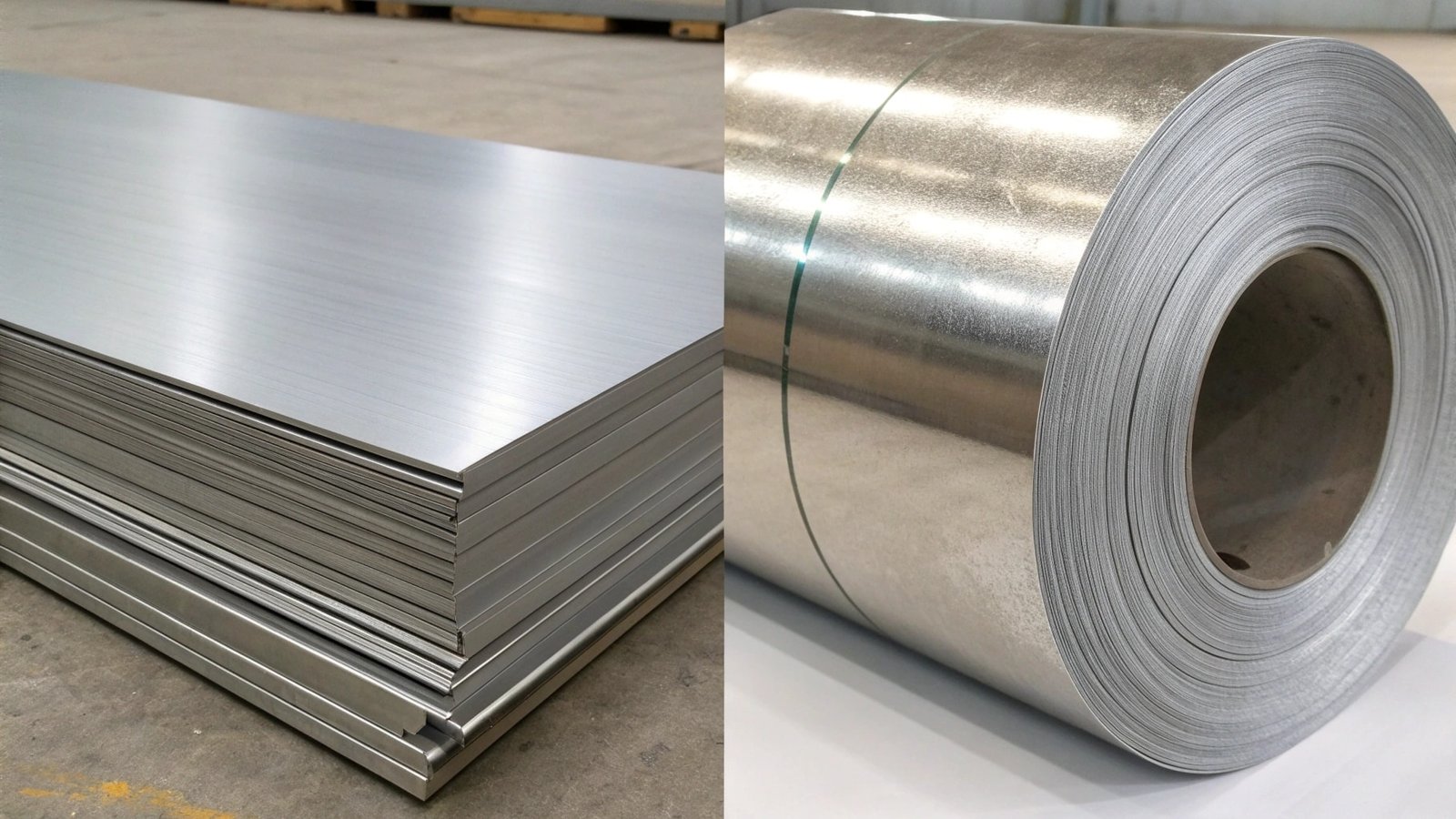
The primary difference between an aluminum sheet and an aluminum plate is thickness. Aluminum sheets are generally defined as flat rolled products less than 0.25 inches (6.35 mm) thick, while aluminum plates are 0.25 inches (6.35 mm) thick or greater. This seemingly small distinction in thickness leads to significant differences in their mechanical properties, applications (sheets for lighter-duty, formable parts; plates for heavy-duty, structural components), and the manufacturing processes used to produce and work with them. For example, aluminum sheets are often used for paneling and light fabrication, whereas aluminum plates are employed in heavy machinery, aerospace structures, and marine applications requiring high strength and rigidity.
At SWA Forging, while we produce massive forged rings and discs, we understand the distinction between sheet and plate is crucial for our clients. Our forged products often serve as foundational material for components that might otherwise be machined from very thick plates, offering superior internal integrity.
Is aluminum alloy expensive?
Have you ever considered using aluminum alloy for a project, only to be surprised by its cost? It's true that aluminum alloys aren't always cheap, but "expensive" is a relative term that depends on what you're comparing it to and what properties you need.
Aluminum alloy can be considered expensive, especially when compared to common materials like steel, on a per-pound basis due to the energy-intensive process of extracting and refining primary aluminum from ore. However, its cost-effectiveness often becomes apparent when considering its unique properties, such as its high strength-to-weight ratio, excellent corrosion resistance2, and recyclability. For applications where weight reduction is critical (like aerospace or automotive), the higher initial material cost is often offset by long-term operational savings. The specific alloy, its form (e.g., sheet, plate, forging), and market conditions also significantly influence its price.

At SWA Forging, we deal with high-performance aluminum alloys, and yes, our products can have a higher upfront cost. But we firmly believe that for our clients who need superior strength, durability, and reliability in large-diameter components, the long-term value, performance, and reduced maintenance costs of our forged aluminum alloy products justify the investment.
Factors Influencing the "Expense" of Aluminum Alloy
Let's break down why aluminum alloy can appear expensive and where its true value lies:
-
Energy-Intensive Primary Production:
- Explanation: The process of converting bauxite ore into primary aluminum is highly energy-intensive, primarily due to the vast amounts of electricity required for the electrolytic smelting process. This energy cost is a significant component of aluminum's price.
- Impact: This high energy input translates to a higher base price for virgin aluminum compared to materials like steel, which is produced with different, often less energy-intensive, methods.
-
Alloying Elements:
- Explanation: To create an aluminum alloy, other metals like copper, magnesium, zinc, silicon, and manganese are added. The cost of these specific alloying elements varies, and some can be quite expensive (e.g., higher purity zinc or specialty metals).
- Impact: The specific composition of the alloy directly influences its price. High-performance alloys with expensive additives will naturally cost more.
-
Manufacturing Processes and Form:
- Explanation: The cost also depends heavily on the form of the aluminum alloy3 product (e.g., sheet, plate, extrusion, casting, forging). Each manufacturing process has its own machinery, labor, and energy costs.
- Impact: Rolled products (sheet, plate) have costs associated with large mills. Forgings, like those produced by SWA, involve significant tooling and high-pressure forming, adding to the cost but also delivering superior mechanical properties. Precision machining adds further value and cost.
-
Properties and Performance Justification:
- Explanation: While the per-pound cost might be higher, aluminum alloys often offer superior performance characteristics like high strength-to-weight ratio, excellent corrosion resistance, good thermal/electrical conductivity, and recyclability.
- Impact: In applications where these properties are critical (e.g., aerospace, high-speed rail, premium automotive, marine), the long-term savings (fuel efficiency, reduced maintenance, extended lifespan) often outweigh the higher initial material cost.
-
Market Dynamics:
- Explanation: Like any commodity, the price of aluminum is influenced by global supply and demand, geopolitical events, and commodity market speculation (e.g., London Metal Exchange prices).
- Impact: These factors can cause significant fluctuations in aluminum prices, sometimes making it more or less "expensive" relative to other materials.
| Factor | Contribution to "Expense" | Value Proposition |
|---|---|---|
| Primary Production Cost | High energy consumption for smelting | Foundation for lightweight, high-performance material |
| Alloying Elements | Cost of added metals for specific properties | Tailored strength, corrosion resistance, machinability |
| Manufacturing Process | Cost of rolling, casting, forging, machining operations | Specific forms (sheet, plate, forged) for diverse applications |
| Performance Value | Higher initial material cost | Long-term savings (fuel, maintenance), enhanced product performance |
| Market Fluctuations | Volatility due to supply/demand and global economics | Affects short-term purchasing decisions |
In essence, aluminum alloy can be expensive in terms of raw material cost, but it often provides a superior return on investment when considering the total cost of ownership and the performance benefits it brings to demanding applications.
Why is an aluminum plate so expensive?
Have you ever sourced aluminum plate for a project and found its cost surprisingly high, perhaps even more so than aluminum sheet of the same alloy? The expense of aluminum plate goes beyond just the material itself, encompassing specialized production and handling.
Aluminum plate is expensive primarily due to the increased material volume compared to thinner forms, combined with the specialized, energy-intensive processes required for its production. Manufacturing thick plates demands larger, more powerful rolling mills and often involves extensive hot rolling followed by precise cold working and heat treatment to achieve desired mechanical properties and dimensional accuracy. The longer processing times, higher energy consumption, and stringent quality control for thicker materials all contribute to increased production costs. Additionally, thicker materials are often specified for critical, high-strength structural applications, leading to demand for higher-performance alloys which are inherently more costly.

At SWA Forging, we produce custom, large-diameter forged rings and discs that often achieve or exceed the properties of thick aluminum plates, but with superior internal grain structure. We understand the cost drivers of thick material, and our forging process, while specialized, offers a compelling value proposition by delivering enhanced performance for critical applications.
Factors Contributing to Aluminum Plate Expense
Let's dissect the reasons behind the higher cost of aluminum plate compared to thinner forms:
-
Material Volume:
- Explanation: Simply put, a thicker plate contains more aluminum material per square foot or meter than a thinner sheet.
- Impact: This directly translates to a higher raw material cost.
-
Increased Energy and Processing Time in Rolling:
- Explanation: Producing thick plate requires massive, powerful rolling mills. The material needs more passes through these mills, often involving repeated heating (hot rolling) and re-rolling, to reduce its thickness and refine its grain structure.
- Impact: More rolling passes, higher forces, and more energy consumption mean longer production cycles and higher energy bills, all of which add to the cost.
-
Stringent Quality Control and Flatness Requirements:
- Explanation: Thick plates, especially those destined for critical structural applications (e.g., aerospace, heavy machinery), have very tight flatness, dimensional tolerance, and internal integrity requirements.
- Impact: Achieving and maintaining these precise specifications requires more sophisticated rolling control, advanced measurement techniques, and extensive non-destructive testing (e.g., ultrasonic inspection), all adding to the manufacturing overhead.
-
Heat Treatment Complexity:
- Explanation: Many aluminum plates, particularly those used for high-strength applications, undergo complex solution heat treatments and artificial aging (T-tempers). Heating and cooling large, thick sections uniformly can be challenging and time-consuming, requiring large furnaces and quenching tanks.
- Impact: These specialized thermal processes add significant cost due to energy consumption, equipment, and extended processing times.
-
Higher Demands for Mechanical Properties:
- Explanation: Plates are often chosen for applications requiring superior strength, toughness, and fatigue resistance. This typically means using high-performance alloys (like 7075 or specific 2xxx series) which are inherently more expensive due to their alloying elements.
- Impact: The demand for peak performance translates to the use of more expensive materials and more controlled, often slower, manufacturing processes.
-
Handling and Transportation:
- Explanation: Thick plates are heavy and difficult to handle. They require specialized lifting equipment, robust packaging, and often incur higher freight costs due to their weight.
- Impact: These logistical challenges add to the overall cost from the mill to the customer.
| Cost Driver | Explanation |
|---|---|
| Material Volume | More aluminum per unit area |
| Increased Rolling Effort | More passes, higher energy, longer processing time |
| Quality/Flatness Control | Sophisticated monitoring, extensive testing |
| Complex Heat Treatment | Energy-intensive, time-consuming thermal processing |
| High-Performance Alloys | Use of inherently more expensive material compositions |
| Handling & Transportation | Heavier, requires specialized logistics |
When you consider the robust properties, demanding production processes, and critical applications for which aluminum plate is used, its higher price becomes understandable.
What is the strongest aluminum plate?
Are you searching for the absolute strongest aluminum plate available, perhaps for a highly critical structural application? While "strongest" can refer to different properties (tensile strength, yield strength, fatigue strength), there's a clear leader for general-purpose high strength.
The strongest aluminum plate, in terms of ultimate tensile strength and yield strength, is generally considered to be 7075 aluminum alloy in the T6 or T7 temper. This alloy is a member of the 7xxx series, primarily alloyed with zinc, and is known for its exceptional strength-to-weight ratio, comparable to some steels. It's extensively used in aerospace applications, high-stress components, and military equipment where maximum strength is critical. While 7075-T6 offers peak strength, 7075-T73 (a different temper) provides slightly lower strength but significantly improved resistance to stress-corrosion cracking.

At SWA Forging, our expertise lies in taking these high-strength alloys, like 7075, and through our controlled forging process, we enhance their internal grain structure and mechanical properties, making them even more reliable and robust for the most demanding applications compared to plate.
Top Contenders for Strongest Aluminum Plate
Let's delve into the strongest aluminum plate alloys and their specific characteristics:
-
Aluminum Alloy 7075 (T6 or T7 Tempers):
- Primary Alloying Element: Zinc (Zn), with magnesium (Mg) and copper (Cu).
- Strength Profile: Exhibits very high ultimate tensile strength (UTS) and yield strength (YS). 7075-T6 is the most common high-strength temper, offering peak strength. 7075-T73 offers slightly lower strength but superior resistance to stress-corrosion cracking (SCC), which is critical in certain environments.
- Typical Applications: Aerospace structures (wing spars, fuselage frames), high-performance automotive parts, military equipment, mold tooling, rock climbing equipment.
- Considerations: Lower corrosion resistance than 6xxx series alloys, and weldability is poor (usually joined by mechanical fasteners).
-
Aluminum Alloy 2024 (T3 or T4 Tempers):
- Primary Alloying Element: Copper (Cu).
- Strength Profile: Very high strength, particularly in fatigue. Known for its good fatigue resistance, making it suitable for cyclic loading applications.
- Typical Applications: Aircraft fuselage, wing structure, truck and bus body structures, screw machine products.
- Considerations: Susceptible to intergranular corrosion, often clad (Alclad) with a layer of pure aluminum for corrosion protection. Weldability is generally poor.
-
Aluminum Alloy 7050 (T7451 or T7651 Tempers):
- Primary Alloying Element: Zinc (Zn), with copper (Cu) and magnesium (Mg).
- Strength Profile: Developed to offer a superior combination of high strength, fracture toughness, and resistance to stress-corrosion cracking (SCC) compared to 7075.
- Typical Applications: Thick plate applications in aerospace (fuselage frames, wing skins, bulkheads) where both high strength and excellent toughness are required.
- Considerations: Higher cost than 7075 due to more complex metallurgy and processing.
Understanding "Strongest":
- Ultimate Tensile Strength (UTS): The maximum stress a material can withstand before breaking.
- Yield Strength (YS): The stress at which a material begins to permanently deform.
- Fatigue Strength: Resistance to repeated cycles of stress below the yield strength.
- Fracture Toughness: Ability of a material to resist crack propagation.
For most general high-strength applications where material property is the primary driver for selection, 7075-T6 will be the go-to strongest aluminum plate. However, for highly critical applications (especially in aerospace), engineers might opt for 7075-T73 or 7050-T7451 to balance strength with improved toughness and stress-corrosion cracking resistance.
| Alloy | Primary Alloying Element(s) | Key Strength Characteristic(s) | Typical Applications |
|---|---|---|---|
| 7075 (T6/T7) | Zn, Mg, Cu | Very high UTS and YS | Aerospace, high-stress components, military |
| 2024 (T3/T4) | Cu | High strength, excellent fatigue resistance | Aircraft fuselage/wing, truck/bus structures |
| 7050 (T7451/T7651) | Zn, Cu, Mg | High strength, superior fracture toughness & SCC resistance | Thick aerospace plate (fuselage, wing skins) |
The choice of the "strongest" aluminum plate ultimately depends on the specific performance requirements and environmental conditions of the application.
Is the price of aluminum up or down right now?
Have you been tracking the price of aluminum, perhaps for an upcoming project or just out of general interest, and wondered if it's trending up or down? The market for aluminum is dynamic, influenced by a multitude of global factors.
The price of aluminum, traded as a commodity on exchanges like the London Metal Exchange (LME), constantly fluctuates. To determine if the price is "up" or "down" right now, one needs to check the most recent LME aluminum spot price or futures contracts. General trends are influenced by global supply and demand (e.g., industrial production, construction activity, automotive sales), energy costs (as smelting is highly energy-intensive), geopolitical events, and the strength of the U.S. dollar. Without real-time data, it is impossible to state definitively if the price is currently up or down, as it can change daily or even hourly.

At SWA Forging, we closely monitor global aluminum market trends. While the LME price influences our raw material costs, our focus remains on providing stable, competitive pricing for our custom forged components, ensuring our clients receive consistent value regardless of short-term market volatility.
How to Check and Understand Aluminum Price Trends
To get the most accurate and current information on aluminum prices, I would recommend the following:
-
Check Real-Time Commodity Exchanges:
- The London Metal Exchange (LME) is the world's primary market for industrial metals, including aluminum. You can find real-time (or slightly delayed) spot prices and futures contract prices on their official website or through financial news outlets that provide commodity data (e.g., Bloomberg, Reuters, Wall Street Journal).
- Other relevant exchanges might include the Shanghai Futures Exchange (SHFE) for regional trends in Asia.
-
Understand Key Price Influencers:
- Global Demand: Strong industrial activity (manufacturing, construction, automotive, aerospace) typically drives prices up. A slowdown in these sectors can lead to price drops.
- Supply: New smelter capacity coming online or production cuts due to high energy costs, environmental regulations, or geopolitical conflicts can significantly impact supply and thus price.
- Energy Prices: As mentioned, smelting aluminum requires vast amounts of electricity. Rising energy prices (natural gas, coal, electricity) directly increase production costs and put upward pressure on aluminum prices.
- U.S. Dollar Strength: Since commodities are often priced in U.S. dollars, a stronger dollar generally makes aluminum more expensive for buyers using other currencies, which can sometimes dampen demand and put downward pressure on prices, and vice versa.
- Recycling Rates: Higher recycling rates can reduce demand for primary aluminum, potentially influencing prices.
- Geopolitical Events: Conflicts, trade disputes, or sanctions in major aluminum-producing or consuming regions can cause significant price volatility.
-
Look at Historical Trends:
- Reviewing charts of aluminum prices over weeks, months, or years can give a better sense of the overall trend (bullish or bearish) rather than just a single day's movement. This helps to identify cycles and patterns.
Note: As an AI, I do not have real-time access to constantly fluctuating market data. Therefore, I cannot tell you definitively if the price is "up" or "down" right now. You would need to consult a live financial data source.
| Price Factor | Impact on Aluminum Price |
|---|---|
| Global Demand | High demand = Upward pressure; Low demand = Downward pressure |
| Supply | Production cuts/smelter closures = Upward; New capacity = Downward |
| Energy Costs | Rising energy costs = Upward pressure |
| U.S. Dollar Value | Stronger USD = Downward pressure (for non-USD buyers); Weaker USD = Upward pressure |
| Recycling Rates | Higher recycling = Reduced primary demand = Downward pressure |
| Geopolitical Events | Can cause significant short-term volatility |
Monitoring these factors and consulting real-time LME data will provide the most accurate answer to whether aluminum prices are currently rising or falling.
Conclusion
The main distinction between aluminum sheet and plate is thickness, with sheet being less than 0.25 inches and plate 0.25 inches or more, impacting their applications and manufacturing. Aluminum alloy can be expensive due to energy-intensive production and alloying, but offers value through its strength-to-weight ratio and corrosion resistance. Aluminum plate is particularly expensive due to increased material volume, complex rolling, stringent quality control, and specialized heat treatment. For the strongest aluminum plate, 7075 alloy (in T6 or T7 temper) is generally considered the top choice. The current price of aluminum is dynamic and requires checking real-time commodity market data, influenced by global supply, demand, and energy costs.