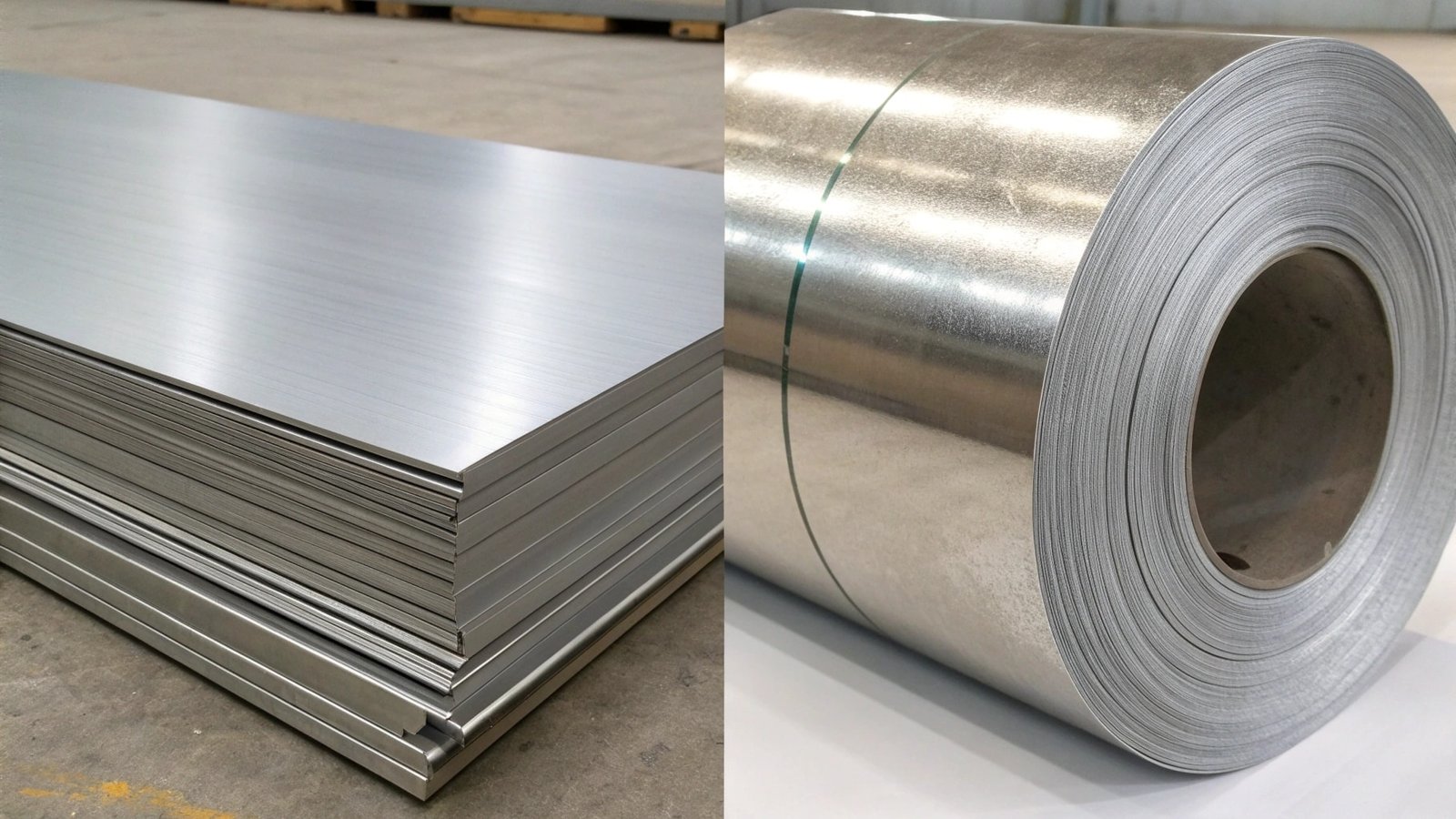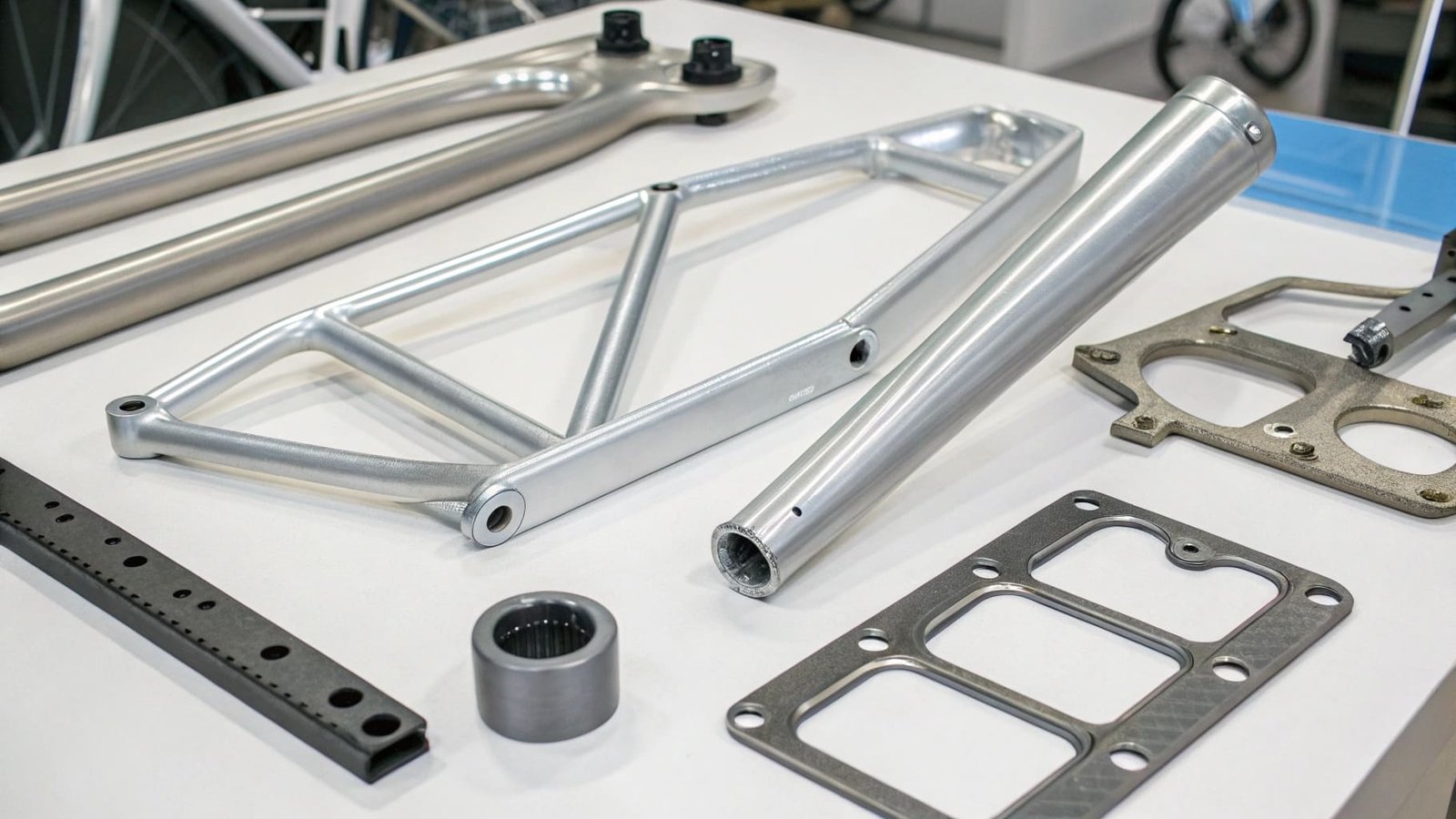
Are your critical projects pushing the limits of standard 6061-T6 aluminum bars1? Discover how SWA Forging delivers superior performance through precision forging.
When conventional 6061-T6 aluminum bars fail to provide the necessary strength, durability, or specific geometric requirements for your high-demand applications, SWA Forging's precision-engineered forged components offer a critical upgrade in performance and reliability.
Many of our clients at SWA Forging start by specifying 6061-T6 aluminum. This alloy is popular because it offers a good balance of strength, corrosion resistance2, weldability, and machinability. They might be looking for standard round bars, tubes, or extrusions. However, for applications that involve significant stress, require complex shapes, or demand the utmost in mechanical integrity, the properties of a simple bar can be limiting. The grain structure in a bar might not be optimized for the stresses the part will encounter. At SWA Forging, we take the same high-quality 6061-T6 alloy and transform it through forging, creating components that inherently possess superior strength, toughness, and fatigue life, far exceeding the capabilities of conventional bars.
What is the application of 6061-T6?
6061-T6 aluminum is a versatile, high-strength alloy widely used in applications requiring a good combination of mechanical properties and corrosion resistance.
The primary applications for 6061-T6 aluminum include structural components in aircraft, automotive parts, bicycle frames, drone frames, marine components, and various general-purpose industrial and commercial products that demand good strength-to-weight ratio and durability.

At SWA Forging, we see 6061-T6 applied in a multitude of demanding scenarios. Clients often turn to us when standard off-the-shelf parts made from 6061-T6 bars or extrusions are not meeting the performance benchmarks for their specific needs. For example, a client might be building a structural component for a high-performance vehicle or a load-bearing part for industrial machinery. While raw 6061-T6 is a strong base material, our forging process further refines its grain structure, aligning it with the stress paths of the final component. This results in parts with enhanced fatigue strength and overall integrity, making them ideal for applications where reliability is paramount, and standard bars might eventually fail under extreme conditions.
Key applications for 6061-T6 include:
- Aerospace: Aircraft structures, fuselage components, wing struts.
- Automotive: Chassis parts, suspension components, engine mounts.
- Marine: Boat hulls, railings, and structural elements exposed to corrosive environments.
- Recreational: Bicycle frames, skateboards, and sporting equipment.
- Industrial: Machine parts, frames, electrical housings, and structural components.
Its excellent all-around performance makes it a staple in many industries.
What does a 6061-T6 temper indicates?
The "T6" in 6061-T6 refers to a specific heat treatment process applied to the aluminum alloy to enhance its mechanical properties, particularly its strength.
The T6 temper indicates that the 6061 aluminum alloy has undergone a solution heat treatment followed by artificial aging. This process significantly increases its tensile strength, yield strength, and hardness, making it one of the strongest and most widely used aluminum alloys.

When clients specify 6061-T6, they are asking for aluminum that has been treated to achieve peak mechanical properties. At SWA Forging, we start with 6061 aluminum that is already in or can be brought to the T6 temper. Our forging process then works with this hardened material to further refine its internal structure. This means that a forged 6061-T6 component not only benefits from the strength achieved through the T6 heat treatment but also gains additional benefits from the forging process itself, such as improved grain flow and reduced internal stresses. This combination allows us to create parts that are exceptionally robust and reliable for even the most demanding applications.
The T6 temper involves two key steps:
- Solution Heat Treatment: Heating the alloy to a high temperature (around 990°F or 532°C) to dissolve alloying elements and create a uniform solid solution.
- Artificial Aging: Rapidly cooling the alloy (quenching) and then heating it to a lower temperature (around 350°F or 177°C) for a specific time to precipitate strengthening particles within the metal's structure.
This treatment significantly boosts the alloy's mechanical performance.
What is 6061 AL used for?
6061 aluminum alloy is one of the most versatile and widely used aluminum alloys due to its excellent combination of properties.
6061 aluminum is commonly used in the construction of aircraft structures, automotive parts, marine applications, bicycle frames, camera tripods, and various structural components where good strength, excellent corrosion resistance, and good weldability are required.

Our work at SWA Forging frequently involves the 6061 alloy, often specified by clients for its broad applicability. Whether it's for a component in a boat’s framework, a part for a drone, or a structural element in industrial equipment, clients choose 6061 for its balanced performance. However, for applications that push these materials to their limits, simply using standard 6061 bars or extrusions might not suffice. By employing our forging techniques, we enhance the inherent properties of 6061. We can create components with superior fatigue resistance and tailored grain structures that offer significantly improved performance and longevity in high-stress environments, providing a more robust solution than conventionally manufactured parts.
Key uses of 6061 aluminum:
- Structural Components: Frames, trusses, and load-bearing parts in various industries.
- Transportation: Vehicle chassis, truck bodies, and railway cars.
- Electrical Applications: Electrical conductor components and housings.
- General Engineering: Machine parts, tooling, and fixtures.
- Welded Structures: Its good weldability makes it suitable for complex assemblies.
Its balanced properties make it a go-to choice for a wide range of applications.
Is there a difference between 6061 and 6061-T6?
Yes, there is a significant difference between 6061 in its basic form and 6061-T6, primarily related to its mechanical properties due to a specific heat treatment process.
The difference between 6061 and 6061-T6 lies in the temper, or heat treatment state. 6061 is the alloy designation, while T6 indicates that the alloy has been solution heat-treated and artificially aged, significantly increasing its strength and hardness compared to the annealed (O temper) or other less strengthened states.

Clients at SWA Forging often inquire about the specifics of the 6061 alloy. It’s important to clarify that while the base alloy is 6061, the "T6" designation signifies a critical enhancement. Think of it like this: 6061 is the recipe, and T6 is a special cooking method that makes the ingredients perform at their best. When we forge 6061-T6, we are working with material that has already undergone this strengthening process. Our forging further refines the microstructure, creating components that are exceptionally strong and durable. This is crucial for clients who need parts that will withstand intense operational stresses, far beyond what a simple, non-heat-treated 6061 bar could endure, especially when complex geometries are involved.
Key differences summarized:
- Strength: 6061-T6 is significantly stronger than other tempers of 6061, such as 6061-O (annealed) or 6061-T4.
- Hardness: The T6 temper increases the hardness of the alloy.
- Formability: While T6 increases strength, it reduces formability compared to softer tempers.
- Mechanical Properties: Yield strength and tensile strength are maximized in the T6 temper.
The T6 temper is the most common and is chosen when high strength is a primary requirement.
Conclusion
For applications demanding the superior strength and reliability of 6061-T6, SWA Forging provides precision-engineered components that outperform conventional bars through advanced forging techniques.