Are you trying to select the ideal aluminum alloy1 for your tubing needs, considering both its strength and its ability to be formed? Choosing the right alloy is key to successful fabrication and performance.
The best aluminum alloy for tube bending depends on a combination of strength, ductility, and the specific bending requirements; alloys like 6061-T6 and 5052 are often preferred for their good balance of strength and formability. Comparing 5052 and 6061 for bending, 5052 is generally considered more formable, especially for cold bending, due to its higher ductility and lack of heat treatment that can induce brittleness. However, 6061-T6 offers higher strength after bending. The strongest aluminum tubing generally comes from the 7xxx series alloys, such as 7075, when their temper is optimized for strength, though they can be more challenging to bend without specialized techniques. Yes, 6061 aluminum alloy, particularly in its T6 temper, is commonly used for piping and tubing in applications requiring good strength, corrosion resistance2, and weldability, such as in fluid and gas transmission systems, structural components, and marine applications.
While standard tubing alloys serve many purposes, SWA Forging focuses on delivering superior material performance through custom forging for large-diameter applications. If your project demands exceptional strength, precise dimensional control, and material properties that exceed what standard tubing alloys can offer, our forged aluminum rings and discs provide a robust, high-performance foundation. We engineer tailor-made solutions that often surpass the limitations of conventional tubing.
What is the best aluminum alloy for tube bending?
Are you seeking an aluminum alloy that can be easily bent into shape without cracking or significant loss of strength? Selecting the right alloy is crucial for smooth fabrication.
The best aluminum alloy for tube bending often involves a balance between strength and ductility. Alloys in the 5xxx series, such as 5052, are excellent choices for bending due to their high ductility and workability. They can be cold-formed readily without the risk of cracking, making them ideal for applications requiring complex bends. Alloys in the 6xxx series, particularly 6061-T6, offer a good compromise. They possess higher strength than 5052 but still have sufficient ductility for bending, especially with proper techniques and tooling. While stronger alloys like 7075 are available, they are significantly more difficult to bend without specialized equipment and processes, often requiring heat to aid formability and risking stress fractures. For general-purpose bending where good strength is also a factor, 6061-T6 is a very popular and effective choice.
SWA Forging works with high-performance aluminum alloys to create custom forged components, and while we don't typically produce straight tubes, our understanding of material formability is extensive. For applications where the integrity of a bent structure is paramount, our forged products can provide the enhanced mechanical properties that result in more durable finished parts, even when subjected to significant forming processes. The controlled grain structure in our forgings can offer superior performance compared to standard extruded tubing, especially in critical bending areas.
Is 5052 or 6061 better for bending?
Are you trying to decide between two common aluminum alloys, 5052 and 6061, for a project that involves bending? Their differences in formability and strength are key considerations.
When it comes to ease of bending and formability, 5052 is generally considered better than 6061**.
- 5052 is a non-heat-treatable alloy with higher ductility, meaning it can be bent to tighter radii and is less likely to crack during cold forming processes. It's a work-hardened alloy, so its strength increases as it's bent, but it remains relatively ductile.
- 6061, especially in its common T6 temper, is a heat-treatable alloy that offers higher strength. While it can be bent, it's less ductile than 5052 and requires more careful technique, larger bend radii, and potentially specialized tooling to avoid fracturing. After bending, its strength remains high.
So, if maximum ease of bending and tight radii are the priority, 5052 is the better choice. If higher strength is crucial and you can accommodate larger bend radii or use advanced bending techniques, 6061-T6 is a viable option.**
| Attribute | 5052 Aluminum | 6061-T6 Aluminum |
|---|---|---|
| Alloy Series | 5xxx (Mg) | 6xxx (Mg-Si) |
| Heat Treatable | No (work hardening) | Yes |
| Ductility | High | Moderate |
| Formability | Excellent | Good (requires more care than 5052) |
| Strength | Medium | Medium-High |
| Best For | Easy bending, complex shapes | Stronger parts, general fabrication |
SWA Forging specializes in large-diameter components where material integrity is paramount. While we don't produce tubing, our expertise in forging high-strength alloys means we understand the critical interplay of alloy composition and structural integrity. If your application demands parts that can withstand significant forming or extreme loads, our custom forged solutions can provide a level of performance and reliability that standard tubing, regardless of its bending ease, cannot match.
What is the strongest aluminum tubing?
Are you looking for aluminum tubing that offers the absolute highest resistance to stress and deformation? Strength is a critical performance factor for many applications.
The strongest aluminum tubing is typically made from alloys in the 7xxx series, such as 70753 or 7005, especially when they are in their strongest tempers (like T6 or T651). These alloys, primarily aluminum-zinc with additions of magnesium and copper, offer tensile and yield strengths that can rival some steels, providing an excellent strength-to-weight ratio. However, these high-strength alloys can also be more brittle and harder to form, meaning that while the material itself is strong, shaping it into tubing without compromising its integrity requires advanced manufacturing processes and careful consideration of the specific application. For applications requiring a balance of high strength and better formability, alloys like 6061-T64 are also very strong and widely used.
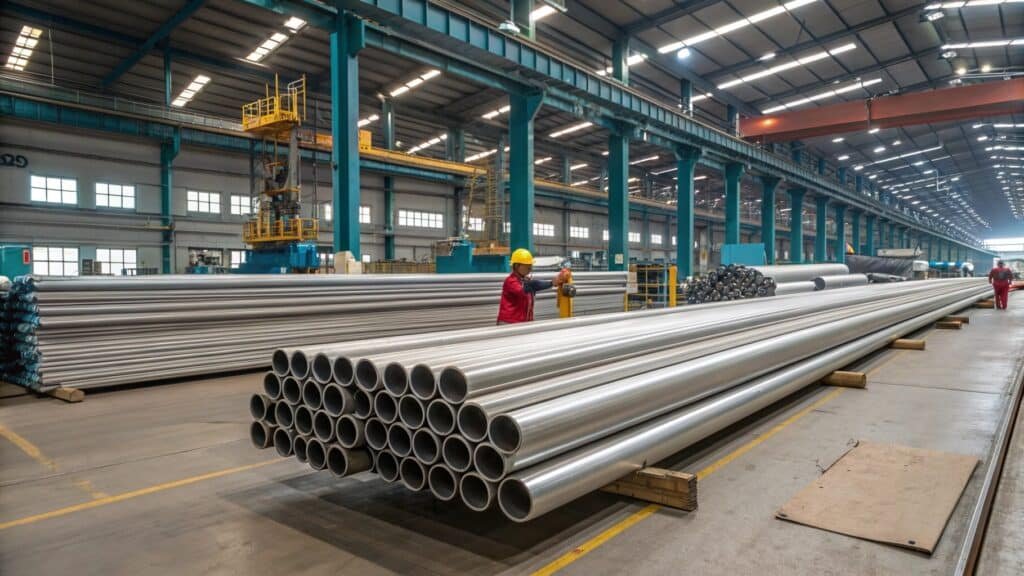
At SWA Forging, we excel in creating large-diameter, high-strength aluminum components through our advanced forging processes. Our expertise lies in optimizing the mechanical properties of high-strength alloys, often exceeding the capabilities of standard extruded tubing. If your project requires parts that must endure extreme stress and retain their integrity, our custom forged solutions offer superior strength and durability, engineered specifically for the most demanding applications where off-the-shelf tubing would fall short.
Is 6061 aluminum alloy used for piping?
Are you wondering if the versatile 6061 aluminum alloy is a suitable material for use in piping systems? Its properties make it a common choice for many fluid and gas applications.
Yes, 6061 aluminum alloy** is frequently used for piping applications. Its particular appeal lies in its excellent combination of properties:
- Good Strength: In its T6 temper, 6061 offers a respectable tensile and yield strength, making it suitable for carrying moderate pressures.
- Excellent Corrosion Resistance: It performs well in many environments, including marine applications, which is crucial for piping systems.
- Good Weldability: This allows for easy fabrication and assembly of pipe sections and fittings.
- Formability: While not as ductile as 5052, it can still be formed into pipes and tubes with good control.
These characteristics make 6061 a popular choice for fluid and gas lines in various industries, including automotive, marine, aerospace, and general industrial applications where it is not subjected to extremely high pressures or temperatures, or corrosive chemicals that might challenge its limits.**
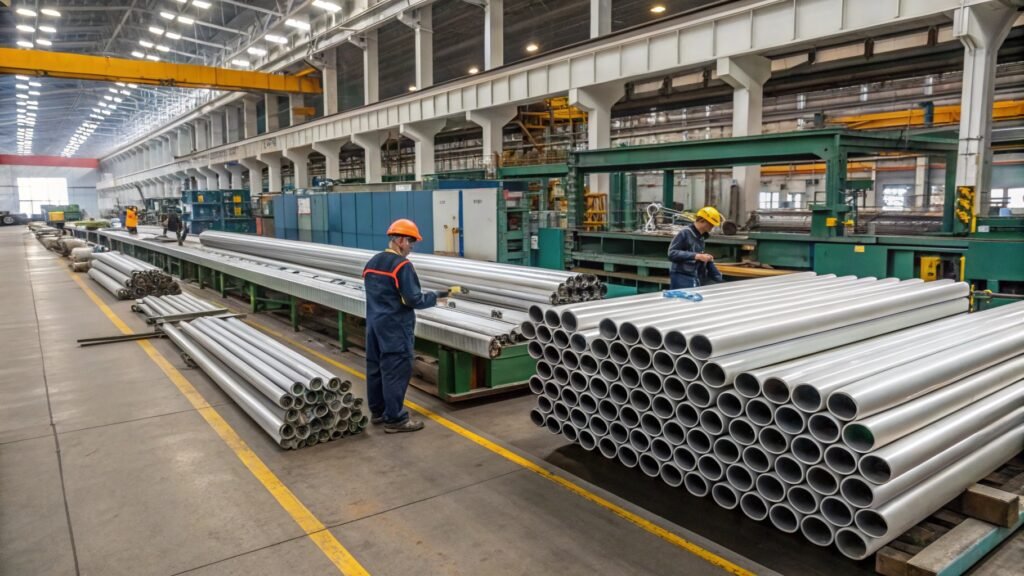
SWA Forging produces large-diameter forged components that can form the critical structural or containment elements in complex systems, often complementing or exceeding the role of standard piping. While we deal with heavy-duty forged parts rather than straight tubing, our material expertise ensures that the aluminum we use offers superior strength and reliability. Our custom-engineered solutions are designed for applications where standard piping materials might not suffice, providing enhanced durability and tailored performance for even the most demanding industrial needs.
Conclusion
Choosing aluminum tubing depends on strength and bendability. Alloys like 5052 excel in bending, while 6xxx and 7xxx series offer greater strength. SWA Forging delivers unmatched strength in custom forged components.
-
Explore the best aluminum alloys for tube bending to ensure optimal strength and formability for your projects. ↩
-
Understanding corrosion resistance can help you select the right materials for piping systems. ↩
-
Discover the unique properties of 7075 aluminum alloy that contribute to its high strength. ↩
-
Learn about the properties of 6061-T6 to see why it's a popular choice for various applications. ↩