Skip to content
Are you curious about the fundamental characteristics that make aluminum alloys such a popular and versatile material across many industries? Knowing these properties is key to appreciating their applications.
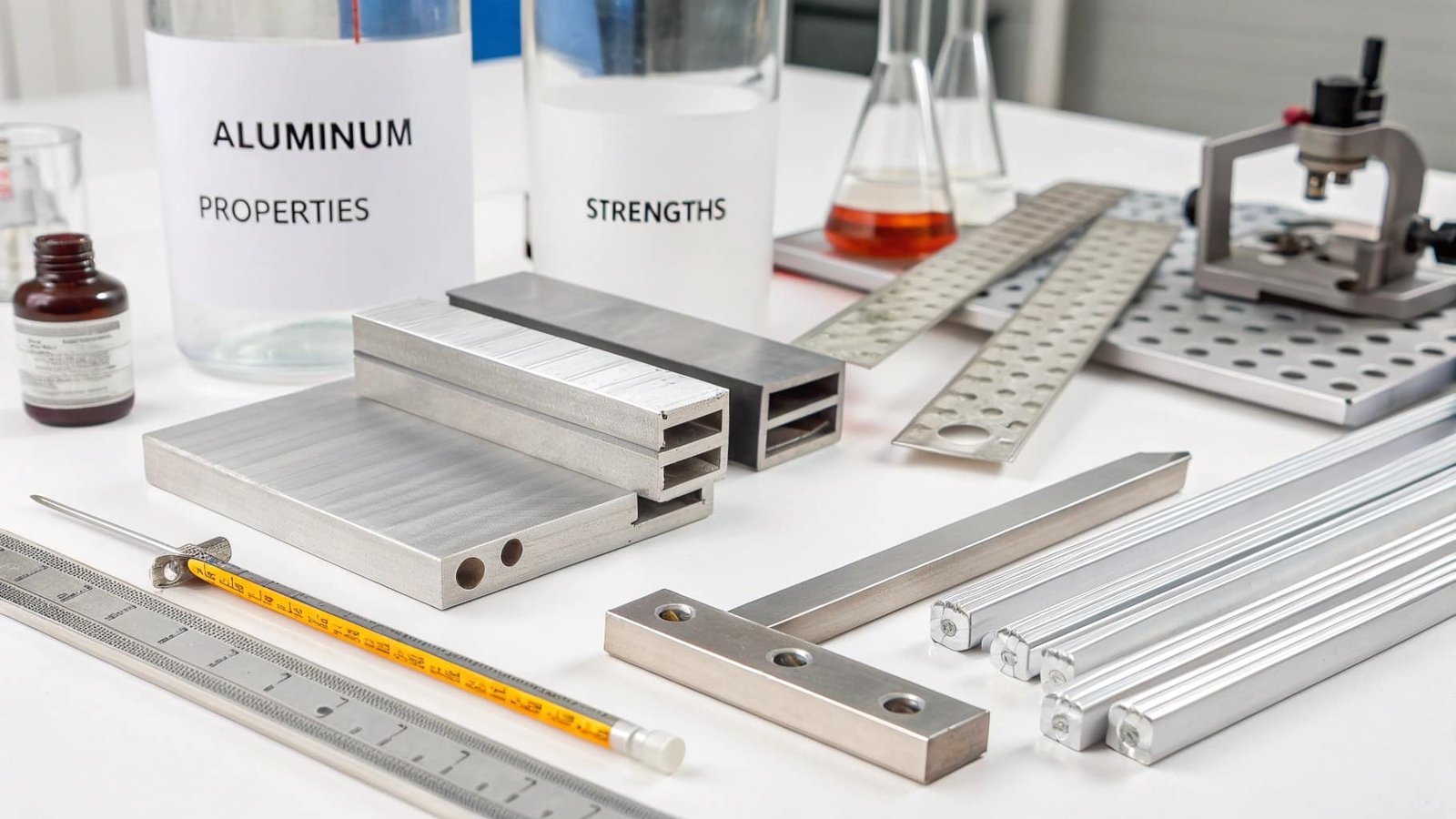
Aluminum alloys possess a unique combination of properties that make them highly desirable: they are lightweight, strong (especially when alloyed), highly resistant to corrosion due to a protective oxide layer, excellent conductors of heat and electricity, non-magnetic, ductile, and reflective. When asked for five key properties of aluminum, they are typically cited as: lightweight, corrosion resistance1, conductivity (thermal and electrical), workability (ductility and machinability), and strength (especially when alloyed). Comparing aluminum to steel, pure aluminum is significantly weaker than steel, but high-strength aluminum alloys, particularly in the 7xxx series, can achieve strength-to-weight ratios that rival or even exceed certain types of steel, making them preferable for weight-sensitive applications. The properties of 6061 aluminum alloy2 are characterized by medium to high strength, good toughness, excellent corrosion resistance, good anodizing characteristics, good weldability, and moderate workability.
At SWA Forging, we go beyond the general properties listed for standard aluminum alloys. Our expertise in custom forging large-diameter components allows us to precisely control the material's internal structure. This means we can engineer aluminum alloys with superior strength, optimized grain flow, and mechanical properties that are specifically tailored to your most demanding applications, offering performance levels that surpass what can be achieved with typical wrought aluminum forms.
What are the properties of aluminum alloys?
Are you seeking a comprehensive understanding of the characteristics that define aluminum alloys and make them so widely used? Their unique combination of traits is their main appeal.
**Aluminum alloys are a diverse group of metals defined by a primary aluminum matrix with added elements to enhance specific properties. Their general properties include:
- Low Density: Approximately one-third that of steel, making them ideal for weight-sensitive applications.
- High Strength-to-Weight Ratio: When alloyed and heat-treated, aluminum can achieve strengths comparable to steel but at a fraction of the weight.
- Excellent Corrosion Resistance: Aluminum naturally forms a protective oxide layer that shields it from further oxidation and many corrosive environments.
- Good Thermal and Electrical Conductivity: Aluminum is an excellent conductor, though not as good as copper, making it useful for heat exchangers and electrical components.
- Ductility and Formability: Most aluminum alloys can be easily formed, extruded, cast, machined, and welded into various shapes.
- Non-Magnetic: This property is important for applications in electronics and sensitive equipment.
- Reflectivity: Aluminum is highly reflective to both light and radiant heat.
- Recyclability: Aluminum is infinitely recyclable with a significant energy saving compared to primary production.**

SWA Forging leverages these inherent properties and enhances them through our specialized forging process. For our large-diameter products, we focus on optimizing the strength and grain structure of the chosen aluminum alloy, ensuring that our custom components deliver exceptional performance and durability that build upon these fundamental advantages, customized precisely for your application's needs.
What are the five properties of aluminium?
Are you looking for the most prominent characteristics that define aluminum and are frequently highlighted when discussing its benefits? These five are commonly recognized.
**The five most commonly cited properties of aluminum are:
- Lightweight: With a density of about 2.7 g/cm³, it is significantly lighter than most other common metals like steel or copper.
- Corrosion Resistance: It naturally forms a tough, protective oxide layer (alumina) on its surface which prevents further corrosion in many environments.
- Good Conductivity: Aluminum is an excellent conductor of both heat and electricity, surpassed only by copper in its electrical conductivity and by silver, copper, and gold in thermal conductivity.
- Ductility and Malleability: Aluminum and its alloys can be easily shaped, drawn into wires, rolled into thin sheets, or extruded into complex profiles without breaking.
- Strong (when alloyed): While pure aluminum is soft, alloying it with small amounts of other elements like copper, magnesium, and silicon significantly increases its strength, making it suitable for structural applications.**

At SWA Forging, we build upon these core aluminum properties by using advanced forging techniques. This means that if you require superior strength in a lightweight component, our forged products offer an enhanced level of structural integrity. We focus on optimizing these fundamental advantages to deliver custom solutions for large-diameter parts that require a high degree of durability and performance beyond what basic aluminum possesses.
Is Al stronger than steel?
Are you trying to gauge how aluminum's strength compares to that of steel, especially in practical engineering applications? It's a common comparison that requires nuance.
Pure aluminum (allotropes) is significantly weaker than most types of steel. However, when aluminum is alloyed with other elements and heat-treated, high-strength aluminum alloys can achieve strengths that rival or even exceed many steels on a pound-for-pound basis. For example, certain aluminum alloys in the 7xxx series (like 7075-T6) have a strength-to-weight ratio that is superior to many common steels. This means that for applications where weight is a critical factor, such as in aerospace or high-performance vehicles, aluminum alloys can be used to achieve equivalent or greater structural integrity with less material. So, while pure aluminum is weaker, high-strength aluminum alloys can be stronger than steel in terms of performance per unit of weight.
| Material Type | Typical Strength (MPa approx.) | Density (g/cm³ approx.) | Strength-to-Weight Ratio (High) |
|---|---|---|---|
| Pure Aluminum | 30-80 | 2.7 | Low |
| 6061-T6 Aluminum | ~310 | 2.7 | Good |
| 7075-T6 Aluminum | ~572 | 2.8 | Very High |
| Mild Steel | ~400 | 7.85 | Moderate |
| High-Strength Steel | ~700+ | 7.85 | Good to Very High |

SWA Forging specializes in creating large-diameter components from high-performance aluminum alloys. By employing precise forging techniques, we can further enhance the strength and optimize the grain structure of these alloys. This means our products can often provide a superior strength-to-weight solution for applications where conventional steel might be too heavy or where standard wrought aluminum alloys do not offer sufficient structural performance.
What are the properties of 6061 aluminum alloy?
Are you interested in the specific characteristics of 6061 aluminum alloy, one of the most widely used aluminum alloys? Understanding its traits explains its popularity.
**6061 aluminum alloy is a precipitation-hardened aluminum alloy, primarily composed of aluminum, magnesium, and silicon. Its key properties include:
- Medium to High Strength: Especially in its heat-treated T6 temper, it offers good tensile and yield strength, making it suitable for structural applications.
- Excellent Corrosion Resistance: It resists corrosion well in many environments, including marine conditions.
- Good Weldability: 6061 can be readily welded using most standard methods, although welding can reduce its strength in the heat-affected zone.
- Good Machinability: It machines well, allowing for precise fabrication of parts.
- Good Formability: While not as ductile as 5052, it can be formed, bent, and manufactured into various shapes, particularly in softer tempers or with appropriate techniques.
- Good Anodizing and Finishing Characteristics: It takes well to anodizing and painting, providing both protective and decorative finishes.
- Versatility: Due to this balanced combination of properties, 6061 is used in a vast array of applications, from aircraft structures and automotive parts to consumer goods and construction.**

At SWA Forging, we utilize 6061 and other high-performance alloys to create large-diameter forged components. Our forging process allows us to manipulate the grain structure and mechanical properties of these base alloys. This means that even for a versatile alloy like 6061, our custom forged products can offer enhanced strength, improved toughness, and more precise dimensional control than standard wrought forms, fulfilling the specific, often demanding, requirements of your applications.
Conclusion
Aluminum alloys offer a versatile mix of lightweight strength, corrosion resistance, and formability. SWA Forging enhances these properties through custom forging for superior performance.