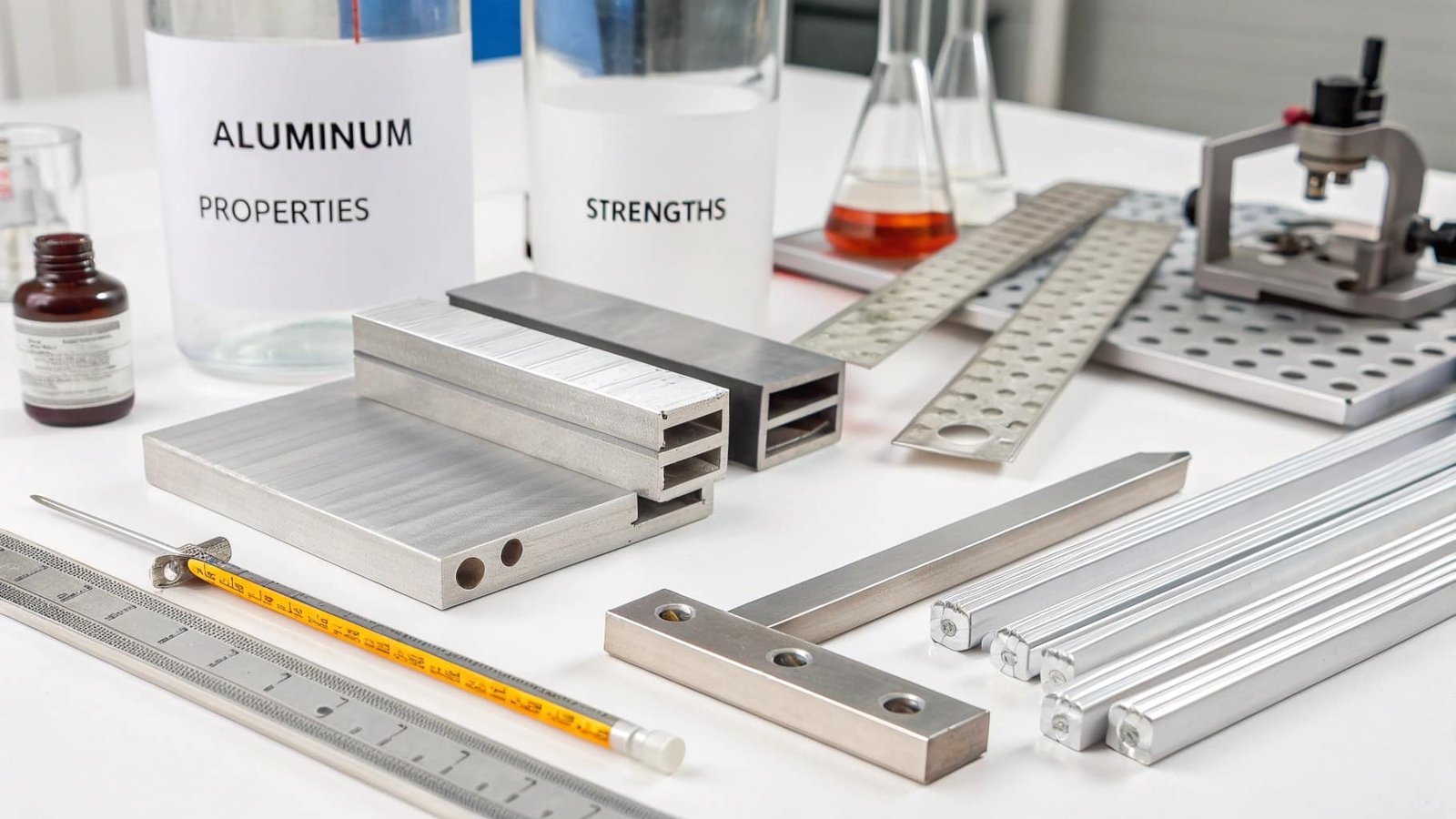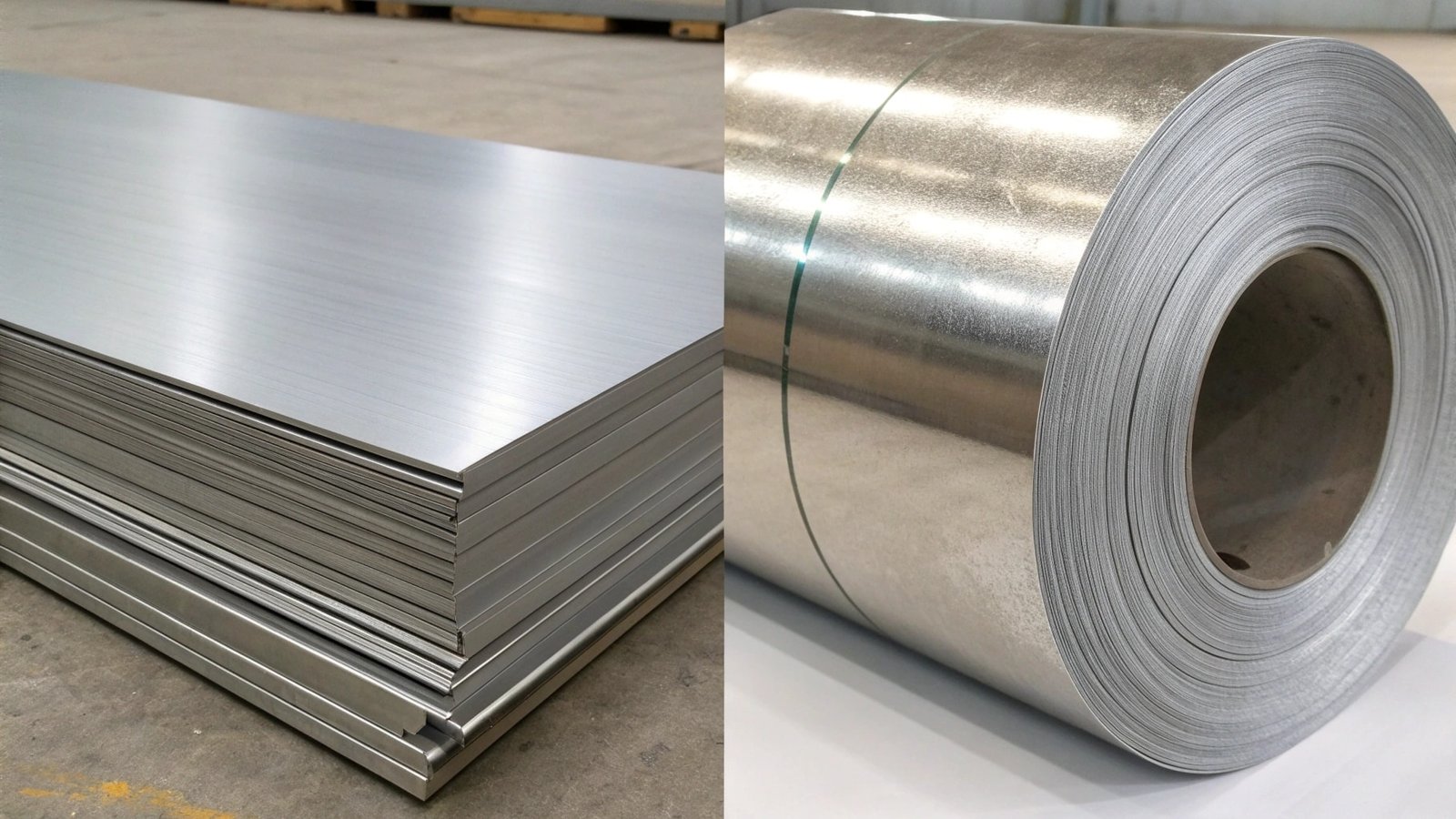
Searching for the right aluminum alloy online can feel overwhelming, but finding the right supplier simplifies the process immensely.
Online searches for aluminum alloy1s often lead to a vast array of information concerning prices, grades, and specific alloy properties. The price of aluminum alloy fluctuates based on market demand, raw material costs, the specific alloy composition, and the quantity purchased; it is not a fixed number. 7075 aluminum2 is indeed an alloy, specifically a high-strength aluminum alloy belonging to the 7xxx series, primarily alloyed with zinc. Determining the "best" aluminum alloy is subjective, as it entirely depends on the intended application; for example, 7075 excels in high-strength aerospace applications, while 6061-T63 is a versatile, general-purpose alloy known for its balanced properties, commonly used in structural components, bicycle frames, and automotive parts. 6061-T6 refers to a specific temper (condition) of 6061 aluminum alloy, indicating it has undergone solution heat treatment (T4) followed by artificial aging (T6), resulting in significantly enhanced strength and hardness. SWA Forging streamlines the online procurement process by offering direct access to customized, large-diameter forged components, providing clear specifications and procurement pathways for global traders and manufacturers seeking specific aluminum alloys.
My goal at SWA Forging is to cut through the complexity of online material sourcing, especially for demanding large-diameter forged components. Instead of sifting through endless search results, clients can directly engage with my expertise to get clear pricing, precise specifications, and reliable delivery for 6000 and 7000 series alloys, among others, including the popular 6061-T6 grade and the high-strength 7075 alloy.
What is the price of aluminum alloy?
When exploring aluminum alloys online, one of the first questions that arises is about cost. What factors influence the price of aluminum alloy1, and how can one find this information?
The price of aluminum alloy is not static; it's a dynamic figure influenced by several key factors. The global market price of primary aluminum, which fluctuates daily based on LME (London Metal Exchange) trading, forms the base cost of any alloy. The specific alloy composition significantly impacts price, as different elements (like zinc, magnesium, copper, silicon) have their own market values, and their concentration in the alloy will affect its final cost. Furthermore, the form and processing method play a role; raw ingots will cost less than finished products like extruded profiles, machined parts, or, in my case, custom-forged rings and discs, which involve more complex manufacturing and labor intensive processes. The quantity ordered is another major driver; bulk purchases typically receive lower per-unit pricing than smaller, custom orders. Finally, certifications, quality inspections, and adherence to specific international standards (like ISO, SGS, BV) add to the cost due to the rigorous processes involved. For precise pricing, direct inquiry with a supplier like SWA Forging, specifying the alloy, quantity, processing, and any certification requirements, is the most effective method.
| Factor | Description | Impact on Price | Where to Find Information |
|---|---|---|---|
| Primary Aluminum Market | Daily fluctuations in the global price of raw aluminum (LME). | Sets the baseline cost for all aluminum products. | Financial news, commodity trading websites. |
| Alloy Composition | The types and amounts of alloying elements (Zn, Mg, Si, Cu, etc.) added. | Higher quantities of more expensive elements increase alloy cost. | Material datasheets, supplier quotes. |
| Product Form & Processing | Raw forms (ingots) vs. semi-finished (extrusions, plates) vs. finished (forgings, machined parts). | More complex processing, labor, and machinery increase the final price significantly. | Supplier catalogs, custom quotes. |
| Order Volume | The quantity of material being purchased. | Larger orders typically benefit from economies of scale, leading to lower per-unit costs. | Supplier quotes. |
| Quality & Certifications | ISO certification, SGS/BV/TUV reports, specific material traceability, testing. | Rigorous quality control and documentation add to the overall production cost. | Supplier specifications, quality assurance documentation. |
| Supplier Markups | The supplier's operational costs, profit margins, and value-added services. | Varies by supplier's efficiency, expertise, and service offerings. | Direct inquiry and negotiation with the supplier. |
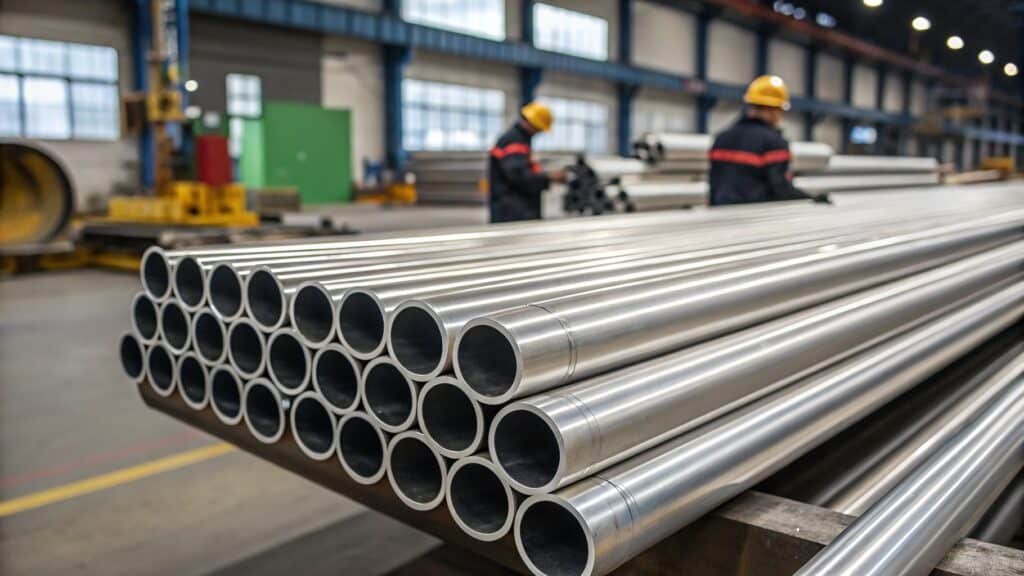
When clients reach out to me at SWA Forging4, they are looking for clarity and value, not just a commodity price. I provide direct, competitive quotes for our specialized large-diameter forged rings and discs, ensuring that the price reflects not only the market cost of high-quality aluminum alloys like 6061-T6 or 7075 but also the precision, strength, and customized service that go into every forged component.
Is 7075 aluminum an alloy?
The categorization of metals can become granular, especially when discussing performance-driven materials. Is the highly regarded 7075 aluminum a pure element or something more?
Yes, 7075 aluminum is unequivocally an alloy. It is not a pure element but rather a mixture where aluminum is the base metal, and significant amounts of other elements are added to enhance its properties. Specifically, 7075 is a member of the 7xxx series of aluminum alloys, characterized by zinc as its primary alloying element. It typically contains about 5.6% zinc, 2.5% magnesium, and 1.6% copper, along with smaller amounts of chromium and other elements to refine its characteristics. These additions, particularly zinc and magnesium, are what provide 7075 with its exceptionally high tensile strength and fatigue resistance, making it one of the strongest commercially available aluminum alloys. Pure aluminum, on the other hand, is relatively soft and easily deformed, lacking the structural integrity required for demanding applications.
| Pure Element vs. Alloy Classification | Pure Aluminum | 7075 Aluminum Alloy |
|---|---|---|
| Base Metal | Aluminum (Al: ~99.9%) | Aluminum (Al: ~89%) |
| Primary Alloying Elements | None | Zinc (Zn: ~5.6%), Magnesium (Mg: ~2.5%) |
| Secondary Alloying Elements | Trace Impurities | Copper (Cu: ~1.6%), Chromium (Cr: ~0.2%) |
| Key Characteristic | Soft, ductile, corrosion-resistant, good electrical/thermal conductivity. | Extremely high tensile strength, good fatigue strength, moderate corrosion resistance. |
| Typical Application | Foil, some electrical conductors, packaging. | Aerospace, high-performance sporting goods, defense components. |
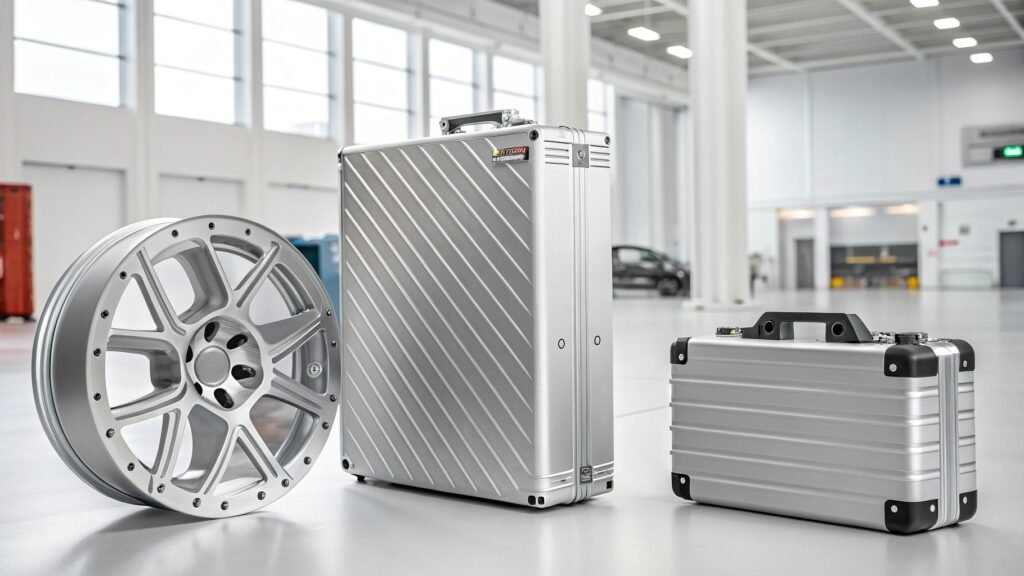
My work at SWA Forging centers on the controlled application of precisely defined alloys like 7075. I leverage its properties to create custom-forged components where its superior strength, achieved through its alloying elements, is paramount. Understanding that 7075 is an alloy with specific additions is crucial for selecting it for applications that demand more than pure aluminum can offer, particularly from the performance standards my clients in aerospace and high-end manufacturing expect.
What is the best aluminium alloy?
In the vast landscape of aluminum alloys, the question of which is "best" is common, but the answer is rarely straightforward, as it depends entirely on what "best" means for a particular job.
There is no single "best" aluminum alloy; the optimal choice is entirely dictated by the specific requirements of the application. If "best" means maximum strength and fatigue resistance for critical aerospace or high-performance structural components, then alloys from the 7000 series, like 7075, are often considered the best. If "best" prioritizes excellent corrosion resistance, good weldability, and ease of fabrication for architectural or general structural purposes, then alloys from the 6000 series, such as 6061 or 6063, are excellent choices. For applications where formability and corrosion resistance are paramount over strength, such as complex packaging like foil or decorative elements, the 3000 or 5000 series might be considered the best. For pure conductivity with light weight, specific aluminum-clad steels or even pure aluminum conductors are chosen. Ultimately, the "best" alloy is the one that most effectively and economically meets the combination of mechanical properties, environmental resistance, manufacturability, and cost targets for a given project.
| Application Need | "Best" Alloy Series (Examples) | Key Justification |
|---|---|---|
| Maximum Strength & Fatigue Life | 7000 Series (e.g., 7075) | Highest tensile and yield strength, excellent fatigue resistance for extreme stress applications. |
| Balanced Strength, Corrosion Resist., Weldability | 6000 Series (e.g., 6061, 6063) | Good all-around performance, excellent corrosion resistance, easy to fabricate and weld. |
| Excellent Corrosion Resistance & Formability | 5000 Series (e.g., 5052, 5083) | Superior resistance to seawater and general corrosion, good ductility for marine and tank applications. |
| Ease of Formability & Good Corrosion Resist. | 3000 Series (e.g., 3003) | Easy to form, good workability, good corrosion resistance, commonly used for cookware and some packaging. |
| High Electrical & Thermal Conductivity | 1000 Series (Pure Aluminum), 1350 etc. | Minimal alloying elements, maximizing conductivity for electrical wire and heat exchangers. |
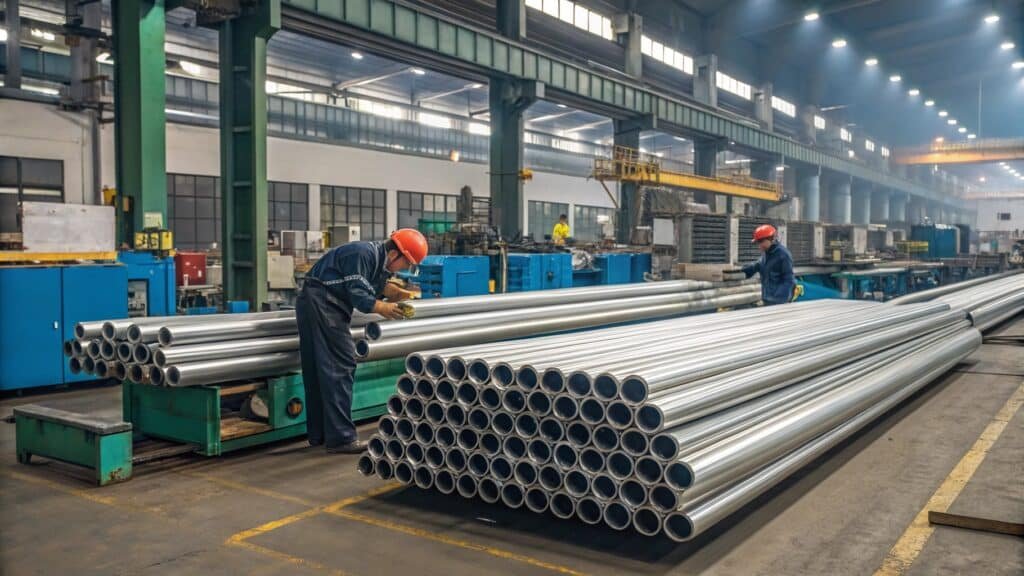
My role is to help clients identify the "best" alloy for their specific needs, particularly for custom-forged components. While I showcase the extreme strength of series like 7000 and the balanced performance of 6000, the ultimate "best" alloy is determined by the project's unique demands. I provide the forged components, whether in 6061-T6 or 7075, that deliver the optimal performance for applications requiring specific strengths, corrosion resistance, or fatigue life.
What is 6061 T6 aluminum grade?
The designation "6061 T6" is frequently encountered when specifying aluminum for various projects. What exactly does this term signify for the material's properties and applications?
The term "6061 T6" refers to a specific type and temper of aluminum alloy. "6061" identifies the alloy itself, meaning it belongs to the 6000 series and is primarily alloyed with magnesium and silicon. This composition gives it a good balance of moderate strength, excellent corrosion resistance, good weldability, and excellent formability. The "T6" designation is a temper code that signifies the alloy has undergone a specific heat treatment process for maximum strength. Specifically, T6 means the alloy has been solution heat-treated and then artificially aged. Solution heat treatment dissolves alloying elements into the aluminum, and subsequent artificial aging (a controlled heating process at a lower temperature) precipitates these elements into fine particles, significantly increasing the alloy's strength and hardness. Therefore, 6061-T6 is a strong, hard, and stable form of the 6061 alloy, making it a very popular choice for structural applications, bicycle frames, automotive parts, and general engineering where this enhanced strength is critical.
| Component of Designation | Meaning | Significance for Material Properties | Typical Applications |
|---|---|---|---|
| 6061 | Identifies the aluminum alloy series and its basic composition (Mg & Si as primary alloying elements). | Indicates good corrosion resistance, weldability, and formability. | General structural fabrication, automotive components, marine applications, fasteners screws, nuts. |
| T6 | Temper designation signifying: Solution Heat-Treated + Artificially Aged. | Significantly increases tensile strength, yield strength, and hardness compared to annealed (O) or just solution treated (T4) states. | Structural components, bicycle frames, automotive parts (e.g., suspension), boat hulls, aircraft components (non-critical), heat sinks. |
| Resulting Properties | A strong, hard, and durable aluminum alloy with good resistance to general corrosion and fatigue. It is considered a good all-around performer. | Offers a high strength-to-weight ratio suitable for applications requiring load-bearing capabilities while remaining lighter than steel. | Widely used in moderate to high-stress applications where a good balance of strength, toughness, and corrosion resistance is required. |
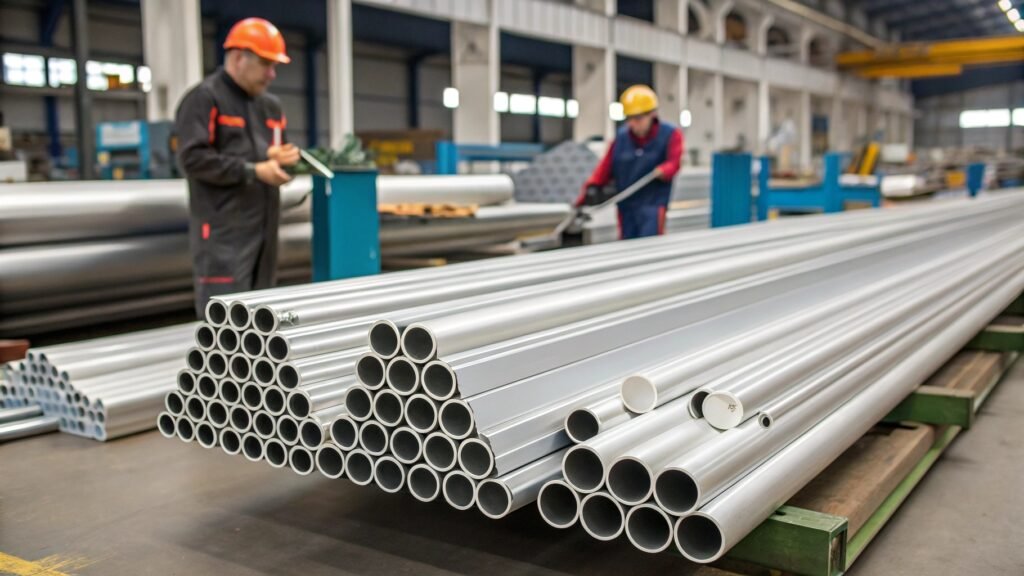
My expertise at SWA Forging includes providing high-quality components in critical tempers like 6061-T6. When clients need the enhanced strength and stability that this specific temper offers for their structural or engineering projects, I ensure our forged products meet those exact specifications. This means delivering large-diameter rings and discs that perform reliably because they are made from the correctly specified and processed 6061-T6 aluminum alloy.
Conclusion
In the online search for aluminum alloys, 7075 is a strong alloy, and 6061-T6 is a versatile grade; prices vary by market and processing, and the "best" alloy depends on application needs, with SWA Forging offering direct access to customized forged solutions.
-
Understanding the factors affecting aluminum alloy prices can help you make informed purchasing decisions. ↩ ↩
-
Explore the unique properties of 7075 aluminum to see why it's favored in aerospace and high-performance applications. ↩
-
Learn about 6061-T6's balanced properties and its common uses in various industries. ↩
-
Discover how SWA Forging can simplify your procurement process for aluminum alloys. ↩