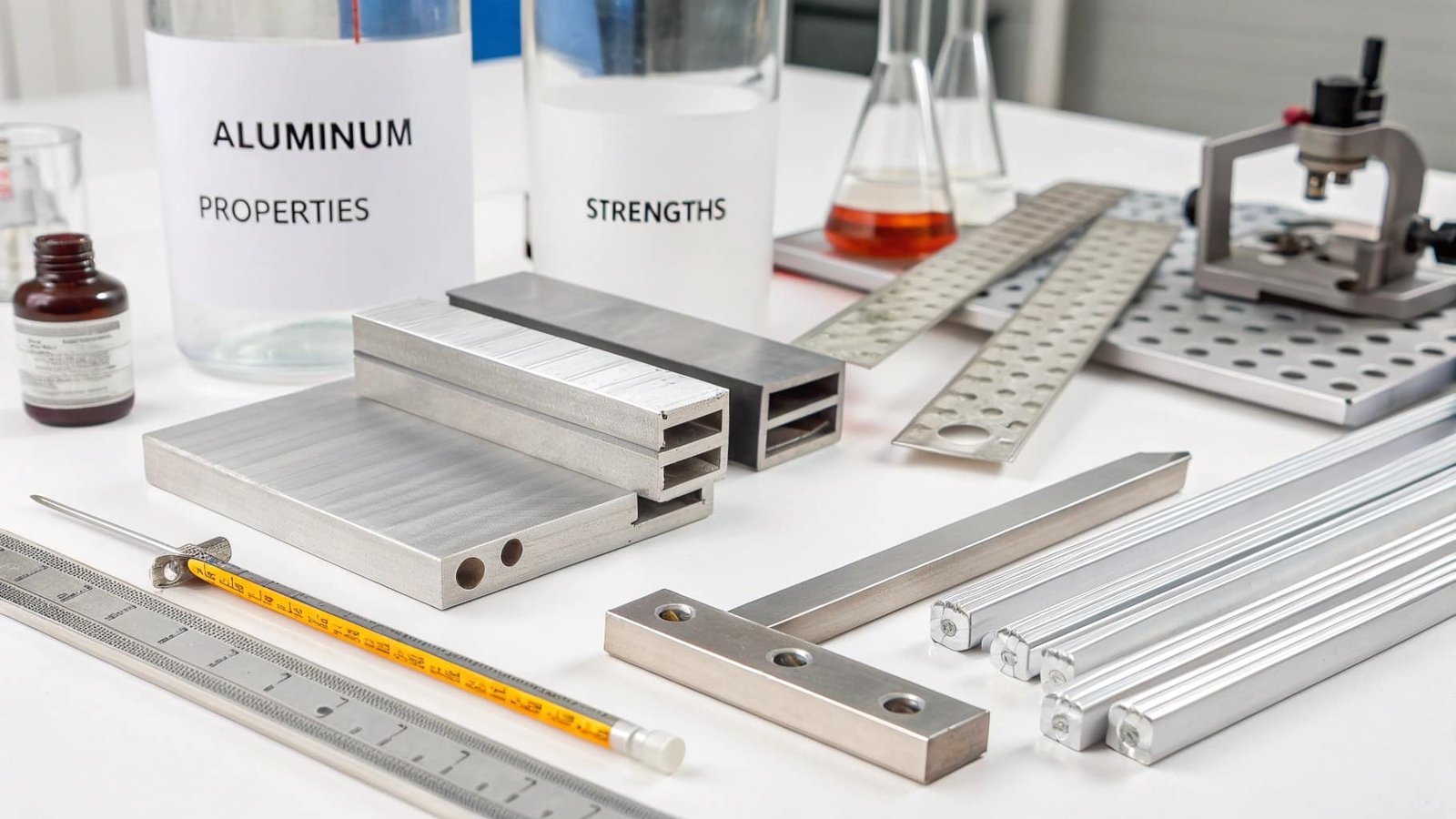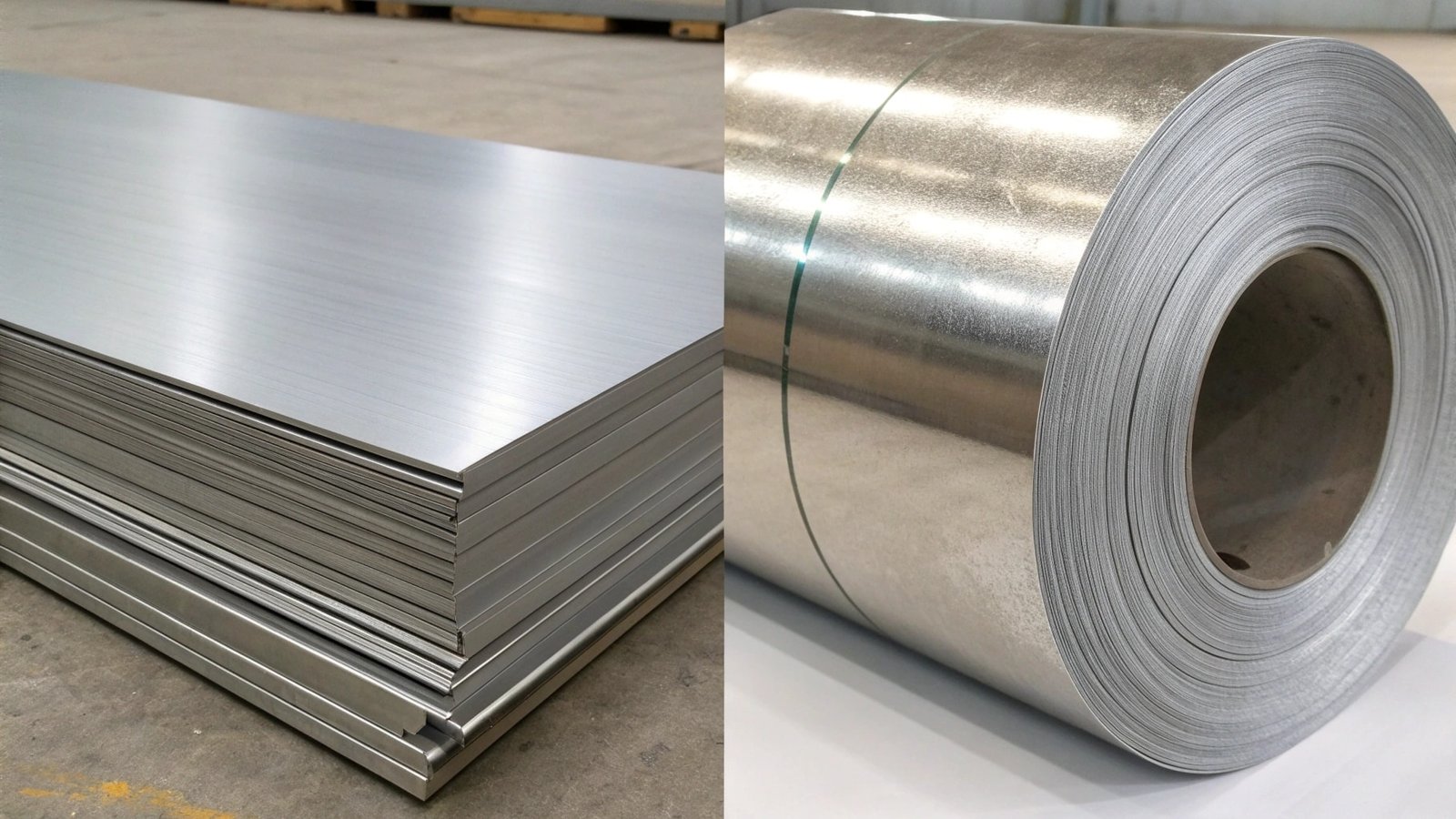
Understanding the precise specifications of aluminum alloys1 is crucial for selecting the right material for any project.
When comparing aluminum alloys like 6061 and 7075, the "better" choice depends entirely on the application's needs; 7075 offers superior strength for high-stress environments like aerospace, while 6061 provides a balanced mix of strength, corrosion resistance2, and workability for general engineering and construction. Identifying an unknown aluminum alloy often requires material testing or detailed analysis, as visual inspection is unreliable; however, knowing the general application or origin might hint at the alloy. The difference between 6061 and 6061-T6 lies in the temper: 6061 is the alloy composition, while T6 is a specific heat-treated and aged condition that significantly increases its strength. Regarding strength, 5052 aluminum3 is generally considered stronger than 6061 in its annealed or as-fabricated state, particularly regarding tensile strength and formability, but heat-treated 6061-T6 typically exhibits higher yield strength and overall structural capability than 5052. SWA Forging meets the critical need for detailed "aluminum material specifications" by providing comprehensive, certified documentation for all our customized forged rings and discs, ensuring clients have the exact material data needed for their specific, demanding applications.
My commitment at SWA Forging is to eliminate guesswork when it comes to material specifications. We provide clear, certified data for every custom-forged component we produce, whether it's comparing the strengths of 5052 versus 6061-T6, clarifying the difference between an alloy like 6061 and its specific temper T6, or helping clients choose between 6061 and the high-strength 7075. We ensure you know exactly what you're getting and why it's the right choice for your project.
Which is better, 6061 or 7075 aluminum?
The choice between different aluminum alloys often comes down to a direct comparison of their properties and intended uses. What makes one alloy "better" than another in practical terms?
The question of whether 6061 or 7075 aluminum is "better" is entirely dependent on the specific application requirements. 7075 aluminum is generally considered superior in terms of absolute strength and fatigue resistance. It belongs to the 7xxx series, primarily alloyed with zinc, and offers exceptionally high tensile and yield strengths, making it the alloy of choice for demanding applications like aircraft structures, high-performance sporting equipment, and military components where maximum load-bearing capacity and weight savings are critical. However, 6061 aluminum, from the 6xxx series alloyed with magnesium and silicon, offers a more balanced set of properties. It provides good strength (especially in its T6 temper), excellent corrosion resistance, superior weldability, and excellent formability. This makes 6061 a highly versatile "workhorse" alloy suitable for a vast range of applications including construction, automotive parts, general structural components, and bicycle frames. Therefore, if maximum strength is the sole criterion, 7075 is "better." If a combination of good strength, excellent corrosion resistance, ease of fabrication, and cost-effectiveness is needed, 6061 is often the better, more practical choice.
| Feature | 6061 Aluminum | 7075 Aluminum | Which is "Better"? |
|---|---|---|---|
| Primary Alloying Elements | Magnesium (Mg), Silicon (Si) | Zinc (Zn), Magnesium (Mg), Copper (Cu) | Different elements yield distinct property profiles. |
| Strength (Ultimate Tensile) | Moderate to High (~310 MPa for T6) | Very High (~570+ MPa for T6) | 7075 is significantly stronger. |
| Corrosion Resistance | Excellent | Fair to Good (lower than 6061) | 6061 offers superior resistance to environmental degradation. |
| Weldability | Good | Poor (significantly weakened by welding) | 6061 is much easier to weld for fabrication. |
| Formability | Excellent | Moderate | 6061 is more pliable for complex shapes. |
| Cost | Generally more cost-effective | Typically more expensive | 6061 offers better value for many general-purpose applications. |
| Typical Applications | Construction, automotive, bicycles, general engineering. | Aerospace structures, high-stress sporting goods. | Choice depends on whether ultimate strength or a balance of properties is the priority. |
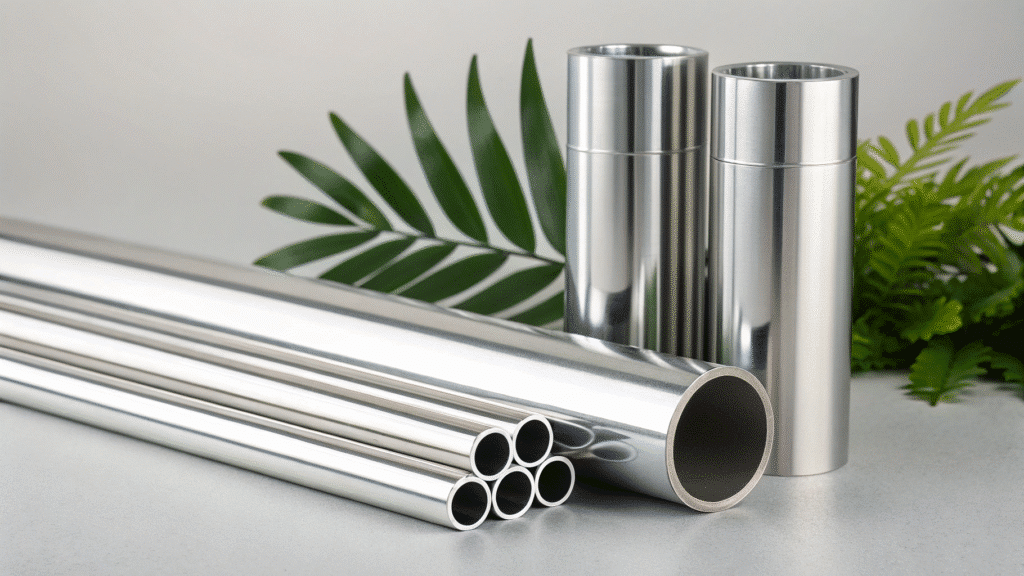
At SWA Forging, I provide both 6061 and 7075 alloys in custom-forged forms. My role is to help clients understand which is "better" for their specific project. If they need the ultimate strength for high-stress components, I offer 7075. If they require a versatile material with excellent durability and ease of performance, I provide the robust 60614 alloy, ensuring the correct specifications are met every time.
How do I know if my aluminum is 5052 or 6061?
Color alone tells you little about aluminum's alloy composition; discerning between similar-looking grades often requires more specific knowledge or testing.
Distinguishing between 5052 and 6061 aluminum without proper tools or documentation can be challenging, as they can appear visually similar, have comparable strengths in some conditions, and both are widely used. Typically, the most reliable way to know is through documentation: if the material was purchased with certifications, its alloy and temper will be clearly stated on the accompanying paperwork. For machined parts or raw stock, identifying marks or labels on the material itself or its packaging are the primary indicators. If such documentation is absent, a definitive identification requires material testing. Techniques like X-ray fluorescence (XRF) spectroscopy can quickly determine the elemental composition, revealing whether it aligns with 5052 (primarily magnesium alloyed) or 6061 (magnesium and silicon alloyed). Sometimes, a material's performance in certain fabrication processes can offer clues; for example, 5052 is known for its excellent formability and superior corrosion resistance2 in marine environments, while 6061-T6 offers higher strength for structural rigidity, but these are performance indicators, not definitive identification methods.
| Characteristic | 5052 Aluminum | 6061 Aluminum | Identification Clues |
|---|---|---|---|
| Primary Alloying Elements | Magnesium (Mg) | Magnesium (Mg), Silicon (Si) | Different elemental composition requires testing. |
| Strength (General) | Good tensile strength, excellent formability. Stronger than pure aluminum. | Moderate to high strength, especially in T6 temper. | 6061-T6 generally has higher yield strength. |
| Corrosion Resistance | Excellent, particularly in marine environments. | Very Good. | 5052 is preferred for severe marine exposure. |
| Formability | Excellent – can be easily bent, stretched, and drawn. | Good. | 5052 is typically easier to form intricate shapes. |
| Weldability | Excellent. | Good (but may require post-weld heat treatment for full strength). | Both are weldable but 5052 is often easier. |
| Typical Applications | Marine components, fuel tanks, automotive body panels, kitchen cabinets. | Structural applications, bicycle frames, automotive components, architectural extrusion. | Application context can provide hints. |
| Definitive Identification | Material Data Sheet (MDS), Manufacturer Labels, XRF Spectroscopy, Spark Testing. | Material Data Sheet (MDS), Manufacturer Labels, XRF Spectroscopy, Spark Testing. | Documentation and lab testing are the only foolproof methods. |
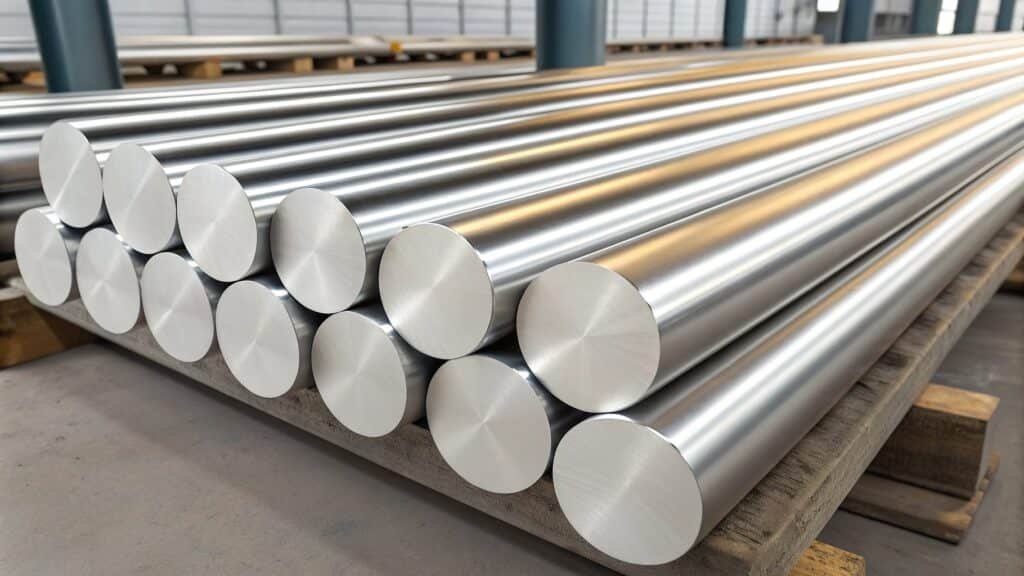
When clients come to SWA Forging, they won't have to guess their aluminum. They come with specifications, and I provide meticulously crafted components that meet those exact requirements, complete with certified material data. Whether they need 5052 for marine applications or 6061 for structural integrity, they receive explicit material specifications, ensuring they know precisely what high-quality forged product they are obtaining.
What is the difference between 6061 and 6061 T6 aluminum?
The alphanumeric designations for aluminum alloys can be confusing. What's the distinction between the alloy name "6061" and the temper designation "T6"?
The core difference between "6061 aluminum" and "6061 T6 aluminum" lies in the specificity of the description. "6061" refers to the aluminum alloy itself—its specific composition, which includes magnesium and silicon as primary alloying elements. This alloy composition defines its fundamental properties, such as moderate strength, good corrosion resistance, and workability. The "T6" designation, on the other hand, is a temper code that indicates the specific heat treatment state or "condition" of the 6061 alloy. T6 signifies that the alloy has undergone solution heat treatment followed by artificial aging. This heat treatment process significantly enhances the alloy's mechanical properties, particularly its tensile and yield strength, making it much harder and stronger than its annealed (O) or solution-heat-treated but not aged (T4) counterparts. Therefore, 6061 is the alloy family, and 6061-T6 is a specific, high-strength variant of that alloy achieved through precise thermal processing.
| Term | Meaning | Properties |
|---|---|---|
| 6061 (Alloy) | Defines the chemical composition of the aluminum alloy (primarily Mg and Si). | Good corrosion resistance, weldability, and formability inherent to the alloy. |
| T6 (Temper) | Indicates a heat treatment process: Solution heat-treated and artificially aged. | Significantly increases tensile strength, yield strength, and hardness; provides maximum strength for the 6061 alloy. |
| 6061-T6 (Specific Material) | Refers to the 6061 alloy in its strongest, most commonly used heat-treated condition. | Combines the inherent properties of 6061 with the enhanced strength and hardness of the T6 temper, making it suitable for structural applications. |
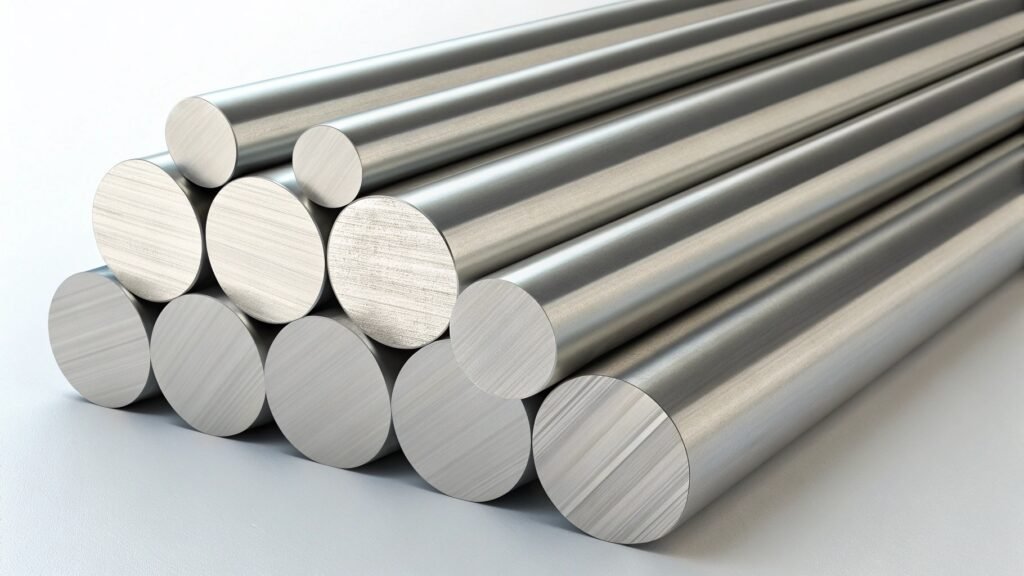
At SWA Forging, I work with precise material specifications, and understanding this difference is fundamental. When clients request 6061, I clarify if they need a specific temper, most commonly T6 for its enhanced strength. My forging process is tailored to achieve these exact temper specifications, ensuring the final forged component—whether a ring or a disc—possesses the precise mechanical properties required for its intended use, be it structural, automotive, or general engineering applications.
Is 5052 aluminum stronger than 6061?
When comparing aluminum alloys for structural applications, their relative strengths are a key consideration. How does 5052 stack up against 6061 in terms of strength?
The answer to whether 5052 aluminum is stronger than 6061 depends on the specific temper and the type of strength being measured. Generally, 5052 is considered stronger in terms of tensile and yield strength than 6061 in its annealed (O) or as-fabricated state. 5052 is a non-heat-treatable alloy, meaning its strength is primarily derived from alloying elements (magnesium) and strain hardening (cold working). It offers excellent tensile strength for a non-heat-treatable alloy. 6061, on the other hand, is a heat-treatable alloy. While its as-fabricated strength might be comparable to or slightly less than 5052 depending on the cold work, its true strength advantage is realized after heat treatment, especially in the T6 temper. 6061-T6 has significantly higher yield strength and ultimate tensile strength than 5052. Therefore, for applications requiring maximum structural integrity and load-bearing capacity, especially under stress, heat-treated 6061-T6 is typically stronger than 5052. However, 5052 often excels in applications demanding high formability and excellent corrosion resistance, especially in marine environments.
| Material | Alloy Type | Primary Alloying Element(s) | Strength (Ultimate Tensile, MPa, Approx.) | Strength Comparison | Key Application Advantages |
|---|---|---|---|---|---|
| 5052 | Non-Heat-Treatable | Magnesium (Mg) | ~220-270 MPa (strain hardened) | Higher tensile strength than 6061 in O or H32 temper. | Excellent formability, superior corrosion resistance (marine). |
| 6061 | Heat-Treatable | Mg, Si | ~120 MPa (O temper) | Lower strength than 5052 in annealed state. | Good workability as-fabricated. |
| 6061-T6 | Heat-Treatable | Mg, Si | ~310 MPa (T6 temper) | Significantly higher tensile and yield strength than 5052. | High structural strength, good fatigue resistance. |
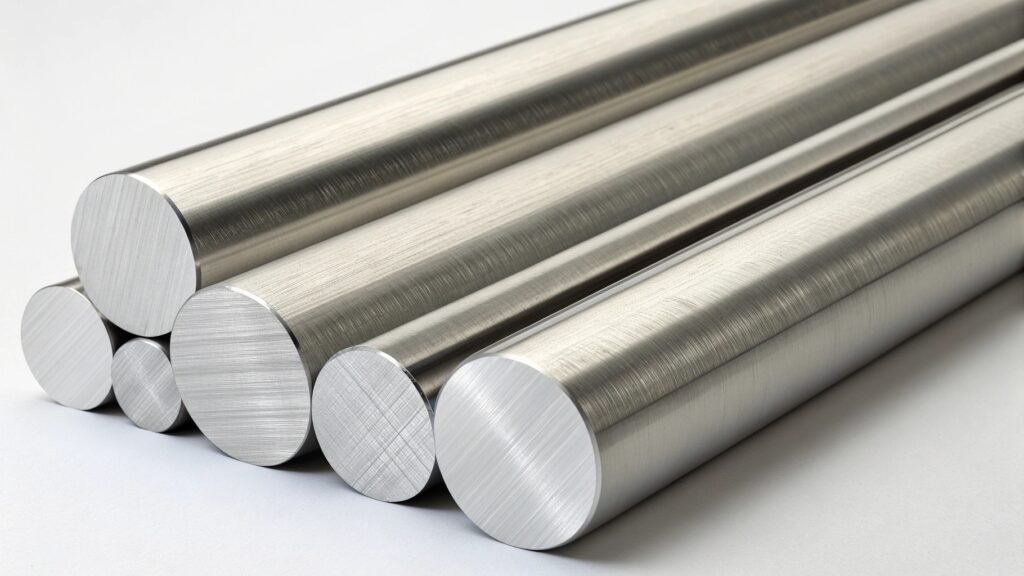
At SWA Forging, we precisely control all material specifications, including alloy and temper. Whether a project's demands favor the formability and marine-grade corrosion resistance of 5052, or the higher load-bearing capacity of heat-treated 6061-T6, we deliver the appropriate forged components. Our commitment is to provide expertly manufactured parts that meet the exact strength and performance requirements dictated by the material specifications, ensuring reliable results for every client.
Conclusion
Choosing between 6061 and 7075 depends on strength vs. balance; identifying alloys requires testing, as 6061-T6 is a tempered version of 6061; and while 5052 excels in formability, 6061-T6 offers higher structural strength, all detailed by SWA Forging's certified specs.
-
Explore this resource to understand the various aluminum alloys and their specific applications, enhancing your material selection process. ↩
-
Understand how corrosion resistance impacts the choice of aluminum alloys for various environments and applications. ↩ ↩
-
Learn about 5052 aluminum's unique properties and applications to see if it fits your project requirements. ↩
-
Learn about 6061 aluminum's properties and applications to determine if it's suitable for your project needs. ↩