Choosing the right material can feel overwhelming with all the options available. Picking the wrong one means risking part failure, excess weight, or poor performance under stress.
Aluminum is 100% a metal, but its unique properties make it far from simple. It is a lightweight1, post-transition metal known for its strength and corrosion resistance2. Misconceptions about it being a non-metal arise from its unique chemical behavior, but its physical characteristics are undeniably metallic. At SWA Forging, we transform this raw potential into high-integrity components with superior performance.
In my work at SWA Forging, I handle aluminum every single day. To me and my clients, "aluminum metal" is not just a commodity; it's a canvas. We take its raw potential and, through the precise process of forging, transform it into a material with a refined grain structure. This process engineer's superior performance, creating the high-integrity forged rings and discs that are essential for critical machining applications. It all starts with understanding what this metal truly is.
What Are the Three Main Types of Metals?
When you hear the word "metal," you might picture steel or gold. But this one word covers a vast and diverse category of materials.
Thinking of all metals as the same can lead to confusion. This makes it hard to choose the right one, because their properties for strength, weight, and durability are completely different.
The three main types of metals are ferrous, non-ferrous, and noble metals. Ferrous metals are iron-based, like steel. Non-ferrous metals, like aluminum and copper, contain no significant iron. Noble metals, like gold and platinum, are highly resistant to corrosion and oxidation. Aluminum's classification as a non-ferrous metal is key to its value.
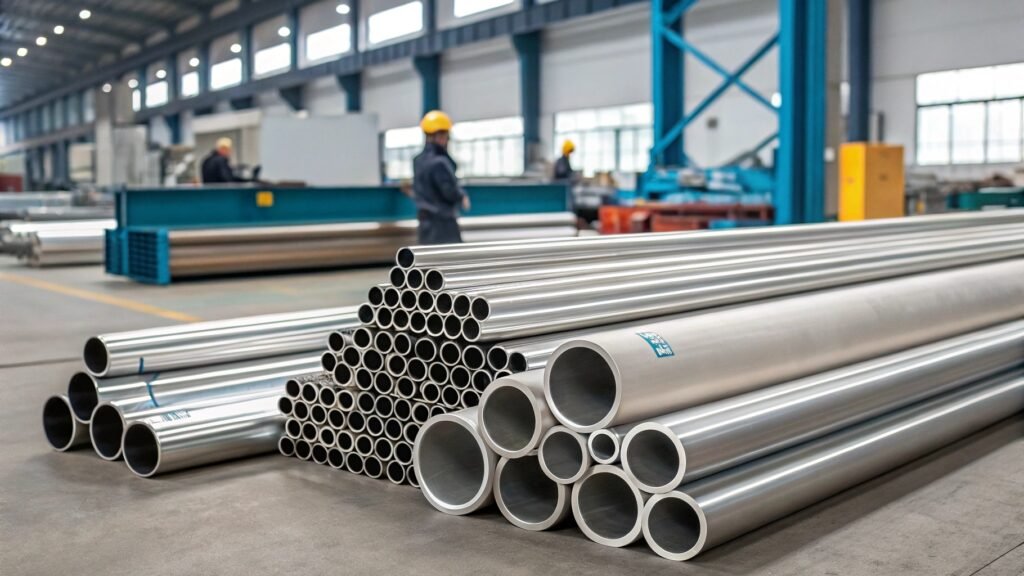
Understanding these categories is crucial for my customers, whether they are traders or machining specialists. It helps them select the right material for the job. Ferrous metals like steel are very strong and common, but they are heavy and rust. Noble metals are excellent for resisting corrosion but are far too expensive for most structural applications. This is where non-ferrous metals, especially aluminum, find their purpose. They offer a fantastic balance of properties. For our clients, choosing our forged aluminum means getting the corrosion resistance of a non-ferrous metal combined with a strength-to-weight ratio that heavy ferrous metals just can't match.
| Metal Type | Defining Characteristic | Common Examples | Key Advantage for Our Clients |
|---|---|---|---|
| Ferrous | Contains iron (Fe) as its main component. | Steel, Cast Iron | Known for high strength and low cost. However, a major disadvantage is its high density (it's heavy) and its susceptibility to rust (iron oxide corrosion). |
| Non-Ferrous | Contains no significant amount of iron. | Aluminum, Copper, Titanium | This is our specialty at SWA Forging. These metals are valued for specific properties. Aluminum's key benefits are its low density (lightweight) and excellent natural corrosion resistance. This makes it ideal for applications where reducing weight and ensuring long-term durability are critical, such as in automotive parts and industrial machinery. |
| Noble Metals | Highly resistant to corrosion and oxidation. | Gold, Platinum, Silver | Extremely stable and unreactive, but their rarity and high cost make them impractical for most industrial or structural uses. They are typically reserved for jewelry, electronics, or specialized catalytic applications. |
Is Aluminum Ever Considered a Non-Metal?
Sometimes in technical discussions, aluminum's chemical behavior creates confusion. This leads people to ask if it might be a non-metal.
This confusion can cause hesitation when selecting materials. If you believe aluminum isn't a true metal, you might overlook it for applications where its metallic properties are actually the perfect solution.
No, aluminum is definitively a metal. The confusion arises because it is an "amphoteric" metal, meaning it can react with both acids and strong bases. This dual reactivity is sometimes associated with non-metals. However, its physical properties—electrical conductivity, thermal conductivity, ductility, and metallic luster—unquestionably prove it is a metal.
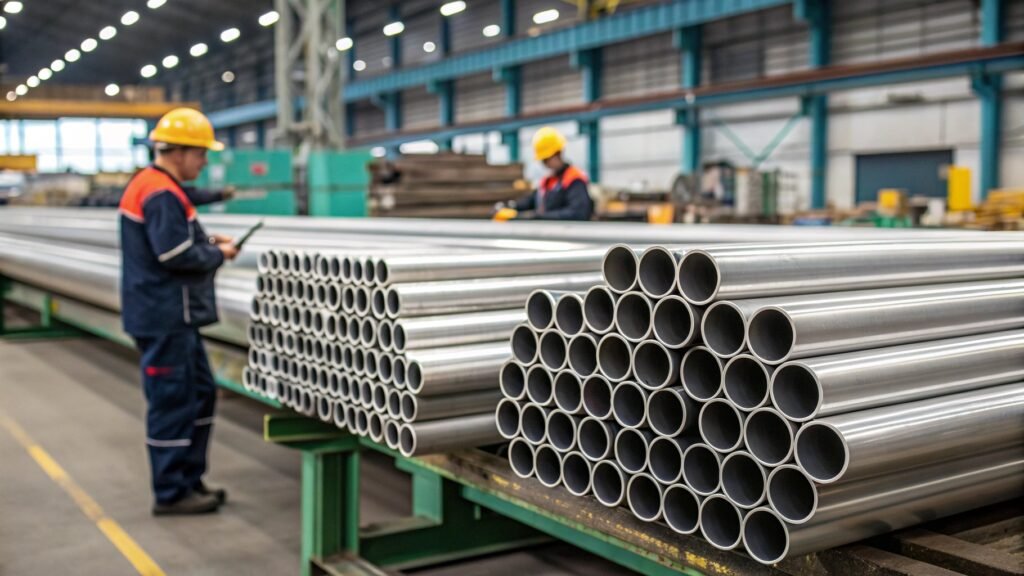
This question comes up because aluminum has a unique personality. It sits right next to the "metalloid staircase" on the periodic table—the dividing line between metals and non-metals. This position gives it some interesting chemical traits. The most notable is that it's "amphoteric." In simple terms, this means its protective oxide layer can be dissolved by both strong acids (like hydrochloric acid) and strong bases (like sodium hydroxide). This ability to react with both is a characteristic of some non-metals, which is the source of the misconception. However, we must look at its physical nature. It conducts electricity and heat very well. It can be drawn into wires (ductile) and hammered into sheets (malleable). It has a clear metallic shine. These are the classic, defining traits of a metal. For forging, these metallic properties are everything. We rely on its ductility and crystalline structure to shape it into the strong, reliable components our clients need.
Is Aluminum 100% Metal?
With all the talk of alloys and special properties, a simple question often comes to mind. Is the aluminum we use truly pure metal?
Uncertainty about a material's purity can lead to doubts about its performance. If you're not sure what you're getting, you can't be confident in the final product's strength and reliability.
Yes, the element aluminum (Al) is 100% metal. However, in virtually all practical applications, including the parts we forge, we use aluminum alloys. An alloy is a metallic substance made by mixing aluminum with small amounts of other elements—like copper, silicon, or zinc—to greatly enhance its properties, such as strength or machinability. So, the base is pure metal, but the end product is a carefully engineered metallic alloy.
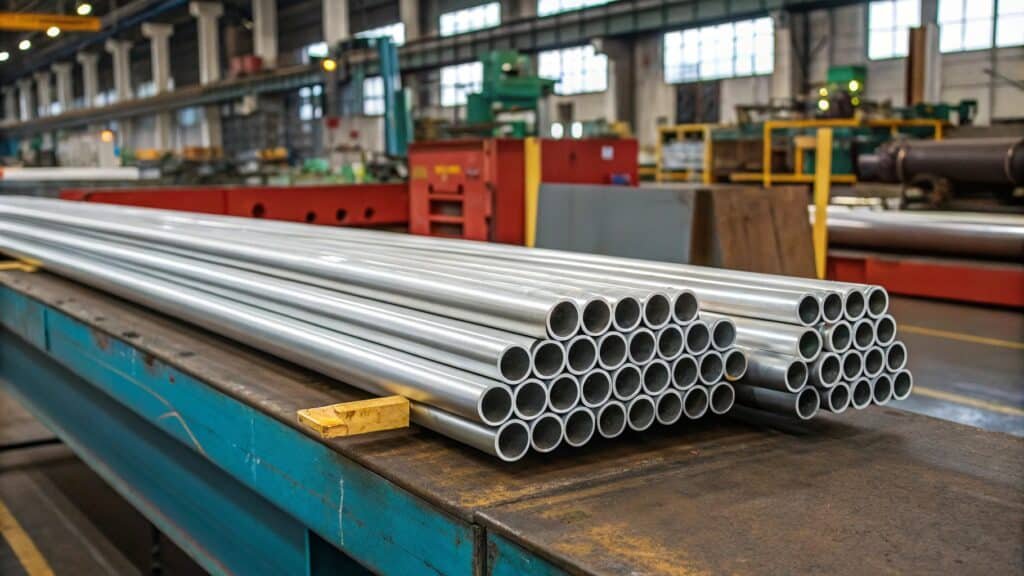
At SWA Forging, this is the core of our expertise. We start with high-quality, pure aluminum metal. But our clients need more than just a soft, pure metal; they need performance. That's where alloying comes in. By adding precise amounts of other metallic elements, we transform the base aluminum into a high-performance material tailored for a specific job. Think of it like baking a cake. Flour is the main ingredient, but you add other things to get the right texture and flavor. It is a material that is still fundamentally aluminum but is engineered to be harder, stronger, or easier to machine. This process allows us to deliver customized solutions that meet the exact specifications our machining clients and traders require for their demanding applications.
| Component | Role in the Final Product | Analogy |
|---|---|---|
| Aluminum (Al) | This is the base metal or matrix. It provides the fundamental properties: lightweight, corrosion-resistant, and conductive. It makes up the vast majority of the alloy, typically over 90%. | This is the flour in a cake. It's the main ingredient that provides the bulk and basic structure. |
| Alloying Elements | These are other metals (e.g., Copper, Magnesium, Silicon, Zinc) added in small, controlled amounts. Each element adds a specific property. For example, Copper (Cu) significantly increases strength, Magnesium (Mg) improves corrosion resistance in saltwater, and Silicon (Si) lowers the melting point and improves castability (though we use it in forging alloys too). | These are the eggs, sugar, and baking powder. They are added in small amounts but have a huge impact on the final result, determining if the cake is dense, fluffy, sweet, or savory. |
| Aluminum Alloy | This is the final engineered material. It is a solid solution of the alloying elements within the aluminum matrix. The result is a metal that is significantly more useful and robust than pure aluminum could ever be on its own. It is still 100% a metallic substance, but it's a precisely formulated one. | This is the finished cake. It's not just flour anymore; it's a completely new product with its own unique characteristics, ready to be served (or in our case, machined into a final part). |
What is Aluminum Metal Used For?
We've established what aluminum is, but where does it make the biggest difference? In which applications does this metal truly shine?
Without knowing a material's best uses, you might miss opportunities to improve your products. Using a heavy, rust-prone metal where a lightweight, durable one would work better is a common and costly mistake.
Aluminum metal is used everywhere, but its main applications are in transportation (aircraft, cars), construction (window frames, facades), and packaging (beverage cans). Its high strength-to-weight ratio is essential for making vehicles more fuel-efficient, and its corrosion resistance ensures longevity in buildings. We at SWA Forging focus on the industrial and machinery side, where its properties are critical for high-performance parts.
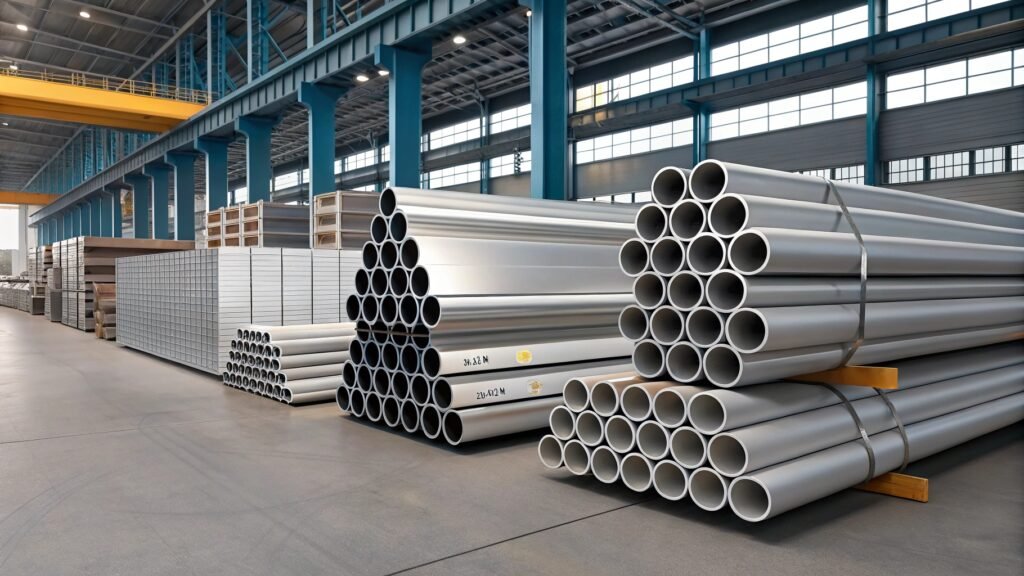
While you see aluminum in everyday items like beverage cans and kitchen foil, its most critical uses are in demanding industrial sectors. This is where SWA Forging operates. Our clients are traders and machining companies that supply parts to the automotive, aerospace, and heavy equipment industries. They come to us for forged aluminum discs and rings that will be machined into high-performance components. For example, a large forged ring we produce might become a structural part in a wind turbine or a lightweight gear in an automotive transmission system. In these applications, there is no room for compromise. The material must be both strong and light, and our forging process ensures it meets these standards by refining the metal's internal grain structure, making it tougher and more reliable than a standard cast or extruded piece.
Conclusion
Aluminum is a versatile, 100% metal whose properties are enhanced through alloying. SWA Forging uses this potential to create high-integrity forged components, delivering superior performance for critical industrial applications.