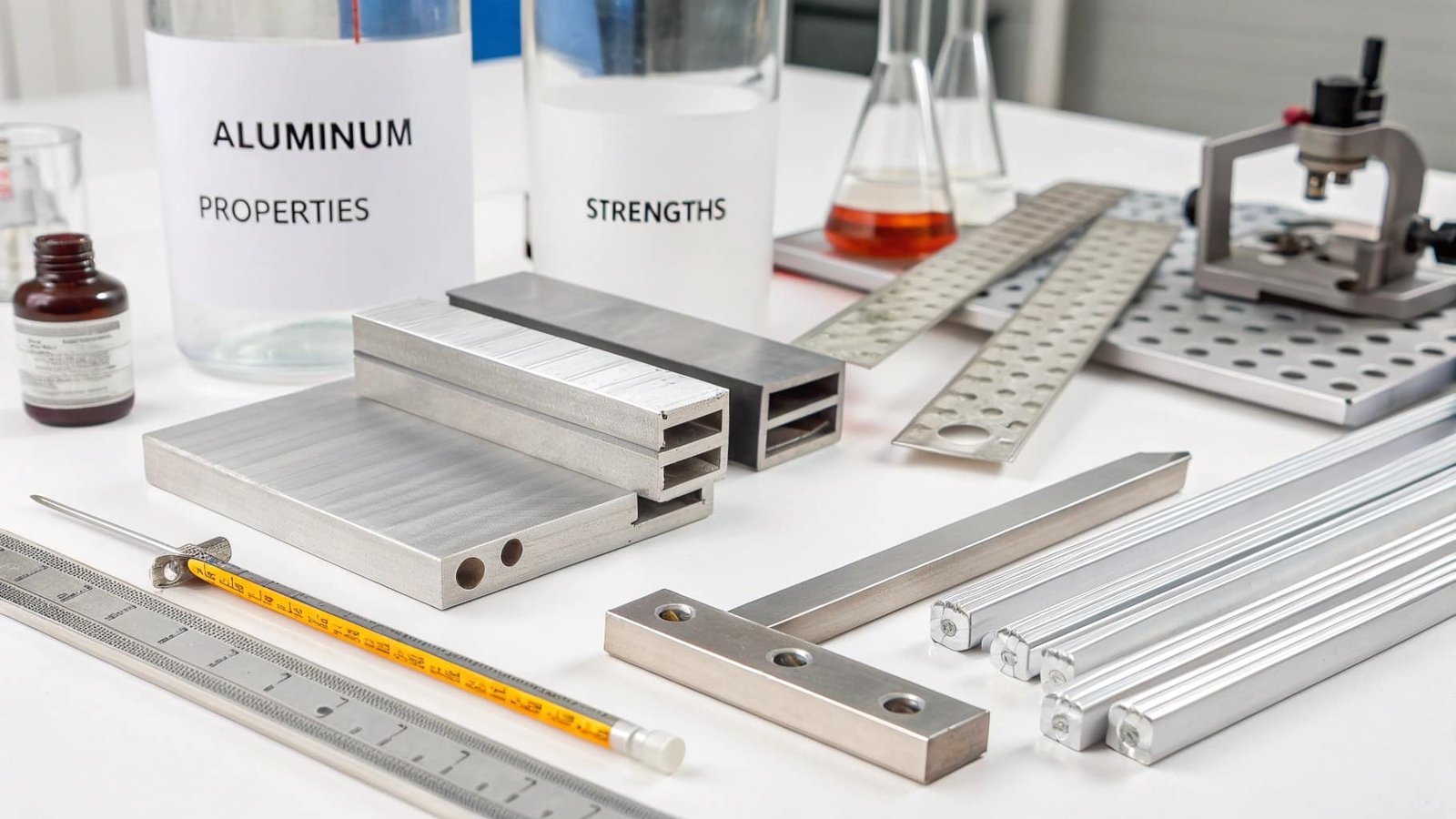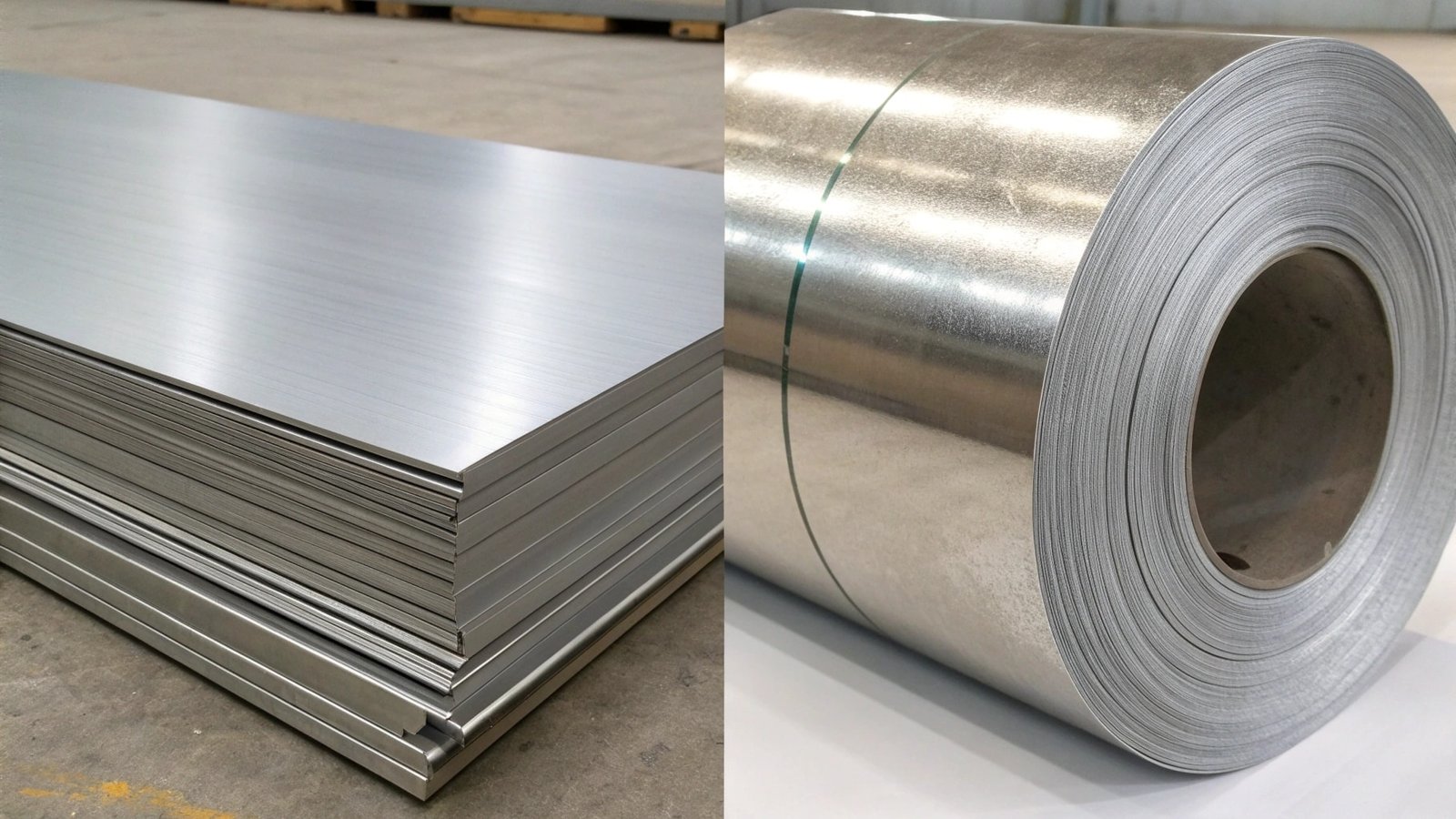
You specified "aluminum" for a structural part, expecting strength and durability. But the material that arrived is soft and weak, completely wrong for the job, leading to production delays.
The "aluminum" used in industry is almost always an aluminum alloy. Pure aluminum is too soft for most applications. Other elements are added to create alloys with the high strength and specific properties that engineering projects demand.
I remember a new client, a machining company, who wanted to source material for a hydraulic manifold. They requested "the purest aluminum you have," thinking that purer meant better quality. I had to explain that for their high-pressure application, pure aluminum would deform and fail almost instantly. Pure aluminum is an element. An alloy is a solution. We don't just sell metal; we provide engineered solutions. By adding specific elements like magnesium or zinc, we engineer the precise strength and machinability your project requires. We switched their order to a forged 6061-T6 alloy1, and the parts performed perfectly. This experience highlights a critical concept that is fundamental to our industry.
Are Alloy and Aluminum the Same Thing?
You see the words "aluminum" and "alloy" used almost interchangeably. This confusion can lead you to order a material that completely fails to meet your performance and strength requirements.
No, they are not the same. Aluminum is a pure chemical element (Al) on the periodic table. An alloy is a mixture of that base element with other metals to create a new material with greatly improved properties like strength or corrosion resistance2.
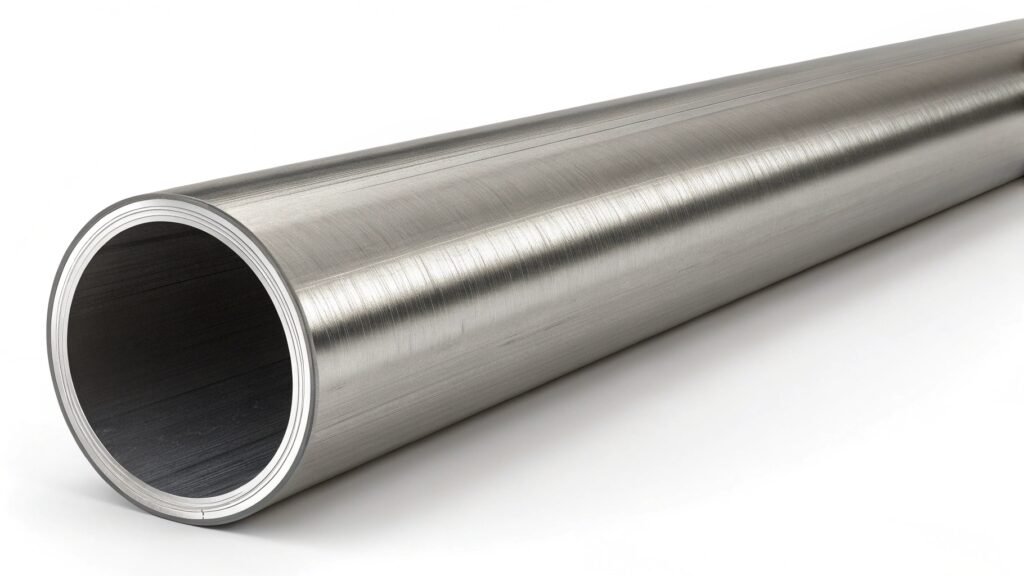
Think of it like baking. Pure aluminum is like plain flour. You can use it for some things, but it's not very useful on its own if you want to make a strong, structured loaf of bread. To get bread, you need to add yeast, salt, and water. These added ingredients transform the flour into something much more useful. In metallurgy, we do the same thing. We start with the base element, aluminum, and we add other metals like copper, magnesium, zinc, or silicon. These additions are not impurities; they are precisely measured ingredients. This process turns the soft, weak base metal into a high-performance aluminum alloy3. For example, the 1xxx series alloys are over 99% pure aluminum, making them soft and perfect for electrical wire. In contrast, a 7075 alloy contains zinc and copper, making it as strong as steel but much lighter.
Is an Alloy Made of Aluminum or Steel?
You hear about "alloy wheels" on cars or "alloy frames" on bikes. But is that alloy aluminum, or is it steel? This common question can cause major confusion when specifying materials.
An alloy is not one specific material. The term simply means a metal made by combining two or more metallic elements. So, you can have aluminum alloys, steel alloys, titanium alloys, and brass (a copper-zinc alloy).
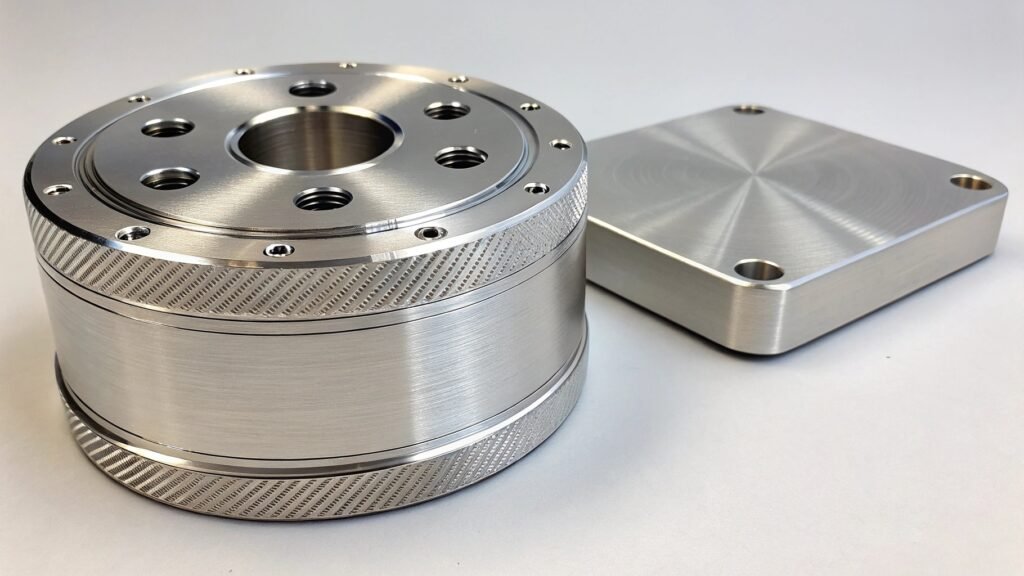
The word "alloy" by itself doesn't tell you the base metal. It's a general category, like the word "vehicle." A vehicle could be a car, a truck, or a motorcycle. You need more information. Similarly, an alloy needs a descriptor. Steel itself is an alloy of iron and carbon. We add other elements like chromium to make stainless steel alloys. In our world at SWA Forging, we specialize in aluminum alloys. This means aluminum is the primary metal in the mixture. When a customer from the automotive or aerospace industry asks us for a high-strength, lightweight solution, they are asking for a specific aluminum alloy like 6061 or 7075. They are not asking for a steel alloy, which would be much heavier and have different properties. Understanding this distinction is the first step in choosing the correct material for your job.
Quick Comparison: Aluminum Alloy vs. Steel Alloy
| Property | Aluminum Alloy (e.g., 6061-T6) | Steel Alloy (e.g., 4140) | Why It Matters for You |
|---|---|---|---|
| Base Metal | Aluminum (Al) | Iron (Fe) | This defines the fundamental characteristics. |
| Density/Weight | Low (Lightweight) | High (Heavy) | Critical for aerospace and automotive parts. |
| Corrosion | Naturally forms protective oxide layer. | Prone to rust without coating. | Affects part lifespan and maintenance needs. |
| Strength | Good to excellent strength-to-weight ratio. | Very high absolute strength. | Choose based on whether weight or pure strength is key. |
Why Is Aluminum Usually Called an Alloy?
You almost never see a structural product advertised as "pure aluminum." It's always an aluminum alloy. Why is the base metal not good enough for these common applications?
Aluminum is usually called an alloy because in its pure form, it is too soft and weak for most structural or mechanical uses. Alloying is the essential process that unlocks the strength and versatility that makes aluminum such a valuable industrial material.
The answer lies at the atomic level. In pure aluminum, the atoms are arranged in a very uniform, orderly crystal structure. This structure is easy to deform; the layers of atoms can slide over one another without much effort. This is why pure aluminum is soft and ductile. When we introduce atoms of other elements, like larger copper atoms or smaller silicon atoms, they disrupt this neat structure. These foreign atoms act like anchors, pinning the layers of aluminum atoms in place and making it much harder for them to slide. This is what we call "solid-solution strengthening." Furthermore, many alloys, like 6061 and 7075, can be heat-treated. This process causes the alloying elements to form tiny, hard precipitate particles within the metal's structure, strengthening it even further. Therefore, we call it an alloy because its useful properties are not inherent to aluminum itself but are created by the deliberate and precise addition of other elements.
Conclusion
Pure aluminum is an element, but an alloy is an engineered solution. We add specific elements to engineer the precise strength and machinability your project requires for guaranteed performance.
-
Learn about the 6061-T6 alloy's strength and versatility, making it ideal for various engineering applications. ↩
-
Learn how aluminum alloys naturally resist corrosion, enhancing the lifespan of your products. ↩
-
Understanding aluminum alloys is crucial for selecting the right material for strength and durability in engineering projects. ↩