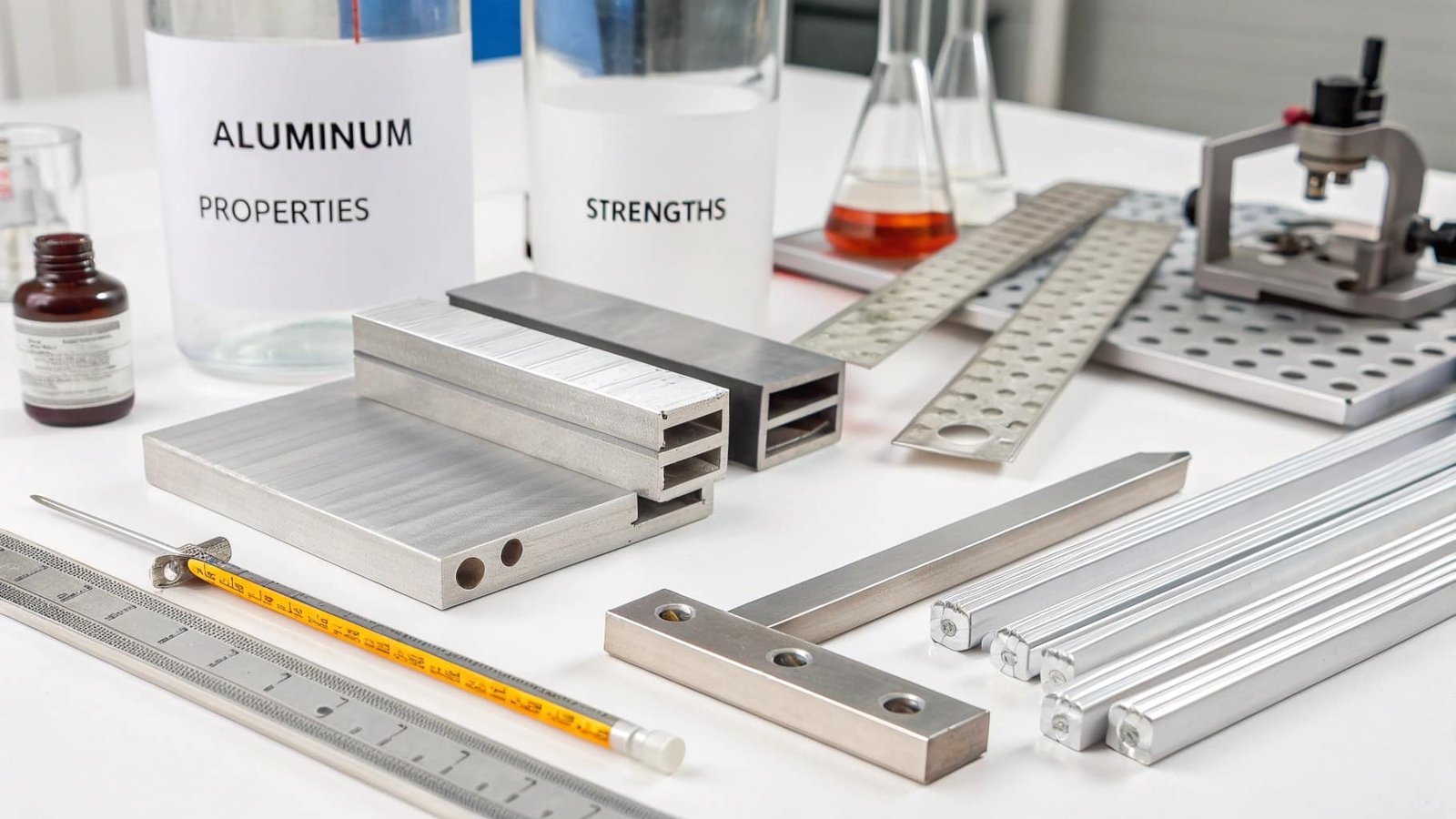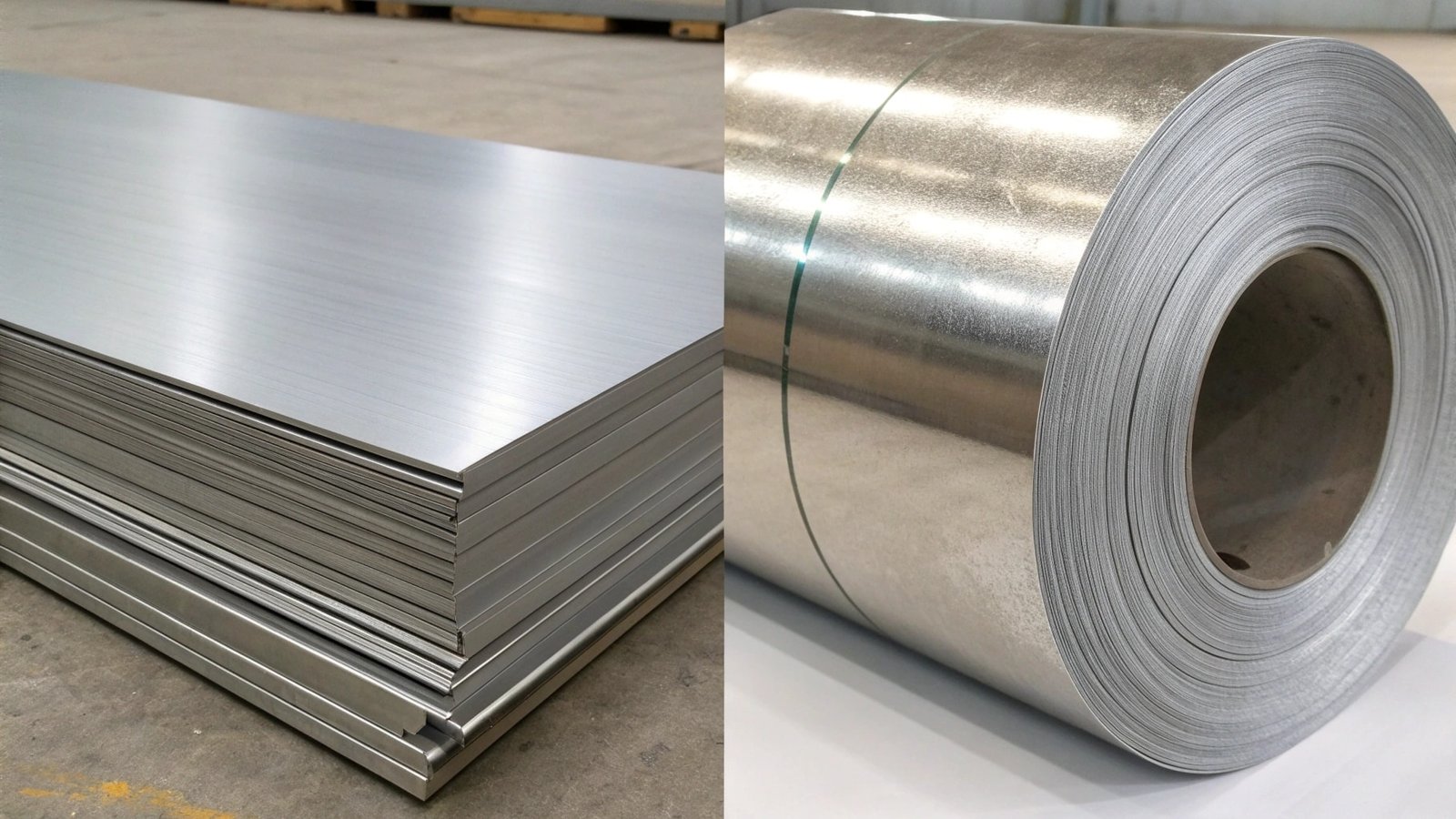
You see a list of aluminum grades like 6061 and 7075. You assume picking the right number is enough, but raw material properties can be dangerously inconsistent.
A grade is just a commodity label; the forged microstructure is the guarantee. We don't sell numbers like 6061. We deliver the certified performance that makes those numbers matter through our precision forging process.
I speak with clients every day who come to me with a grade number. They'll say, "I need a 7075 forged ring." My first job is to help them see past the number. A grade is a commodity label. The forged microstructure is the guarantee. We don't sell numbers like 60611 or 70752; we deliver the certified performance that makes those numbers matter. Anyone can buy a billet with a grade stamped on it. But what we do is take that raw material and fundamentally rebuild it from the inside out. Let's look at what some of these common grades mean, and more importantly, how we turn them into components you can stake your reputation on.
What is the difference between 6061 and 7050 aluminum?
You need a high-performance part and see grades 6061 and 7050 listed. They are both strong, but choosing the wrong one for a critical aerospace component3 could lead to failure.
The key difference is their alloying elements and application focus. 6061 (magnesium & silicon) is a versatile workhorse. 7050 (zinc) is a premium aerospace alloy with far superior strength and stress corrosion cracking resistance.
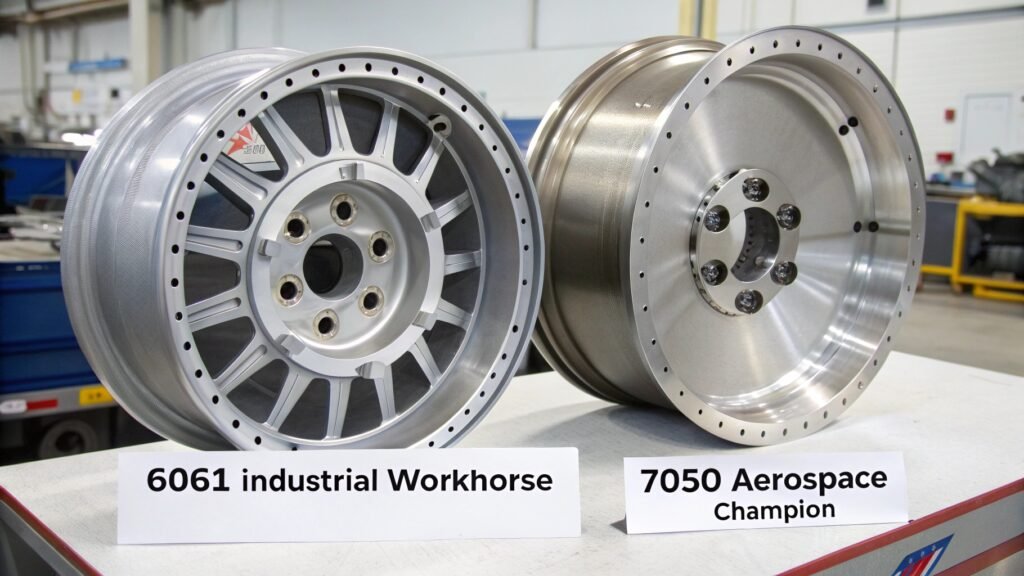
I like to use a car analogy for this. 6061-T6 is like a brand new, very reliable pickup truck. It’s strong, versatile, and does a great job in a huge range of demanding industrial applications. It's alloyed with magnesium and silicon, which gives it that great balance of strength, corrosion resistance4, and machinability. We forge countless rings and discs from 6061 for customers in the machinery and automotive sectors. 7050, on the other hand, is a Formula 1 race car. It's a high-zinc alloy from the 7xxx series, specifically developed to improve upon the legendary 7075 for thick plate and forging applications in aircraft. Its chemistry is tuned to provide exceptional strength combined with very high resistance to stress corrosion cracking (SCC), which is critical for parts under constant tension. When a client needs a part for a landing gear or a fuselage bulkhead, 7050 is the blueprint we execute.
Why is 7075 aluminum so expensive?
You see the high price of 7075 aluminum and wonder if it's justified. The cost seems excessive compared to more common alloys, making you question if it's necessary for your project.
7075 is expensive due to its complex alloy composition, including high-purity zinc and copper, and the intensive, multi-stage heat treatment process required to achieve its extreme strength. Its production is highly energy- and process-intensive.
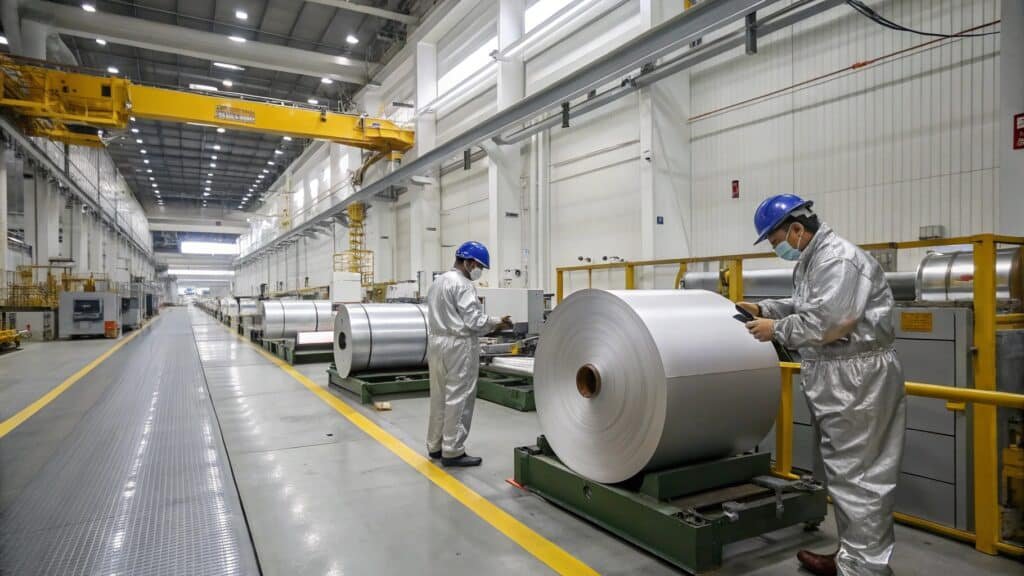
The price tag of 7075 comes down to two main things: the recipe and the cooking process. First, the recipe. 7075’s primary alloying element is zinc, but it also contains significant amounts of magnesium and copper. These aren't just standard-grade metals; they are often higher purity, which costs more. The combination is precisely balanced to create the potential for very high strength. Second, and this is the bigger factor, is the "cooking," or heat treatment. To get 7075 to its famous T6 temper, it requires a very controlled and energy-intensive process. It involves solution heat treating at a precise temperature, quenching rapidly to lock the alloying elements in place, and then artificial aging (baking) to precipitate the particles that create its incredible strength. This process takes time, uses a lot of energy, and requires extremely tight controls. Any deviation can ruin the material. So, you're not just paying for metal; you're paying for the complex metallurgy and the demanding manufacturing process required to create one of the highest-strength aluminum alloys available.
Is 6061 or 7075 aluminum stronger?
You need the strongest possible part for a lightweight application. You have to choose between 6061 and 7075, and making the wrong choice means the part could fail under load.
7075 aluminum is significantly stronger than 6061. In the T6 temper, 7075-T6 has an ultimate tensile strength that is nearly double that of 6061-T6, making it the clear choice for applications requiring maximum strength.
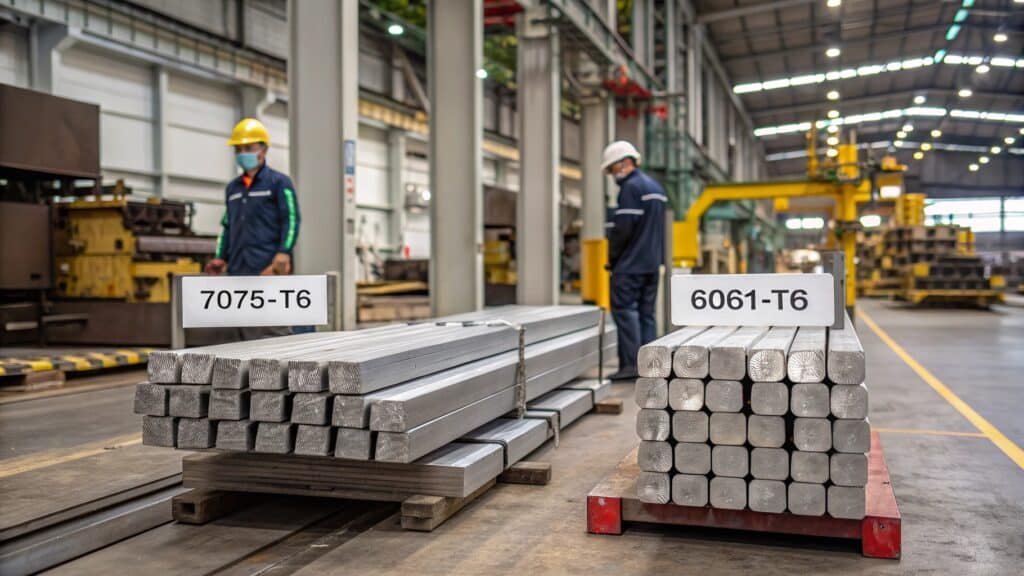
This is one of the clearest comparisons we can make. There is no contest here; 7075 is in a different league when it comes to strength. Let's look at the numbers for the T6 temper, which is the most common for both. A typical 6061-T6 forged part will have an ultimate tensile strength of around 310 MPa (45,000 psi). That's very strong and perfectly suitable for a huge range of structural parts. However, a 7075-T6 forged part will have an ultimate tensile strength of around 572 MPa (83,000 psi). It's nearly twice as strong. This is why 7075 is the backbone of the aerospace industry, used for things like wing spars and fuselage frames where maximum strength-to-weight ratio is the most important factor. For a customer building industrial machinery, 6061 is often the perfect, cost-effective choice. But for a customer building a high-performance aircraft or race car, the superior strength of 7075 is non-negotiable.
Strength at a Glance
| Alloy Grade | Typical Ultimate Tensile Strength | Primary Use Case |
|---|---|---|
| 6061-T6 | ~310 MPa (45,000 psi) | General structural, industrial, automotive. |
| 7075-T6 | ~572 MPa (83,000 psi) | High-stress aerospace and defense applications. |
What is the difference between 5052 and 6063 aluminum?
You are choosing between 5052 and 6063 for your product. They are both common and corrosion-resistant, but using them interchangeably will lead to major manufacturing problems and poor performance.
The main difference is that 5052 is a non-heat-treatable alloy for sheet metal work, while 6063 is a heat-treatable alloy used almost exclusively for extruding architectural shapes. They are not interchangeable.
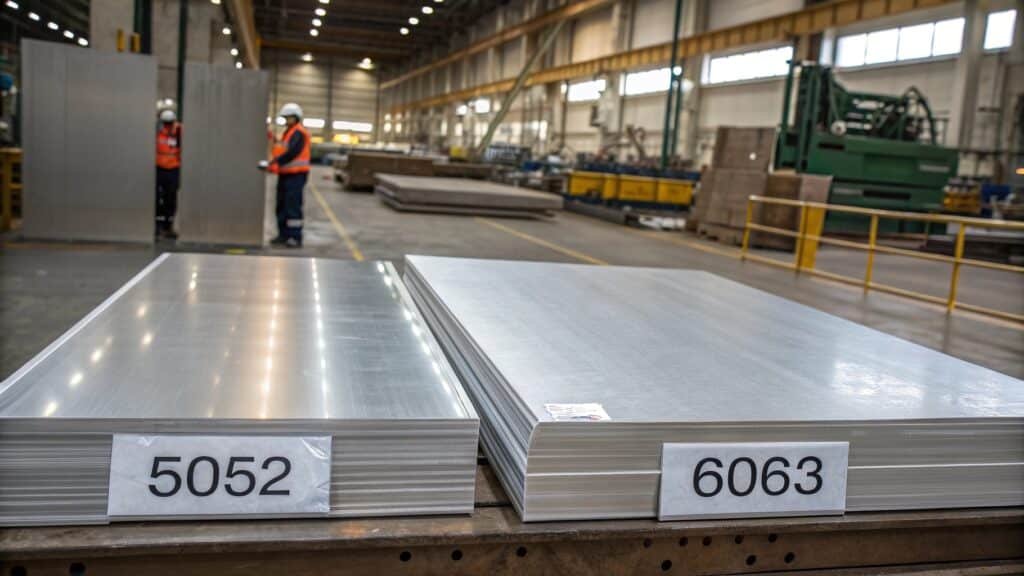
This question highlights how different alloys are designed for completely different manufacturing processes. 5052 is part of the 5xxx series, alloyed with magnesium. This series gets its strength from work-hardening, not heat treatment. It has excellent formability and fantastic corrosion resistance, especially in saltwater. This makes it the perfect material for boat hulls, fuel tanks, and sheet metal enclosures that need to be bent and formed. 6063 is in the 6xxx series, but it's a much lower-strength alloy than 6061. It is known as "architectural aluminum" for a reason. Its chemistry is specifically designed to have excellent extrudability, meaning it can be easily pushed through a die to create complex shapes like window frames, door frames, and decorative trim. It also has a great surface finish and good corrosion resistance. You would never try to forge 6063 into a structural part, and you wouldn't use 5052 for an extruded profile. They are specialists, designed for different jobs.
Conclusion
A grade number is a starting point, not a solution. We deliver the certified, forged performance that makes those numbers matter, ensuring your components are built for reliability and strength.
-
Explore the properties of 6061 aluminum to understand its versatility and applications in various industries. ↩
-
Learn why 7075 aluminum is a premium choice for aerospace applications due to its strength and corrosion resistance. ↩
-
Understand the critical requirements for aerospace components to ensure safety and performance. ↩
-
Investigate how different aluminum alloys offer varying levels of corrosion resistance. ↩