You see dozens of suppliers claim to be a "leading source" from China. But these words feel hollow when you face the real risks of inconsistent quality, communication gaps, and logistical nightmares.
A true leading source is a strategic partner, not just a factory. They take ownership of your project's risk, transforming your custom specs into a certified, high-performance asset that guarantees success.
A client once told me, "Every factory I talk to can meet my specs on paper." He was right. But that's where the real work begins. I believe a 'leading source' isn't a factory; it's your strategic partner. We don't just take your custom specs for a large-diameter aluminum ring—we take ownership of your risk. Our job is to ask the right questions and use our expertise to foresee challenges before they become problems. We are here to transform a design on paper into a certified, high-performance asset that you can depend on. This philosophy turns a simple purchase from China into a risk-free investment in your project's success.
What exactly is a forging process?
You know you need strong metal parts. But the term "forging" is just a word, and you're not sure why a forged part is fundamentally better or different from a cast one.
Forging is a manufacturing process that shapes metal using localized compressive forces. A heated metal billet is squeezed or hammered, refining its grain structure to create a part that is significantly stronger and more reliable than a cast or machined component.
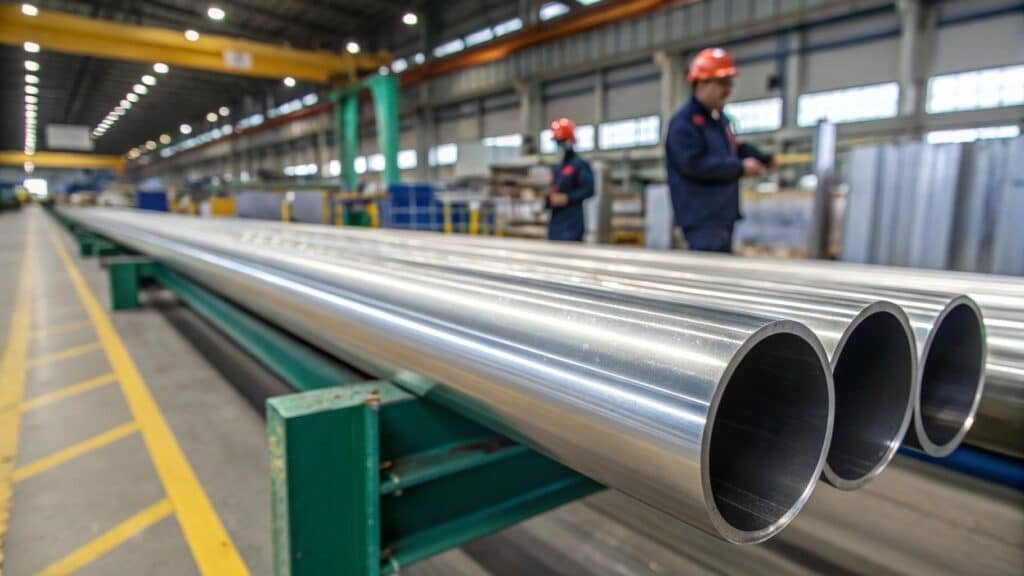
Let's break it down simply. Imagine you have a block of wood. You can carve a shape out of it (that's like machining), or you can glue sawdust together into a shape (that's like casting). Or, you can take that block of wood and compress it, forcing its grain to follow the shape you want. This is forging. At SWA Forging, we heat an aluminum billet to a precise temperature, making it pliable. Then, under the immense pressure of our presses, we shape it. This process does something magical at a microscopic level: it refines the metal's grain structure and aligns it with the part's contour. This "grain flow" eliminates the internal voids common in casting and creates a continuous structural integrity that makes the final component incredibly resistant to impact, fatigue, and stress. You aren't just getting a shape; you're getting engineered strength.
| Process | Core Concept | Key Advantage | Key Disadvantage |
|---|---|---|---|
| Forging | Shaping metal with compressive force | Superior strength and grain structure | Higher initial tooling cost |
| Casting | Pouring molten metal into a mold | Can create very complex shapes | Prone to porosity and defects |
| Machining | Cutting away material from a solid block | High precision and complex geometries | Can be wasteful of raw material |
What are the different types of forging?
You hear terms like "open-die" and "closed-die" but are unsure what they mean. This makes it difficult to understand which process is right for your custom component.
The main types are open-die and closed-die forging. Open-die forging is for large, simple shapes, while closed-die forging uses a custom mold to create more complex, precise parts with excellent repeatability.
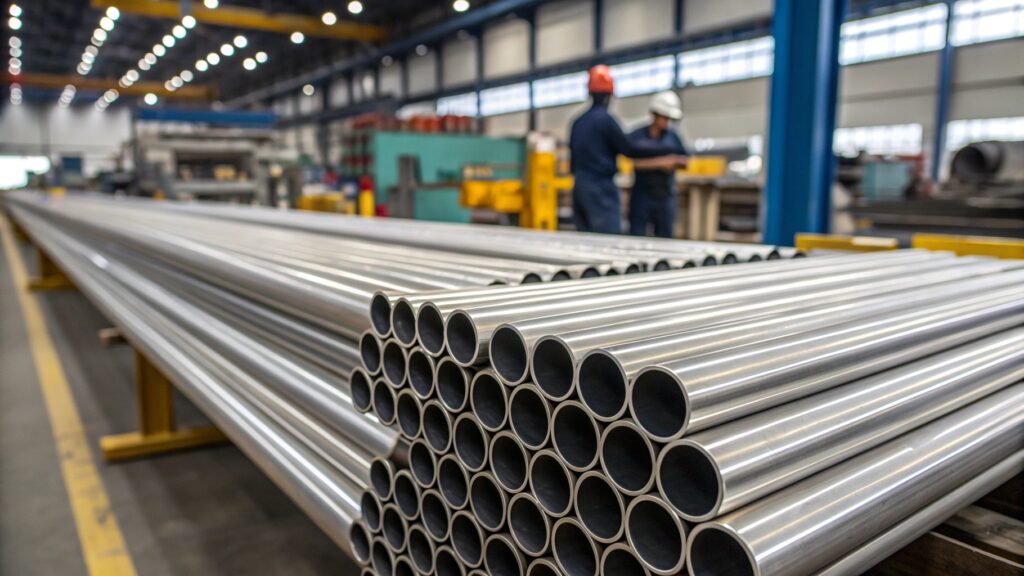
As a manufacturer of custom forged rings and discs, we use both processes depending on the client's needs. Understanding the difference is key.
Open-Die Forging: Think of this as a blacksmith with a hammer and anvil, but on a massive industrial scale. The aluminum billet is placed between two simple, flat dies and is progressively shaped. We use this method to create our large-diameter forged rings and discs. It is excellent for large parts and single or low-volume production runs because it doesn't require expensive, custom dies. The skill of the operator is critical here to achieve the correct dimensions and internal structure.
Closed-Die Forging (or Impression Die Forging): This is like using a very specific mold. We create two custom die halves that, when closed, form a cavity in the exact shape of the desired part. The heated billet is placed inside, and the press forces the metal to fill the entire cavity. This process is perfect for producing large quantities of complex parts with high precision and consistency. The initial cost to create the die is higher, but the cost per part becomes very low for high-volume orders.
What kind of forging equipment is used?
You know forging requires immense force, but you can't visualize the machinery involved. Understanding the equipment helps you appreciate the scale and precision required to make your parts.
Modern forging operations rely on two main types of equipment: massive forging presses and powerful hammers. Presses squeeze the metal into shape, while hammers shape it through a series of high-impact blows.
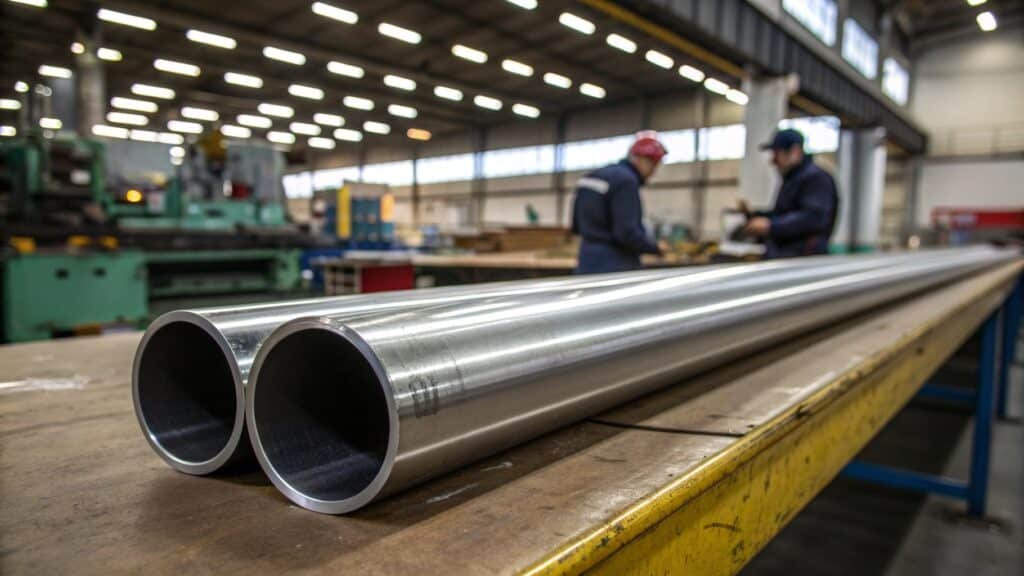
Walking through our facility, the scale of the equipment is always impressive to visitors. It's what allows us to shape solid aluminum with such precision. The two heroes of our production floor are hydraulic presses and forging hammers.
A hydraulic press, which is our primary tool for large rings and discs, generates enormous force by using fluid pressure to move a ram at a controlled speed. This slow, powerful squeezing action is ideal for aluminum alloys, as it allows the force to penetrate deep into the material, ensuring a uniform grain structure throughout the entire workpiece. We can precisely control the pressure and speed, which gives us exceptional control over the final product's dimensions and properties.
A forging hammer works more like a traditional blacksmith's hammer, but it's driven by mechanical or pneumatic power and can weigh many tons. It shapes the metal through a rapid series of impacts. While very effective, the force is more concentrated on the surface. For our focus on large-diameter, high-integrity aluminum forgings, the controlled and deep-working force of the hydraulic press is often the superior choice.
What are the design considerations for forging?
You have a part design, but you're not sure if it's suitable for forging. You worry that a poor design will lead to manufacturing defects or an unnecessarily expensive final product.
Key design considerations include adding draft angles for easy removal from the die, using generous radii to ensure smooth metal flow, and keeping wall thicknesses uniform to prevent defects and ensure structural integrity.
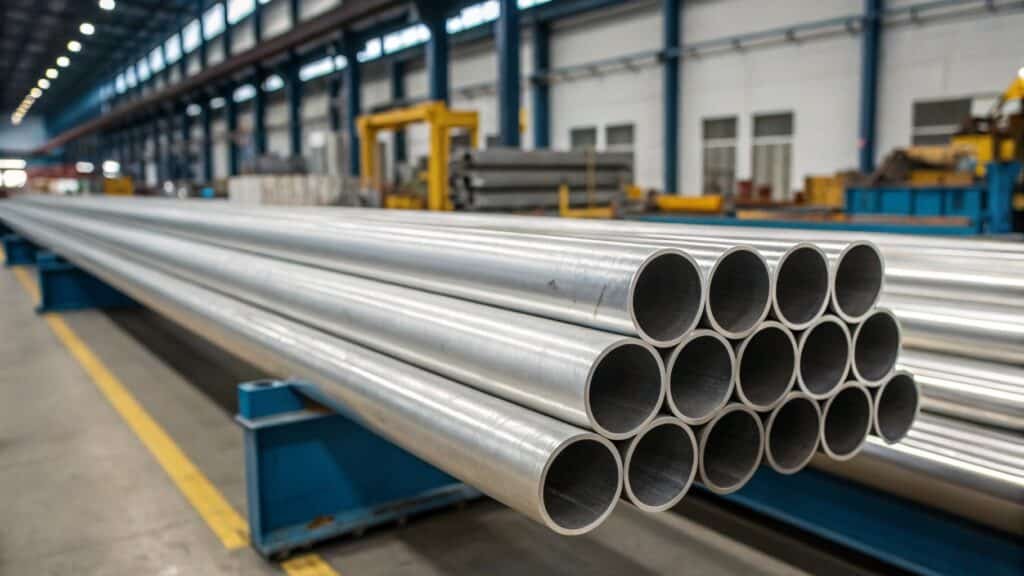
This is where a partnership truly begins. A design that is perfect for machining might be impossible to forge. When a client sends us a drawing, we don't just look at the final shape; we analyze it for forgeability.
Here are the critical points we discuss:
- Draft Angles: Imagine trying to pull a cup straight out of wet sand; the sides would collapse. We need to add a slight taper, or draft angle, to all vertical surfaces so the part can be easily removed from the die.
- Radii and Fillets: Sharp internal corners are the enemy of good forging. They restrict metal flow and create stress points. By designing generous, rounded corners (radii and fillets), we allow the metal to flow smoothly and fill every part of the die, resulting in a stronger, defect-free part.
- Parting Line: This is where the two halves of the closed die meet. Its location is a strategic choice that affects metal flow, grain structure, and the final cost. We position it to optimize the strength of the part.
- Wall Thickness: Drastic changes in thickness can cause problems. We advise keeping walls as uniform as possible to ensure the part cools evenly and to prevent internal defects.
Conclusion
A leading source in China is a partner who brings expertise to every step, from design review to final certification, ensuring your project is a guaranteed success from the start.