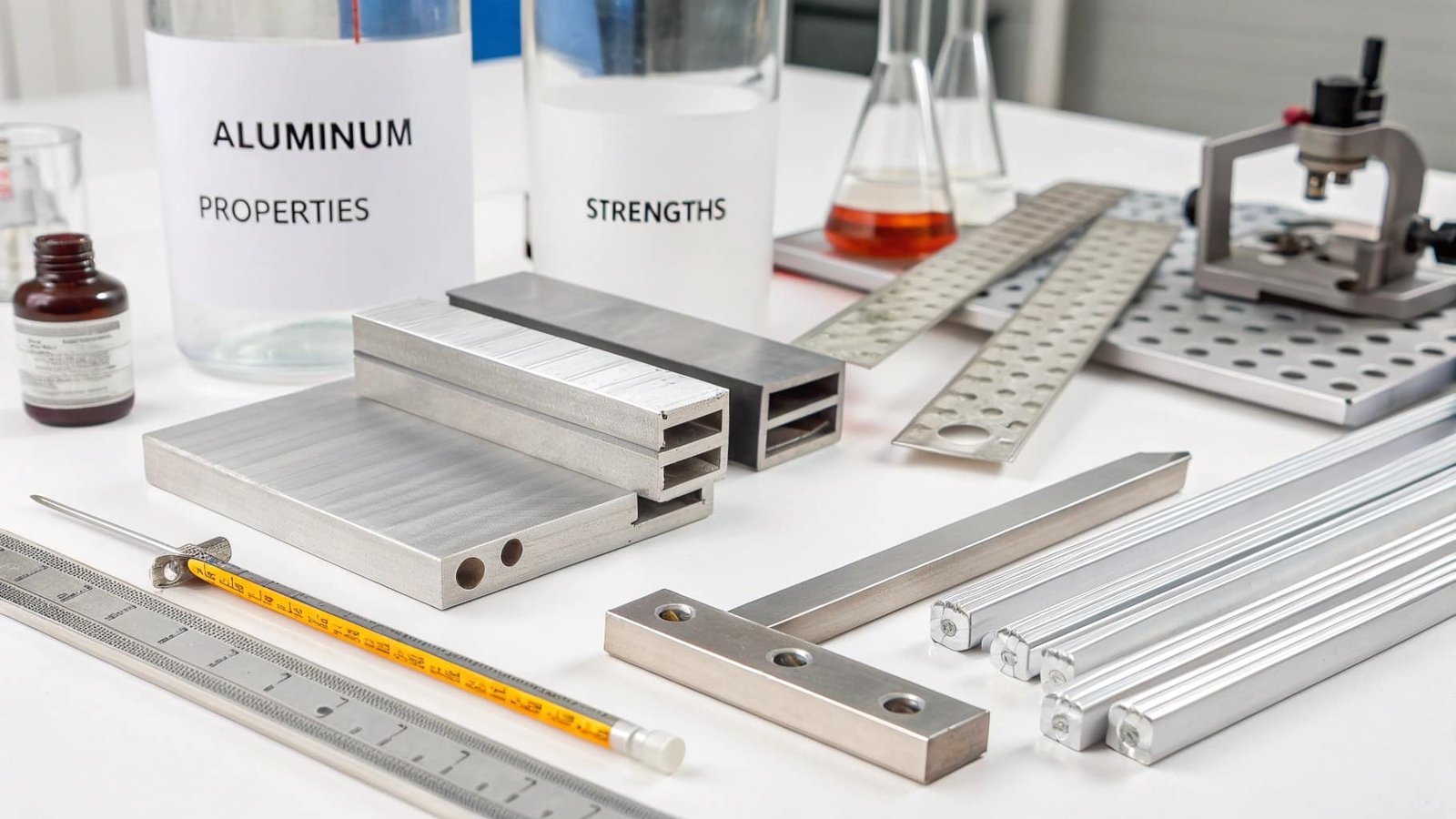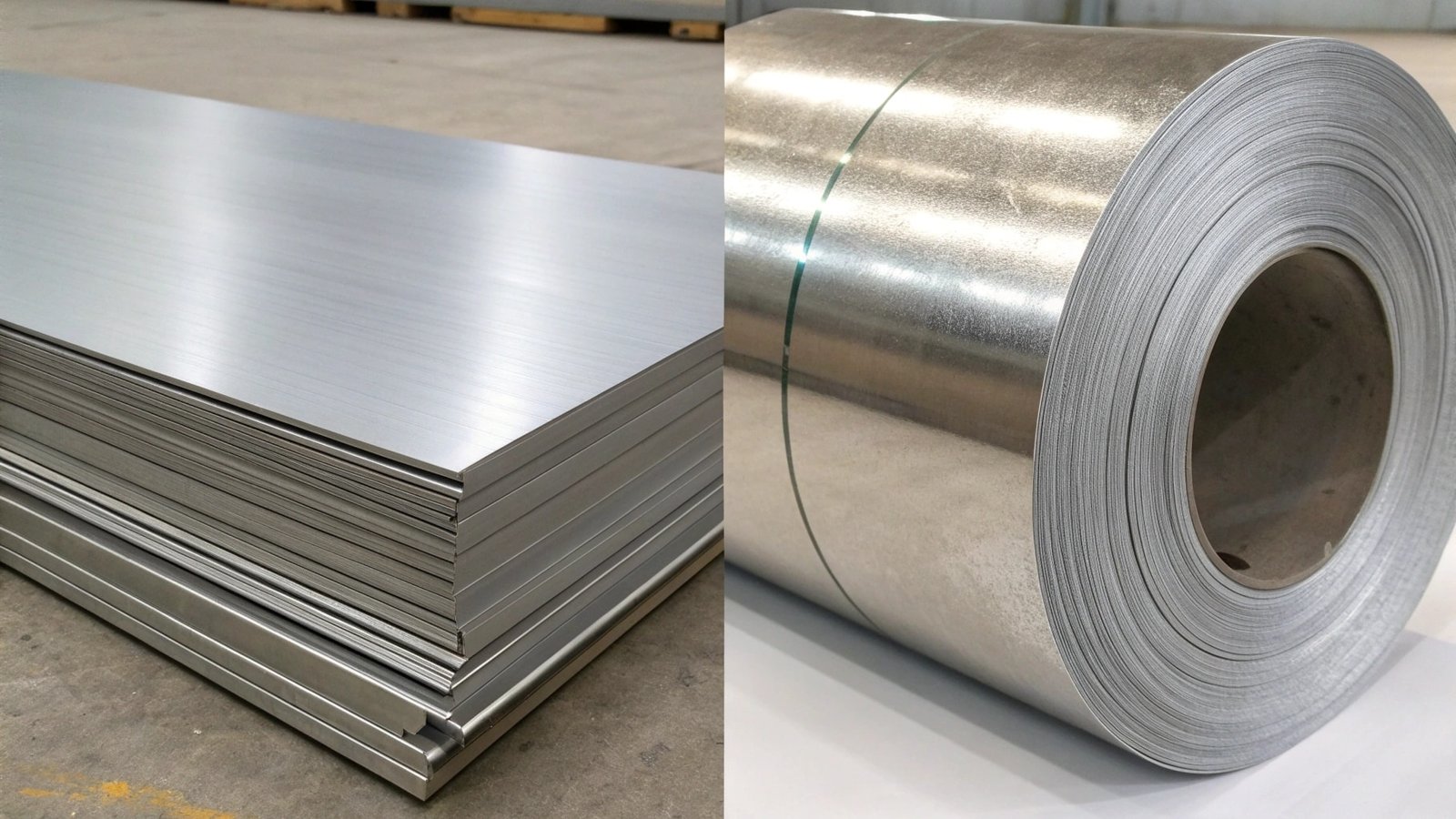
You think of aluminum foil and soda cans, and the word "soft" comes to mind. This perception makes you hesitant to specify it for structural parts that demand strength and hardness.
In its pure form, aluminum is indeed soft and malleable. However, through alloying and advanced forging processes, it is transformed into a range of high-strength materials with hardness levels suitable for the most demanding industrial and aerospace applications.
I have this conversation daily with engineers and machinists. They see the incredible lightweight benefits of aluminum but are held back by the fear of it being flimsy. I tell them that pure aluminum's softness is a starting point, not the final product. Softness is a liability, not a feature. Our forging process is designed to attack this inherent trait. It transforms a soft billet into a material with predictable hardness and a refined grain structure. This completely eliminates the "gummy" machining problem associated with soft metals, delivering a material engineered for high-speed, clean-cutting performance.
Is aluminum a softer metal than steel?
You instinctively reach for steel when a project requires hardness and wear resistance. The assumption that all aluminum is soft could be costing you significant advantages in weight and efficiency.
Yes, fundamentally, aluminum alloys1 are softer than steel alloys. A typical 6061-T6 aluminum has a Rockwell hardness of around 60 HRB, while a common mild steel is closer to 70 HRB, and hardened tool steels are much higher.
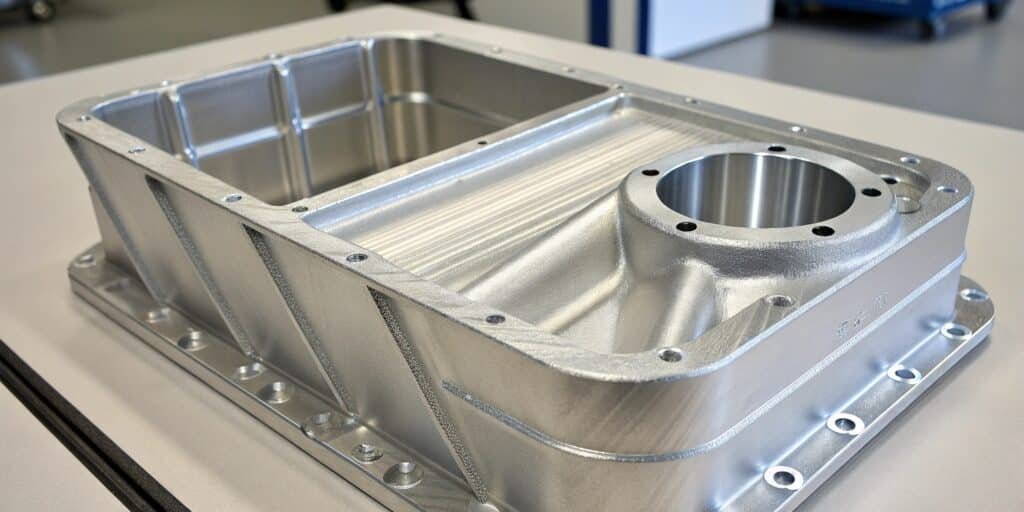
This is a straightforward fact of metallurgy. On any standard hardness scale, steel will almost always measure harder than aluminum. Hardness is a measure of a material's resistance to indentation and scratching. Steel's atomic structure, with its high density of iron and carbon, naturally creates a harder, more wear-resistant surface.
However, this doesn't tell the whole story. While steel is harder, it is also three times denser. The critical question for modern engineering is not just "how hard is it?" but "how much performance do I get for the weight?" For many applications, the hardness of a forged aluminum alloy like 6061-T6 or 7075-T6 is more than sufficient. We produce large forged discs for machine components that require excellent machinability and structural integrity, but not the extreme surface hardness of a hardened steel gear. The benefit is a much lighter part, which reduces inertia, saves energy, and is easier to handle and install.
Is aluminum easy to bend by hand?
You might have bent a piece of thin aluminum trim or wire easily. This experience makes you worry that a larger aluminum part might deform under load, leading to failure.
Thin sheets or small rods of pure, soft aluminum can be bent by hand. However, a structural aluminum alloy like forged 6061-T6 or 7075-T6 in any significant thickness is impossible to bend by hand, exhibiting immense stiffness and resistance to deformation.
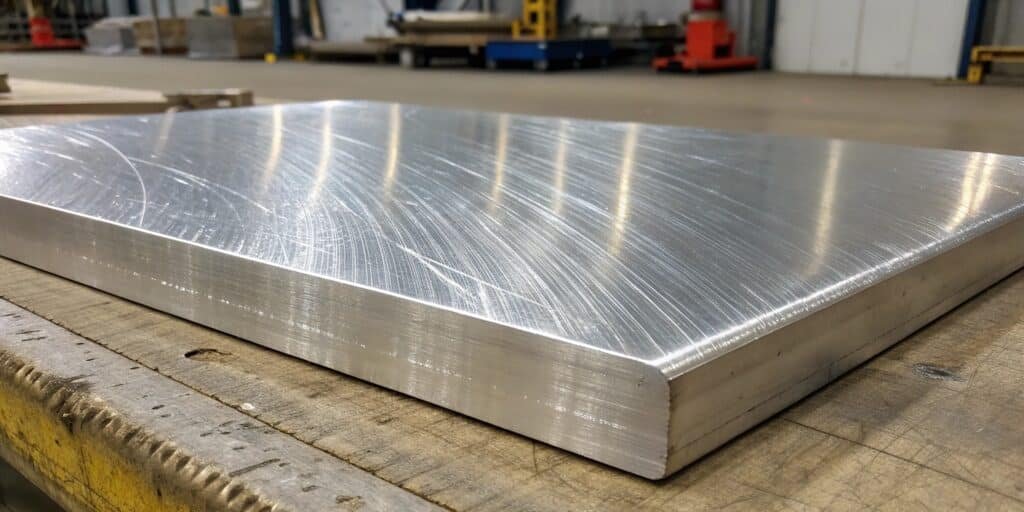
This question perfectly illustrates the difference between pure aluminum and engineered aluminum alloys. The aluminum in a piece of foil is a 1xxx series alloy, which is over 99% pure. It is in an annealed (softened) state, called the "O" temper. It is designed to be extremely soft and malleable for shaping and wrapping.
Now, consider a forged 6061-T6 aluminum disc from our facility, maybe 50mm thick. This is a completely different animal.
- Alloying: It contains magnesium and silicon, which add inherent strength.
- Forging: The forging process has compressed the material, refined its grain structure, and eliminated internal voids, making it dense and uniform.
- T6 Temper: The heat treatment has created a microscopic structure that resists deformation.
The result is a material with high stiffness and yield strength. Yield strength is the amount of stress a material can take before it starts to bend permanently. Forged 6061-T6 has a high yield strength, meaning it will resist bending until a massive force is applied, far beyond what any person can do. It is not flimsy; it is engineered to be rigid.
Is aluminum flimsy?
The word "flimsy" suggests a lack of substance and reliability. You worry that using aluminum for a critical part will result in something that feels cheap, vibrates, or fails unexpectedly.
No, structural aluminum is the opposite of flimsy. The stiffness-to-weight ratio2 of forged aluminum alloys is superior to steel, meaning they can be designed to create lighter parts that are just as rigid and stable as their steel counterparts.
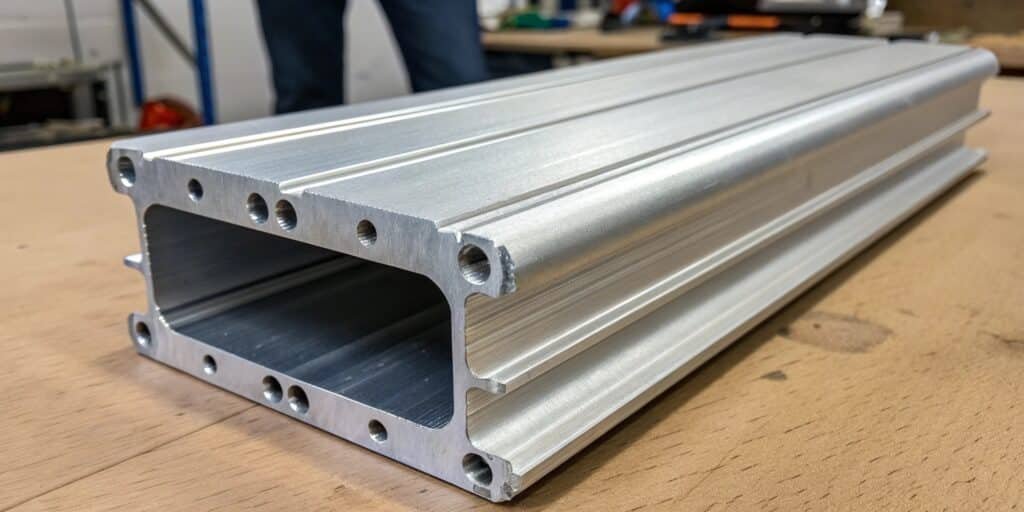
"Flimsy" is about more than just bending; it's about a feeling of instability. In engineering, we measure this property as stiffness, or the Modulus of Elasticity. While steel has a higher modulus (it's stiffer pound-for-pound), aluminum's low density gives it a huge advantage.
Let me explain. Imagine you need to design a beam that can't deflect more than 1mm under a certain load.
- Steel Beam: You design a solid steel beam that meets the stiffness requirement. It is strong, but very heavy.
- Aluminum Beam: Because aluminum is one-third the weight, you can design a beam with the same weight as the steel one, but with a much larger and thicker cross-section (e.g., a hollow tube or a deeper I-beam).
This geometrically larger aluminum beam will be significantly stiffer than the solid steel beam of the same weight. This is why you see modern machine frames, automation gantries, and aircraft structures built from large aluminum extrusions and forgings. They are designed to be incredibly rigid and stable, but without the massive weight penalty of steel. A part forged at SWA Forging is engineered to be robust, stable, and absolutely reliable—the exact opposite of flimsy.
Conclusion
Aluminum's initial softness is a blank canvas. Through forging and alloying, we engineer it into a hard, strong, and rigid material that delivers high performance without the weight penalty.Planning and Structuring the Content
I'm initiating the process for a blog post for SWA Forging. The main topic is "is aluminium soft," so I'm starting by brainstorming a captivating title and a series of question-based secondary titles. The aim is to create an engaging flow for the reader.
Outlining the Structure
Now I'm focusing on the structure of the post, starting with the main title and introduction. I'm focusing on the "Problem-Agitation-Solution" (PAS) format to engage the reader, and the snippet answer for a quick, informative answer. I'm also planning to integrate an image.
Structuring the Content
I'm starting with a new mental sandbox, focusing on the content for the blog post. I've got a title in mind—"Is Aluminum Too Soft for Your High-Performance Needs?"—and I'm ready to dive into the main sections. I'm also thinking about a snippet paragraph and the transition paragraph.
Developing the Opening
I'm starting the blog post for SWA Forging, focusing on the topic "Is Aluminum Soft?". I've got the title in mind, so I'm moving on to the opening paragraph, which I'll write in the "Problem, Agitation, Solution" (PAS) format. The goal is to address the common misconception about aluminum's softness and then present SWA's forging process as the solution. I'm also going to add a snippet paragraph and an image placeholder.
Writing the Introduction
I'm starting the blog post for SWA Forging, and I'm going to kick off with a captivating title: "Is Aluminum Too Soft for Your High-Performance Needs?". This will immediately grab the reader's attention and lead them into the introduction, which I'm structuring using the "Problem, Agitation, Solution" (PAS) format.
Developing the Content
I've got the main structure for the blog post now. I've formulated the intro and snippet paragraphs, and I'm ready to move on. I'm confident that the current draft will resonate with the client's target audience, and I'm looking forward to getting their feedback.