Your reputation with machining clients depends on consistent material quality. But one bad batch of 7075 rings can lead to costly rejections, damaging the trust you have worked so hard to build.
To guarantee quality, look beyond the final product certificate. Demand a supplier with certified processes like ISO 9001 and full traceability. This ensures every forged 7075 ring meets the exact mechanical properties promised, from the first piece to the last.
For a trader, a material certificate is your promise to your customer. But for us, that certificate is just the final step. Our entire process is your proof. We don't just test one ring from a batch and hope for the best. We provide complete process traceability that certifies the entire production run shares the same forged integrity. This approach safeguards your reputation and protects your client's significant investment in machining time and labor.
Can 7075 aluminum be forged?
You need the extreme strength of 7075 but worry the material is too difficult to forge correctly. This could lead to you supplying material with hidden defects that cause failure later.
Yes, 7075 aluminum is specifically designed for forging. The forging process is absolutely essential to achieve its signature high strength. Proper forging refines its grain structure, creating a dense, uniform material perfect for high-stress applications.
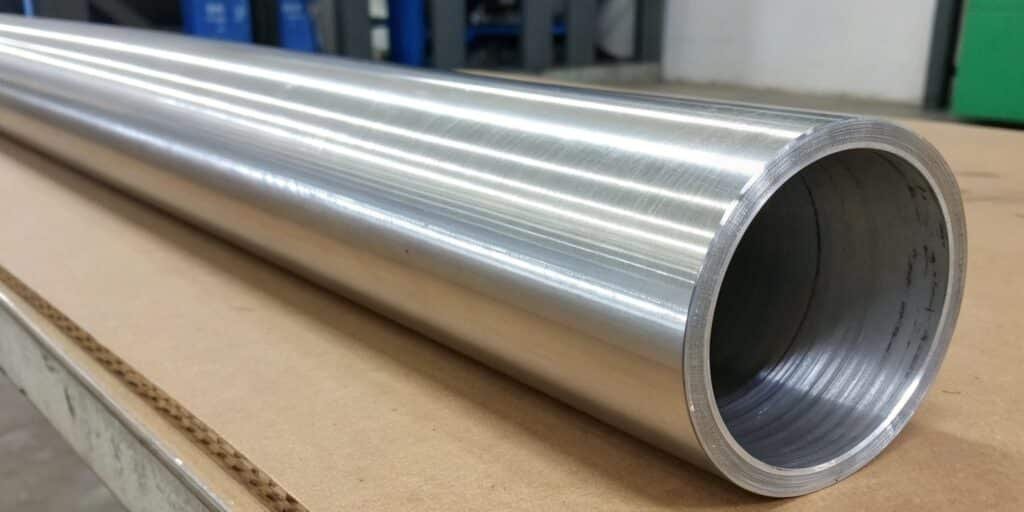
The strength of 7075 isn't just in its chemical recipe; it's activated by the forging process. When we take a cast billet of 7075, its internal crystal structure is large and random. This is a point of weakness. Our forging process, using immense pressure at precise temperatures, changes everything. It breaks down those coarse grains and forces them to align with the shape of the part, a phenomenon known as grain flow. This process eliminates internal porosity and creates a homogenous microstructure. The result is a forged ring with superior fatigue resistance and tensile strength that is consistent throughout the entire piece. For your clients, this means predictable machining and reliable final part performance.
What are the disadvantages of 7075 aluminum?
You love the strength of 7075, but you're worried about its limitations. You need to advise your clients correctly to avoid unexpected failures or misapplication of the material.
The main disadvantages of 7075 aluminum are its lower corrosion resistance1 compared to alloys like 6061 and its poor weldability. It also has a higher material cost. These trade-offs are necessary to achieve its exceptional strength-to-weight ratio2.
No material is perfect for every job. As a trader, guiding your client to the right material builds trust. 7075 is a specialist, a champion of strength, but that specialization comes with trade-offs. It's crucial to understand these so you can set the right expectations.
Here's a simple breakdown to help you advise your clients:
| Feature | 7075 Aluminum (The Specialist) | 6061 Aluminum (The Workhorse) |
|---|---|---|
| Strength | Exceptional (Highest) | Good (Very Versatile) |
| Corrosion Resistance | Fair (May require protective coating) | Excellent |
| Weldability | Poor (Not recommended for welding) | Good |
| Cost | Higher | Lower |
When your client needs the absolute highest strength-to-weight ratio for a machined part, like in aerospace or high-performance machinery, 7075 is the clear winner. If the part needs to be welded or will be exposed to a corrosive environment without a surface coating, 6061 is often the more practical and cost-effective choice.
Which is better, 6061 or 7075 aluminum?
Your clients ask which alloy is "better," a simple question with a complex answer. Recommending the wrong one can lead to over-spending on an application or, worse, a component failure.
Neither is inherently "better"; they are engineered for different purposes. 7075 is better for applications demanding the highest possible strength, while 6061 is better for all-around versatility, corrosion resistance, and cost-effectiveness.
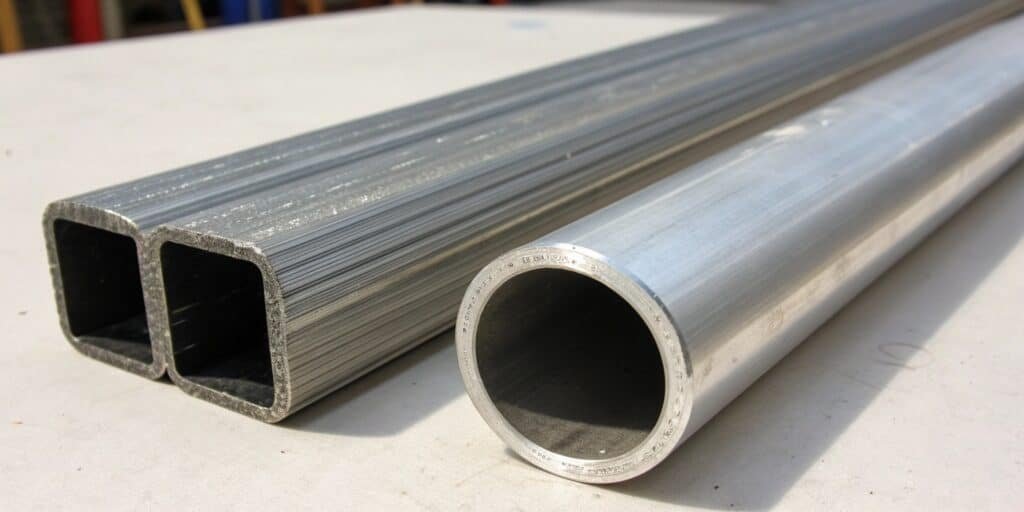
The best way to answer this is to ask your client another question: "What is the most critical requirement for your final part?" This shifts the focus from a simple comparison to a needs-based solution. We help our trading partners navigate this conversation every day.
Think of it like choosing a vehicle. Is a race car "better" than a pickup truck? It depends on the job.
- Choose 7075 (The Race Car) when: The single most important factor is maximum strength and minimum weight. The application involves high stress, high fatigue, and performance is paramount. Think of aircraft structural components, high-end bicycle frames, or industrial tooling. The higher cost and need for surface protection are acceptable for this peak performance.
- Choose 6061 (The Pickup Truck) when: You need a strong, reliable, and predictable material for a wide range of jobs. The application requires good strength, but also needs to be corrosion-resistant, easily machined, and possibly welded. It's the perfect choice for machine bases, structural frames, hydraulic components, and general industrial parts.
What is the best aluminum for forging?
You need to source a forged product, but you're unsure which alloys are suitable. You want to offer your clients materials that are not only strong but also benefit most from the forging process.
While many alloys can be forged, 7075, 6061, and 2024 are among the best and most common. These alloys are specifically designed so their mechanical properties are dramatically enhanced by the forging and subsequent heat treatment processes.
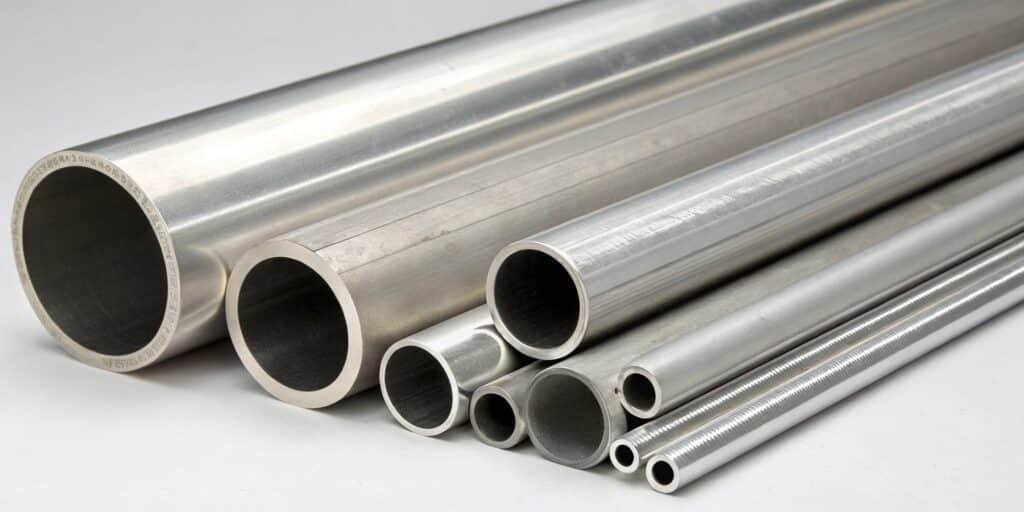
The "best" forging alloys are those that respond best to thermomechanical processing. The forging process isn't just about shaping the metal; it's about fundamentally improving its internal structure. Certain alloy families are engineered to maximize this improvement.
Key Forging Alloy Families:
- 7xxx Series (Zinc-based, like 7075): This is the king of strength. The combination of zinc as the primary alloying element and our forging process results in the highest strength-to-weight ratio possible for aluminum. It is the top choice for strength-critical applications.
- 6xxx Series (Magnesium & Silicon-based, like 6061): This series offers a fantastic balance of properties. It responds very well to forging and heat treatment, resulting in good strength, while also having great corrosion resistance, weldability, and extrudability. It’s the most versatile forging alloy.
- 2xxx Series (Copper-based, like 2024): This is another high-strength, aerospace-focused alloy. It offers excellent fatigue resistance, making it suitable for parts that experience cyclic stress. It's often seen alongside 7075 in aircraft structures.
As a supplier, we focus on 7075 and 6061 for our large forged rings and discs because they cover the majority of high-performance industrial needs our traders' clients have.
Conclusion
Sourcing 7075 rings successfully comes down to partnering with a manufacturer whose certified processes guarantee quality. This ensures the material you supply consistently protects your reputation and your client's investment.