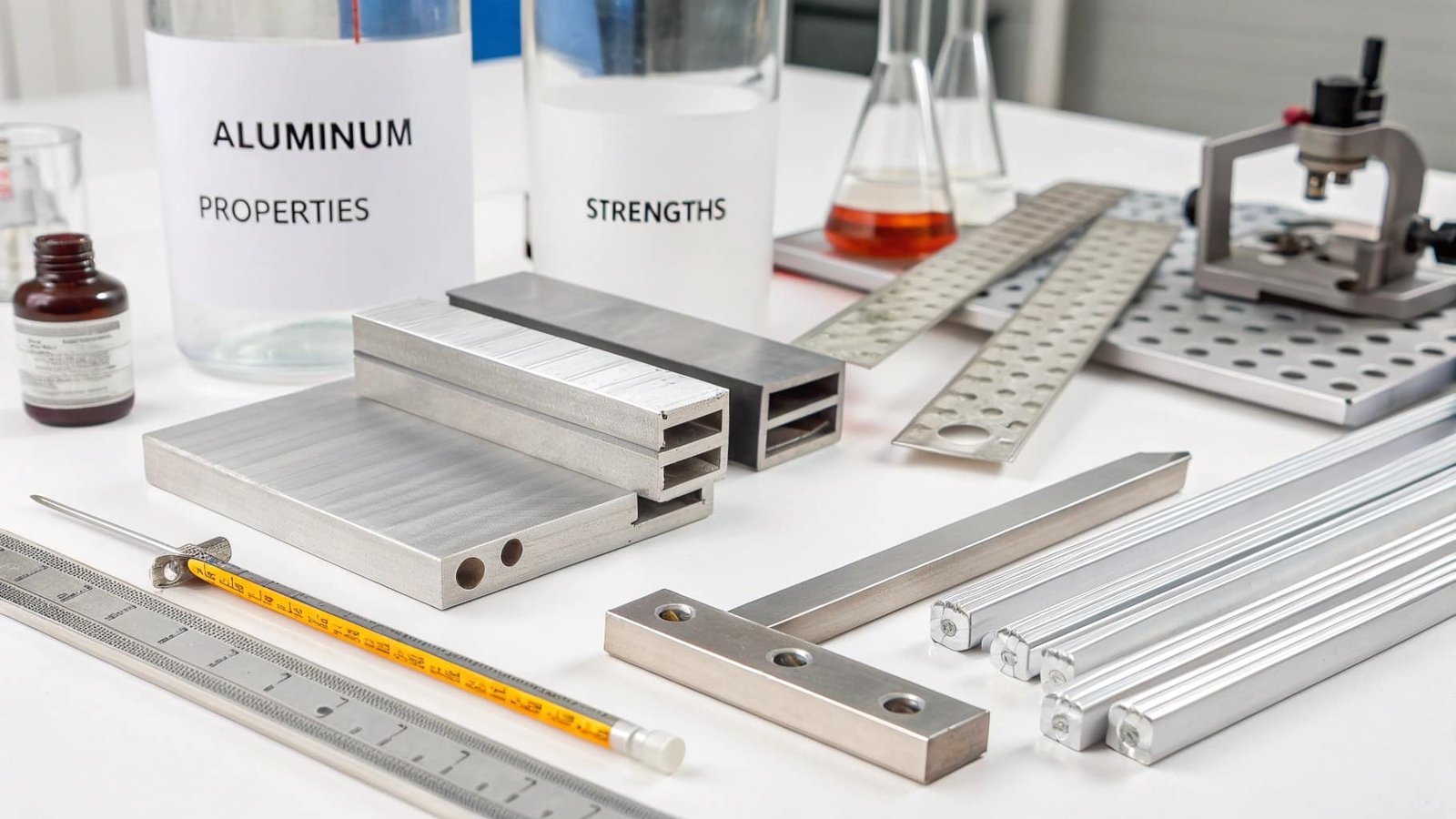
You need to source aluminum, but with hundreds of registered alloys available, the options are paralyzing. You can't risk choosing an obscure grade that complicates your supply chain or fails in production.
The essential list focuses on the industry workhorses: the 6xxx series (like 60611) for all-around use, the 7xxx series (like 7075) for maximum strength, the 5xxx series (like 50832) for corrosion resistance3, and the 2xxx series (like 2024) for aerospace applications.
Forget an exhaustive list; the market demands a powerful few. At SWA Forging, we focus on these proven workhorses: 6061 for versatility, 7075 for peak strength, and 2024 for aerospace integrity. For the traders and machinists we partner with, this isn't just a list—it's the core of your business. These are the alloys that are always in demand, perform predictably, and deliver real value.
Is 6061 or 7075 Aluminum Stronger?
You need a strong aluminum component, but you're weighing the higher cost of 7075 against the reliability of 6061. Choosing incorrectly means either overpaying for strength you don't need or risking critical component failure.
7075 is significantly stronger than 6061. In its common T6 temper, 7075's tensile strength is nearly double that of 6061-T6, putting it in the same league as many common steels. This makes it the clear choice for high-stress, critical applications.
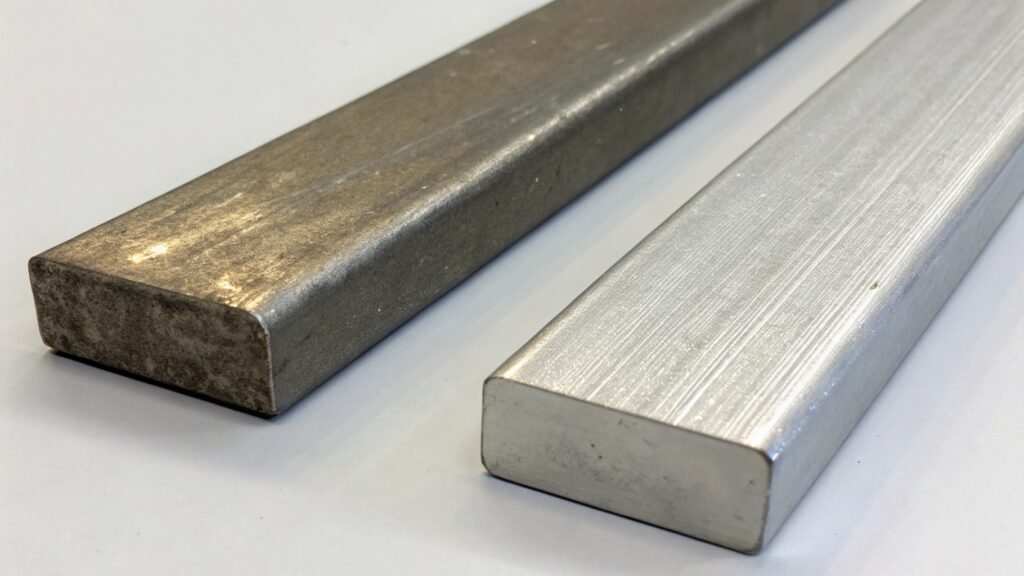
This is one of the most common questions we get from our machining clients. While 70754 is the undisputed champion of strength, strength isn't the only factor. For every project, we have a discussion about the balance between performance and practicality. 6061 is the versatile hero—it's strong enough for a huge range of applications, easier to weld, more corrosion-resistant, and more cost-effective. 7075 is the specialist you call in when failure is not an option and the highest strength-to-weight ratio is the primary goal.
Choosing Between the Workhorse and the Champion
The decision comes down to your application's specific demands. We help our customers make this choice every day by looking at the complete picture.
| Feature | 6061-T6 (The Workhorse) | 7075-T6 (The Champion) |
|---|---|---|
| Ultimate Tensile Strength | ~45,000 psi (310 MPa) | ~83,000 psi (572 MPa) |
| Primary Use Case | General structural, machine parts, fixtures, architectural. | High-stress aerospace frames, military hardware, high-performance molds. |
| Corrosion Resistance | Good | Fair (often requires anodizing or painting for protection) |
| Weldability | Excellent | Generally considered not weldable for structural applications. |
| Cost | Lower | Higher |
For traders, 6061 offers higher volume and broader market appeal. For machinists, 7075 allows for the creation of elite, high-performance components that command a premium price.
What Defines the 2000 and 5000 Series Alloys?
Your project requires something beyond a general-purpose alloy. You hear terms like "aerospace-grade" or "marine-grade" but need to know what that means for material performance and selection.
The 2000 series, with copper as its main component, is known for high strength similar to steel, making it ideal for aerospace. The 5000 series, with magnesium as its main component, is known for excellent corrosion resistance, especially in saltwater, making it perfect for marine use.

When we forge materials for specialized industries, these are the two series we often work with. A client building components for a commercial aircraft will require the certified strength and fatigue resistance of a 2024 forged disc. Another client supplying parts for a naval vessel or a desalination plant in the Middle East will need the guaranteed corrosion performance of a 5083 forged ring. These aren't interchangeable; choosing the right series is a critical engineering decision.
Specialized Performance for Demanding Environments
These alloy families are designed to solve specific problems that general-purpose alloys like 6061 cannot.
-
2000 Series: The Aerospace Alloy
The key ingredient here is Copper (Cu). When heat-treated, alloys like 2024 develop incredible strength and excellent fatigue resistance. This is why they have been a staple in aircraft construction for decades, used in fuselage and wing structures that are constantly under stress cycles. The trade-off? The copper content makes them more susceptible to corrosion than other aluminum alloys. As a result, 2000-series parts are almost always coated or clad with a layer of pure aluminum for protection. -
5000 Series: The Marine Alloy
The star player in this series is Magnesium (Mg). Alloys like 5083 are not heat-treatable; they get their strength from strain-hardening. Their biggest advantage is outstanding resistance to corrosion, particularly in saltwater and harsh industrial chemical environments. They also retain their strength well after welding, making them the top choice for shipbuilding, large tanks, and any structure that needs to be fabricated and then survive in a corrosive setting.
Conclusion
Focus on the powerful few aluminum alloys5 that drive the industry. By understanding the core strengths of the 6061, 7075, 2024, and 5083 alloys, you can make smarter sourcing and machining decisions.
-
Explore the versatility of 6061 aluminum, a workhorse alloy ideal for various applications, from structural to architectural. ↩
-
Find out how 5083 aluminum's corrosion resistance makes it perfect for marine applications and harsh environments. ↩
-
Explore the factors that influence corrosion resistance in aluminum alloys, crucial for long-lasting applications. ↩
-
Discover why 7075 aluminum is the go-to choice for high-stress applications, offering unmatched strength and performance. ↩
-
Get a comprehensive overview of aluminum alloys, their properties, and how to choose the right one for your project. ↩