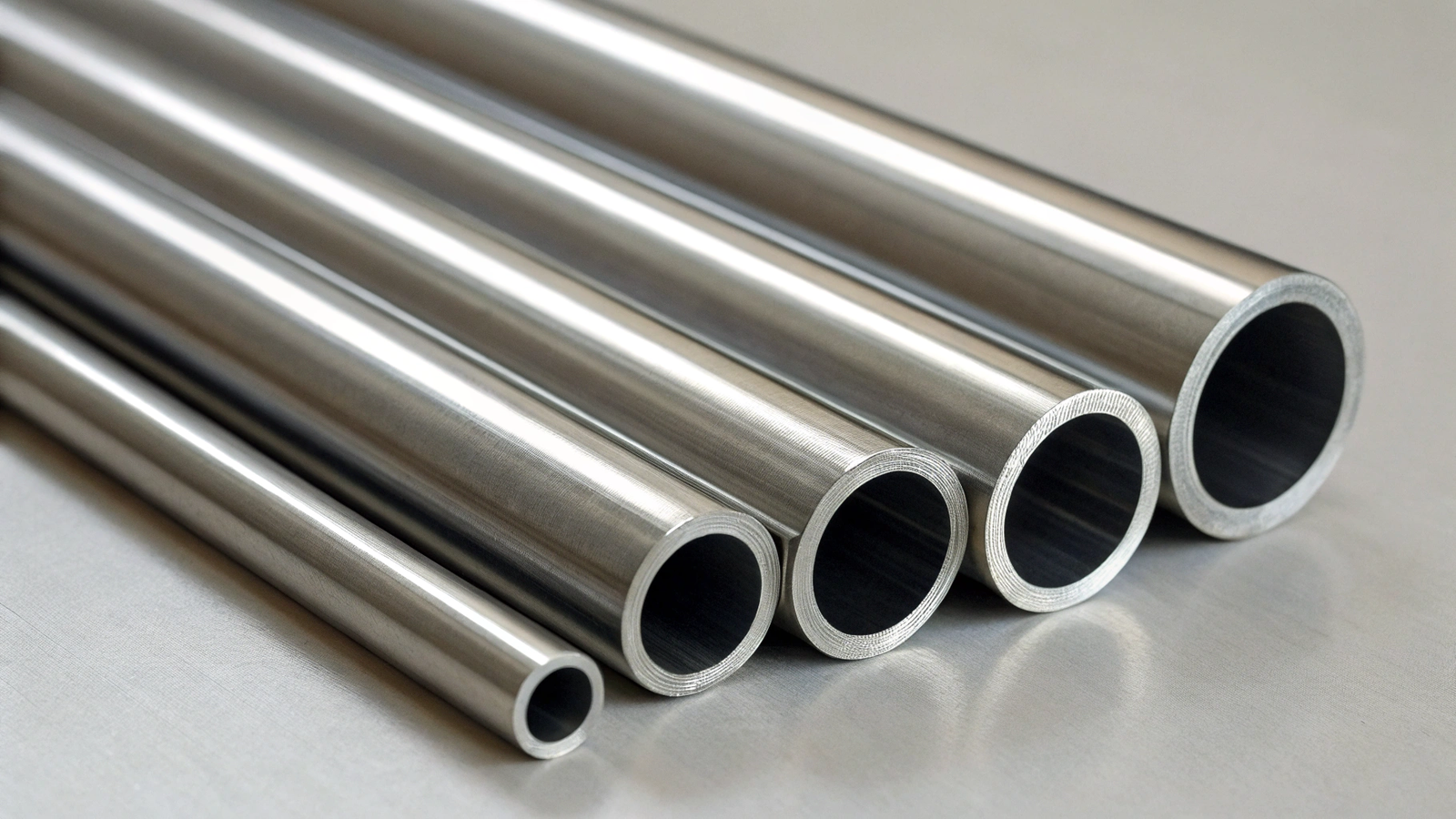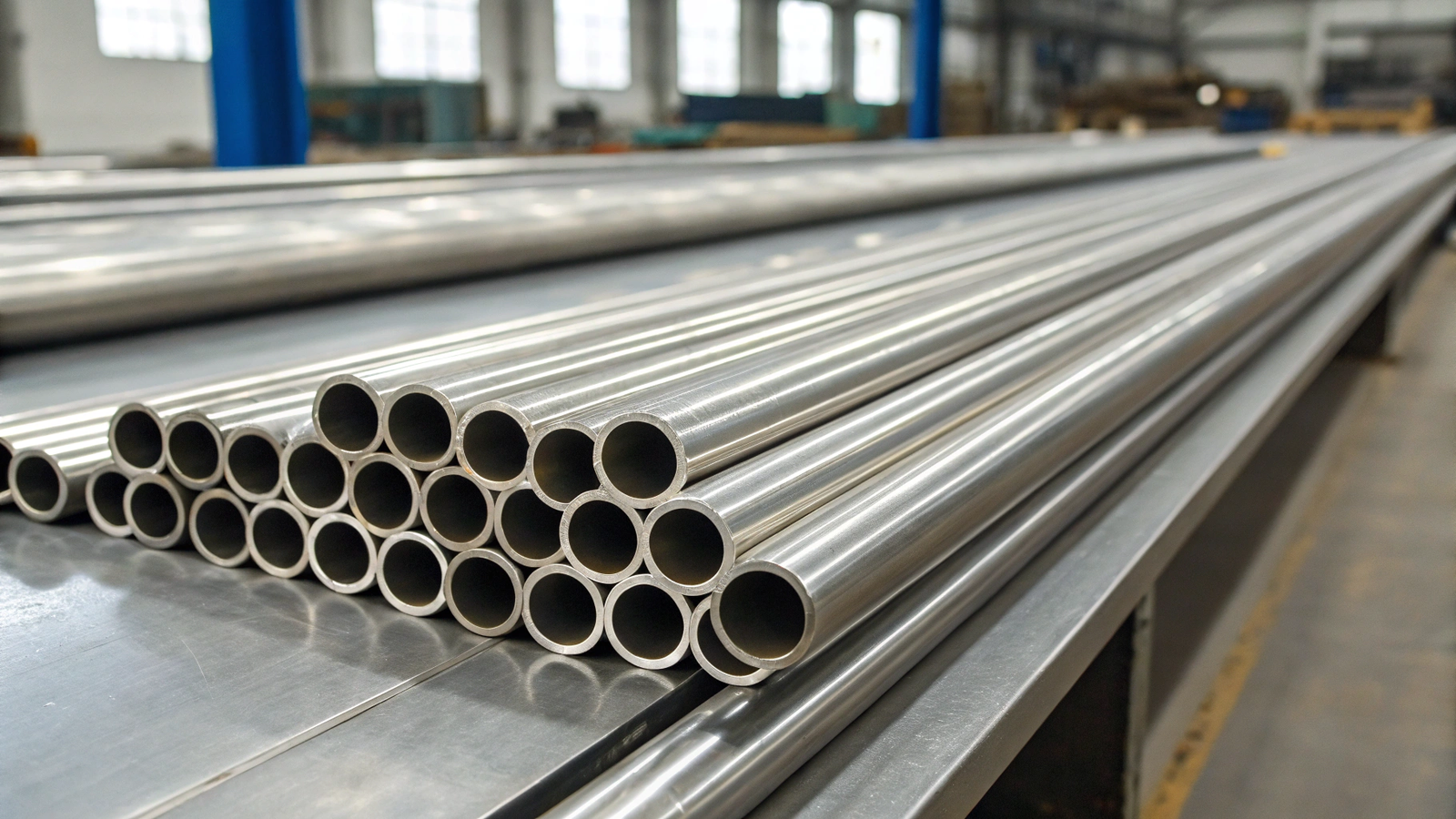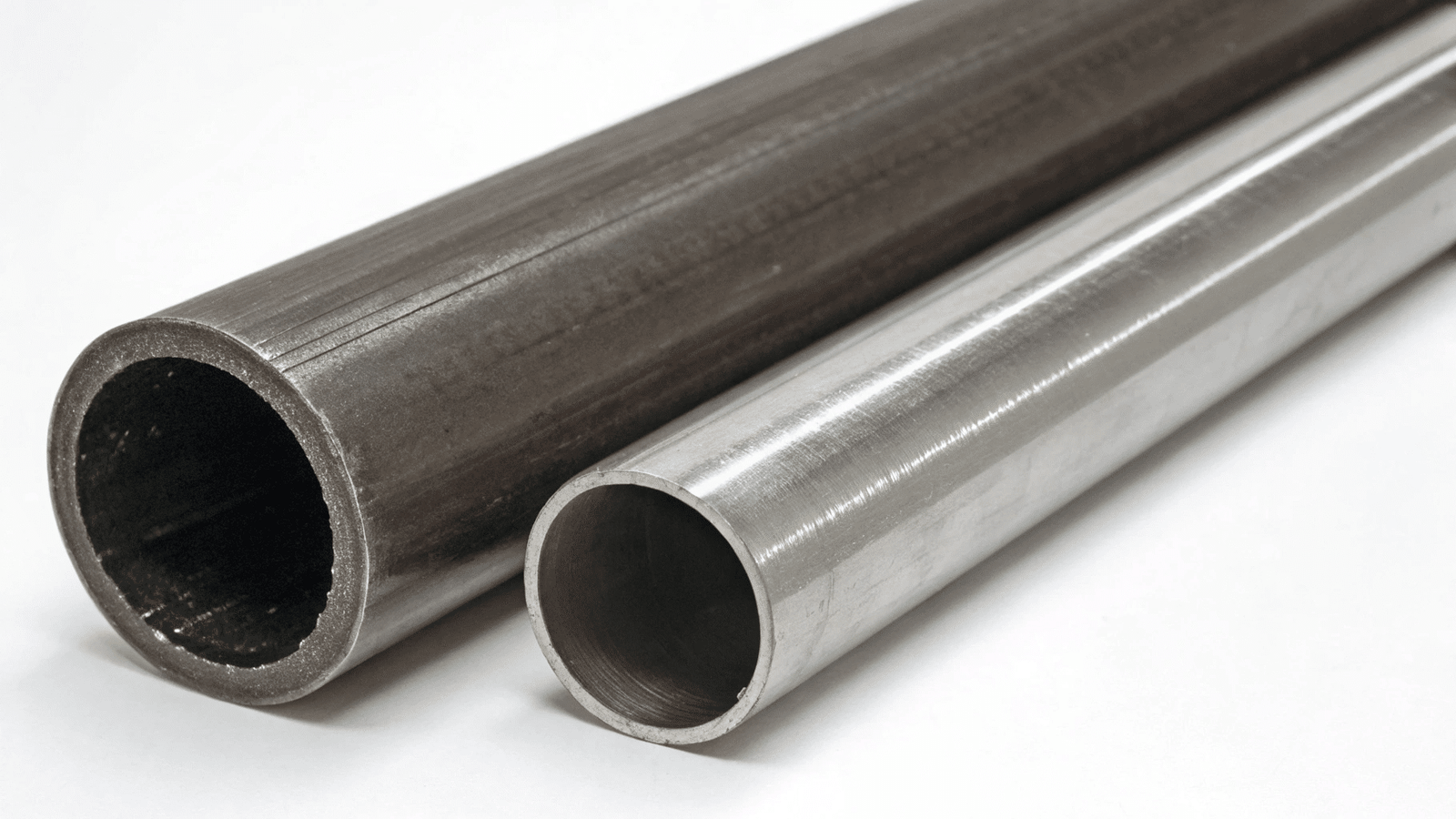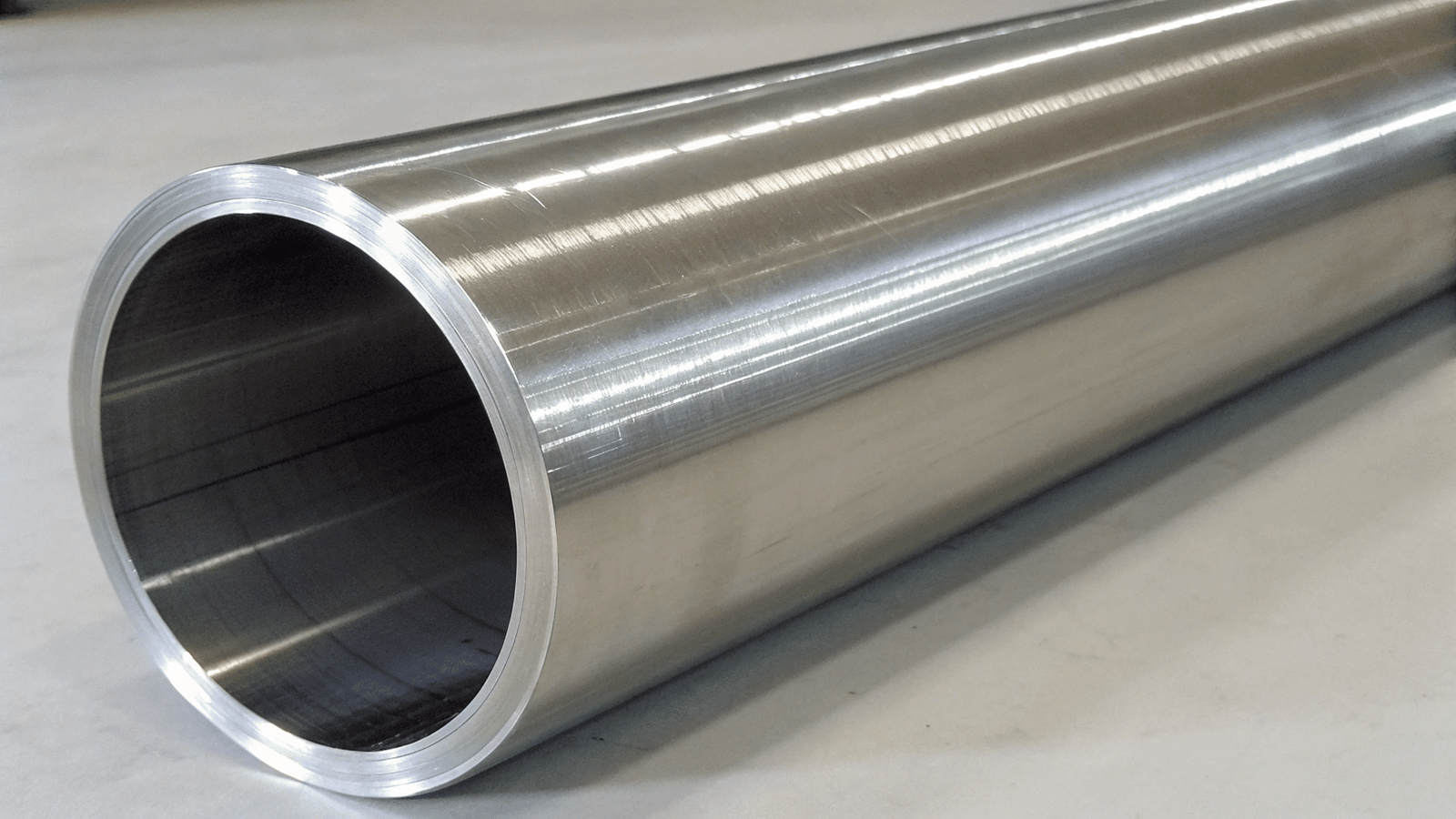
You're machining parts from solid aluminum bars, especially when you need a hollow center. You accept deep-hole drilling as a necessary evil, watching valuable material and expensive machine time get wasted as chips.
It’s pre-engineered efficiency. As a near-net hollow shape, extruded aluminum tube eliminates the costly deep-hole drilling of solid bars, directly converting saved material and machine time into pure profit for your business.
One of my longest-running clients, a large machining company, used to produce thousands of hydraulic cylinders every month. For years, they started with solid 6061 bar stock. Their biggest bottleneck was drilling the center bore. It was slow, wore out expensive tooling, and created mountains of scrap they had to manage. When I introduced them to our extruded hollow tubes, their entire operation changed. They bypassed the drilling step completely. Their cycle time per part dropped by over 40%, and their material costs went down significantly. The shift from solid bar to extruded tube wasn't just a material change; it was a fundamental business improvement that boosted their bottom line.
What Are the Properties of Aluminum Tube?
You need to understand the fundamental characteristics of aluminum tubing to select the right material. Without this basic knowledge, you risk over-specifying or choosing a product that can't perform as needed.
Aluminum tube is defined by its excellent strength-to-weight ratio, high thermal and electrical conductivity, and natural corrosion resistance1. Its properties can be precisely tailored through alloy selection and heat treatment.

When we talk about the properties of aluminum tube, we're really talking about a suite of benefits. First and foremost is its famous strength-to-weight ratio. It provides impressive structural strength while being about one-third the weight of steel, which is a game-changer for any application where weight matters. Second, it's a fantastic conductor of both heat and electricity, making it ideal for heat exchangers, electrical busbars, and enclosures. Third, aluminum naturally forms a protective oxide layer on its surface, giving it great inherent corrosion resistance, especially in alloys like 6061. The true beauty of aluminum, however, is its versatility. By choosing a specific alloy from the 2000, 6000, or 7000 series and applying a specific heat treatment (temper), we can fine-tune these properties—maximizing strength, ductility, or corrosion resistance to perfectly match your project's demands.
What Are the Features of Extruded Aluminum?
You see the term "extruded" but may not grasp what makes this process special. Understanding the features of extrusion is key to unlocking its potential for creating complex, cost-effective parts.
Extrusion's main feature is its ability to produce complex cross-sections with excellent surface finish and dimensional accuracy. It creates a continuous length of a uniform profile, ideal for both structural and intricate designs.
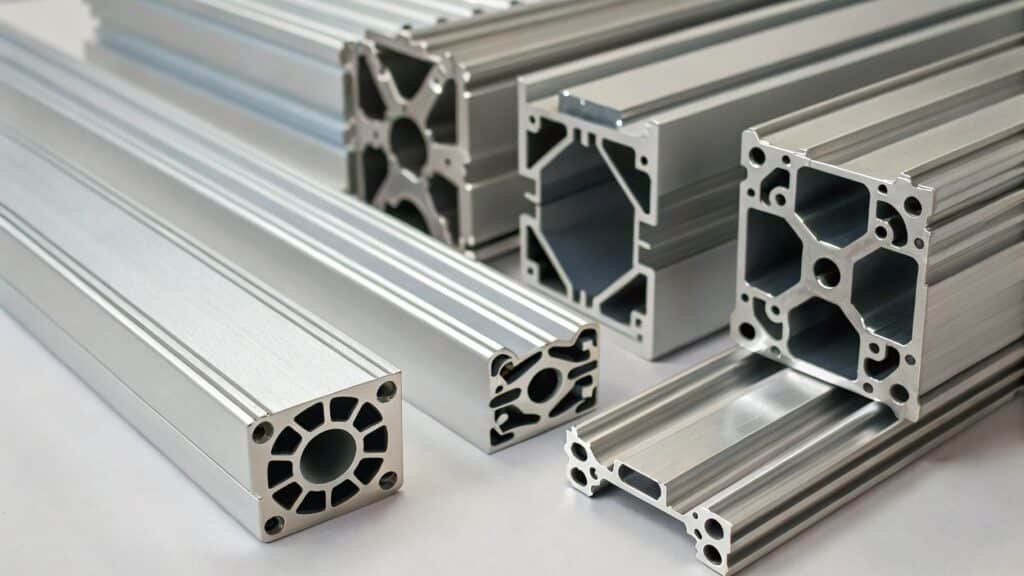
Think of the extrusion process like squeezing toothpaste from a tube, but with metal. We heat a solid aluminum billet and use a powerful hydraulic press to force it through a hardened steel die. This die is cut into the specific cross-sectional shape of the final part. The defining feature of this process is the incredible design freedom it offers. We can create not just simple shapes like round tubes and square bars, but also incredibly complex custom profiles with multiple internal voids, screw ports, and cooling fins, all in a single piece. This allows engineers to consolidate what would have been multiple assembled parts into one stronger, lighter, and more cost-effective component. The process also imparts a smooth, consistent surface finish and holds tight dimensional tolerances, often reducing the need for secondary machining operations. It’s a powerful method for creating efficient, highly functional parts.
Extrusion Feature Breakdown
| Feature | Benefit | Ideal Application |
|---|---|---|
| Complex Cross-Sections | Part consolidation, reduced assembly, integrated functionality. | Custom enclosures, heat sinks, multi-port manifolds. |
| Excellent Surface Finish | Aesthetically pleasing, reduces need for polishing or finishing. | Architectural trim, consumer electronics frames. |
| Tight Tolerances | High precision, ensures good fit and function in assemblies. | Telescoping tubes, machine guide rails. |
| Long Continuous Lengths | Efficient material use for long parts, reduces joints/welds. | Window frames, conveyor systems, structural beams. |
What Is the Difference Between Extruded and Drawn Aluminum Tubing?
You see "extruded tube" and "drawn tube" and assume they are the same. This misunderstanding can lead to choosing the wrong product for high-precision or high-pressure applications.
Extrusion pushes hot aluminum through a die to create the basic shape. Drawing pulls the extruded tube through a smaller die at room temperature, which improves surface finish, dimensional tolerances, and mechanical strength.

Extrusion and drawing are two distinct steps, and drawing is a secondary process that refines an extruded tube. Extrusion is the hot-forming process that creates the initial hollow shape. It's fast and efficient for creating the basic profile. However, for applications that demand greater precision, a better surface, or thinner walls, we use drawing. In this cold-working process, we take the extruded tube (often called a "hollow" at this stage) and pull it through a die that is slightly smaller than the tube's outer diameter. Often, a plug or mandrel is held inside to control the inner diameter. This process literally stretches and thins the tube, refining the grain structure, increasing its tensile strength (work hardening), and achieving much tighter control over the wall thickness and diameter. Think of extrusion as making the dough, and drawing as rolling it out to be perfectly thin and uniform.
Is Extruded Aluminum Tube Seamless?
You need a tube for a high-pressure application and see "extruded seamless tube2." You need to know if this process truly eliminates the seam and the weaknesses associated with it.
Yes, tube produced by the direct extrusion method is truly seamless. The process starts with a solid billet of aluminum which is pierced and then pushed through a die, creating a single, continuous tube wall with no welds or joints.
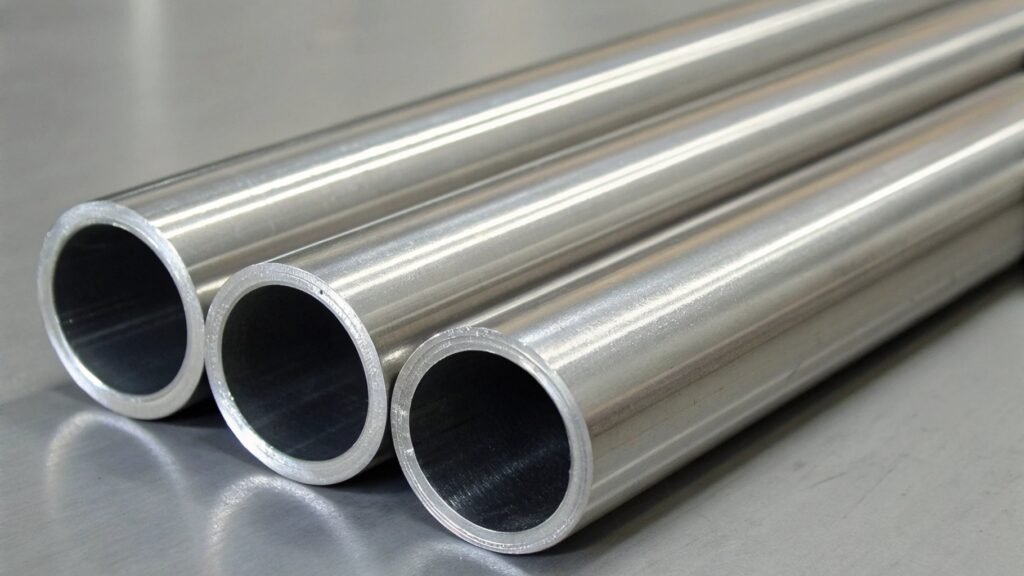
This is a critical point for any application involving pressure or high stress. The term "seamless" means there are no welded, brazed, or joined seams anywhere on the tube. In the most common method for making seamless tube, a solid, pre-heated aluminum billet is placed in the extrusion press. As the press applies pressure, a piercing mandrel pushes through the center of the billet, creating a hollow. Immediately after, the main ram pushes the now-hollow billet through the die, forming the final tube shape. Because it all starts from one solid piece of metal, the resulting tube is a monolithic structure. There is no line of weakness. This is fundamentally different from a welded tube, which is formed by rolling a flat sheet and welding the edges together. That weld can be a point of failure. For hydraulic lines, pressure vessels, and critical structural components, the uniform integrity of a seamless extruded tube is non-negotiable.
Conclusion
Stop turning solid bars into scrap. Embrace the pre-engineered efficiency of extruded aluminum tubing to eliminate wasteful processes, shorten cycle times, and directly improve your company's profitability.