You need to source an aluminum part and focus on getting the lowest price per kilogram. But the final part costs a fortune after hours of machining and piles of wasted material.
This isn't about the raw material price; it's about strategy. Your budget and volume determine the best manufacturing path. The goal is balancing material cost against the long-term savings of a near-net forged shape that minimizes your final machining costs.
I remember a client, a large machining company, who came to us with a problem. They were producing a series of large, flanged rings. To save money, they were buying the cheapest solid 6061 aluminum discs they could find. The upfront cost was low, but their CNC machines1 were running nonstop, turning over 60% of each disc into scrap chips just to create the inner diameter and the flange. When we calculated their total cost—material, machine time, tool wear, labor, and scrap handling—it was staggering. We proposed a custom-forged, near-net shape ring. The price per kilogram for our forged piece was higher, of course. But it was already shaped like their final part, with the hole in the middle and the flange roughly formed. They only had to do a final finishing pass. Their machining time dropped by 80%, and their material waste became almost zero. They ended up saving over 30% on the total cost of each finished part. It taught them to look beyond the supplier's price list and focus on the final cost on their own books.
How much does aluminum alloy really cost?
You're trying to budget for a project, but the price of aluminum seems to change constantly. This makes it impossible to quote jobs accurately, putting your profits and customer relationships at risk.
The price of aluminum alloy is not fixed. It is based on the daily London Metal Exchange (LME) price for raw aluminum, plus premiums for the specific alloy, the manufacturing form (like a forged ring), and order quantity.
Thinking about aluminum cost requires you to look at several layers. The base price is a global commodity, like oil or wheat, that changes every day. But the price you actually pay for a semi-finished product, like one of our forged discs, has several other important factors built in. For our trader clients who buy in bulk, understanding these components is key to timing their purchases and managing their inventory costs effectively. It's not just one price; it's a price that is built.
Breaking Down the Final Price
- LME Price: This is the foundation. It's the market price for pure, un-alloyed aluminum ingot. This is the biggest factor and the one that causes daily fluctuations.
- Alloy Premium: This is the cost of the other metals added to make a specific alloy. High-strength alloys like the 7000 series contain more expensive elements like zinc and copper, so they have a higher premium than a simple 6000-series alloy.
- Manufacturing Cost: This is the cost to turn the raw ingot into a useful shape. A simple cast billet is cheapest. An extruded bar costs more. A high-performance forged ring costs the most per kilogram because the process is energy-intensive and adds enormous value in terms of strength and reliability.
- Logistics & Quantity: Smaller orders and complex shipping requirements will always add to the final cost per unit.
How does your required volume affect the price?
You have a small run of custom parts, so you try to use a standard, mass-produced material. The material isn't quite right, leading to performance issues or forcing you to buy a huge minimum quantity you don't need.
Volume is the critical factor that decides your manufacturing method. High-volume, simple shapes are perfect for extrusion. Low-to-medium volumes of high-performance or custom parts are where forging provides the best value, avoiding high tooling costs for small runs.
The question of volume is really a question of tooling and setup costs. Different manufacturing processes have very different economic models. For machining companies, this is a vital concept. Choosing a process that doesn't match your volume is one of the fastest ways to lose money on a job. We often guide our clients on this point, ensuring the manufacturing path we choose together is the most cost-effective for their specific project size.
Matching the Process to the Volume
| Manufacturing Method | Ideal Volume | Tooling Cost | Key Advantage |
|---|---|---|---|
| Extrusion | High (Thousands of meters) | High (Expensive Dies) | Lowest cost per unit for standard shapes at high volume. |
| Machining from Bar | Low to Medium | Very Low (Standard Tools) | Good for simple parts or prototypes, but high material waste. |
| Open-Die Forging | Low (1 to 100s of pieces) | Low to None (Simple Dies) | Ideal for large, custom one-offs like rings and discs. |
| Closed-Die Forging | Medium to High | Very High (Custom Molds) | Creates complex near-net shapes with great strength, but needs volume. |
For our specialty—large forged rings and discs—we use open-die forging. This method is incredibly flexible and requires minimal, simple tooling. This makes it economically perfect for producing even a single, massive custom part without passing on huge setup costs to the customer.
What is the cheapest aluminium alloy?
You need to reduce costs, so you ask for the cheapest possible alloy. But this "cheaper" material fails in the field, leading to warranty claims and damaging your reputation for quality.
The cheapest aluminum alloys are typically common, non-heat-treatable alloys2 from the 1xxx, 3xxx, or 5xxx series. However, they are often the most expensive choice if their lower strength and performance lead to part failure or redesign.
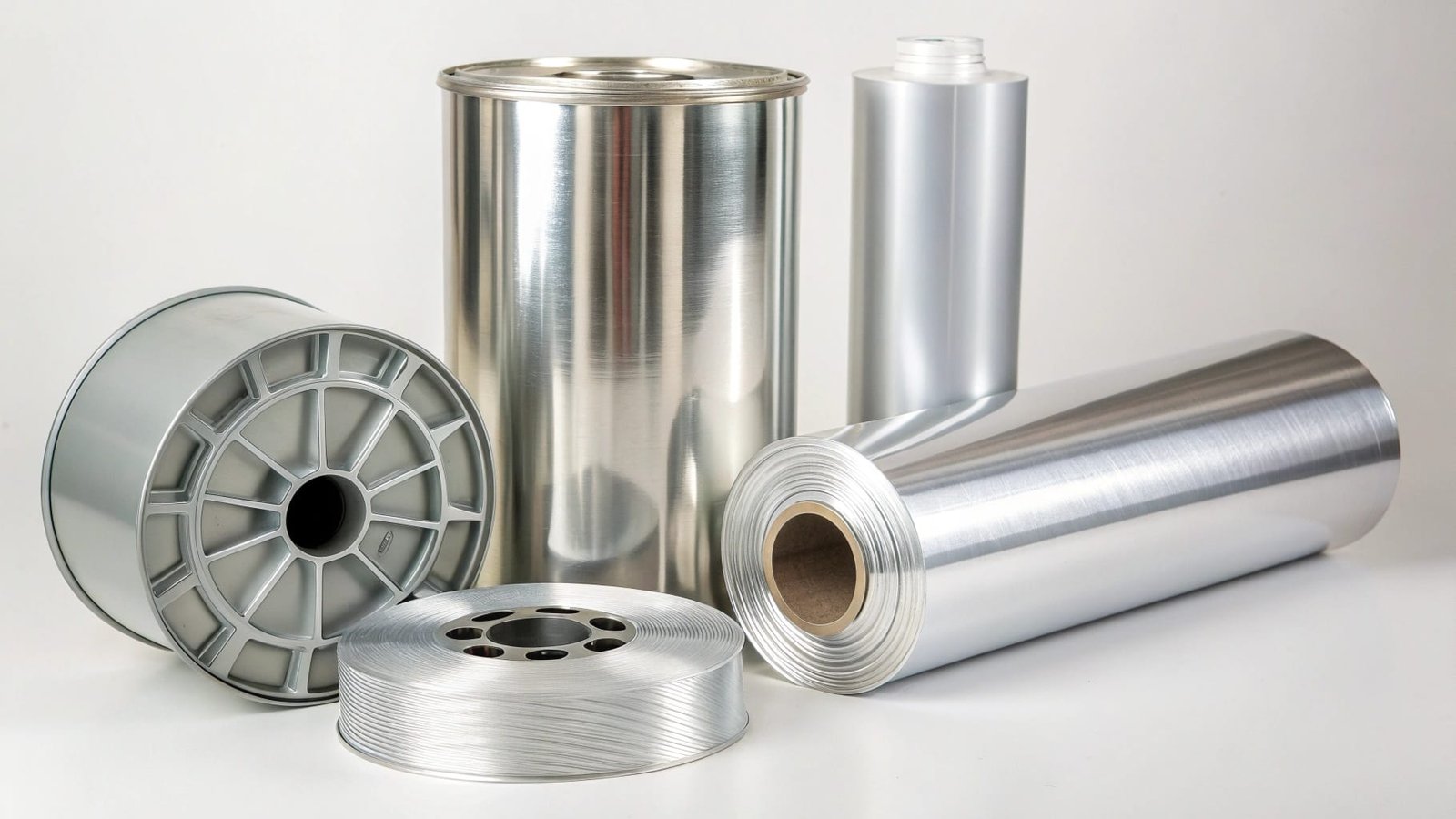
This question is a trap. While technically true that an alloy like 3003 (used for beverage cans) is cheaper per kilogram than a high-strength alloy like 6082, they are not interchangeable. Using the wrong alloy because it is cheap is the definition of a false economy. The cost of failure is always higher than the cost of using the correct material from the start. We always advise our clients to think about "value" and "fitness for purpose," not just the initial price tag.
Price vs. Performance
The cost of an alloy is directly related to its alloying elements and whether it can be heat-treated to increase its strength.
- Cheapest Tier (Non-Heat-Treatable): The 1xxx (pure aluminum), 3xxx (manganese), and 5xxx (magnesium) series are simpler to produce and cannot be strengthened by heat treatment. They are good for applications where formability and corrosion resistance are key, but not high strength. Think of cooking foil, cans, and boat hulls.
- Value Tier (Heat-Treatable): The 6xxx series (magnesium and silicon), like our common 6061 and 6082, are the workhorses of the industry. They offer an excellent balance of strength, corrosion resistance, and cost. They can be heat-treated to achieve high strength, making them perfect for most machining and structural jobs.
- Premium Tier (High-Strength): The 2xxx (copper) and 7xxx (zinc) series are the highest strength and most expensive alloys. They are used for critical applications like aircraft structures where maximum performance is non-negotiable.
Choosing the cheapest alloy for a demanding job is like using a shopping bag to carry heavy engine parts. It will fail.
Conclusion
Stop focusing on the price per kilo. Your budget and volume should guide your manufacturing strategy to find the lowest total cost for your finished part, where forging often provides the greatest savings.