Are you faced with a critical project and struggling to choose between 7075 and 6061 aluminum1 bars for maximum performance? Let's break down their strengths and weaknesses.
Selecting between 7075 and 6061 aluminum bars depends heavily on your project's specific needs. 7075 aluminum, while offering exceptional strength, has disadvantages like lower corrosion resistance2, higher cost, and poor weldability, making it less suitable for some environments or fabrication methods. Regarding cost, 6061 is generally significantly cheaper than 7075, often by 20-50% or more, depending on form and market conditions. The modulus of elasticity for both 6061 and 7075 aluminum is very similar, typically around 68.9 GPa (10,000 ksi), meaning they deform similarly under stress. The primary advantage of 7075 aluminum is its superior tensile and yield strength, making it one of the strongest aluminum alloys available, ideal for highly stressed components where weight savings are paramount.
At SWA Forging, we understand that selecting the right aluminum alloy is crucial for the success of strength-critical projects. We work with both 6061 and 7075, leveraging our expertise to guide you. Whether you prioritize the market-leading strength of 7075 or the balance of performance, cost, and workability offered by 6061, we forge components that optimize your design's requirements, ensuring you get the best material for its intended purpose.
What are the disadvantages of 7075 aluminum?
Are you concerned about the potential downsides of using 6061's high-strength rival, 7075 aluminum3? Understanding its limitations is key to making an informed choice for your project.
**While 7075 aluminum is celebrated for its outstanding strength, it comes with several notable disadvantages that can limit its application:
- Corrosion Resistance: 7075 exhibits significantly poorer corrosion resistance compared to 6061, especially in marine or aggressive environments. The higher copper content in the alloy makes it more susceptible to galvanic corrosion and stress corrosion cracking. This often necessitates protective coatings like anodizing or painting, adding complexity and cost.
- Weldability: 7075 is very difficult to weld. Traditional welding methods can cause significant weakening of the alloy at the heat-affected zone, compromising its structural integrity. It is generally not recommended for applications requiring welded joints unless specific, specialized techniques are employed.
- Cost: Due to its higher strength alloys and often more complex manufacturing, 7075 aluminum is typically more expensive than 6061. This can make it less economical for projects where cost is a major consideration or where the absolute highest strength isn't strictly necessary.
- Formability: It can be less formable or workable than 6061, particularly in its fully heat-treated (T6) state, making complex shaping or bending more challenging without risk of cracking.**
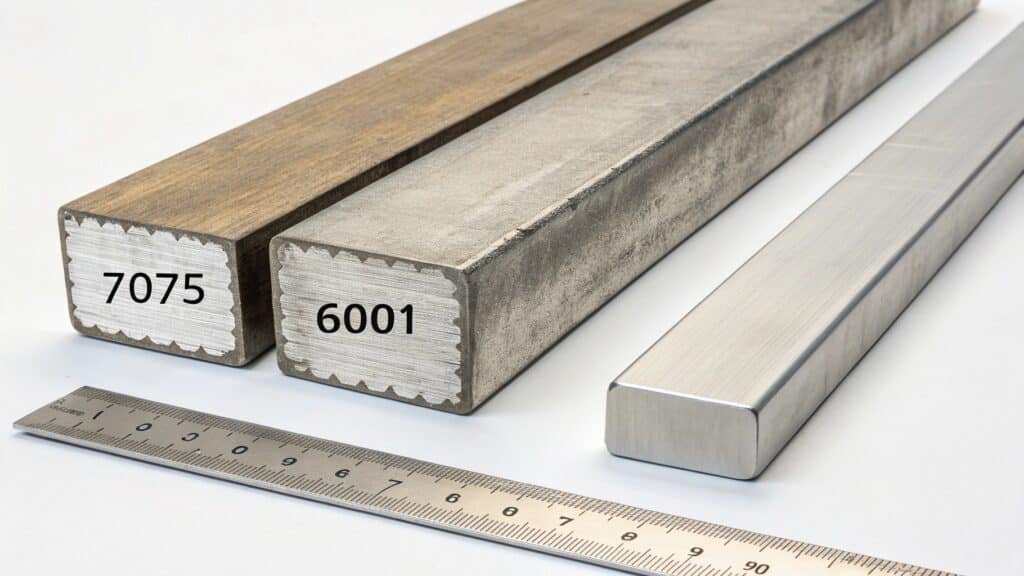
SWA Forging acknowledges these challenges with 7075 aluminum. When you require the exceptional strength of this alloy for your projects, we advise on appropriate finishing and handling to mitigate its corrosion susceptibility and workability issues. Our forging process optimizes the material properties, but its inherent characteristics mean it's best suited for applications where its superior strength is the primary driver and its drawbacks can be effectively managed through design and post-processing.
How much is 6061 cheaper than 7075?
Are you trying to balance performance needs with budget constraints and need a clearer picture of the cost difference4 between these two popular aluminum alloys? The price gap is substantial and depends on many factors.
Generally, 6061 aluminum is significantly cheaper than 7075 aluminum. The exact price difference can fluctuate based on market demand, the specific form of the material (bar, plate, sheet, etc.), the temper (heat treatment state), and the quantity purchased. However, as a rule of thumb, you can expect 6061 aluminum to be anywhere from 20% to 50% less expensive than 7075 aluminum for comparable forms and quantities.
This cost difference primarily stems from the alloying elements and processing required. 7075 uses more premium alloying elements like zinc and copper to achieve its very high strength, which increases raw material costs. Furthermore, its production and heat treatment might involve more energy or specialized equipment. 6061, with its magnesium and silicon base, is more readily available and less costly to produce.
| Alloy | Relative Cost (Approximate) | Primary Alloying Elements | Key Characteristics |
|---|---|---|---|
| 6061 | Lower | Mg, Si | Good strength, excellent corrosion resistance, weldable, good machinability |
| 7075 | Higher | Zn, Mg, Cu | Very high strength, lower corrosion resistance, poor weldability |
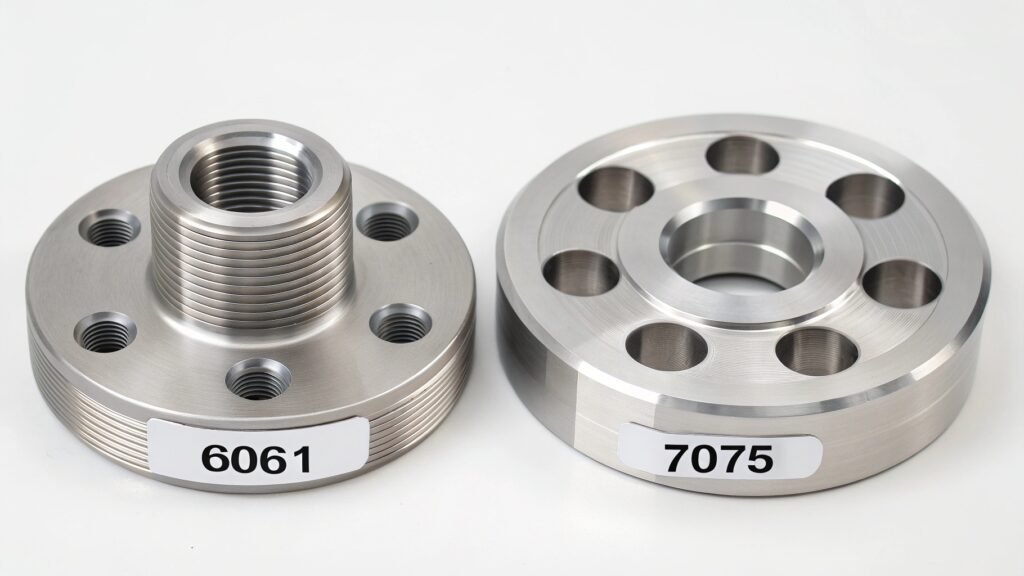
At SWA Forging, we understand the importance of cost-effectiveness in material selection. For projects where the extreme strength of 7075 is not mandated, 6061 offers an excellent balance of performance and affordability. We can help you assess whether 6061's properties suffice for your application, thereby potentially reducing your project costs without significantly compromising the required mechanical integrity, leveraging its excellent machinability and corrosion resistance effectively.
What is the modulus of elasticity of 6061 vs 7075?
Are you interested in how these two strong aluminum alloys behave under structural load, specifically how they deform elastically? Their stiffness is remarkably similar.
The modulus of elasticity, also known as Young's Modulus, is a measure of a material's stiffness or its resistance to elastic deformation under tensile or compressive stress. For both 6061 and 7075 aluminum alloys, the modulus of elasticity is essentially the same. It typically falls within the range of 68.9 GPa (Gigapascals) or 10,000,000 psi (pounds per square inch), regardless of whether the alloy is in its T6 temper or other common heat-treated states.
This means that under a given load within their elastic limit, both 6061 and 7075 aluminum will stretch or compress by roughly the same amount. The primary difference between these two alloys lies not in their stiffness, but in their strength – specifically their yield strength and tensile strength. While they deform similarly under proportional stress, 7075 will withstand a much higher stress before permanent deformation (yielding) occurs, and it can tolerate a higher stress before fracturing.
| Property | 6061 Aluminum (T6 Temper) | 7075 Aluminum (T6 Temper) |
|---|---|---|
| Modulus of Elasticity | ~68.9 GPa (~10,000 ksi) | ~68.9 GPa (~10,000 ksi) |
| Yield Strength | ~276 MPa (~40 ksi) | ~503 MPa (~73 ksi) |
| Tensile Strength | ~310 MPa (~45 ksi) | ~545 MPa (~79 ksi) |
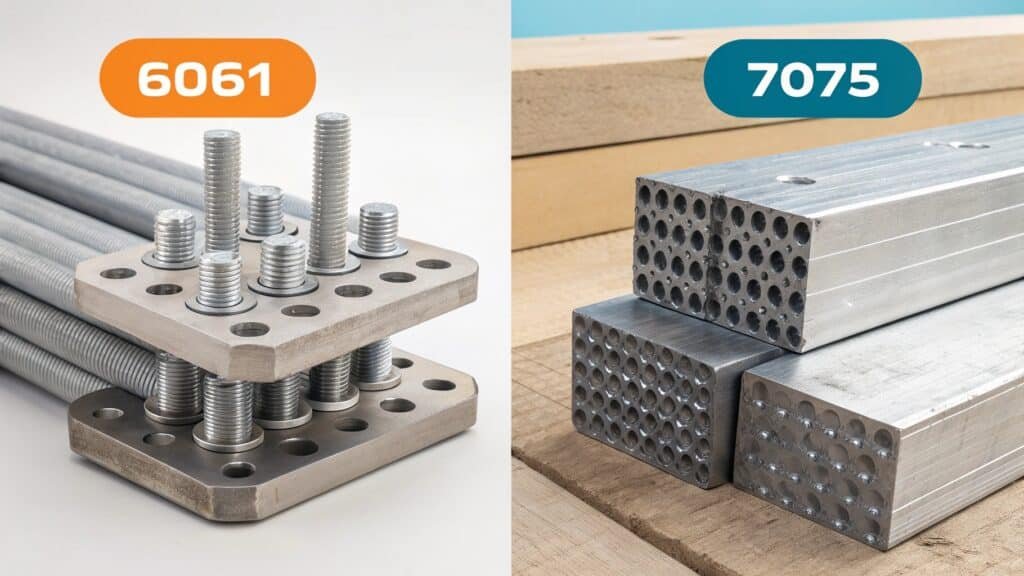
At SWA Forging, we recognize that while the stiffness (modulus of elasticity) of 6061 and 7075 is similar, their performance under significant load is vastly different due to their varying yield and tensile strengths. We ensure that our forged components, whether from 6061 or 7075, are manufactured to optimize their respective strengths, allowing you to choose the alloy best suited for your project's load-bearing requirements without concern for differential elastic behavior.
What are the advantages of 7075 aluminum?
Are you curious about why 7075 aluminum is chosen for the most demanding applications, despite its higher cost and certain limitations? Its exceptional strength is its defining feature.
**The primary and most significant advantage of 7075 aluminum alloy is its exceptionally high strength. It is among the strongest commercially available aluminum alloys, often approaching the tensile strength of some steels. This makes it ideal for applications where maximum strength-to-weight ratio is critical.
Key advantages include:
- Superior Strength: With tensile strength often exceeding 545 MPa (79 ksi) and yield strength around 503 MPa (73 ksi) in its T6 temper, 7075 can withstand very high loads and stresses.
- Lightweight Performance: Because of its incredible strength, components made from 7075 can be designed to be thinner and lighter than those made from less strong alloys (including 6061) while still meeting strength requirements. This weight reduction is invaluable in industries like aerospace and high-performance motorsports.
- Good Machinability: Despite its hardness, 7075 is generally considered to have good machinability, allowing for the creation of complex shapes and intricate parts, though it requires care.
- Good Fatigue Strength: Its high strength contributes to good resistance to fatigue, meaning it can withstand repeated loading cycles better than many other aluminum alloys.
- Dimensional Stability: It maintains its shape well under stress, contributing to the reliability of precision components.**
| Advantage | Description | Typical Application Examples |
|---|---|---|
| Exceptional Strength | Highest strength among common aluminum alloys, comparable to some steels. | Aircraft structural components, high-performance sporting goods |
| High Strength-to-Weight | Allows for lighter designs while maintaining structural integrity. | Aerospace frames, racing components, drone bodies |
| Good Machinability | Can be machined into complex parts with precision. | Precision tooling, custom mechanical parts |
| Good Fatigue Resistance | Withstands repeated stress cycles effectively. | Aerospace components, high-cycle machinery parts |
| Dimensional Stability | Maintains tight tolerances under load. | Precision instruments, critical structural elements |
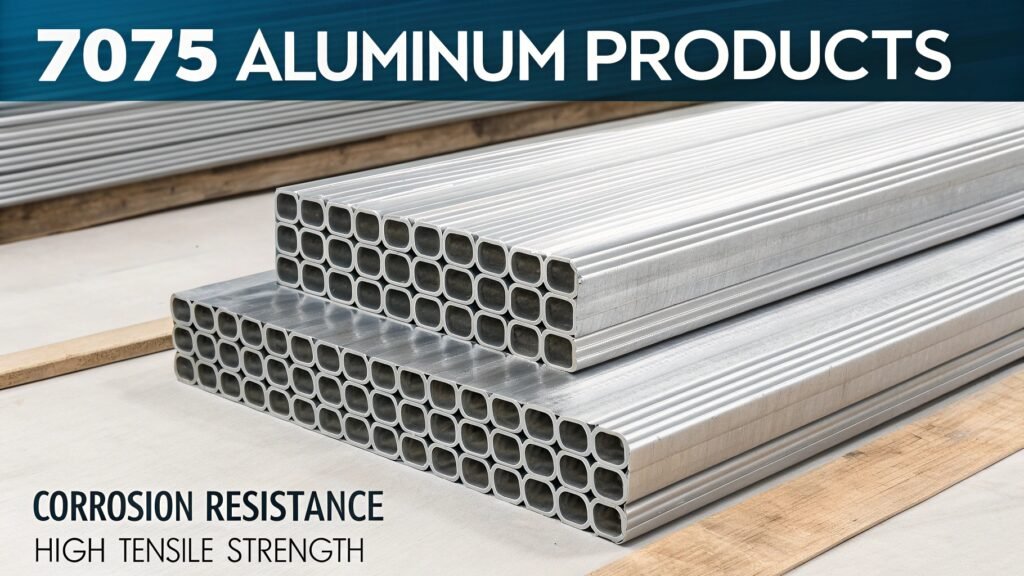
SWA Forging specializes in harnessing the extreme strength of 7075 aluminum through our advanced forging processes. We can produce large-diameter forged components from 7075 that fully exploit its high tensile and yield strength advantages. If your project demands the ultimate in aluminum alloy performance for critical structural integrity and weight savings, 7075, expertly forged by SWA, is likely your optimal choice.
Conclusion
Choosing between 7075 and 6061 depends on strength needs and budget. 7075 offers superior strength but at a higher cost and with limitations, while 6061 provides a balanced, cost-effective alternative.
-
Learn about 6061 aluminum's excellent corrosion resistance and weldability, making it a popular choice for various applications. ↩
-
Understanding corrosion resistance is crucial for selecting the right aluminum alloy for your project. ↩
-
Explore the advantages of 7075 aluminum, known for its exceptional strength, ideal for high-performance applications. ↩
-
Get insights into the pricing of these aluminum alloys to make informed budget decisions. ↩