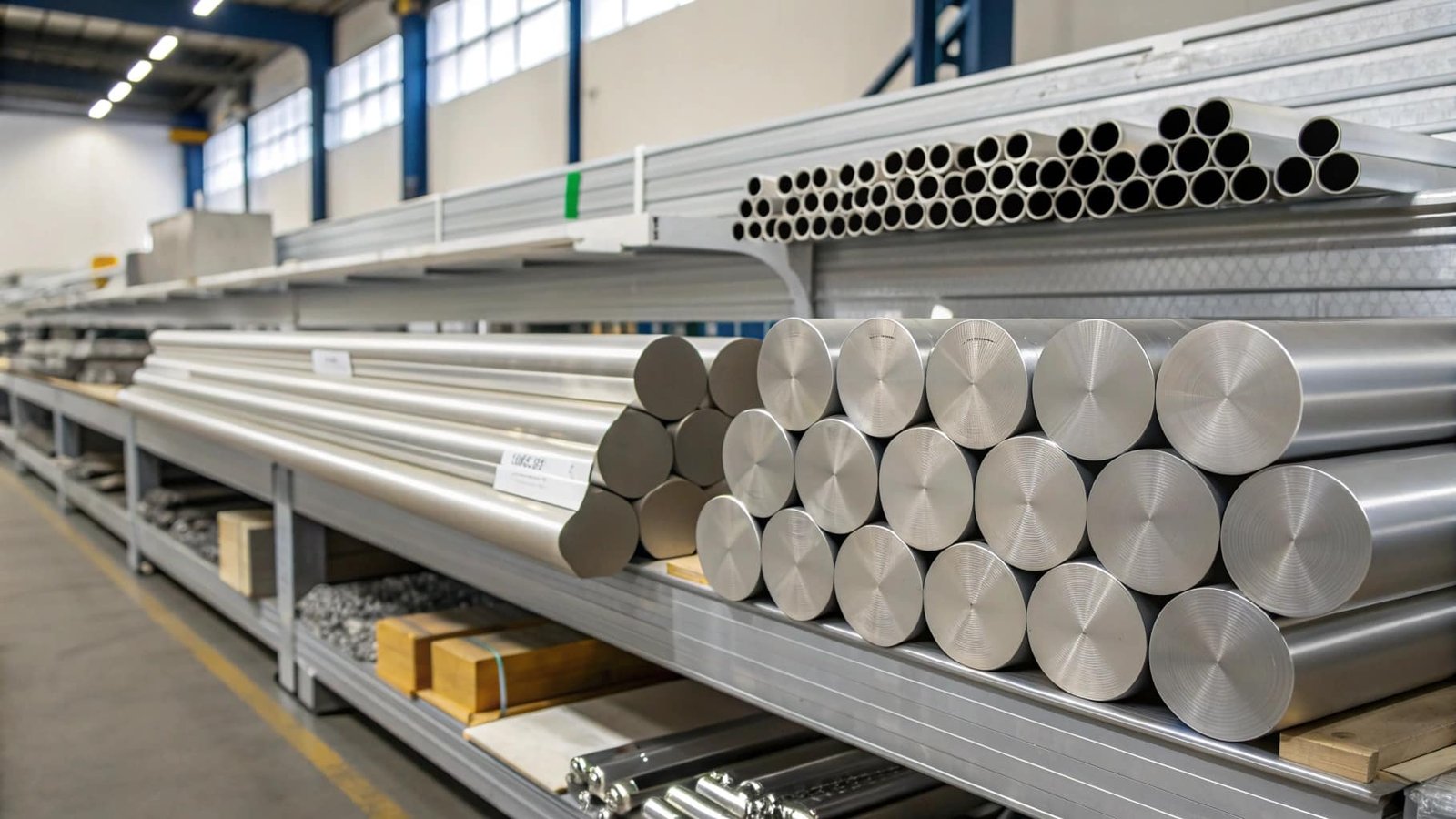
Are you designing components that need to withstand pulling forces without breaking? Knowing the tensile strength of aluminum is crucial for ensuring your parts perform reliably under stress.
The tensile strength of aluminum varies greatly depending on its purity and, more importantly, its alloying elements and temper. Pure aluminum (1xxx series) has a low tensile strength, typically ranging from 70 to 130 N/mm² (approximately 10 to 19 ksi). However, aluminum alloys1 are engineered to achieve much higher tensile strengths. For instance, the widely used 6061 alloy2 in its T6 temper3 has a tensile strength of around 310 N/mm² (approximately 45 ksi). The much stronger 7075 alloy4, also in its T6 temper, can reach tensile strengths exceeding 570 N/mm² (approximately 83 ksi). SWA Forging enhances aluminum's tensile strength through controlled forging processes. This ensures our large-diameter rings and discs deliver exceptional load-bearing capacity and durability for your demanding industrial needs.
At SWA Forging, we leverage controlled forging processes specifically to enhance the tensile strength of aluminum alloys. This meticulous approach ensures that the large-diameter rings and discs we produce not only meet but often exceed the expected load-bearing capacity and durability for your most demanding industrial applications, providing components that can reliably withstand significant pulling forces.
What is the tensile strength of aluminium?
When we talk about "pulling" a material to its breaking point, what is the general range of tensile strength for aluminum, considering both pure forms and common alloys?
The tensile strength of aluminum itself, in its purest form (1xxx series), is relatively low, typically ranging from about 70 to 130 N/mm² (or megapascals, MPa). This makes pure aluminum suitable for applications where high strength is not a primary requirement, such as electrical wiring or foil. However, when aluminum is alloyed with other metals, its tensile strength can increase dramatically. Common aluminum alloys offer a wide spectrum of strengths. For example, the 6xxx series alloys, like 6061, typically have tensile strengths around 310 N/mm² in their T6 temper. The higher-strength 7xxx series alloys, like 7075, can achieve astonishing tensile strengths, often exceeding 570 N/mm² in their T6 temper. This means that depending on its composition and heat treatment, aluminum's tensile strength can vary by a factor of eight or more.
| Aluminum Product | Typical Tensile Strength Range (N/mm²) | Approximate Tensile Strength (ksi) | Notes |
|---|---|---|---|
| Pure Aluminum (1xxx Series) | 70 - 130 | 10 - 19 | Low strength, high conductivity, excellent corrosion resistance. |
| Common Wrought Alloys (e.g., 3xxx) | 110 - 180 | 16 - 26 | Moderate strength, good workability. |
| Versatile Alloys (e.g., 6xxx) | 210 - 310 (depending on temper) | 30 - 45 | Good balance of strength, corrosion resistance, and formability. |
| High-Strength Alloys (e.g., 7xxx) | 450 - 580+ (depending on temper) | 65 - 84+ | Very high strength, often used in aerospace and critical structural parts. |
| Common Cast Alloys | 150 - 300+ | 22 - 43+ | Strength varies significantly with composition and casting method. |
[^5] to high-strength alloys.](https://southwestalu.com/wp-content/uploads/2025/10/unnamed-file-12-1024x576.jpg")
At SWA Forging, we are experts in manipulating the tensile strength of aluminum alloys. We understand that "aluminum" can mean vastly different things in terms of strength. That's why we meticulously select alloys known for their high tensile properties and, through our specialized forging techniques, ensure that components like our large-diameter rings exhibit the robust load-bearing capabilities required for even the most challenging industrial environments.
What is the tensile strength of aluminium in N mm2?
To accurately specify aluminum materials for engineering, it's essential to understand their tensile strength, particularly using the N/mm² unit, which is equivalent to megapascals (MPa).
The tensile strength of aluminum, expressed in N/mm² (which is the same as Megapascals, MPa), varies significantly with alloy composition and temper. Pure aluminum (1xxx series) typically has a tensile strength between 70 and 130 N/mm². For alloys, the numbers increase substantially. The versatile 6061-T6 alloy has a tensile strength of approximately 310 N/mm². Moving to higher-strength alloys, 7075-T6 can achieve tensile strengths of around 570 N/mm², and even higher in some conditions. These values represent the maximum stress the material can withstand under tension before it begins to neck and ultimately fracture. When specifying materials, using the N/mm² unit is standard practice in many regions, and these figures are critical for engineering calculations related to stress, strain, and safety factors. For context, many common steels have tensile strengths ranging from 400 N/mm² to over 1000 N/mm², but aluminum alloys offer comparable or superior specific strength due to their much lower density.
| Aluminum Type/Alloy | Common Temper | Tensile Strength (N/mm²) | Tensile Strength (ksi) | Notes |
|---|---|---|---|---|
| Pure Aluminum (1100) | H14 | ~95 | ~14 | Low strength, high conductivity. |
| 6061 Aluminum | T6 | ~310 | ~45 | Good balance of strength, corrosion resistance, and formability. |
| 6061 Aluminum | T4 | ~210 | ~30 | Weaker but more ductile than T6. |
| 7075 Aluminum | T6 | ~570+ | ~83+ | Very high strength alloy, often used in aerospace. |
| 7075 Aluminum | T73 | ~520 | ~75 | Slightly lower strength than T6 but with improved stress corrosion crack resistance. |
| 5083 Aluminum | H116 | ~350+ | ~50+ | High strength with excellent corrosion resistance (marine). |

At SWA Forging, precision is paramount. When we discuss the tensile strength of the aluminum alloys we work with, we use standard units like N/mm². Our forging processes are meticulously controlled to achieve specific tensile strengths in our products, ensuring that whether we are working with the robust 6061 alloy or the exceptionally strong 7075, our large-diameter components deliver the exact load-bearing performance required by our clients, specified accurately in N/mm² for engineering clarity.
What is the tensile strength of 6061 aluminium?
For the widely used 6061 aluminum alloy, what are its specific tensile strength values, and how do these values influence its broad range of applications?
The tensile strength of 6061 aluminum alloy is a key property that makes it so versatile. In its most common temper, 6061-T6 (solution heat-treated and artificially aged), the typical tensile strength is around 310 N/mm² (approximately 45,000 psi). This provides a good level of strength for many structural applications without sacrificing too much in terms of workability or corrosion resistance. In the T4 temper (solution heat-treated and naturally aged), the tensile strength is lower, typically around 210 N/mm² (approximately 30,000 psi), but this temper offers greater ductility. The T6 temper offers the best combination of strength and stiffness for general use, making it suitable for applications like bicycle frames, automotive components, structural parts for buildings and bridges, and many marine applications where moderate to good tensile strength is essential. The strength of 6061 can be further influenced by processing methods like forging, which can refine the grain structure and potentially increase strength.
| Temper | Heat Treatment Stage | Typical Tensile Strength (N/mm²) | Typical Yield Strength (N/mm²) | Notes |
|---|---|---|---|---|
| T4 | Solution Heat-Treated, Naturally Aged | ~210 | ~120 | Higher ductility and formability, lower strength. |
| T6 | Solution Heat-Treated, Artificially Aged | ~310 | ~240 | Best balance of strength and stiffness for general use. |
| T651 | Solution Heat-Treated, Artificially Aged, Stress Relieved | ~310 | ~240 | Similar strength to T6, but with reduced internal stress. |
| T7351 | Solution Heat-Treated, Artificially Aged, Overaged | ~270 | ~200 | Lower strength than T6 but improved resistance to stress corrosion cracking. |
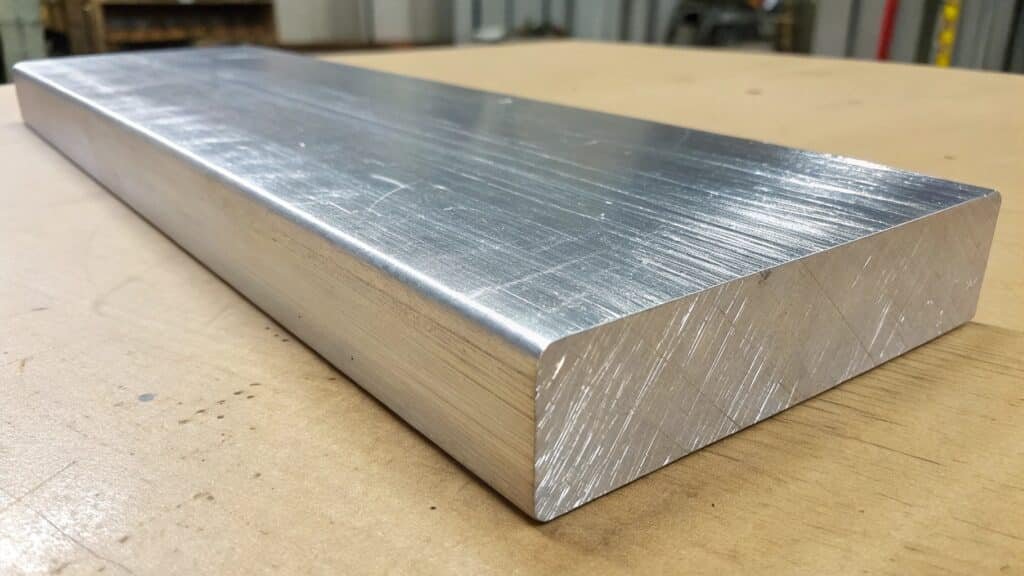
At SWA Forging, 6061 aluminum alloy is a cornerstone material for many of our projects. We work with it in its common T6 temper, ensuring that our forged large-diameter rings and discs possess the tensile strength of approximately 310 N/mm² that our clients expect. Our forging process refines this inherent strength, delivering components that provide exceptional performance and reliability, even under significant pulling forces in demanding industrial settings.
Is 6061 or 7075 aluminum stronger?
When comparing two of the most frequently specified aluminum alloys, which one offers superior resistance to breaking under tensile load? The answer is quite clear.
The 7075 aluminum alloy is significantly stronger than the 6061 aluminum alloy. This difference arises from their differing alloying elements. 7075 belongs to the 7xxx series, which is primarily alloyed with zinc, often combined with magnesium and copper. This composition, particularly in the T6 temper, allows 7075 to achieve tensile strengths that can exceed 570 N/mm² (approximately 83,000 psi). In contrast, 6061 is from the 6xxx series, alloyed with magnesium and silicon. While 6061-T6 is strong, with a tensile strength typically around 310 N/mm² (approximately 45,000 psi), it is considerably less strong than 7075-T6. Therefore, for applications where maximum tensile strength is the paramount requirement, 7075 is the superior choice. However, 6061 offers a better balance of strength, corrosion resistance, weldability, and cost, making it a more suitable choice for a wider array of general applications.
| Feature | 6061 Aluminum Alloy (T6 Temper) | 7075 Aluminum Alloy (T6 Temper) | Conclusion |
|---|---|---|---|
| Tensile Strength | ~310 N/mm² (~45 ksi) | ~570+ N/mm² (~83+ ksi) | 7075 is substantially stronger. |
| Yield Strength | ~240 N/mm² (~35 ksi) | ~500+ N/mm² (~72+ ksi) | 7075 is substantially stronger. |
| Primary Alloying | Mg, Si | Zn, Mg, Cu | Different compositions. |
| Corrosion Resistance | Very good | Fair to good (lower than 6061) | 6061 generally superior. |
| Weldability | Good | Poor | 6061 generally easier. |
| Cost | More economical | More expensive | 6061 is typically less costly. |
| High-Stress Apps | Suitable for moderate stress | Ideal for very high stress | 7075 is designed for extreme loads. |
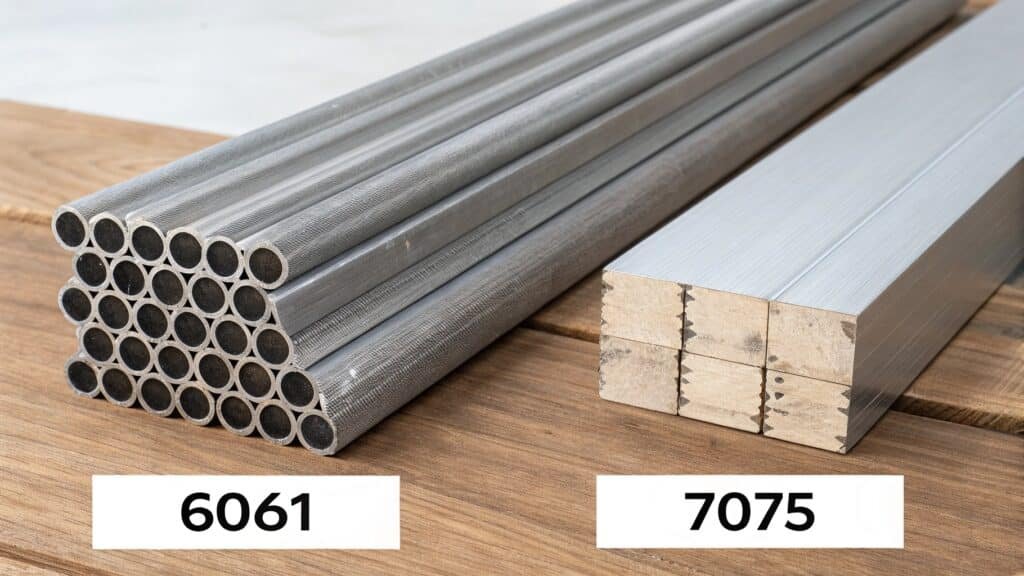
At SWA Forging, we understand the crucial differences in tensile strength between 6061 and 7075. When clients require the absolute highest tensile performance, we expertly forge 7075, leveraging its inherent strength for demanding components. For applications where a balance of good tensile strength, corrosion resistance, and cost-effectiveness is key, our forged 6061 alloy products are an excellent and reliable choice.
Conclusion
The tensile strength of aluminum varies greatly, from pure aluminum's low strength to alloys like 7075 reaching over 570 N/mm², with 7075 being considerably stronger than 6061.
-
Learn about various aluminum alloys and their strengths to make informed material choices. ↩
-
Explore the properties of 6061 alloy to see why it's a popular choice for various applications. ↩
-
Learn about T6 temper and how it affects the strength and properties of aluminum alloys. ↩
-
Discover the unique properties of 7075 alloy that make it ideal for high-stress applications. ↩