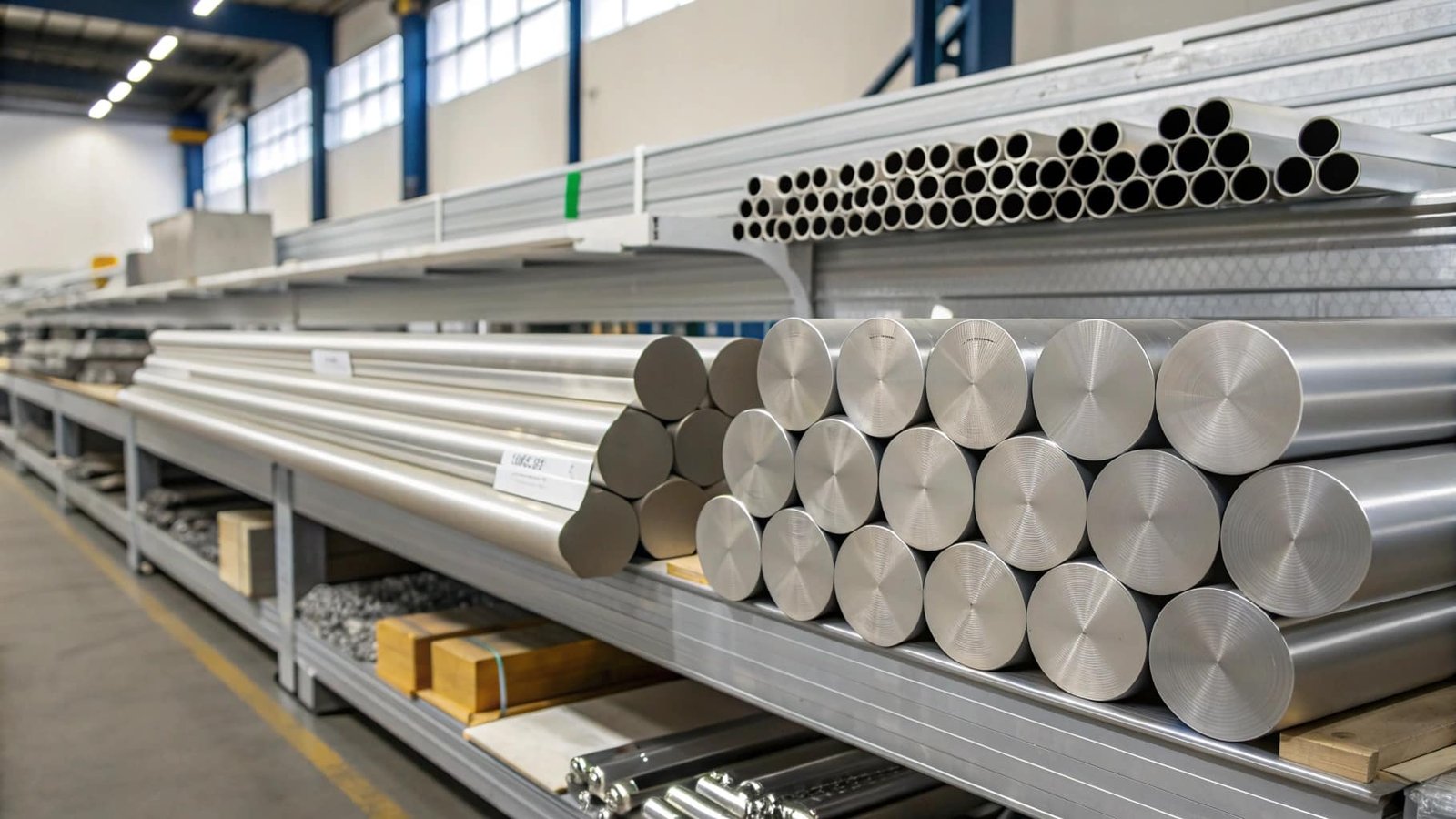
Have you ever tried to bend a piece of aluminum and wondered if there's a "sweet spot" temperature where it becomes easier to shape without breaking? Understanding aluminum's temperature-dependent behavior is key to working with it.
Aluminum doesn't have a single specific temperature at which it "becomes" malleable, as it is malleable at room temperature. However, like most metals, aluminum's malleability and ductility (its ability to be stretched or drawn into wire) increase significantly as its temperature rises. As aluminum approaches its annealing temperature, typically starting around 200-250°C (392-482°F) and continuing upwards, its internal structure becomes more pliable, allowing it to be formed, bent, and shaped with much less force and a greatly reduced risk of cracking or fracture. Above these temperatures, and well before its melting point, it becomes exceptionally easy to deform.
At SWA Forging, we work with aluminum alloys at elevated temperatures to achieve our forging processes. Manipulating the material at these higher temperatures is essential for shaping our large-diameter rings and discs effectively, a process that relies heavily on understanding how temperature affects the metal's malleability and ductility.
At what temperature does aluminum bend easily?
Have you ever tried to bend a piece of aluminum foil, and then perhaps a thicker aluminum plate, and noticed how much harder the latter is to shape? While aluminum is malleable at room temperature, heating it makes a significant difference.
Aluminum begins to bend much more easily as its temperature increases, moving past room temperature into elevated ranges. While it's already malleable at ambient conditions, significant ease of bending is observed as it approaches its annealing temperatures, generally starting from around 200°C (392°F) upwards. At these higher temperatures, the metal's crystal structure becomes more flexible, reducing the force required to deform it. This increased pliability is what allows for complex forming operations like deep drawing or bending without cracking, a state far removed from its brittle condition if it were heated too high and then cooled rapidly.
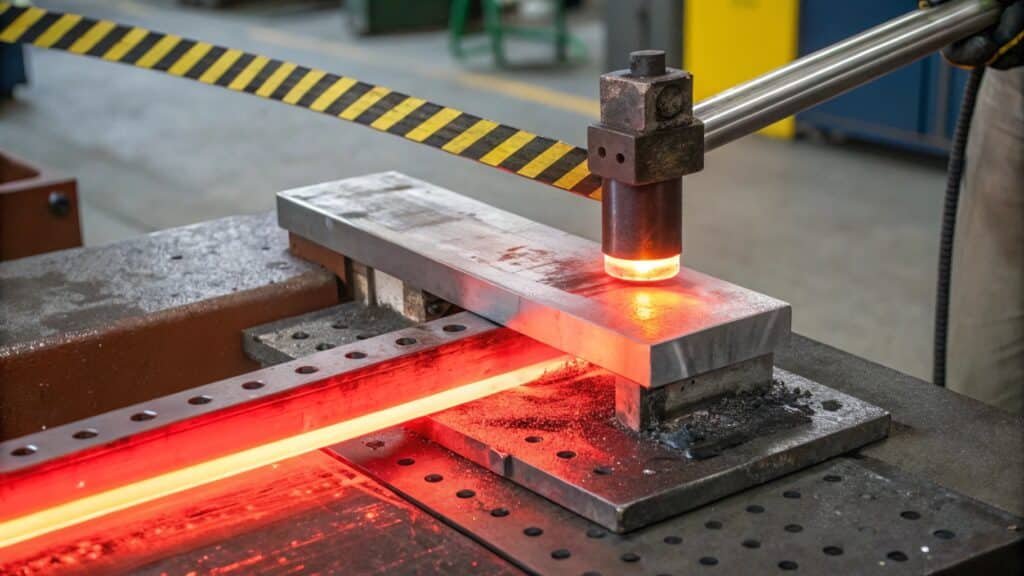
Understanding this temperature-dependent malleability is crucial for metal forming processes. At SWA Forging, we leverage controlled heating to make our aluminum alloy forgings pliable enough to shape into precise, large-diameter components, ensuring we can meet intricate client specifications.
The Impact of Temperature on Aluminum's Formability
Let's look closer at how temperature influences aluminum's ability to bend and deform:
-
Room Temperature (Malleable, but Force Required):
- Pure aluminum and most common aluminum alloys are malleable at room temperature. This means they can be hammered or rolled into thin sheets or bent without fracturing.
- However, the force required to bend or deform them increases with thickness and strength (due to alloying and temper). Thicker sections or higher-strength alloys (like 7075-T6) will be significantly harder to bend than thin pure aluminum foil.
-
Elevated Temperatures (Increased Malleability and Ductility):
- As aluminum heats up, its atomic structure becomes more energetic, and the internal friction between atoms decreases. This makes the metal more pliable.
- Annealing Temperatures (Starting around 200-250°C / 392-482°F): This is a critical range where malleability and ductility increase substantially. Annealing is a heat treatment process used to soften metals, relieve internal stresses, and improve formability. As aluminum reaches these temperatures, it becomes much easier to bend, stretch, and form complex shapes. This is often referred to as "hot working" or "warm working."
- Forging Temperatures: Forging processes, like those we perform at SWA Forging, typically occur at temperatures significantly above the annealing point, often in the range of 350-500°C (662-932°F) or even higher, depending on the specific alloy. At these temperatures, the aluminum is highly malleable and ductile, allowing it to be shaped under immense pressure without fracturing.
-
Effects on Different Alloys:
- Pure Aluminum (1xxx Series): Remains quite soft and malleable even at higher temperatures.
- Heat-Treatable Alloys (e.g., 2xxx, 6xxx, 7xxx): Their behavior at temperature is more complex. While they become more malleable when heated, improper cooling after heating can affect their tempered strength. Forging these alloys requires precise temperature control to avoid degrading their properties.
- Non-Heat-Treatable Alloys (e.g., 5xxx): Generally maintain good formability when heated, and their strength can be recovered through work hardening rather than heat treatment.
Comparison of Bending Ease:
| Condition | Ease of Bending | Force Required | Risk of Cracking | Typical Use Cases |
|---|---|---|---|---|
| Room Temperature (Thin Foil) | Easy | Low | Low | Wrapping food, crafts |
| Room Temperature (Thick Plate/Alloy) | Moderate to Hard | High | Moderate | Bending sheet metal components |
| Elevated Temperature (e.g., 300°C) | Very Easy | Very Low | Very Low | Hot forming, bending thick sections |
| Forging Temperature (e.g., 400°C+) | Extremely Easy | Minimal | Extremely Low | Forging complex shapes, rings |
Therefore, while aluminum is always malleable, the temperature at which it becomes significantly easier to bend and shape is in the elevated range, starting from its annealing temperatures upwards.
At what temperature does aluminum lose its strength?
Have you ever wondered how much heat aluminum can withstand before it starts to weaken considerably? This is a critical question for many industrial applications.
Aluminum does not abruptly "lose" its strength at a single temperature, but rather, its strength begins to decrease gradually as temperature increases, a phenomenon known as thermal softening. While pure aluminum has low strength to begin with, its alloys start to lose significant tensile strength and hardness as they approach their annealing temperatures. For most common aluminum alloys (like 6061-T61), this weakening becomes noticeable around 150-200°C (302-392°F) and accelerates considerably as temperatures rise towards 300-400°C (572-752°F). At temperatures approaching its melting point, aluminum alloys retain only a fraction of their room-temperature strength, becoming very soft and ductile.
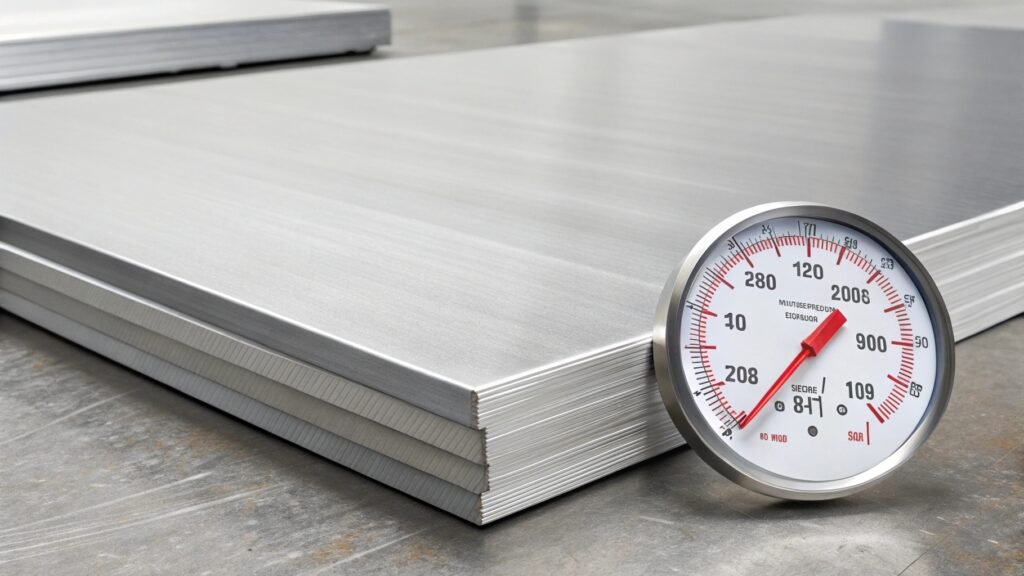
At SWA Forging, we carefully control the temperatures at which we work with aluminum alloys. We operate in the hot working range, typically between 350-500°C, where the material is malleable. However, we must be precise because exceeding optimal temperatures can reduce the final strength of the forged product after cooling.
Understanding Strength Degradation in Aluminum with Heat
Let's look at how temperature affects aluminum's mechanical properties:
-
Thermal Softening (General Effect):
- As temperature increases, the atoms within the metal lattice gain kinetic energy and vibrate more vigorously.
- This increased atomic movement makes it easier for dislocations to move, which is the underlying mechanism for plastic deformation. Consequently, the material's resistance to deformation (strength) decreases.
- This softening effect is a continuous process, not an abrupt one, as temperature rises.
-
Impact on Different Aluminum Types:
- Pure Aluminum (1xxx Series): Already has low strength, so the effect of heat is to make it even softer and more easily deformed.
- Heat-Treatable Alloys (2xxx, 6xxx, 7xxx Series): These alloys achieve their high strength through heat treatment processes involving precipitation hardening. Elevated temperatures can reverse these strengthening mechanisms.
- Over-aging: If heated for extended periods or at too high a temperature, the fine precipitates that provide strength can coarsen and reduce their effectiveness, leading to a loss of strength.
- Recrystallization: At higher temperatures, new, strain-free grains can form within the deformed metal, which can soften the material and reduce strength, especially if it was previously work-hardened.
- Non-Heat-Treatable Alloys (5xxx Series): Their strength comes primarily from work hardening (cold working) and solid solution strengthening from alloying elements like magnesium. While they don't have precipitation hardening to lose, they will still soften significantly with elevated temperatures due to increased atomic mobility and potential recovery of dislocations.
-
Key Temperature Thresholds (Approximate and Varying by Alloy):
- Noticeable Softening: Generally begins to be observed as temperatures approach 150-200°C (302-392°F).
- Significant Strength Loss: Most alloys will have lost a substantial portion of their room-temperature yield and tensile strength by the time they reach 300°C (572°F). For instance, 6061-T6, which has a room-temperature yield strength around 275 MPa, might have its yield strength drop to below 100 MPa at 300°C.
- Very Low Strength (Near Melting): As temperatures approach the melting point (which itself varies by alloy but is generally above 600°C / 1112°F), aluminum alloys retain very little of their solid-state strength and become extremely soft and easily deformable.
Temperature vs. Strength Reduction:
| Temperature Range | Effect on Strength |
|---|---|
| Room Temperature (20-25°C) | Full room-temperature strength. |
| ~100-150°C (212-302°F) | Slight to moderate decrease in strength for some alloys. |
| ~150-200°C (302-392°F) | Noticeable strength reduction begins, especially for heat-treatable alloys. |
| ~250-300°C (482-572°F) | Significant strength loss. Alloys become considerably softer and more malleable. |
| ~300-400°C (572-752°F) | Very low strength. Material is highly ductile, suitable for hot working. |
| Approaching Melting Point (>500°C) | Strength is minimal. Material behaves almost like a very viscous liquid. |
It's important to remember that the exact temperatures vary significantly based on the specific aluminum alloy and its temper. Always consult material data sheets for precise information.
What makes aluminium malleable?
Have you ever wondered why aluminum can be hammered into thin sheets or drawn into wires so easily, unlike some other metals? Its inherent malleability is a key characteristic.
Aluminum is inherently malleable primarily due to its atomic structure and bonding. Aluminum atoms are arranged in a face-centered cubic (FCC) crystal lattice. This structure allows for slip planes, which are planes within the crystal where layers of atoms can slide past each other with relatively low resistance when a force is applied. Furthermore, the metallic bonding in aluminum involves a "sea" of electrons shared among positively charged aluminum ions. This electron sea is flexible and allows the ions to slide past each other without breaking the overall metallic bond, enabling deformation without fracture. Pure aluminum's relatively low melting point and the absence of strong directional bonding also contribute to its high malleability and ductility.
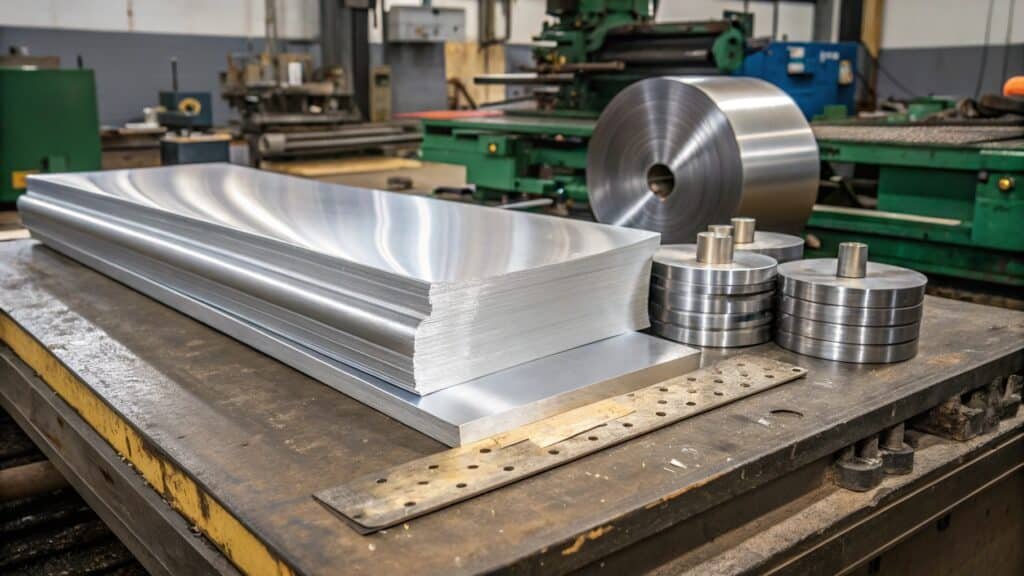
At SWA Forging, we exploit aluminum's malleability at elevated temperatures to shape it. While it's malleable at room temperature, heating it to forging temperatures further enhances this property, allowing us to form complex shapes like large rings with ease, a testament to its fundamental atomic characteristics.
The Atomic Basis of Aluminum's Malleability
Let's delve into the reasons behind aluminum's ability to be easily deformed:
-
Crystal Structure (FCC Lattice):
- Face-Centered Cubic (FCC): Aluminum crystallizes in an FCC structure. This arrangement provides multiple slip systems – planes and directions along which atoms can slide.
- Slip Planes: In an FCC structure, there are 12 independent slip systems (4 slip planes, each with 3 slip directions). These numerous slip systems mean that atoms can shift and slide across each other in many different ways, facilitating plastic deformation without breaking the atomic bonds.
- Dislocation Movement: Plastic deformation in metals occurs through the movement of line defects called dislocations. The FCC structure allows dislocations to move relatively easily.
-
Metallic Bonding:
- Electron Sea: In metallic bonding, valence electrons are delocalized and form a "sea" of electrons that surrounds the positively charged metal ions.
- Flexibility: This electron sea is not rigidly attached to any single ion. When stress is applied and atoms shift, the electron sea can redistribute, maintaining the metallic bond between the ions. This allows the metal to deform without breaking apart. Pure metals have a very uniform distribution of these ions and electrons.
-
Atomic Size and Bonding Strength:
- Aluminum atoms are relatively small, and the metallic bonds are strong but not excessively rigid. This balance allows for atomic movement under stress.
- The bonding energy is high enough to hold the structure together but not so high that it prevents atomic planes from sliding.
-
Low Melting Point:
- Compared to many other metals like iron or tungsten, aluminum has a relatively low melting point (around 660°C or 1220°F).
- Lower melting points generally correlate with weaker interatomic forces, which contributes to easier deformation, especially at elevated temperatures.
Comparison with Less Malleable Metals:
- Pure Iron: Iron has a Body-Centered Cubic (BCC) structure at room temperature. BCC structures have fewer slip systems than FCC, making pure iron less malleable and ductile than pure aluminum. Iron's higher melting point also contributes to its greater strength and resistance to deformation.
- Tungsten: Tungsten has a very high melting point and strong metallic bonds, making it extremely strong and very difficult to deform, meaning it is not malleable at room temperature.
How Alloying Affects Malleability:
While pure aluminum is highly malleable, adding alloying elements often reduces malleability. These added atoms, being of different sizes than aluminum atoms, distort the crystal lattice and impede dislocation movement. This is why alloys are stronger but often less ductile and malleable than pure aluminum. However, by carefully controlling the types and amounts of alloying elements, and through heat treatment, some aluminum alloys can retain good formability while achieving significant strength gains.
At what temperature does aluminium start to melt?
Have you ever wondered how hot aluminum needs to get before it transforms from a solid metal into a liquid? This melting point is a fundamental property of the metal.
Aluminum, in its pure form (99% or more pure aluminum), has a melting point of approximately 660.3°C (1220.5°F). This is the temperature at which pure solid aluminum transitions into liquid aluminum under standard atmospheric pressure. It's important to note that aluminum alloys have slightly different melting points, which can be a range rather than a single temperature, and depend on the specific elements and their percentages in the alloy. For instance, some aluminum alloys may start to soften or partially melt at slightly lower temperatures than pure aluminum.
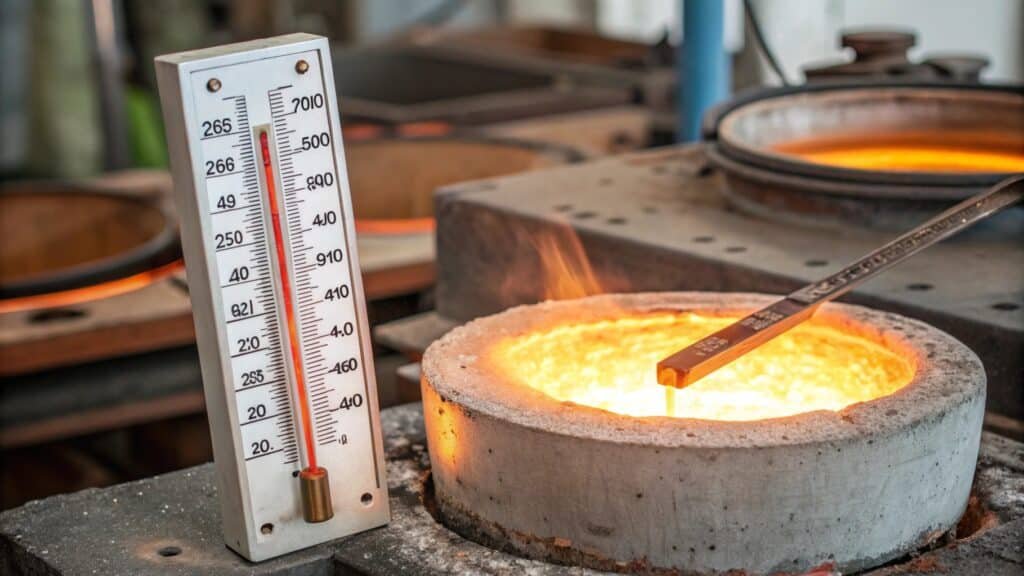
At SWA Forging, we work with aluminum alloys2 at temperatures well below their melting point. Our forging processes typically occur between 350°C and 500°C, allowing the metal to be malleable and easily shaped, but it remains well within the solid-state range, far from its melting point.
Understanding the Melting Process of Aluminum
Let's delve into the specifics of aluminum's melting point:
-
Pure Aluminum Melting Point:
- The scientifically accepted melting point for pure aluminum is 660.3 degrees Celsius (or 1220.5 degrees Fahrenheit).
- At this precise temperature, solid aluminum atoms gain enough thermal energy to overcome their fixed positions in the crystal lattice and move freely as a liquid.
-
Aluminum Alloys and Melting:
- Alloy Composition Matters: When other elements are added to aluminum to create alloys, the melting behavior changes. Most alloys do not have a single, sharp melting point. Instead, they have a melting range.
- Solidus and Liquidus: For alloys, there is a "solidus" temperature, below which the material is entirely solid, and a "liquidus" temperature, above which it is entirely liquid. Between the solidus and liquidus, the material exists as a mixture of solid and liquid phases.
- Effect of Alloying Elements: Generally, alloying elements either slightly raise or lower the melting point. For example, adding silicon to aluminum typically lowers the melting point. The exact melting range for a specific aluminum alloy depends on its exact composition.
- Examples:
- Alloy 6061 (a common structural alloy containing Mg and Si) typically melts in a range starting around 582°C (1080°F) and becoming fully liquid by around 653°C (1207°F).
- Alloy 7075 (a high-strength aerospace alloy containing Zn, Mg, Cu) has a melting range starting around 480°C (896°F) and becoming fully liquid by around 635°C (1175°F).
-
Practical Implications:
- Forging: As mentioned, forging occurs in the solid state but at elevated temperatures (e.g., 350-500°C) where the material is easily deformed. Exceeding the solidus temperature would result in a mushy or fully liquid state, which is not suitable for forging.
- Casting: Casting processes rely on melting the aluminum alloy and pouring it into molds. Here, temperatures are raised above the liquidus temperature to ensure the molten metal flows properly.
- Heat Treatment: Some heat treatments are performed at temperatures below the solidus to achieve desired property changes without melting.
Melting Point Comparison:
| Material | Melting Point (°C) | Melting Point (°F) | Notes |
|---|---|---|---|
| Pure Aluminum | 660.3 | 1220.5 | Sharp melting point |
| Alloy 6061 | ~582 - 653 | ~1080 - 1207 | Melting range, starts softening below pure Al |
| Alloy 7075 | ~480 - 635 | ~896 - 1175 | Lower melting range, significant softening occurs |
| Pure Iron | 1538 | 2800 | Much higher melting point |
| Pure Copper | 1085 | 1984 | Higher melting point than aluminum |
Therefore, while pure aluminum melts at about 660°C, alloys can have slightly different and broader melting ranges, which are critical considerations for manufacturing processes.
Conclusion
Aluminum is malleable at room temperature, but becomes significantly easier to bend and shape as it heats up, especially approaching annealing temperatures around 200-250°C. Aluminum loses strength gradually as temperature increases, with noticeable softening starting around 150-200°C and significant loss occurring by 300°C. Aluminum’s malleability stems from its FCC crystal structure, flexible metallic bonding, and atomic arrangement that allows planes of atoms to slide. Pure aluminum starts to melt at approximately 660.3°C (1220.5°F), while aluminum alloys have melting ranges that vary based on their composition.