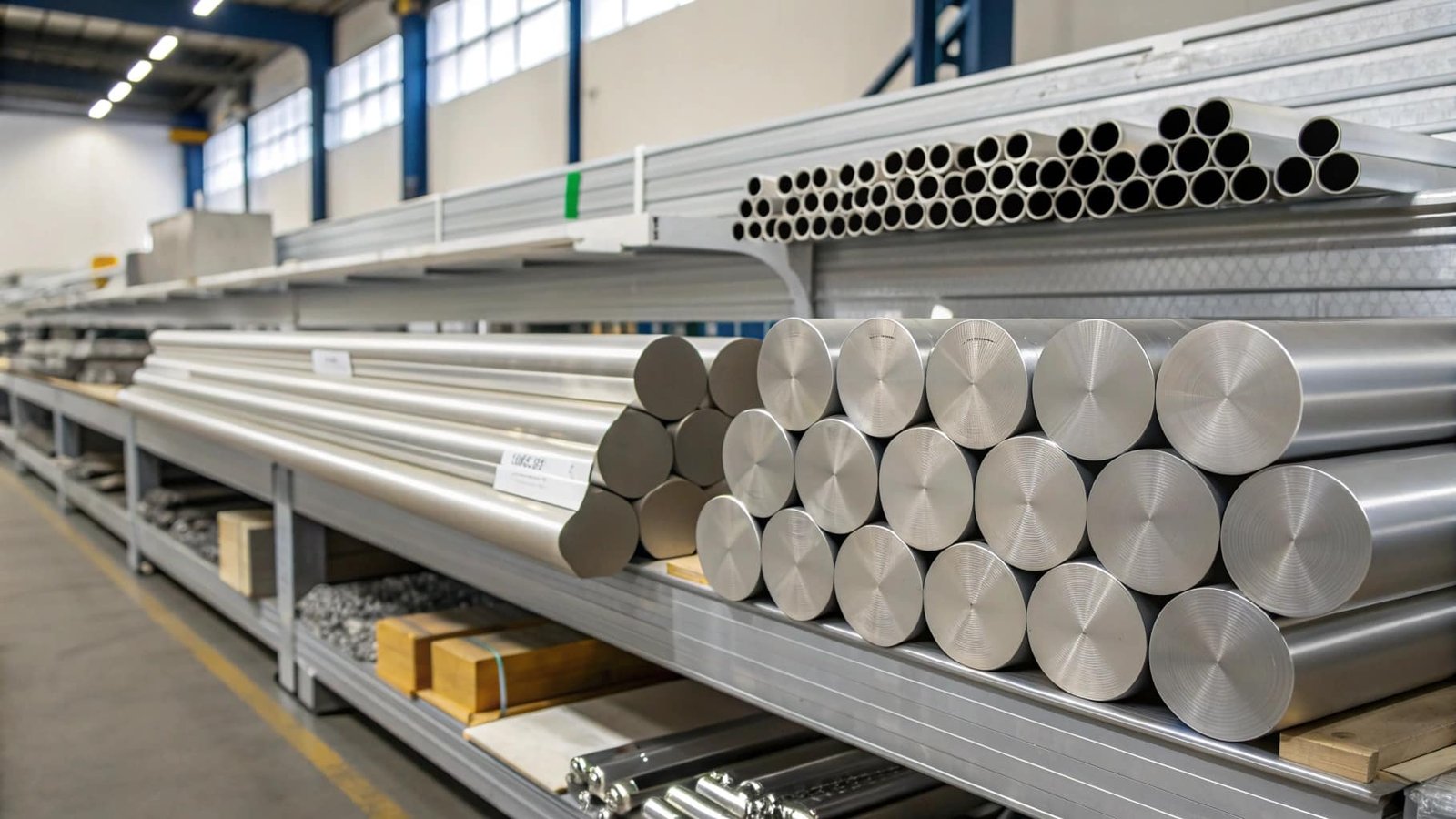
Are standard aluminum bars and tubing failing to meet your high-stress application needs? Explore how SWA Forging1's custom-engineered solutions provide superior strength and tailored performance.
SWA Forging offers custom-forged aluminum rings and discs engineered from high-performance alloys, providing significantly enhanced strength, durability, and precision compared to standard aluminum bars and tubing for demanding applications in aerospace, automotive, and heavy industries.
Many of our clients reach out to us because they've hit a performance ceiling with conventional aluminum bars or tubing. They might be dealing with components that are experiencing premature fatigue, deformation under load, or simply don't offer the precise geometry needed for optimal system function. Whether it's for a critical aerospace component, a heavy-duty industrial mechanism, or a high-performance automotive part, the need for a more robust material solution is evident. At SWA Forging, we address these challenges by creating custom-forged aluminum parts designed to exceed expectations and deliver reliability under extreme conditions.
Is 6061 or 7075 aluminum stronger?
7075 aluminum alloy2 is significantly stronger than 6061 aluminum alloy3, particularly in its heat-treated state.
7075 aluminum is considerably stronger than 6061 aluminum. When both alloys are in their peak heat-treated condition (T6 temper), 7075 typically exhibits a tensile strength of around 530 MPa and a yield strength of 490 MPa. In contrast, 6061-T6 has a tensile strength of about 310 MPa and a yield strength of 270 MPa, making 7075 substantially stronger.

For clients operating in high-stress environments, understanding the nuanced differences between aluminum alloys is critical for making the right material choices. At SWA Forging, this knowledge allows us to guide them towards alloys that will best suit their specific engineering challenges. The superior strength of 7075 makes it an excellent candidate for applications where maximum performance under load is non-negotiable, and our forging process further refines these properties.
Here's a closer look at their strengths:
- 7075 Alloy: This alloy, part of the aluminum-zinc series, is renowned for its extremely high strength. It's often considered one of the strongest commercially available aluminum alloys. Its excellent strength-to-weight ratio makes it a top choice for aerospace structures, military equipment, and high-performance sporting goods.
- 6061 Alloy: Belonging to the aluminum-magnesium-silicon series, 6061 offers a very good balance of properties. It provides moderate strength, excellent corrosion resistance4, and good workability. It's a versatile alloy widely used in general-purpose structural applications, including automotive parts, aircraft components (though less critical ones than 7075), and construction.
While 6061 is a capable alloy, 7075 is the clear winner when absolute maximum strength is the primary requirement.
What is the toughest aluminum?
The toughness of aluminum depends on the alloy composition and its heat treatment and processing. Generally, alloys designed for high strength also exhibit higher toughness.
The toughest aluminum alloys are typically found in the 7xxx series, such as 7075, especially when properly heat-treated to achieve optimal strength and fracture toughness. Alloys like 7050 are specifically designed for improved fracture toughness, making them suitable for applications with higher damage tolerance requirements, like aircraft structures.

When clients ask about "toughness," they are often concerned with how well a material will resist fracturing or cracking under stress, especially impact or fatigue. At SWA Forging, we recognize that toughness is a vital property for components operating in demanding environments. Alloys like 7075, known for their exceptional strength, often exhibit good toughness, and our forging process further enhances the material's integrity, making our products more resistant to failure.
Key factors contributing to aluminum toughness include:
- Alloy Composition: Certain alloying elements, particularly magnesium and zinc in the 7xxx series, contribute to higher strength and, consequently, often to greater toughness when properly processed.
- Heat Treatment: Specific heat treatments, like aging (e.g., T6, T73), are crucial for developing the optimal microstructure that balances strength and toughness. For example, the T73 temper in 7075 is specifically designed to enhance resistance to stress-corrosion cracking and improve fracture toughness over the T6 temper.
- Grain Structure: The forging process itself refines the grain structure of the aluminum, creating a more uniform and defect-free material. This refined grain structure leads to improved mechanical properties, including toughness.
- Absence of Defects: Forging minimizes internal voids and porosity that can act as crack initiation sites, thereby increasing the material's overall toughness and reliability.
Understanding these factors allows us to select the best alloys and processing methods to deliver forged aluminum components with the highest levels of toughness for critical applications.
Is 5052 or 6061 aluminum stronger?
6061 aluminum is stronger than 5052 aluminum. The difference in their alloy composition leads to distinct mechanical properties.
6061 aluminum is stronger than 5052 aluminum. 6061, a magnesium-silicon alloy with added copper, offers significantly higher tensile and yield strengths, especially in its heat-treated T6 temper. 5052, a magnesium alloy, is known more for its excellent corrosion resistance, good formability, and moderate strength, making it ideal for applications where welding and formability are prioritized over maximum strength.

For many of our clients, the choice between alloys like 5052 and 6061 comes down to balancing strength requirements with other factors like corrosion resistance or ease of fabrication. At SWA Forging, we often work with 6061 because its robust strength profile makes it suitable for more demanding structural applications than 5052. When exceptional strength and durability are needed, 6061, and even more so our forged components, provide a clear advantage.
Here’s a comparison highlighting their strength differences:
- 6061 Aluminum: This alloy is heat-treatable and can achieve a substantial level of strength. Its typical tensile strength in the T6 temper is around 310 MPa, with a yield strength of 270 MPa. This makes it suitable for structural components, aircraft parts, automotive chassis, and frames.
- 5052 Aluminum: This alloy is not heat-treatable and derives its strength from cold working. While it offers good strength for a non-heat-treatable alloy, its typical tensile strength is around 250 MPa and yield strength is 210 MPa. Its primary advantages lie in its excellent corrosion resistance (particularly in marine environments), good formability, and superior weldability, making it a choice for boat hulls, fuel tanks, and sheet metal work.
Therefore, if maximum strength is the primary concern, 6061 is the preferred choice over 5052.
How do I know if my aluminum is 6061 or 7075?
Identifying aluminum alloys like 6061 and 7075 typically requires either testing methods or relying on official documentation, as they look very similar.
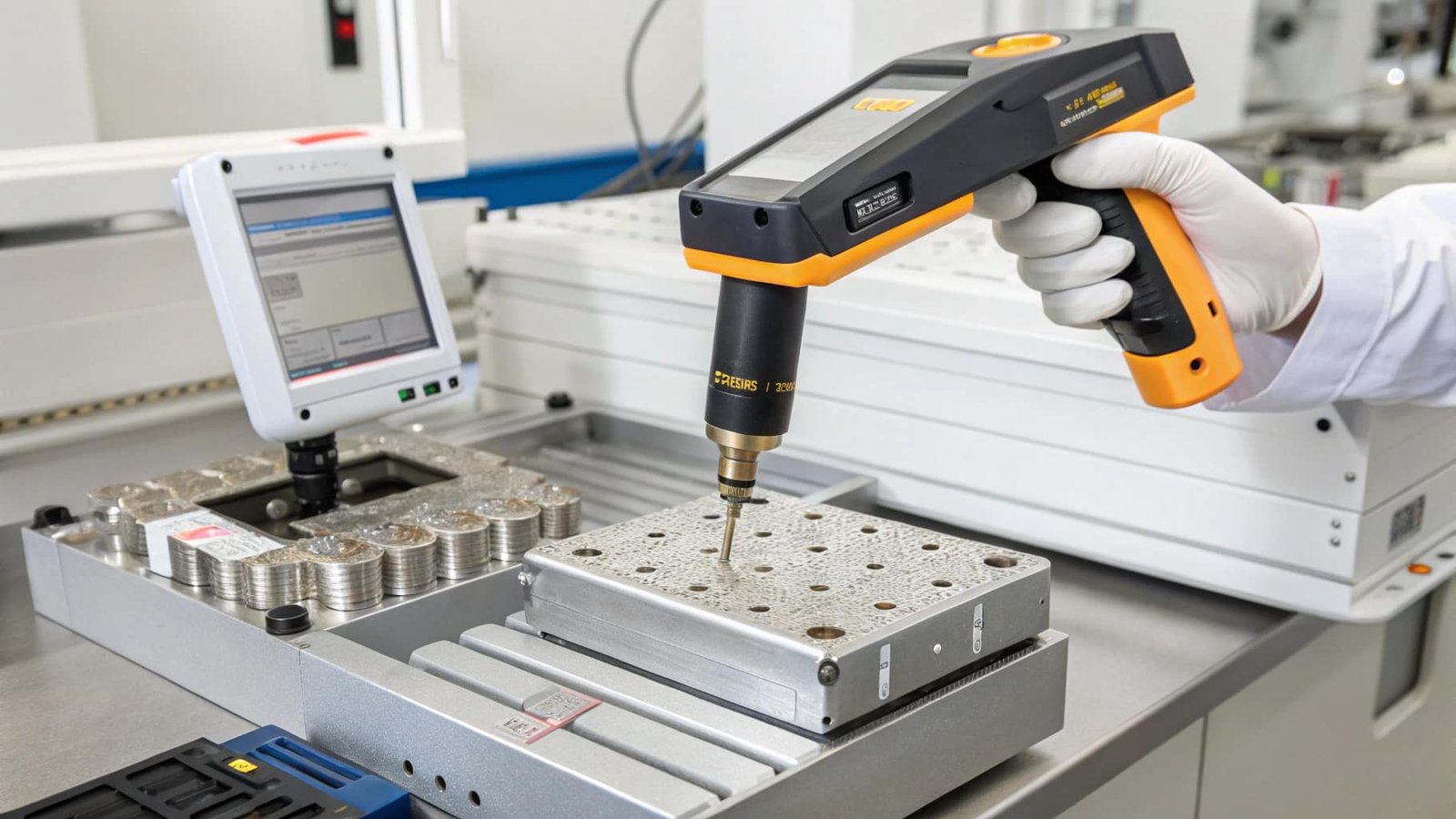
To reliably distinguish between 6061 and 7075 aluminum, you generally need to rely on material testing or documentation. Spectrographic analysis can determine the exact chemical composition, while mechanical testing (like tensile strength tests) can reveal significant differences in their strength properties. Visual inspection alone is usually insufficient.

For our clients at SWA Forging, knowing the exact alloy composition of the materials they are using or receiving is crucial for ensuring the integrity and performance of their projects. While visual identification between alloys like 6061 and 7075 is virtually impossible due to their similar appearance, our commitment to quality means we employ rigorous methods to guarantee the alloy grade we are working with.
Here are common methods for identifying aluminum alloys:
- Chemical Analysis (Spectrography): This is the most accurate method. A spectrograph can analyze the elemental composition of the metal, providing precise percentages of alloying elements like copper, zinc, magnesium, and silicon. This analysis can definitively confirm whether the material is 6061 or 7075.
- Mechanical Testing: Differences in strength are a key indicator. A tensile test can measure the yield strength, tensile strength, and elongation. Since 7075 is significantly stronger than 6061, a material that yields at approximately 480 MPa is likely 7075-T6, while one yielding around 270 MPa is likely 6061-T6.
- Hardness Testing: While less definitive than spectrography, hardness tests (like Rockwell or Brinell) can provide some indication. For instance, 7075-T6 is typically harder than 6061-T6.
- Marking and Documentation: Reputable suppliers always provide material certifications or lot traceability that specifies the alloy grade. If the material is purchased from a reliable source, this documentation is the primary way to identify it. Always check for stamped lot numbers or accompanying certificates of analysis.
Without proper testing or documentation, it is very difficult to tell 6061 and 7075 aluminum apart visually.
Conclusion
When standard aluminum bars and tubing fall short, especially in high-stress applications, consider the advanced capabilities of SWA Forging. By understanding the distinct strengths of alloys like 6061 and 7075, and the inherent toughness and reliability of forged components, you can confidently choose engineered solutions that meet your most demanding requirements.
-
Explore the custom solutions provided by SWA Forging for high-performance applications. ↩
-
Explore the unique properties of 7075 aluminum and its applications in various industries. ↩
-
Find out why 6061 aluminum is a popular choice for many structural applications. ↩
-
Understand the key factors that enhance or diminish aluminum's corrosion resistance. ↩