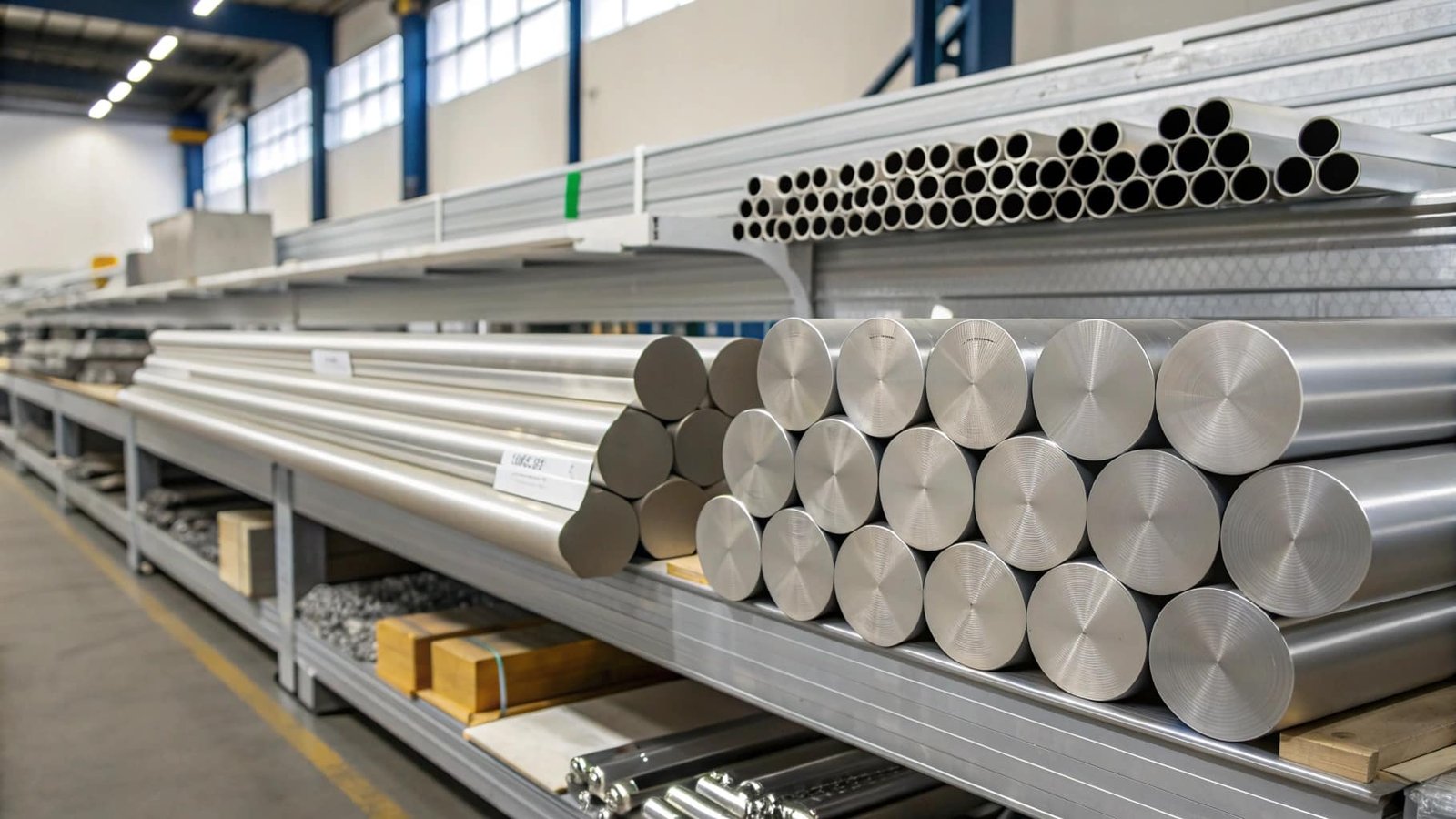
Are your projects hitting a wall with the limitations of standard aluminum round bars1? Discover how custom-engineered components can elevate your designs.
When standard aluminum round bars cannot meet the complex geometric, strength, or performance requirements of your critical applications, SWA Forging's precision-engineered 3D components offer a superior, tailored solution.
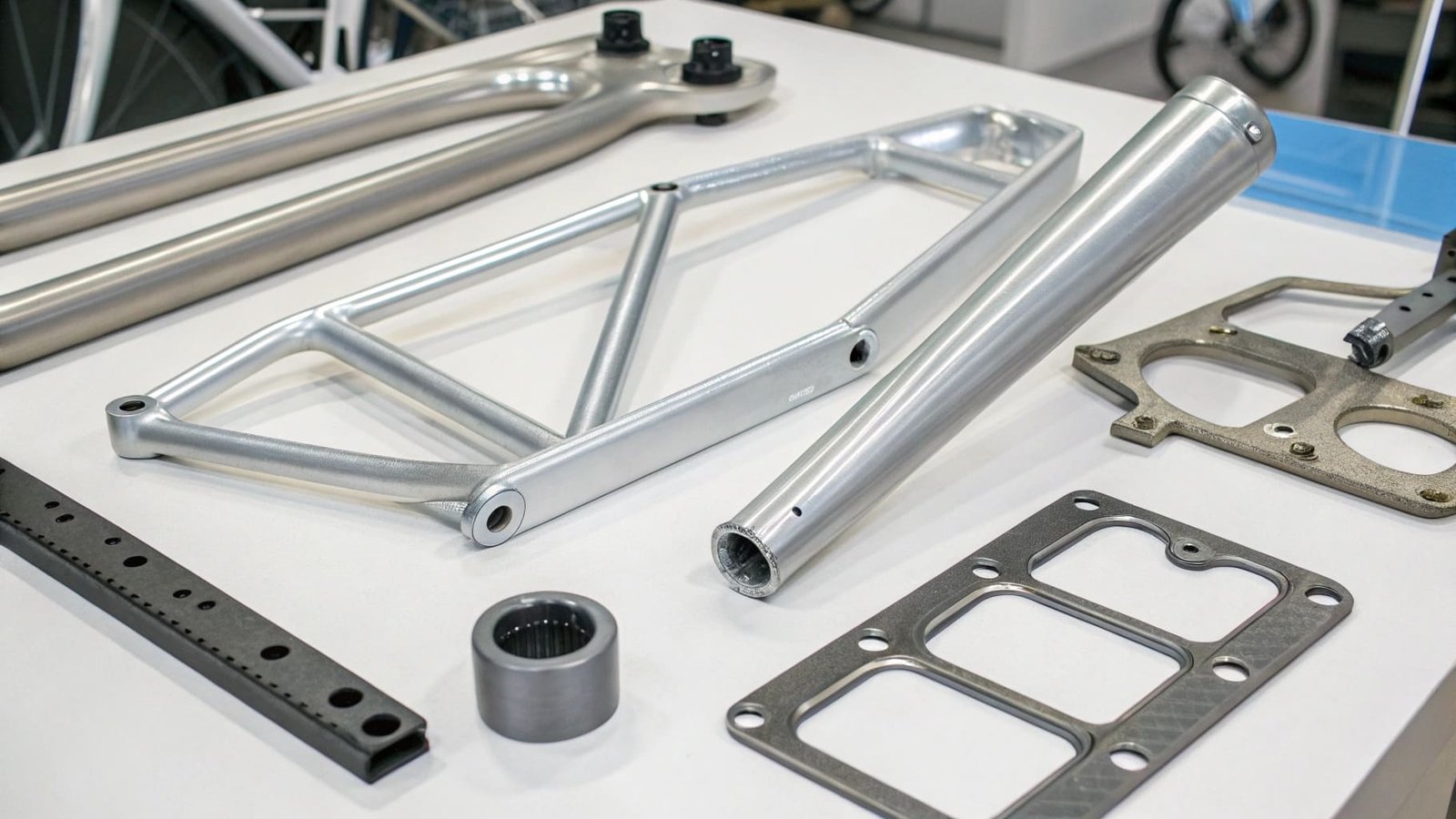
Many of our clients at SWA Forging initially consider standard aluminum round bars for their projects. However, they often find that these basic shapes lack the specific features, the necessary strength optimization, or the precise dimensional control required for high-performance applications. Whether it's intricate aerospace parts, specialized automotive systems, or advanced industrial machinery, the limitations of a simple round bar become apparent. At SWA Forging, we transform high-quality aluminum alloys2 into custom-engineered components, utilizing forging to create complex 3D shapes with optimized material properties that go far beyond the capabilities of a basic round bar.
Is 6061 aluminum stronger than 5052?
When comparing 6061 and 5052 aluminum alloys, strength is a key differentiator, with 6061 generally offering higher mechanical properties.
Yes, 6061 aluminum3 is typically stronger than 5052 aluminum4. 6061, being a heat-treatable alloy, offers higher tensile strength and yield strength, making it suitable for structural applications. 5052, a non-heat-treatable alloy, has excellent formability, corrosion resistance (especially in marine environments), and good strength, but it does not reach the peak strength levels of 6061.

Our clients at SWA Forging often select materials based on a balance of strength, formability, and corrosion resistance. While 5052 is excellent for applications requiring easy fabrication and good marine-grade performance, 6061 is the alloy of choice when higher structural integrity is paramount. Our forging process further enhances the strength of 6061, allowing us to produce components that require exceptional load-bearing capabilities and precision. Understanding these alloy differences helps our clients choose the right material for their specific needs.
Key comparison points:
- Strength: 6061 has higher tensile and yield strength.
- Formability: 5052 is easier to bend and form.
- Corrosion Resistance: 5052 generally excels, particularly in marine settings.
- Weldability: Both are generally weldable, but 5052 can be easier.
- Heat Treatability: 6061 is heat-treatable to achieve higher strength; 5052 is not.
The best alloy depends on whether the priority is strength or formability and corrosion resistance.
What are the grades of aluminum round bars?
Aluminum round bars are manufactured from various aluminum alloys, each offering a different combination of properties, with 6061 and 7075 being among the most common high-strength grades.
Aluminum round bars are available in numerous grades, categorized by their alloy series, such as the 1xxx (pure aluminum), 3xxx (aluminum-manganese), 5xxx (aluminum-magnesium), 6xxx (aluminum-magnesium-silicon), and 7xxx (aluminum-zinc) series. Each grade offers distinct characteristics like strength, corrosion resistance, weldability, and formability.

At SWA Forging, we frequently work with high-demand grades like 6061 and 7075 for our custom-engineered components. While these are commonly supplied as round bars, our clients often need these alloys shaped into complex 3D forms with optimized strength. The choice of alloy grade is critical for performance, and our forging process5 allows us to maximize the benefits of each grade, providing solutions that far surpass the limitations of a simple round bar.
Common grades and their characteristics:
- 1100: Purest commercially available (99.0% min Al). Good corrosion resistance, low strength. Used for chemical equipment, heat exchangers.
- 3003: Most widely used alloy. Good workability, corrosion resistance, moderate strength. Used for general purposes, cookware, tanks.
- 5052: Excellent formability and corrosion resistance (marine grade). Moderate strength. Used for boat hulls, automotive trim, fuel tanks.
- 6061: Heat-treatable. Good strength, weldability, corrosion resistance. Versatile, used for structural applications, aircraft components, automotive parts.
- 7075: Very high strength. Excellent fatigue strength. Used for aerospace structures, high-stress components, sporting goods.
The selection of the grade is fundamental to the component’s intended function.
What grade is 6061 aluminum?
6061 aluminum belongs to the 6xxx series of aluminum alloys, which are characterized by the addition of magnesium and silicon.
6061 aluminum is a heat-treatable alloy belonging to the Aluminum-Magnesium-Silicon (Al-Mg-Si) series. It is one of the most versatile and widely used aluminum alloys due to its excellent combination of strength, corrosion resistance, weldability, and formability. It is commonly found in applications requiring moderate to high strength, such as structural components, frames, and automotive parts.

For our clients at SWA Forging, understanding the specific grade of aluminum, like 6061, is crucial for designing high-performance components. While 6061 is a versatile alloy that can be readily machined or formed into basic shapes like round bars, our forging process allows us to take this alloy further. We can create intricate 3D forms from 6061, optimizing its grain structure to achieve superior strength and durability in critical areas, thus extending its application potential far beyond standard round bars.
Key attributes of 6061:
- Alloy Series: 6xxx
- Main Alloying Elements: Magnesium (Mg) and Silicon (Si).
- Heat-Treatable: Yes, it can be heat-treated to achieve various tempers (e.g., T4, T6) for enhanced mechanical properties.
- Key Properties: Good strength-to-weight ratio, good corrosion resistance6, excellent weldability, good machinability, moderate formability.
- Common Tempers: T6 (solution heat-treated and artificially aged) is the most common, providing peak strength.
Its balanced properties make it a workhorse alloy for numerous industries.
What is an extruded aluminum bar?
An extruded aluminum bar is a semi-finished aluminum product formed by pushing heated aluminum through a die with a specific cross-sectional profile, creating a uniform shape.
An extruded aluminum bar is manufactured by forcing heated aluminum through a shaped die, allowing for the creation of a continuous profile with a consistent cross-section. This process is highly versatile, capable of producing bars with various shapes, including solid rectangular, square, or even more complex profiles, and it offers good dimensional accuracy and surface finish.

While extruded aluminum bars are useful for many applications, our clients at SWA Forging often require more than what extrusion can provide. They need components with complex 3D geometries, optimized grain flow for enhanced strength, or tighter tolerances in specific areas. Our forging process starts with high-quality aluminum alloys, often in forms like round bars or billets, and then shapes them under immense pressure to create these intricate, high-performance parts. This capability allows us to deliver engineered solutions that surpass the limitations of standard extruded products.
Key characteristics of extruded aluminum bars:
- Manufacturing Process: Extrusion—pushing aluminum through a die.
- Shape Versatility: Can create a wide range of complex, uniform cross-sections.
- Dimensional Control: Generally good accuracy and consistency along the length.
- Surface Finish: Typically smooth and suitable for many applications without further finishing.
- Material Properties: Properties are generally uniform throughout the extruded profile.
Extrusion is a cost-effective method for producing uniform shapes, but forging is used when higher mechanical properties and complex 3D forms are needed.
Conclusion
When standard aluminum round bars or extruded profiles don't meet your project's demands, SWA Forging offers precision-engineered 3D components. We leverage advanced forging techniques to create custom solutions with superior strength and complex geometries.
-
Find out how aluminum round bars are utilized across various industries for different applications. ↩
-
Learn about the various aluminum alloys and their specific applications to make informed material choices. ↩
-
Discover the versatile properties of 6061 aluminum and its wide range of applications. ↩
-
Explore the benefits of 5052 aluminum, especially in marine and automotive applications. ↩
-
Learn about the forging process and how it contributes to creating high-strength components. ↩
-
Explore the importance of corrosion resistance in selecting materials for long-lasting applications. ↩