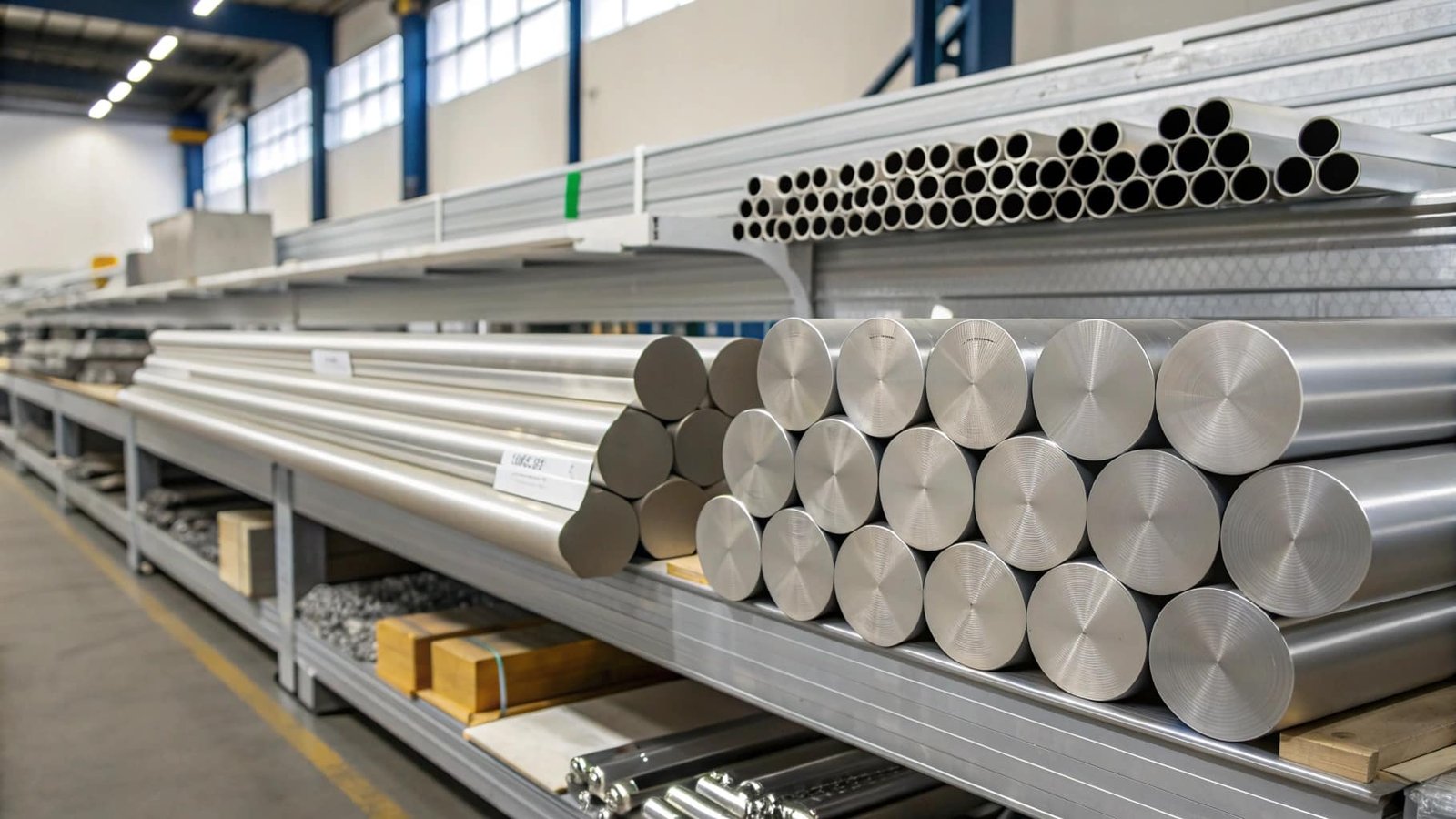
Are precision drawn aluminum tubes no longer meeting the complex demands of your critical projects? Explore the advanced capabilities of precision-forged 3D components.
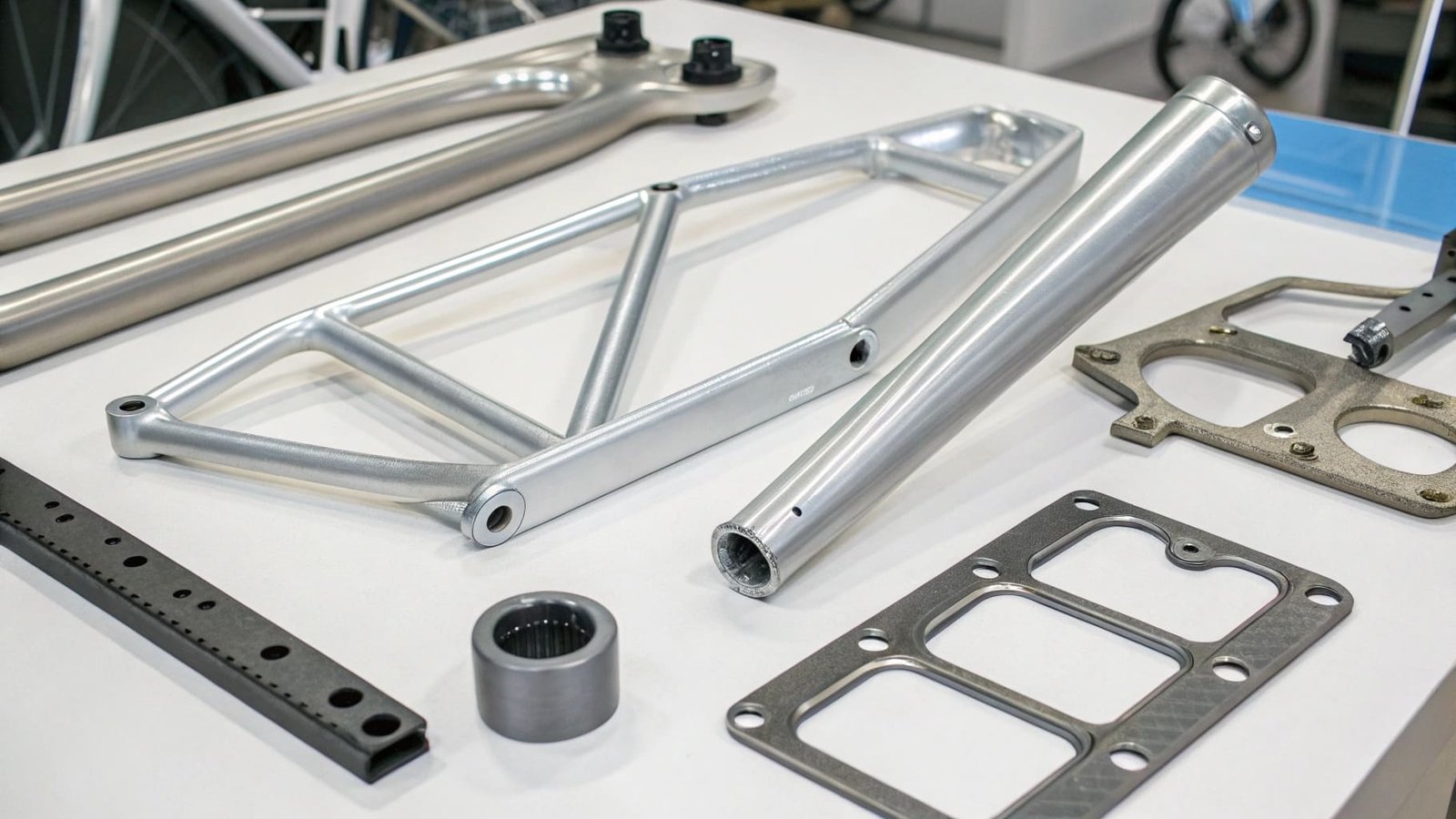
When the linear nature and geometric limitations of precision drawn aluminum tubes prevent optimal performance or integration in your extreme demand applications, SWA Forging's custom-engineered 3D components offer superior strength, complex functionality, and enhanced durability.
Many of our clients at SWA Forging begin their journey by specifying precision drawn aluminum tubes. This is a wise choice for applications needing smooth surfaces, tight tolerances, and consistent cross-sections for uses like hydraulic lines, structural supports, or fluid conduits. The drawing process refines the material, aligning the grain structure and achieving excellent dimensional accuracy. However, the inherent challenge with tubes, even precision drawn ones, is their typically linear form and limited ability to integrate complex, three-dimensional features or achieve optimized material flow for intricate stress paths. Trying to machine complex shapes into drawn tubes can compromise their structural integrity and wall thickness. At SWA Forging, we address these limitations by utilizing our expertise in precision forging. We transform aluminum alloys into monolithic, complex 3D components that often consolidate multiple parts, offering unparalleled strength and integrated functionality that goes far beyond what standard tubes can achieve.
What is the difference between extruded and drawn aluminum tube?
The key differences between extruded and drawn aluminum tubes stem from their manufacturing processes, affecting their tolerances, surface finish, and mechanical properties.
Extruded aluminum tubes are made by forcing heated aluminum through a shaped die, allowing for a wide range of cross-sectional complexities but potentially with wider tolerances. Drawn aluminum tubes are typically produced by pulling an extruded or seamless tube through a die and over a mandrel, resulting in tighter dimensional control, smoother surfaces, and often improved mechanical strength due to grain refinement.

Understanding these manufacturing nuances is vital for our clients at SWA Forging when they require components for demanding applications. Extrusion is a primary forming method, excellent for creating complex, continuous cross-sections. Drawn tubing, however, is a secondary process that refines an existing tube. This drawing process can elongate the aluminum's grain structure, which can enhance its tensile strength and toughness. While precision drawing significantly improves the quality of a tube, it is still fundamentally a process designed for creating consistent cross-sections, typically along a linear axis. Creating complex, non-linear 3D forms with integrated features in a single component is where forging excels, offering a level of geometric freedom and material integrity that is simply not achievable with tubing alone.
Distinctions in detail:
- Process: Extrusion is a push-through process; Drawing is a pull-through process.
- Tolerances: Drawn tubes generally offer tighter dimensional control.
- Surface Finish: Drawing typically yields a smoother, more refined surface.
- Grain Structure: Drawing can refine and align grain structure, improving strength.
- Shape Capability: Extrusion is better for complex cross-sections; Drawing refines linear shapes.
The choice depends on the specific requirements for precision and form.
What is the difference between extruded and seamless tubing?
The terms "extruded tubing" and "seamless tubing1" refer to distinct manufacturing methods that impact the material's integrity and suitability for various applications.
Extruded tubing starts with forcing aluminum through a die, which can create a hollow shape directly or require a piercing step. Seamless tubing is created from a solid billet that is pierced and then elongated without any welded joints, ensuring a uniform material structure throughout.

For our clients at SWA Forging, the concept of "seamless" is critical for high-integrity components. A truly seamless tube is manufactured from a solid piece of metal that is heated and then pierced, creating a hollow cavity. This process inherently avoids any welded seams, which can be weak points under pressure or stress. While some extrusion processes can also create hollows without an obvious weld, the fundamental difference lies in the origin material and the process's aim to maintain absolute material continuity. When we forge components, we are essentially creating complex, three-dimensional parts from solid material, ensuring a monolithic structure that mirrors the integrity of seamless tubing but with vastly expanded geometric possibilities and optimized material properties for critical, demanding environments.
Key differences highlighted:
- Origin: Seamless starts from a solid billet; Extruded can start from solid or pre-formed hollows.
- Structure: Seamless tubing has a uniform, continuous grain structure without welds.
- Process: Seamless involves piercing a solid; Extrusion involves pushing material through a die.
- Application Suitability: Seamless is often preferred for high-pressure or critical structural uses.
The absence of welds in seamless tubing is a key advantage for integrity.
What are the disadvantages of extruded aluminum?
While aluminum extrusion offers numerous advantages, it also has certain limitations that clients must consider when designing components for critical applications.
The disadvantages of extruded aluminum2 include limitations in forming complex three-dimensional shapes with curves or intricate features that are not linear, potential for reduced strength in areas heavily machined from the extruded profile, and the possibility of surface imperfections or less precise dimensions compared to processes like precision drawing or forging.

At SWA Forging, we often encounter projects where clients initially explored extrusion but found it insufficient for their needs. While extrusions are fantastic for linear components with consistent cross-sections, they struggle to create complex, non-linear 3D forms, sharp radii, or integrated features that require shaping in multiple dimensions. For example, creating a curved structural member with specific load-bearing contours is very difficult and often impossible through extrusion alone. Furthermore, if complex features must be machined from an extruded profile, it can remove material and alter the intended grain flow, potentially weakening the component. Our forging process directly addresses these limitations by shaping aluminum into highly complex, integrated 3D structures with optimized material grain flow, ensuring maximum strength and performance where extrusions would fall short.
Specific disadvantages of extrusion:
- Geometric Limitations: Primarily suited for linear or constant cross-sectional shapes.
- Machining Impact: Extensive machining can weaken the part or compromise tolerances.
- Die Limitations: The complexity of the die can limit the intricacy of the profile.
- Surface Finish: Can sometimes require secondary finishing operations for critical applications.
These limitations often lead clients to explore alternative manufacturing methods for advanced designs.
What is the difference between extrusion and forging aluminum?
Extrusion and forging are fundamentally different metal shaping processes, each with its own strengths and applications when working with aluminum.
Extrusion involves pushing heated aluminum through a shaped die to create a continuous profile, ideal for linear components with complex cross-sections. Forging shapes aluminum by applying controlled compressive forces, often through dies and hammers, to create discrete, three-dimensional parts with optimized grain flow for enhanced strength and integrity.

For our clients at SWA Forging, understanding this distinction is crucial for selecting the right manufacturing process for their critical components. Extrusion is fantastic for creating consistent shapes along a single axis, like tubes, bars, or complex linear frames. It’s like drawing a profile repeatedly. Forging, however, is about creating a fully formed, often intricate, three-dimensional shape from a block of aluminum. It involves manipulating the metal's grain structure to align with the part's intended use, leading to superior mechanical properties, especially fatigue strength and toughness. When a project requires integrated features, complex curves, or optimized load paths in a 3D space, forging offers capabilities that extrusion simply cannot match, allowing for the creation of monolithic components that are stronger and more efficient.
Key differences summarized:
| Feature | Extrusion | Forging |
|---|---|---|
| Process Type | Continuous forming of a profile | Discrete forming of a 3D part |
| Material Flow | Metal pushed through a die | Metal deformed and flowed into die cavities |
| Dimensionality | Primarily 2D cross-sections along a linear axis | Fully 3D shapes with integrated features |
| Grain Structure | Aligned in the direction of extrusion | Aligned to follow the contours and stress paths of the component |
| Component Focus | Tubes, bars, frames, linear structural elements | Complex housings, brackets, optimized structural components |
| Resulting Strength | Good, especially when drawn; can be weakened by machining | Superior, especially in fatigue and toughness due to grain flow |
Choosing between them depends on the required shape complexity and performance needs.
Conclusion
For extreme demand applications that surpass the capabilities of precision drawn aluminum tubes, SWA Forging's precision-engineered 3D components provide unmatched strength and integrated functionality through advanced forging techniques.