You need an aluminum tube with specific OD/ID dimensions for a custom part. But standard size charts leave you with a terrible choice: buy a tube that’s too thick or a solid bar.
While standard aluminum tubes come in many fixed millimeter sizes, a custom-forged hollow bar is the ideal solution for precision machining. It provides a near-net shape with an optimized OD/ID, drastically reducing material waste and machining time.
Machining customers come to me frustrated with standard catalogs. They see a list of sizes, but none match their drawings. A standard size chart defines a limit; our forging process defines your starting point. We don't sell tubes off a rack. We engineer the optimal Outer Diameter (OD) and Inner Diameter (ID) for a forged hollow bar. This creates a near-net shape that serves as the perfect machining blank, slashing your material waste and cycle time from the very beginning.
What are standard stock sizes for aluminum tube?
You spend hours scrolling through supplier lists, trying to find a match. The "standard" sizes are never quite right, forcing you to compromise your design or plan for excessive machining.
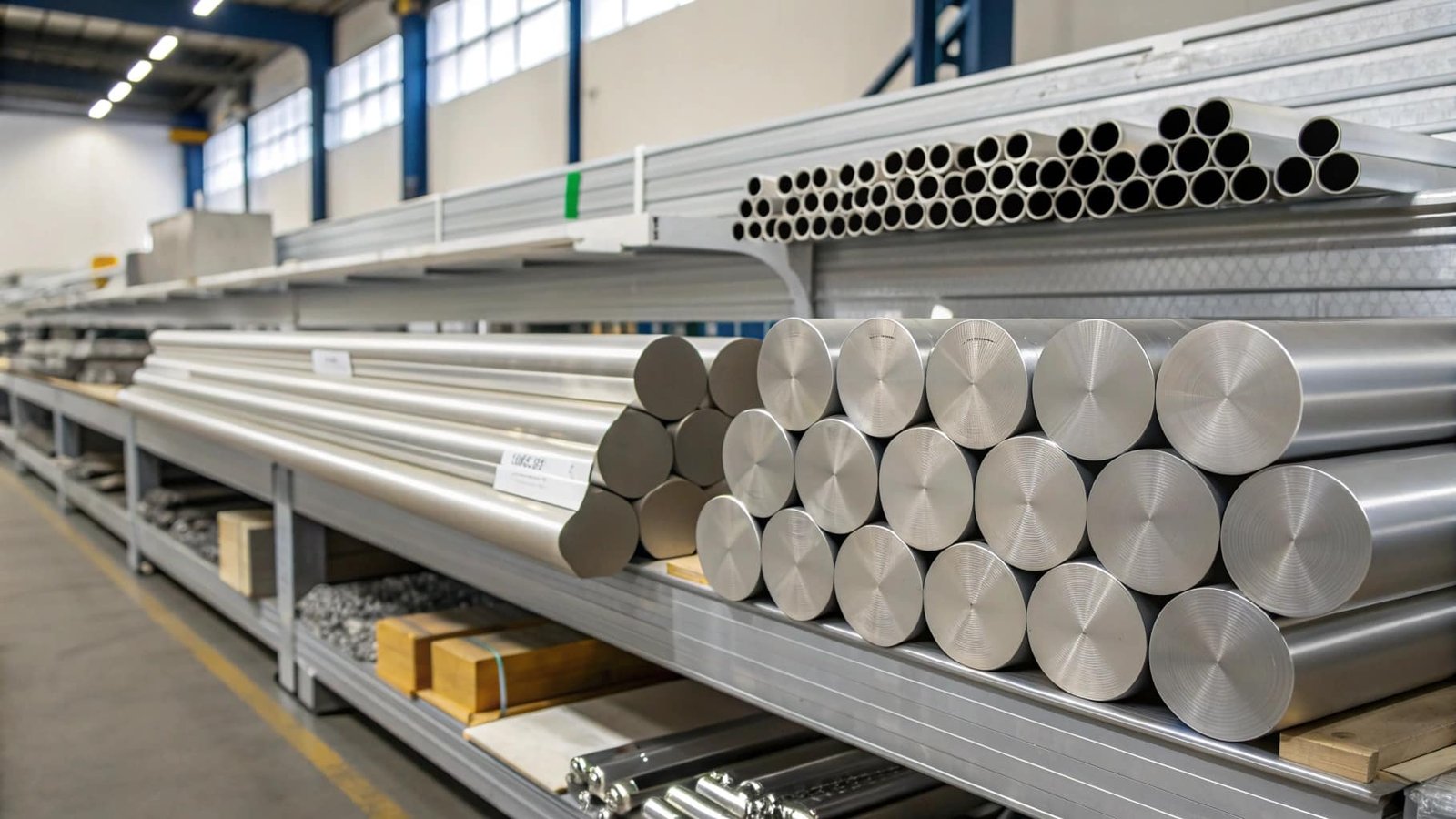
Standard stock sizes are mass-produced, pre-defined dimensions (OD and wall thickness) for general-purpose use. They are made to industry conventions, not to the specific requirements of a custom-machined component, creating significant waste.
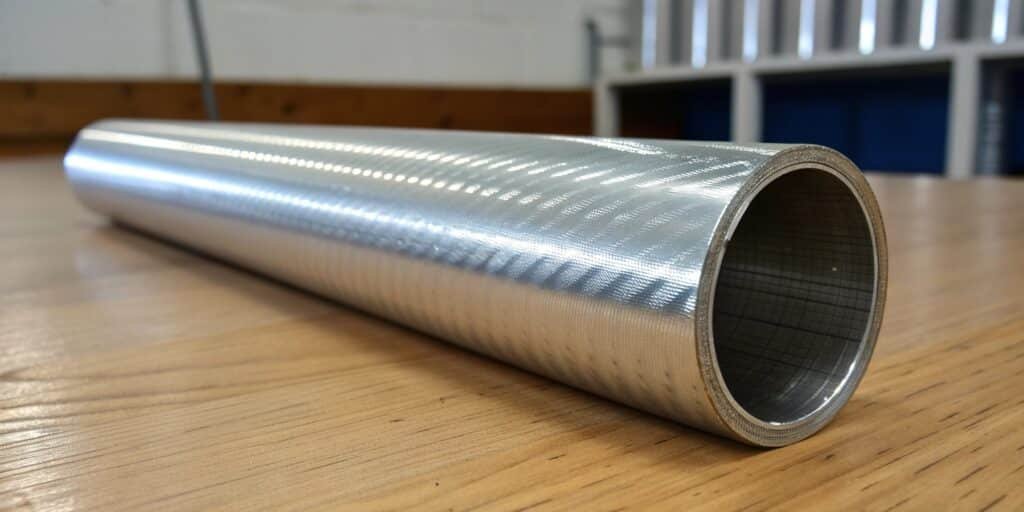
This is a critical distinction that saves our clients thousands of dollars. "Standard" or "stock" implies the product is sitting on a shelf, ready to ship. These tubes are typically extruded and intended for structural or fluid transfer applications where exact dimensions are less critical. They are not made with precision machining in mind.
The Problem with "Standard" for Machinists
Let's say your final part requires a tube with a 250mm OD and a 220mm ID. You look at a standard chart and might find:
| Standard Size Example (OD x Wall) | Resulting ID | Your Problem |
|---|---|---|
| 250mm x 10mm | 230mm | Not enough material on the inside to clean up. |
| 250mm x 20mm | 210mm | You must machine away 10mm from the inside. |
| 260mm x 10mm | 240mm | You must machine 10mm from OD and 20mm from ID. |
In every standard scenario, you are either buying material you don't need or wasting hours machining it away. Our forged hollow bars eliminate this problem by providing a starting blank of maybe 255mm OD x 215mm ID, giving your machinist the perfect amount of stock to work with.
How do you calculate the weight of an aluminum tube?
You need to estimate shipping costs and material handling capacity. Incorrect weight calculations can lead to surprise fees and logistical problems, hurting your project's budget and timeline.
To calculate the weight of an aluminum tube in kilograms, use the formula: (OD² - ID²) 0.002199 Length. All dimensions (Outer Diameter, Inner Diameter, Length) must be in millimeters. This formula accounts for aluminum's density.
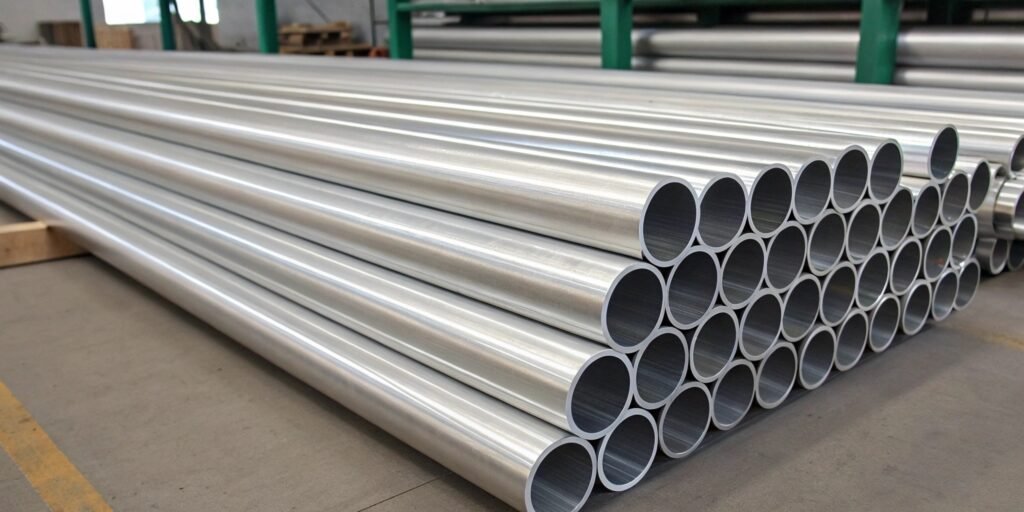
As a supplier, providing accurate weight is part of building trust. A simple mistake can cause big problems for our trading partners and machining clients. The formula we use is based on the volume of the material and the specific density of the aluminum alloy being used.
A Step-by-Step Weight Calculation
Let's calculate the weight of a custom forged hollow bar for a client.
- Final Part Dimensions: 300mm OD x 250mm ID x 1000mm Length
- Our Forged Blank Dimensions: 305mm OD x 245mm ID x 1000mm Length (allowing for cleanup)
- Alloy: 6061 Aluminum (Density ≈ 2.7 g/cm³ or 0.002199 kg per mm³ area per mm length)
The Formula:
Weight (kg) = (OD² - ID²) Constant Length (m)
Let's use a more precise formula for engineers:
Weight (kg) = [π ( (OD/2)² - (ID/2)² ) Length] Density
Let's use the simple version:
Weight (kg) = (305² - 245²) 0.002199 1000
Weight (kg) = (93025 - 60025) 0.002199 1000
Weight (kg) = 33000 0.002199
Weight ≈ 72.57 kg
Now, compare this to buying a solid 305mm bar. That would weigh approximately 201 kg. By providing a near-net shape, we saved our client from purchasing and shipping over 128 kg of unnecessary material.
What is a near-net shape and why does it matter?
You see the term "near-net shape" and wonder if it's just marketing jargon. You're skeptical about how much it can really impact your bottom line compared to just buying standard stock.
A near-net shape is a custom-produced blank that is very close to the final dimensions of the machined part. It matters because it drastically reduces material waste, shortens machining cycle times, and lowers overall production costs.
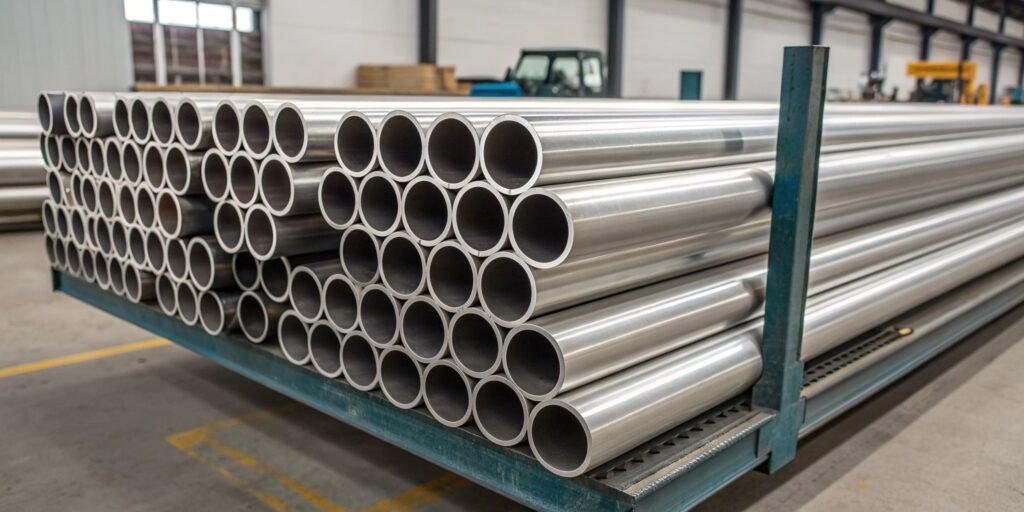
This is the core of our value proposition at SWA Forging. We are not just selling a piece of metal; we are selling a manufacturing advantage. For machining companies, time and material are the two biggest costs. A near-net shape forged hollow bar directly attacks both.
Let's look at the real-world impact for a client making a large bushing:
- Option A: Solid Bar: The client buys a 400mm solid forged disc. They first have to drill a massive hole through the center, turning a huge amount of expensive, certified 7075 aluminum into low-value chips. Then they begin the slow process of turning the OD and boring the ID to the final size.
- Option B: SWA Forged Hollow Bar: We analyze their final part drawing. We then forge a hollow bar with an OD of 405mm and an ID of, say, 345mm. The client receives a blank that is already hollow. They completely skip the time-consuming and wasteful center drilling operation. Their CNC machine can immediately start on the final finishing passes. The savings are enormous, both in upfront material cost and in valuable machine time.
Conclusion
Stop letting standard tube sizes dictate your costs. A custom-forged hollow bar provides a near-net shape, delivering the exact dimensions you need and saving you money on material and machining.