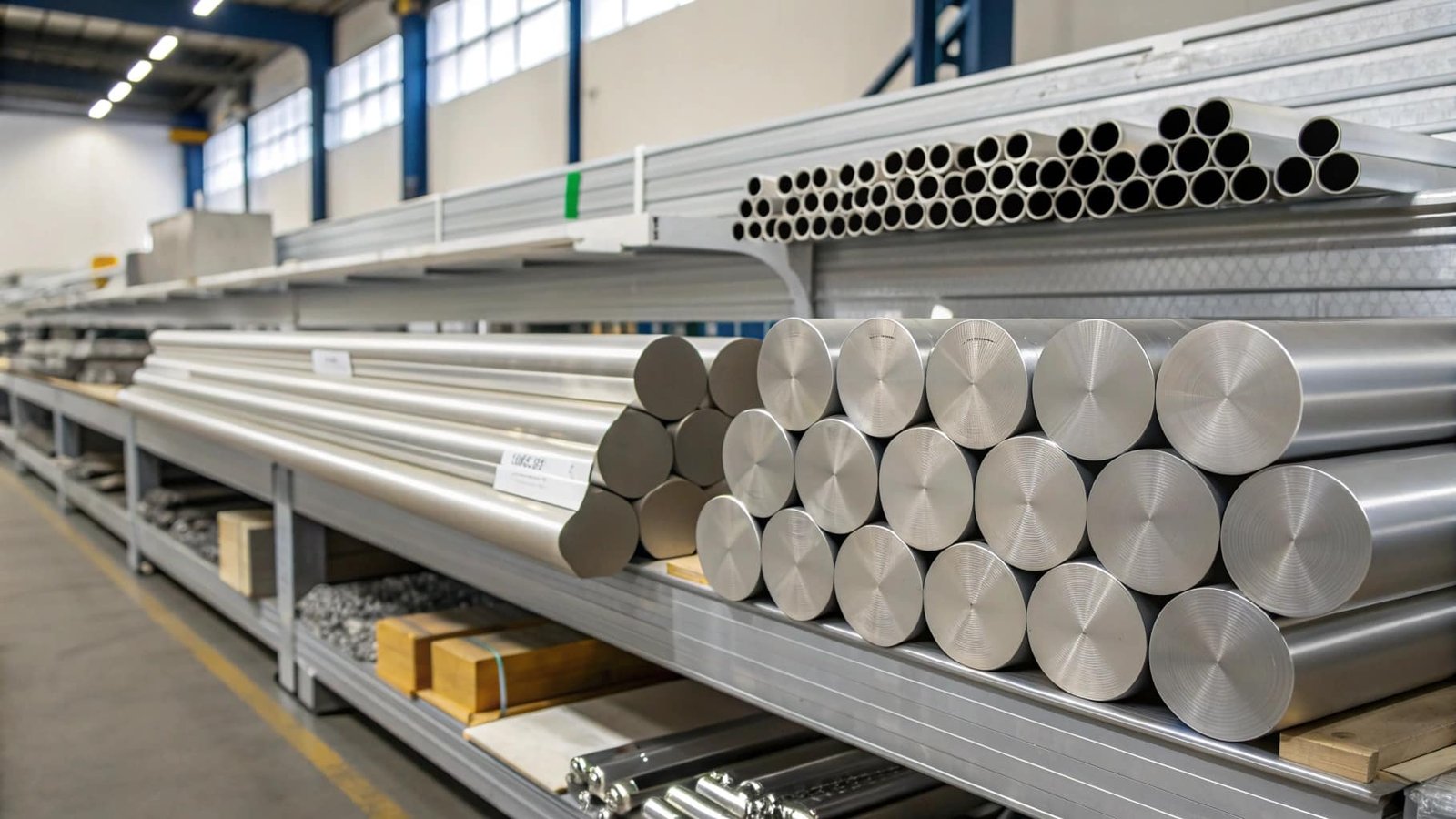
Tired of aluminum tubing failing in demanding applications? Discover how SWA Forging's custom aluminum forgings1 deliver unmatched strength, durability, and tailored performance.
SWA Forging crafts custom aluminum forged rings2 and discs that surpass the limitations of standard aluminum tubing, offering superior strength, improved fatigue resistance, and greater design flexibility for critical components in automotive, aerospace, and heavy industries.
Many of our clients come to us seeking a better solution than what standard aluminum tubing can offer. They face applications where tubing might buckle, fatigue, or not provide the precise geometry needed for optimal performance. Whether it's for a high-stress automotive part, a critical aerospace component, or heavy industrial machinery, the need for enhanced material properties is clear. At SWA Forging, we meet these needs by transforming aluminum into high-performance forged components that are engineered for excellence.
What is the aluminium alloy in aerospace industry?
Aerospace industries utilize a range of aluminum alloys, with the 2xxx and 7xxx series being most common due to their high strength and lightweight properties.
The most common aluminum alloys3 used in the aerospace industry are the 2xxx series (e.g., 2024) and the 7xxx series (e.g., 7075). These alloys offer excellent strength-to-weight ratios, high tensile strength, and good fatigue resistance, making them ideal for aircraft structures, fuselages, wings, and critical components.

When discussing materials for aerospace applications4, the choice of aluminum alloy is critical. At SWA Forging, we understand that the extreme demands of flight require materials with exceptional properties. While we produce custom forged components, the alloys we work with are often specified for these high-performance aerospace environments. Knowing which alloys are favored helps us explain the advantages of using premium materials like those found in our custom forged rings and discs.
Here are key aluminum alloys used in the aerospace industry:
- 2xxx Series (e.g., 2024): These copper-containing alloys offer high strength, good fatigue properties, and good machinability. They are frequently used for aircraft structural components like fuselages, wings, and bulkheads. However, they have lower corrosion resistance5 compared to other series.
- 7xxx Series (e.g., 7075, 7050): These zinc-containing alloys are known for their exceptionally high strength, often comparable to certain steels. They are used in highly stressed aircraft parts, such as wing spars, fuselage frames, and landing gear components. 7075 is one of the strongest aluminum alloys commercially available.
- 6xxx Series (e.g., 6061): While not as strong as the 2xxx or 7xxx series, 6061 is widely used in aerospace for less critical structural parts, such as window frames, mounting hardware, and lower-stress components. It offers a good combination of strength, corrosion resistance, weldability, and formability.
These alloys are chosen for their ability to meet the stringent requirements for strength, weight, durability, and performance in aviation.
How strong is aerospace grade aluminum?
Aerospace-grade aluminum alloys are among the strongest available, offering high tensile and yield strengths, crucial for the demanding conditions of flight.
Aerospace-grade aluminum alloys, particularly the 7xxx series like 7075-T6, can have tensile strengths around 530 MPa (77,000 psi) and yield strengths around 480 MPa (69,600 psi). The 2xxx series, like 2024-T3, also offers high strength and excellent fatigue resistance, making these materials exceptionally robust for aircraft construction.

When clients ask about the strength of aerospace-grade aluminum, they are essentially asking about the ultimate performance capabilities of the material. At SWA Forging, we work with alloys that meet these exacting standards. The strength of these materials, when enhanced through forging, is what allows us to create components that can withstand the rigorous environments experienced in aviation and other high-stress industries.
Here's what contributes to the high strength of aerospace-grade aluminum:
- Alloy Composition: The primary alloying elements play a significant role. The addition of copper (2xxx series) or zinc (7xxx series) greatly increases tensile and yield strength, especially when combined with appropriate heat treatments.
- Heat Treatment: Many high-strength aerospace aluminum alloys rely on heat treatment processes (like solution heat treatment and aging, often referred to as T6 or T73 tempers) to achieve their peak mechanical properties. These treatments alter the alloy's microstructure to enhance hardness and strength.
- Manufacturing Process: While the alloy itself is key, the manufacturing method also impacts strength. Forging, as done at SWA Forging, refines the grain structure and aligns grain flow, further boosting the material's inherent strength and fatigue resistance compared to casting or extrusion alone.
These high strength characteristics are vital for ensuring the safety and efficiency of aircraft, and they are precisely the properties we aim to maximize in our custom forged components.
What is the 7000 series aluminium?
The 7000 series aluminum alloys are primarily characterized by their high zinc content, which gives them exceptional strength, often comparable to some steels.
The 7000 series aluminum alloys are a group of aluminum-zinc alloys known for their very high tensile strength, hardness, and good machinability. Common examples include 7075, 7050, and 7068. These alloys are typically heat-treatable and are widely used in aerospace, defense, and high-performance applications where a superior strength-to-weight ratio is crucial.

When clients are looking for the absolute strongest aluminum options, we invariably turn our attention to the 7000 series. At SWA Forging, we recognize the remarkable properties of these alloys and utilize them to produce custom forged parts that meet the most demanding performance requirements. The unique composition of 7000 series aluminum is key to achieving the high-performance characteristics our clients expect.
Key characteristics of the 7000 series include:
- Primary Alloying Element: Zinc is the principal alloying element, often combined with smaller amounts of magnesium and copper.
- High Strength: These alloys exhibit the highest strength among all aluminum alloys. Their strength can be significantly enhanced through heat treatment, allowing them to compete with many steel alloys.
- Applications: Due to their exceptional strength, they are extensively used in the aerospace industry for structural components like wing structures, fuselage frames, and landing gear. They are also found in high-performance sporting goods, automotive components, and military equipment.
- Corrosion Resistance: While very strong, some 7000 series alloys (particularly those with higher copper content) can have lower resistance to stress corrosion cracking and general corrosion compared to other aluminum series. However, alloys like 7050 are formulated for improved corrosion performance.
- Machinability and Formability: They generally offer good machinability but can be more challenging to form and weld compared to lower-strength alloys like 6061.
The superior strength of the 7000 series makes it a go-to choice for critical applications where weight reduction and maximum load-bearing capability are essential.
Which type of aluminum is the strongest?
The strongest types of aluminum are typically found in the 7xxx series alloys, which are primarily alloyed with zinc.
The strongest types of aluminum are the 7xxx series alloys, such as 7075 and 7050. These alloys, when properly heat-treated (e.g., to T6 or T7351 tempers), can achieve tensile strengths comparable to many steels, offering an exceptional strength-to-weight ratio crucial for demanding applications like aerospace structures.

When clients require the utmost in material performance, we often look to the high-strength alloys. Understanding which aluminum alloy offers the highest mechanical properties is key to selecting the right material for our specialized forged components. At SWA Forging, we work with these advanced alloys to meet the most stringent requirements.
Here's a breakdown of the strongest aluminum alloy series:
- 7xxx Series (Aluminum-Zinc Alloys): This series is renowned for its exceptionally high strength. Alloys like 7075, 7050, and 7068 are among the strongest aluminum alloys available. They are used in applications where maximum strength and lightness are critical, such as aircraft structural components, high-performance sporting goods, and military applications. Their strength is significantly enhanced by heat treatment.
- 2xxx Series (Aluminum-Copper Alloys): These alloys, like 2024 and 2014, also offer high strength, particularly after heat treatment. They are commonly used in aerospace applications due to their good fatigue resistance and strength. However, they tend to have lower corrosion resistance compared to other series.
- 6xxx Series (Aluminum-Magnesium-Silicon Alloys): Alloys like 6061 and 6063 are very popular for their good balance of properties, including moderate strength, excellent corrosion resistance, and good formability. While not as strong as the 7xxx or 2xxx series, 6061 in its T6 temper provides significant strength for many structural applications.
For applications where ultimate strength is the primary concern, the 7xxx series alloys are generally the strongest available aluminum options.
Conclusion
For applications in automotive, aerospace, and heavy industries that demand more than standard aluminum tubing can provide, SWA Forging offers custom forged aluminum components. By understanding the strength of aerospace-grade alloys like the 7000 series and comparing them to other types, it becomes clear why forging is the superior method for achieving the high performance and durability your critical parts require.
-
Explore how custom aluminum forgings can enhance strength and performance in demanding applications. ↩
-
Learn about the applications and advantages of aluminum forged rings in various industries. ↩
-
Find out which aluminum alloys are preferred in aerospace for their strength and lightweight properties. ↩
-
Explore the stringent requirements for materials used in aerospace to ensure safety and performance. ↩
-
Understand the role of corrosion resistance in extending the lifespan of aluminum components. ↩