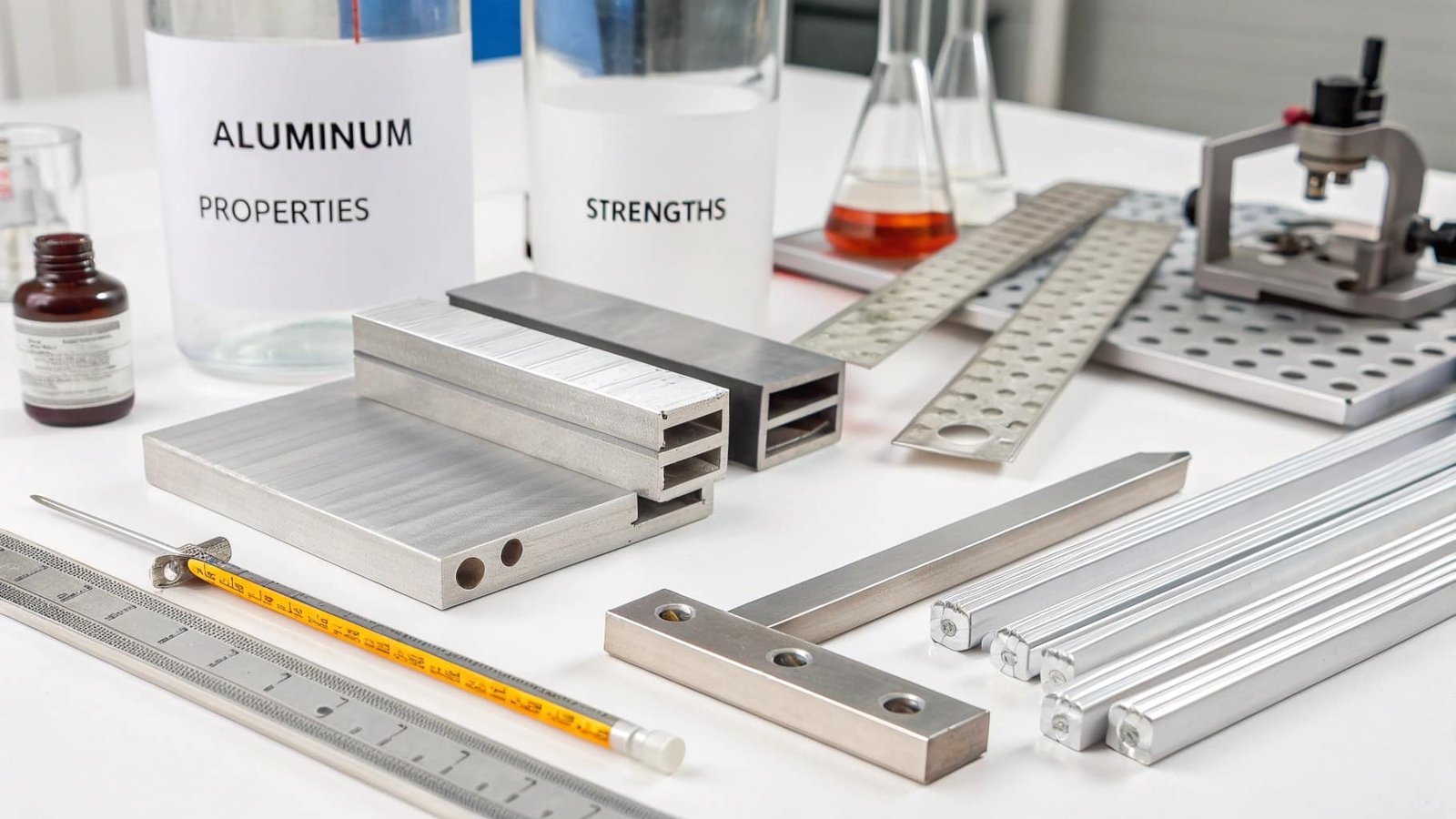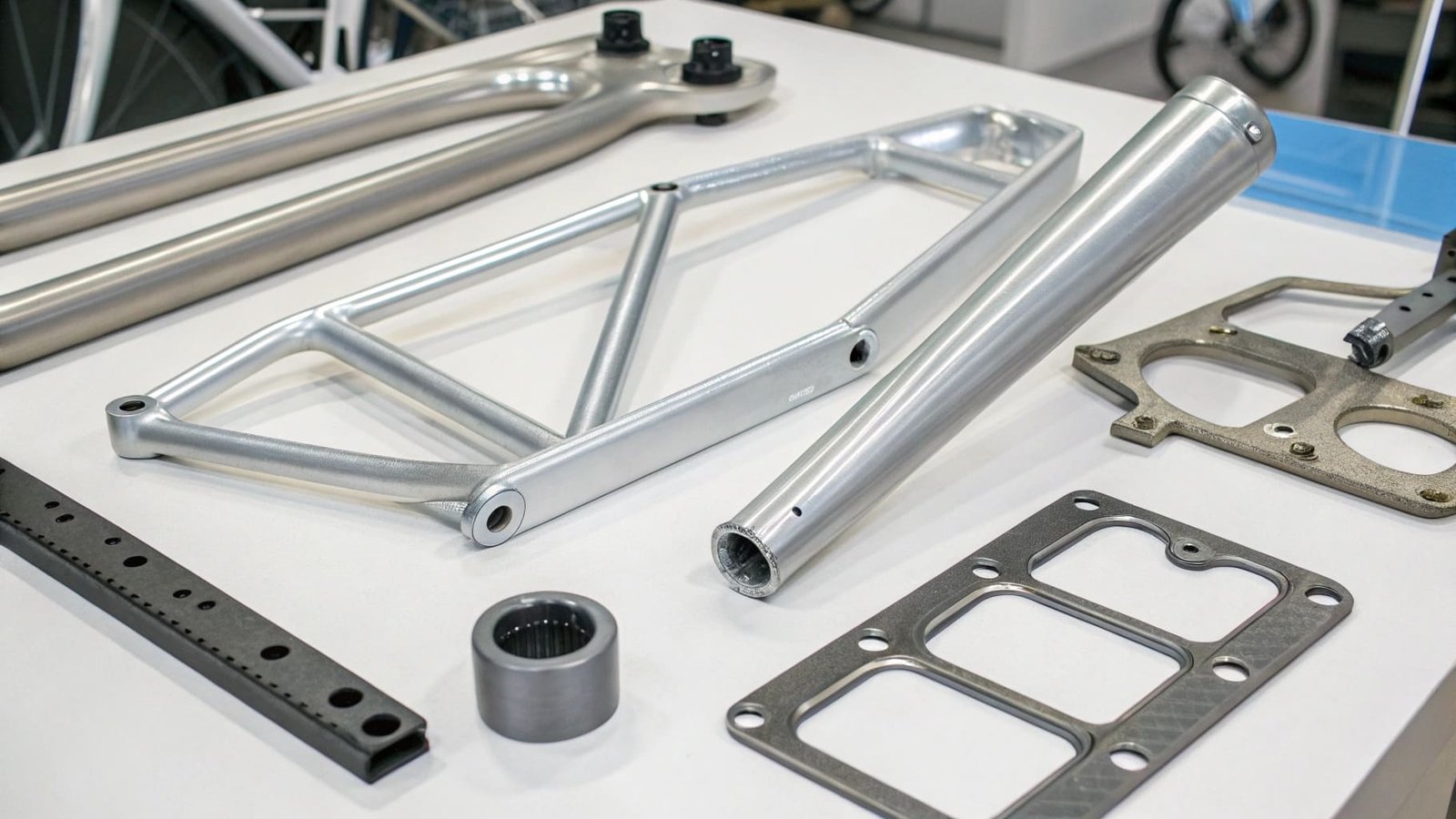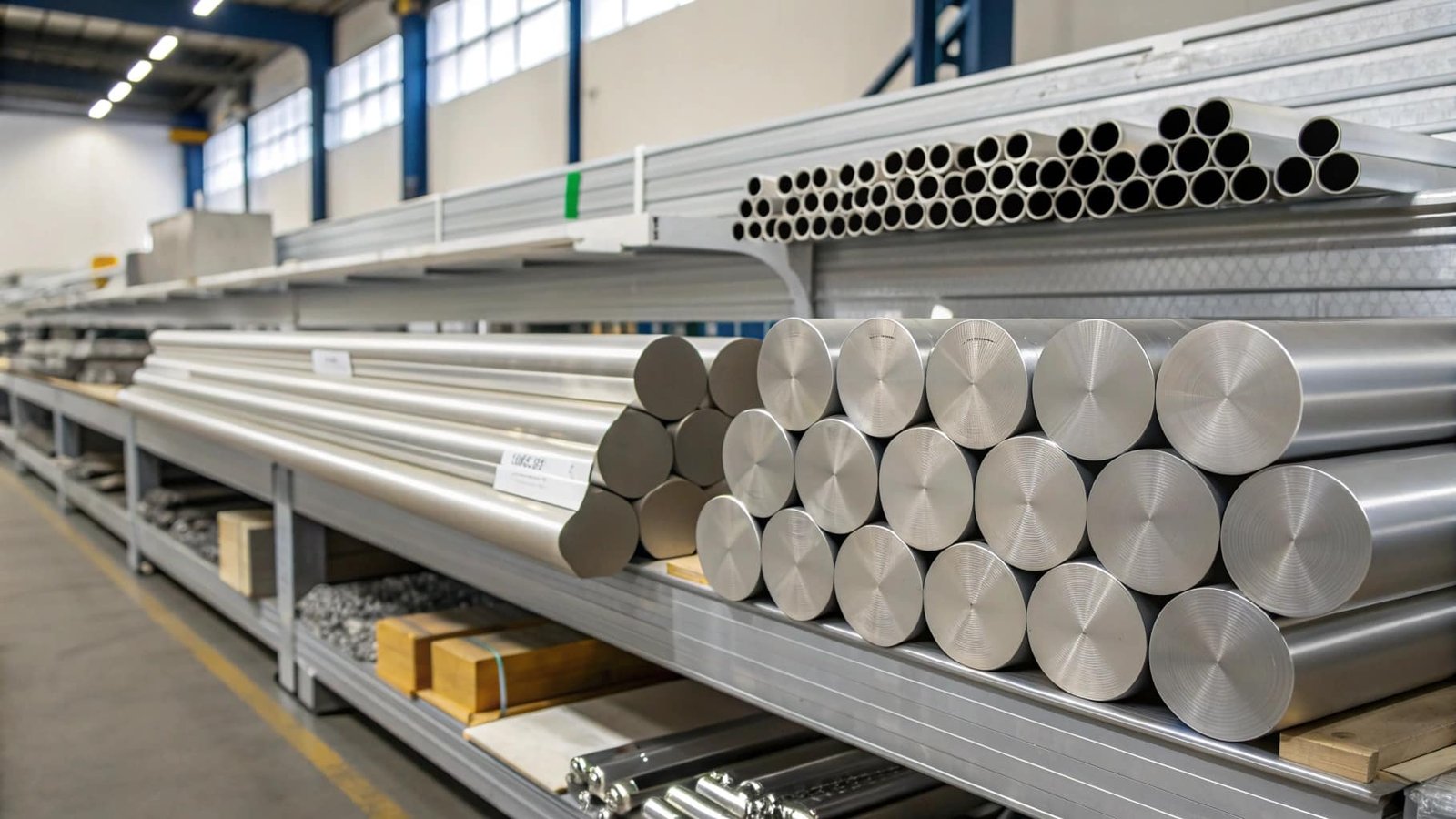
Understanding what goes into an aluminum alloy1 is key to appreciating its diverse applications and performance enhancements.
An aluminum alloy is not pure aluminum; it's a mixture of aluminum with other metals or non-metal elements, added to improve its properties like strength, hardness, or workability. For instance, common alloying elements include copper, magnesium, silicon, zinc, and manganese. Whether aluminum is "stronger" than steel depends on the specific alloy and temper of the aluminum and the type of steel being compared; high-strength aluminum alloys can rival some steels in strength-to-weight ratio, but steel generally possesses higher absolute strength and hardness. Aluminum itself is 100% metal. The term "alloy" refers to a mixture or metallic substance formed by combining two or more elements, at least one of which is a metal, to create material with improved characteristics. Therefore, the difference between aluminum and an aluminum alloy is that pure aluminum is the base metal, while an aluminum alloy is that base metal enhanced with other elements to achieve specific performance characteristics. SWA Forging applies this understanding by using specific alloying elements in our aluminum to create customized properties, such as increased strength or improved corrosion resistance, perfectly suited for various industrial applications.
Here at SWA Forging, we specialize in creating custom-forged components where precise material properties are paramount. We understand that the right aluminum alloy, with its specific blend of base aluminum and carefully selected alloying elements, can unlock enhanced strength, improved corrosion resistance2, or optimized workability for your unique industrial needs.
What is aluminum alloy made of?
Pure aluminum has certain limitations. What other elements are typically combined with aluminum to create alloys with enhanced properties?
Aluminum alloys are primarily made of aluminum, with smaller amounts of other elements added to improve specific mechanical or physical properties. The choice of these alloying elements dictates the type of alloy and its resulting characteristics. Common alloying elements3 include: Copper (Cu): Increases strength and hardness, but can reduce corrosion resistance. Magnesium (Mg): Significantly improves strength and corrosion resistance, especially when combined with silicon. Silicon (Si): Improves castability and strength, especially when paired with magnesium (forming Mg₂Si). Zinc (Zn): Enhances strength, particularly in high-strength alloys, but can decrease corrosion resistance. Manganese (Mn): Improves strength and work-hardenability, often used in non-heat-treatable alloys. Nickel (Ni): Improves high-temperature strength and corrosion resistance. Lithium (Li): Significantly reduces density while increasing stiffness, used in advanced aerospace alloys. Iron (Fe): Often present as an impurity, it can reduce ductility but also improve strength and castability in some cases. These elements are added in precise amounts, categorized into series (e.g., 1xxx for pure aluminum, 2xxx for Al-Cu alloys, 6xxx for Al-Mg-Si alloys, 7xxx for Al-Zn-Mg-Cu alloys) to achieve desired performance profiles for different applications.
| Alloy Series | Primary Alloying Elements | Key Property Improvements | Typical Applications |
|---|---|---|---|
| 1xxx | Minimum 99.0% Aluminum | Excellent corrosion resistance, high ductility, good electrical conductivity. Low strength. | Electrical conductors, chemical equipment, foil. |
| 2xxx | Copper (Cu) | Very high strength (heat-treatable), good fatigue resistance. Reduced corrosion resistance and weldability. | Aerospace structures (wings, fuselage), high-stress applications. |
| 3xxx | Manganese (Mn) | Good strength (non-heat-treatable), good corrosion resistance, good formability. Intermediate strength. | Can feedstock, packaging foil, automotive radiators, general sheet metal work. |
| 4xxx | Silicon (Si) | Low melting point, good fluidity for casting, wear resistance. Used often as brazing filler metals. | Welding filler metals, high-silicon alloys for engine blocks, cookware. |
| 5xxx | Magnesium (Mg) | Good strength (non-heat-treatable), excellent corrosion resistance (especially in marine environments), good weldability. | Marine applications, automotive body panels, tanks, heavy-duty structures. |
| 6xxx | Magnesium (Mg) & Silicon (Si) | Good strength (heat-treatable), good corrosion resistance, good formability, good weldability (especially T4/T6 temper). Versatile. | Structural components in aerospace and automotive, architectural extrusions, bicycle frames, general engineering. |
| 7xxx | Zinc (Zn) (often with Mg, Cu) | Very high strength (heat-treatable), excellent fatigue resistance. Reduced corrosion resistance and weldability. | Aerospace primary structures (wings, fuselage), high-performance sporting goods, military applications. |
| 8xxx | Other elements (e.g., Li, Fe) | Tailored properties for specific needs, like reduced density (Li) or improved high-temperature strength (Fe, Ni). | Advanced aerospace components, specialty applications. |
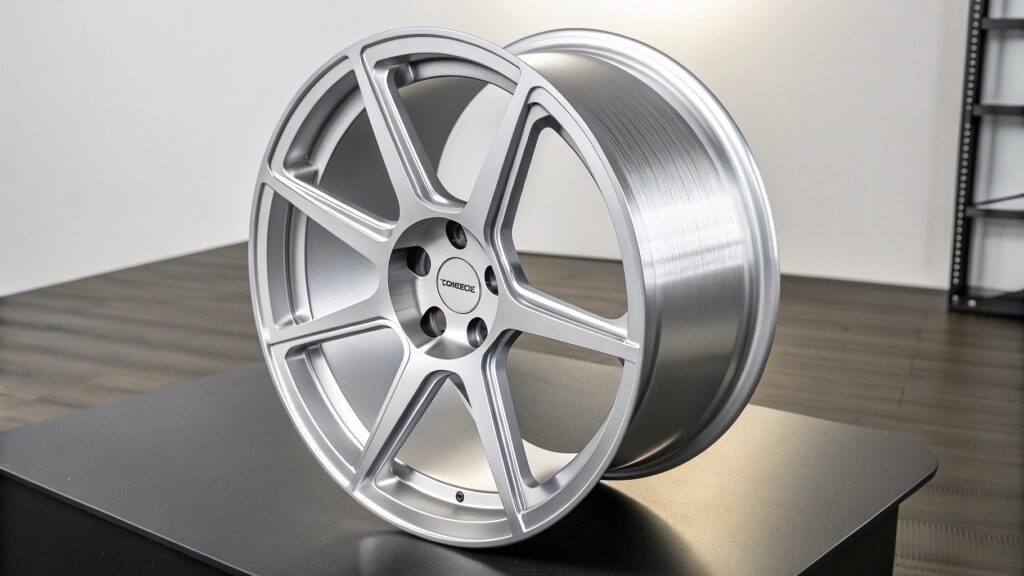
At SWA Forging, we are experts in the precise craft of alloying. By understanding the intricate interplay of these elements, we select and forge aluminum alloys that are tailored precisely for your application—whether it requires the exceptional strength of a 7xxx series alloy or the superior corrosion resistance of a 5xxx series, we deliver the optimal material specification.
Is Al stronger than steel?
Comparing the strength of aluminum alloys to steel is a common question, but it's not a simple yes or no answer. What factors determine which is "stronger"?
The statement "Al is stronger than steel" is an oversimplification; the reality is more nuanced and depends on the specific types being compared and the definition of "strength." Pure aluminum is significantly weaker than most steels. However, aluminum alloys, particularly those in the 7xxx series (like 7075) and some 2xxx series alloys, can achieve very high tensile and yield strengths, often exceeding those of many common steels, especially when considering strength on a per-unit-weight basis. Steel generally has a much higher absolute strength and hardness than even the strongest aluminum alloys. For example, a high-strength structural steel will typically have a higher ultimate tensile strength than any aluminum alloy. However, aluminum is roughly one-third the density of steel. This means that for equivalent volumes, steel is much heavier. When comparing components of the same weight, an aluminum alloy might be designed to be thicker and still provide comparable or even superior structural performance to a steel component, thus achieving a better strength-to-weight ratio. So, while steel is generally "harder" and has higher absolute strength, aluminum alloys can be "stronger" for their weight in many applications, making them preferable for aerospace and automotive industries where weight is critical.
| Property Comparison | Steel (General Structural) | Aluminum Alloys (High-Strength Series) | Verdict / Nuance |
|---|---|---|---|
| Absolute Strength (Tensile/Yield) | Generally Higher | Lower than high-strength steels | Steel typically wins in raw force it can withstand per cross-section. |
| Density | High (~7.85 g/cm³) | Low (~2.7 g/cm³) | Steel is about 3 times denser than aluminum. |
| Strength-to-Weight Ratio | Good, but often lower than high-performance aluminum alloys | Very High | Aluminum alloys often excel here; they can be designed to be stronger per unit of weight. |
| Hardness | Generally Higher | Lower | Steel is typically harder and more resistant to scratching and wear. |
| Corrosion Resistance | Poor (rusts easily without protection) | Good to Excellent (forms protective oxide layer) | Aluminum has a significant advantage in resisting environmental degradation. |
| Cost | Generally Lower | Varies, but often higher for high-strength alloys. | Steel is typically cheaper per unit of weight or volume. |
| Applications | Heavy construction, bridges, tools, certain machinery. | Aerospace, automotive, high-performance sporting goods, portable structures. | Choice depends on whether absolute strength/hardness or lightweight design is the primary driver. |
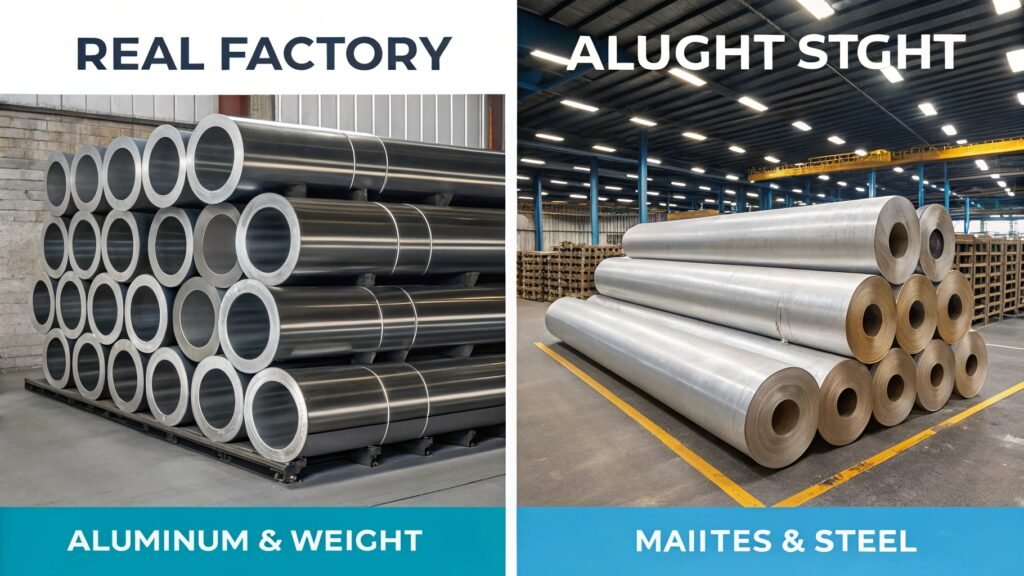
At SWA Forging, we provide components where this strength-to-weight advantage is often critical. We work with high-strength aluminum alloys that deliver exceptional performance relative to their weight, meeting the demanding requirements of industries where minimizing mass while maintaining structural integrity is essential. We can forge alloys that rival steel's performance in many weight-sensitive applications.
Is aluminum 100% metal?
This question touches on the distinction between a pure element and an alloy. What is the fundamental composition of "aluminum"?
There seems to be a slight confusion here, as aluminum itself is a pure metal. The confusion may stem from how aluminum is used.
Yes, elemental aluminum (Al) is 100% metal. It is a fundamental chemical element found on the periodic table. However, when we talk about "aluminum" in practical applications for components, structures, or everyday items, we are very often referring to aluminum alloys, not pure aluminum. Pure aluminum is very soft and has low strength, making it unsuitable for most structural purposes. An aluminum alloy is made by adding other elements (like copper, magnesium, silicon, zinc, etc.) to pure aluminum. These added elements are also metals or sometimes non-metals, but the resulting mixture, the alloy, functions as a metal with enhanced properties. So, while aluminum itself is a pure metal, the "aluminum" you encounter in something like an airplane wing, a car part, or a forged ring is a composite material—an alloy—designed for specific performance needs.
| Term | Composition | Properties |
|---|---|---|
| Aluminum (Al) | A pure metallic element. Composed solely of aluminum atoms. | Soft, very ductile, excellent corrosion resistance, good electrical/thermal conductivity. Low strength. |
| Aluminum Alloy | A mixture where Aluminum is the primary element (usually >90%), with smaller percentages of other elements. | Enhanced properties compared to pure aluminum: higher strength, hardness, specific corrosion resistance, etc. |
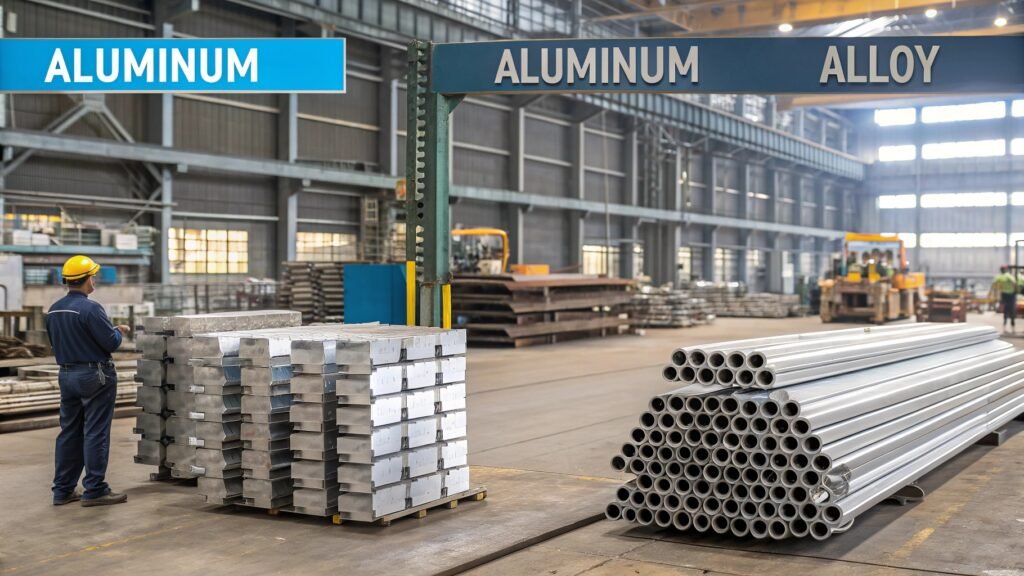
My role at SWA Forging is to work with these advanced materials. We start with high-quality aluminum, but our expertise lies in forging precise aluminum alloys. These alloys are engineered mixtures, where the careful selection of additional elements combined with our forging process unlocks specific performance characteristics that pure aluminum could never achieve, making them ideal for demanding industrial applications.
What's the difference between aluminum and aluminum alloy?
Clarifying this distinction is fundamental to understanding the material science behind many manufactured goods and industrial components. What separates the element from the compound?
The fundamental difference is that aluminum is a pure chemical element, while an aluminum alloy is a mixture where aluminum is the primary component, combined with other metallic or non-metallic elements to enhance its properties. Think of aluminum as the base ingredient, like flour in baking. Pure aluminum itself is very soft, malleable, and has a relatively low strength, making it unsuitable for most structural applications where durability and load-bearing capacity are needed. To make aluminum stronger, harder, more corrosion-resistant in specific conditions, or easier to cast or machine, other elements are added. These alloying elements are mixed with aluminum in precise proportions, creating an aluminum alloy. Common alloying elements include copper, magnesium, silicon, zinc, and manganese. For example, 6061 aluminum is an alloy containing magnesium and silicon, while 7075 is an alloy primarily containing zinc. The addition of these elements significantly changes the mechanical properties of the base aluminum, allowing it to be used in demanding applications like aircraft, automotive parts, and high-performance industrial components. So, while the base metal providing the lightness and corrosion resistance is aluminum, the engineered material with superior mechanical performance is typically an aluminum alloy.
| Feature | Pure Aluminum (Al) | Aluminum Alloy |
|---|---|---|
| Composition | 100% Aluminum element. | Primarily Aluminum, with added elements (e.g., Cu, Mg, Si, Zn, Mn) in specific percentages. |
| Strength | Low. Soft and easily deformed. | Significantly higher than pure aluminum, depending on the alloying elements and heat treatment. |
| Hardness | Low. | Higher than pure aluminum. |
| Ductility & Malleability | Very High. | Generally lower than pure aluminum, but varies greatly with alloy composition and temper. |
| Corrosion Resistance | Excellent. | Varies; some alloys (e.g., 5xxx) offer excellent resistance, while others (e.g., 2xxx, 7xxx with copper) may have reduced resistance compared to pure Al. |
| Workability | Excellent, but limited by low strength. | Varies; some alloys are easily machined or formed, others are more challenging. |
| Applications | Electrical wiring, foil, chemical containers, packaging where strength is not key. | Aerospace structure, automotive parts, construction, cookware, beverage cans, forged components requiring high performance. |
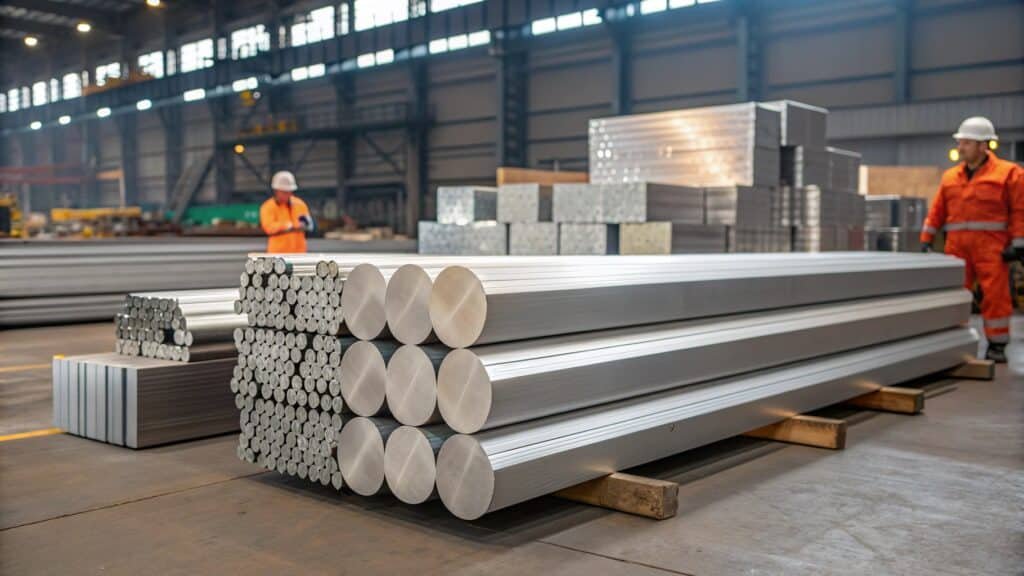
At SWA Forging, we work exclusively with aluminum alloys. Pure aluminum simply doesn't have the mechanical properties required for the high-performance, custom-forged rings and discs our clients need. Our expertise lies in selecting the right aluminum alloy—understanding the specific blend of aluminum and alloying elements—to achieve the precise strength, durability, and performance characteristics tailored for demanding industrial and specialized applications.
Insight: SWA Forging leverages specific alloying elements in aluminum to achieve customized properties—like enhanced strength or corrosion resistance—tailored for diverse industrial applications.
This highlights our core capability! We don't just forge aluminum; we forge aluminum alloys. By meticulously selecting the precise combination of aluminum with elements like magnesium, silicon, copper, or zinc, we engineer materials that meet the exact specifications for strength, hardness, ductility, corrosion resistance, and other critical properties required for your specific industrial needs, ensuring optimal performance and longevity for every forged component we produce.
Conclusion
Aluminum alloys combine aluminum with other elements to improve strength and performance; while pure aluminum is a metal, alloys are engineered mixtures with tailored properties, crucial for applications where SWA Forging customizes these alloys for superior industrial results.
-
Understanding aluminum alloys is crucial for appreciating their diverse applications and performance enhancements. ↩
-
Find out why aluminum alloys are favored in environments prone to corrosion. ↩
-
Learn about the key elements that enhance aluminum's properties and their specific roles in alloy performance. ↩