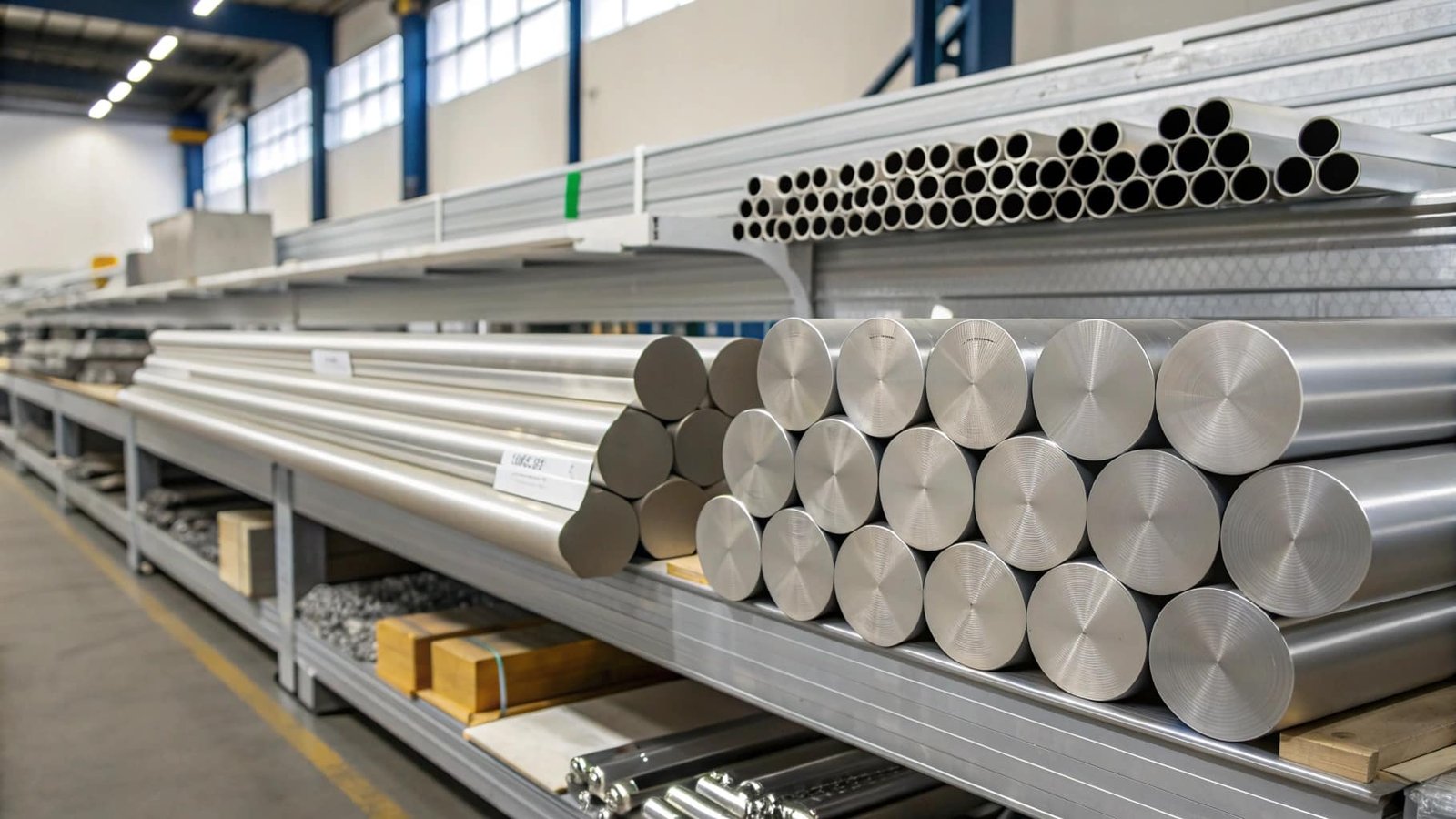
Are standard extruded or seamlessly drawn aluminum tubes insufficient for your critical application's demands? Discover the benefits of precision-forged 3D components.
When standard extruded or seamlessly drawn aluminum tubes lack the necessary structural integrity, complex geometries, or optimal performance for your critical applications, SWA Forging's precision-engineered 3D components provide a superior upgrade in strength, precision, and functional design.
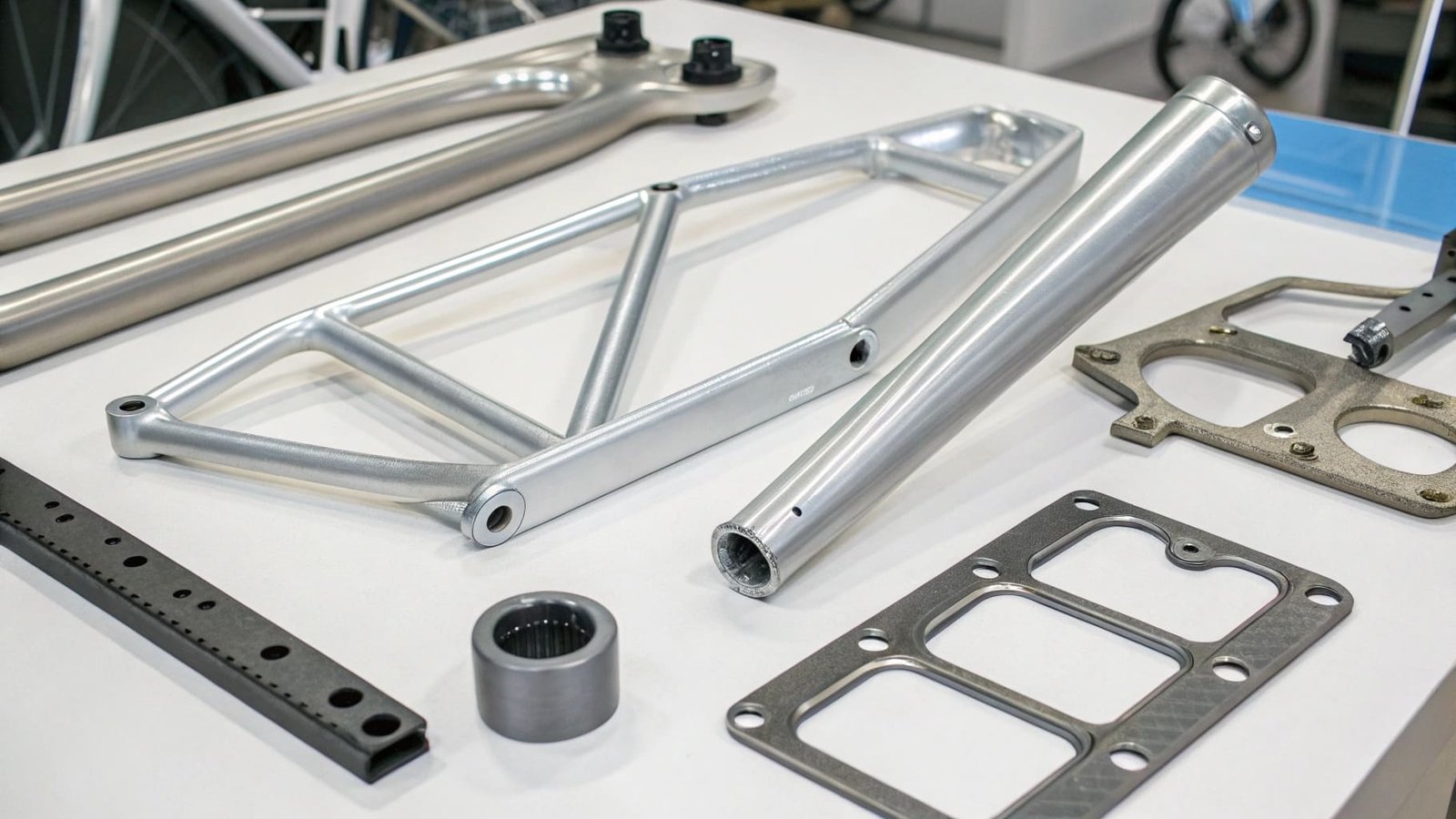
Many clients at SWA Forging begin their design process by considering readily available aluminum forms like extruded or seamlessly drawn tubes. These are excellent for many applications, providing consistent cross-sections for fluid transfer, structural support, or conduit needs. Extruded tubes are formed by pushing aluminum through a die, allowing for complex cross-sectional shapes, while seamless drawn tubes are made by drawing a solid billet through a die and over a mandrel, resulting in a uniform wall thickness and excellent surface finish. However, when projects require more than just a linear form—think complex curves, integrated mounting features, or highly optimized shapes for stress distribution in 3D—these conventional tube forms often fall short. Machining complex features into tubes can weaken them, and achieving specific 3D contours is difficult. At SWA Forging1, we specialize in transforming aluminum alloys2 into precisely engineered 3D components that embody the integrity and complexity needed for advanced applications, moving far beyond the limitations of standard tubes.
What is the difference between extruded and drawn aluminum tube?
The primary difference between extruded and drawn aluminum tubes lies in their manufacturing processes, which influence their dimensional tolerances, surface finish, and mechanical properties.
Extruded aluminum tubes are formed by forcing heated aluminum through a die to create a continuous profile, allowing for complex cross-sections but potentially with less precise dimensions and a rougher surface finish. Seamless drawn aluminum tubes are produced by stretching a pre-extruded or seamless tube over a mandrel and through dies, resulting in tighter tolerances, smoother surfaces, and often enhanced mechanical strength.

Understanding the nuances of tube manufacturing is crucial when SWA Forging's clients evaluate materials for critical applications. Extrusion is a versatile process that allows for intricate shapes, but the resulting dimensional accuracy and surface finish might not be ideal for highly precise components. Drawing, on the other hand, is a secondary process applied to an already formed tube (which might have started as an extrusion or a seamless billet). This drawing process stretches the aluminum, elongates its grain structure, and refines the dimensions and surface quality. While drawn tubes offer superior precision, both methods are still limited when it comes to creating truly complex, non-linear 3D shapes with integrated features in a single, monolithic component, something our forging process excels at.
Key distinctions:
- Manufacturing Process: Extrusion pushes material through a die; Drawing stretches a tube over a mandrel.
- Dimensional Tolerance: Drawn tubes typically have tighter tolerances.
- Surface Finish: Drawn tubes generally have a smoother, more refined surface.
- Grain Structure: Drawing can refine and align the grain structure, potentially increasing strength.
- Cross-sectional Complexity: Extrusion is more versatile for complex, non-circular profiles.
Both have their strengths depending on the application's needs.
What is the difference between extruded and seamless tubing?
While often used interchangeably in some contexts, the distinction between "extruded tubing" and "seamless tubing" (when referring to the initial forming process) is significant, especially regarding material integrity.
Extruded tubing is created by pushing heated aluminum through a die, which can result in a hollow profile directly or require a secondary piercing step. Seamless tubing, in the context of its initial formation, means the tube is produced from a solid billet without any welded seams or pre-existing hollows, typically achieved through piercing or hot extrusion of a solid slug.

For our clients at SWA Forging, the term "seamless" often implies a higher level of integrity, and it’s important to clarify how this relates to aluminum. A truly seamless tube starts from a solid mass of aluminum that is heated and then pierced from the center to create the initial hollow. This process ensures there are no welded joints or seams in the material structure, which could be potential weak points. Extrusion, while capable of creating hollows, can sometimes involve a piercing operation that is akin to creating a seamless start, but the die shape and process can also introduce different grain structures. When we forge components, we are essentially creating a complex 3D shape from a solid billet of aluminum, inherently ensuring a seamless and monolithic structure that often surpasses the mechanical properties achievable through traditional tube manufacturing for complex geometries.
Understanding the terms:
- Seamless (Initial Form): Made from a solid billet pierced and then potentially drawn. No welded seam.
- Extruded: Formed by pushing material through a die. Can start from a solid billet and be pierced during extrusion, or start from a hollow slug.
- Drawn Seamless Tube: A seamless tube that has undergone further drawing to refine dimensions and surface.
- Welded Tube: Formed by rolling a flat sheet into a tube and welding the seam.
The "seamless" aspect is critical for high-pressure or high-stress applications.
What are the advantages of extruded aluminum?
Extruded aluminum offers significant advantages, making it a preferred material for a vast array of products and components due to its versatility in shaping and its inherent material properties.
The advantages of extruded aluminum include its ability to be formed into complex cross-sectional shapes with tight tolerances, its excellent strength-to-weight ratio, good corrosion resistance, and ease of fabrication and finishing, making it highly cost-effective for many structural and functional applications.

Clients often approach SWA Forging with designs that might initially be conceived as extrusions, seeking to leverage the benefits of this manufacturing process. Extrusion excels at creating long, consistent profiles with intricate features integrated directly into the shape, such as internal channels or interlocking edges. This offers significant cost and assembly advantages over fabricating similar shapes from multiple pieces. However, when applications demand three-dimensional complexity, sharp corners, or contoured surfaces that go beyond a linear extrusion, our forging capabilities come into play. By forging, we can consolidate multiple extruded or machined parts into a single, high-integrity component, optimizing the material's grain structure for superior strength and durability where an extrusion might be limited or require extensive secondary machining that could compromise its inherent advantages.
Key advantages of aluminum extrusion:
- Design Flexibility: Can create intricate and complex cross-sectional shapes.
- Cost-Effectiveness: Tooling costs are relatively low, and the process is efficient for long runs.
- Material Properties: Excellent strength-to-weight ratio, good corrosion resistance, and electrical conductivity.
- Precision: Can achieve tight dimensional tolerances.
- Surface Finish: Can produce smooth, aesthetically pleasing surfaces.
It is a highly adaptable manufacturing method.
What is the difference between extrusion and forging aluminum?
Extrusion and forging are both metal forming processes for aluminum, but they differ significantly in how the material is shaped, the types of components they produce, and the resulting mechanical properties.
Extrusion involves forcing heated aluminum through a die to create a continuous profile with a specific cross-section, ideal for linear shapes and complex profiles. Forging, on the other hand, shapes aluminum by applying compressive forces, often through hammering or pressing, to form discrete, three-dimensional components with optimized grain flow for superior strength and integrity.

At SWA Forging, we see extrusion and forging as complementary, yet distinct, capabilities. Extrusion is excellent for producing long, uniform pieces with specific cross-sections, like tubes, bars, or complex linear profiles. Think of it as creating a specific "shape" along a straight line. Forging, however, is about creating a complete, three-dimensional object, often with curves, contours, and complex load-bearing geometries. When a client needs a part that is more than just a straight tube or profile—perhaps a complex housing with integrated mounting bosses, or a structural component with intricate load paths—forging is the superior method. It allows us to manipulate the aluminum's grain structure in a way that extrusion cannot, creating parts with significantly enhanced mechanical properties, particularly in terms of toughness and fatigue resistance, perfect for critical, high-demand applications.
Comparison of Extrusion vs. Forging:
| Feature | Extrusion | Forging |
|---|---|---|
| Process | Pushing heated aluminum through a die | Compressing aluminum with dies/hammers |
| Component Type | Linear profiles, tubes, complex cross-sections | Discrete 3D parts, complex shapes |
| Grain Structure | Aligned along the extrusion direction | Aligned with part contours and stress paths |
| Strength | Good, can be enhanced by drawing | Superior, especially in complex geometries and fatigue |
| Complexity | High for cross-sections, limited for 3D shape | High for 3D shape and integrated features |
| Tooling Cost | Relatively low for dies | Can be higher for complex die sets |
Both processes are valuable, but forging offers distinct advantages for complex, high-performance 3D parts.
Conclusion
For critical applications demanding superior strength, complex geometries, and enhanced durability, consider SWA Forging's precision-engineered 3D components as the ultimate upgrade over standard extruded or seamlessly drawn aluminum tubes.