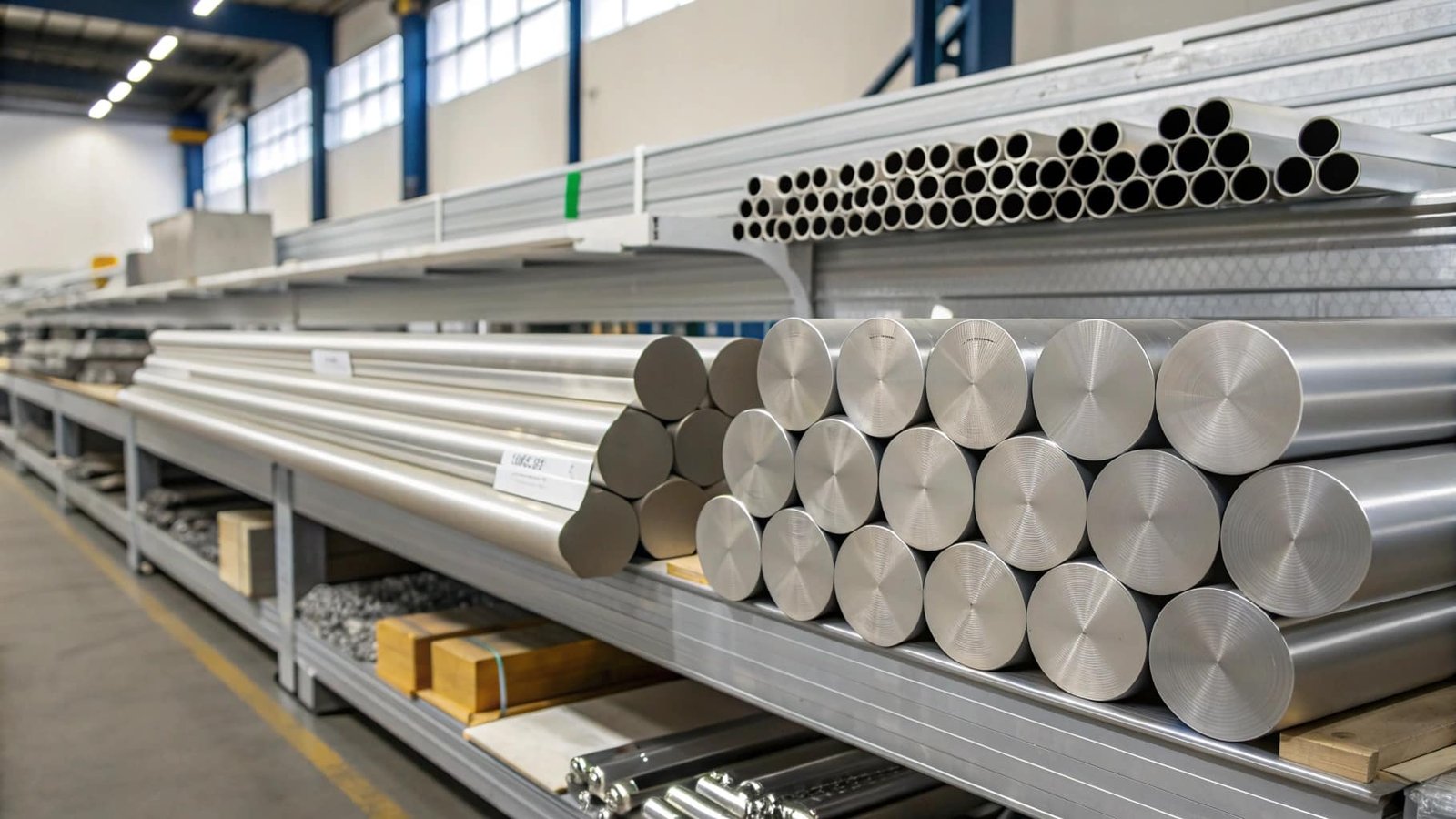
Are you seeking robust, custom-made large aluminum components like rings and discs, with guaranteed quality and global reach? Partnering with a specialist is key.
The "best" aluminum for forging depends on the desired properties of the final product, but alloys from the 5xxx and 6xxx series are often excellent choices due to their good balance of strength, formability, corrosion resistance, and weldability, making them highly responsive to the forging process. The future of forging is leaning towards increased automation, advanced material science for new alloy development, additive manufacturing integration, and enhanced sustainability. The four primary types of forging are open-die forging, closed-die forging, ring rolling, and seamless rolled ring forming. The "highest quality" aluminum is subjective and application-dependent, but for strength and performance in demanding areas, heat-treatable alloys like 7075 or 6061 in specific tempers are often considered top-tier after proper processing.
At SWA Forging, a specialist based in China, we elevate the concept of 'Custom Large Aluminum Forgings.' Our process involves offering globally delivered, precision-engineered rings and discs that are bespoke to your exact needs. Our unwavering commitment to quality assurance, coupled with our expertise in customized alloy solutions, ensures that these critical components not only meet but exceed stringent performance requirements, positioning us as your most reliable, high-value supplier for complex aluminum forged parts.
What is the best aluminum for forging?
Are you trying to determine which type of aluminum alloy is most suitable when the goal is to create high-quality, strong, and durable forged components? The ideal alloy depends on the desired end-use properties.
For general forging applications where a good balance of properties is required, alloys from the 5xxx series (aluminum-magnesium) and 6xxx series (aluminum-magnesium-silicon) are often considered among the "best" for forging. The 5xxx series alloys, particularly 5083 and 5086, are known for their excellent weldability, good corrosion resistance (especially in marine environments), and moderate strength, making them well-suited for large marine structures and pressure vessels. The 6xxx series, especially 6061, offers a higher strength than the 5xxx series after heat treatment and provides a good combination of strength, corrosion resistance, and machinability, making it very versatile for structural components in aerospace, automotive, and general engineering. The 7xxx series (aluminum-zinc) can also be forged but often requires more specialized techniques and careful temperature control due to their higher strength and potential for cracking during the process. Pure aluminum (1xxx series) is too soft and not typically forged for structural strength.
| Aluminum Alloy Series | Key Characteristics for Forging | Typical Applications |
|---|---|---|
| 5xxx Series (Al-Mg) | Good formability, excellent weldability, good corrosion resistance. | Marine components, pressure vessels, truck bodies. |
| 6xxx Series (Al-Mg-Si) | Good strength (heat-treatable), good formability, good corrosion resistance. | Structural components, aircraft parts, automotive frames. |
| 7xxx Series (Al-Zn) | Very high strength achievable, but can be more challenging to forge. | High-stress aerospace components, specific high-performance parts. |
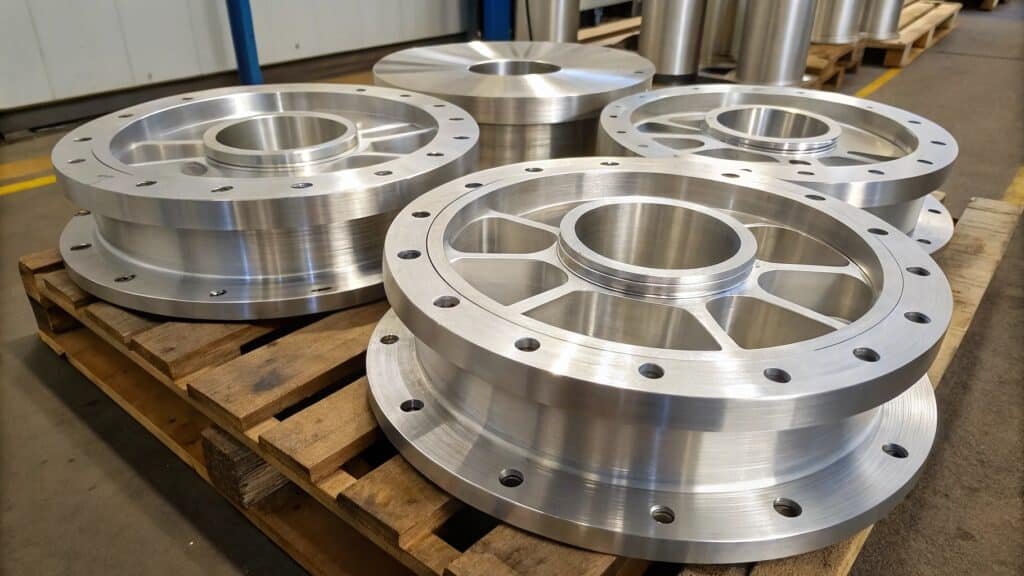
At SWA Forging, we leverage our expertise in selecting and processing the most suitable aluminum alloys1 for forging. Our specialization in large-diameter rings and discs means we have deep knowledge of how alloys like the 6xxx series respond to our precision forging techniques. This selection is critical to achieving the exact strength, durability, and performance specifications our global clients demand, ensuring that each custom component is optimized for its intended, often demanding, application.
What is the future of forging?
Are you interested in understanding the technological trends and directions shaping the forging industry for years to come, as it continues to evolve? The industry is embracing innovation.
The future of forging is characterized by several key advancements and trends aimed at improving efficiency, enhancing material capabilities, and increasing sustainability. Automation and robotics are playing an increasingly vital role, from automated loading and unloading of parts to sophisticated robotic manipulation systems, which enhance consistency and safety. The development of novel aluminum alloys and other advanced materials, often with customized properties, is crucial for meeting the ever-more demanding applications in sectors like aerospace and automotive. Integration with additive manufacturing (3D printing) is becoming more prominent, allowing for hybrid manufacturing approaches that combine the benefits of both forging (strength, material integrity) and additive manufacturing (design freedom, rapid prototyping). Furthermore, there is a strong push towards sustainability, focusing on energy-efficient processes, reduced waste, and the use of recyclable materials. Digitalization, including simulation software for process optimization and smart factory technologies, will also be central to future forging operations, enabling better control and predictive maintenance.
| Future Trend | Description of Impact | Key Benefits |
|---|---|---|
| Automation & Robotics | Replacing manual operations with robotic systems for repetitive, high-force tasks. | Increased consistency, higher throughput, improved safety, reduced labor costs. |
| Advanced Materials | Development and application of new alloys and composites with superior strength, lightness, and thermal properties. | Enabling lighter, stronger, and more efficient components for demanding industries. |
| Additive Manufacturing Integration | Combining forging with 3D printing for complex geometries or final part finishing. | Greater design flexibility, optimized material usage, possibility of hybrid components. |
| Sustainability | Focus on energy efficiency, waste reduction, recycling, and environmentally friendly processes. | Reduced operational costs, environmental compliance, better corporate image. |
| Digitalization & AI | Use of simulation, IoT, AI for process control, quality monitoring, predictive maintenance, and supply chain optimization. | Improved process control, optimized performance, reduced downtime, enhanced quality and efficiency. |
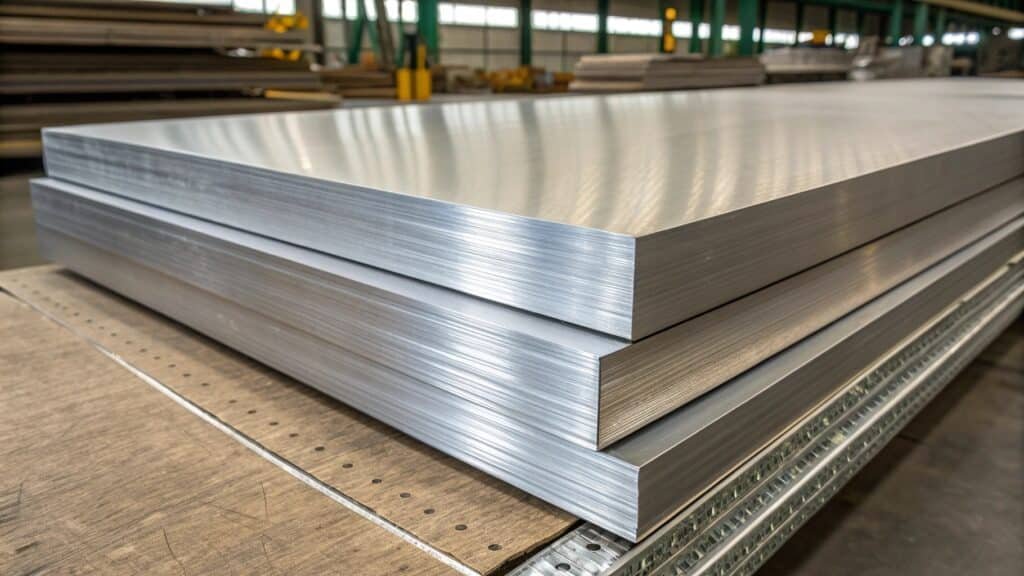
At SWA Forging, we are actively embracing these future trends. Our facilities are equipped with advanced machinery, and we continuously explore new material science and process optimizations. While we deliver custom large aluminum forgings globally now, we are committed to integrating future technologies to enhance our capabilities, ensuring that the rings and discs we produce meet the highest standards of performance and sustainability for our clients worldwide.
What are the 4 types of forging?
Are you looking to understand the basic methods used in the metalworking process of forging, which fundamentally shape metal into desired forms under compressive forces? There are distinct categories.
The four primary types of forging processes are differentiated by how the metal is contained and deformed during the process: 1. Open-Die Forging: In this method, the workpiece is shaped gradually by hammering or pressing between flat or slightly shaped dies. This is often used for simpler shapes, prototypes, or when producing smaller quantities. 2. Closed-Die Forging (Impression Die Forging): Here, the workpiece is placed between dies that have a cavity precisely shaped like the final part. The material flows into the die cavity under high pressure, forcing it into the desired shape. This method is ideal for producing complex parts in high volumes with high precision. 3. Ring Rolling: This specialized process starts with a pierced disc (a "ring blank") that is then heated and rolled between two grooved rolls. The rolls rotate and move closer together, thinning the ring's cross-section and increasing its diameter while maintaining a hole in the center. It's perfect for producing seamless rings. 4. Seamless Rolled Ring Forming: This is similar to ring rolling but can also start from bar stock or perform more complex shaping. The goal remains to create a seamless ring with refined grain structure and high strength. Each type offers distinct advantages for different part geometries, complexities, and production volumes.
| Forging Type | Description of Process | Best Suited For | Key Characteristics |
|---|---|---|---|
| 1. Open-Die Forging | Material shaped by repeated blows or pressure between simple dies; shape built up incrementally. | Simple shapes, prototypes, large parts, smaller production runs. | Lower tooling cost, flexible for various sizes, less precise finish. |
| 2. Closed-Die Forging | Material forced into a die cavity that duplicates the final part's contour. | Complex shapes, high-volume production, high precision. | High tooling cost, excellent surface finish, refined grain structure. |
| 3. Ring Rolling | A ring blank is rolled and thinned between grooved rolls to form a seamless ring. | Seamless rings for gears, bearings, pipe flanges. | Produces seamless rings, refined grain structure, high strength. |
| 4. Seamless Rolled Ring Forming | Similar to ring rolling, can start from various stock, creates seamless rings with tailored properties. | Seamless rings with complex profiles or specific property needs. | High strength, refined grain structure, seamless construction. |
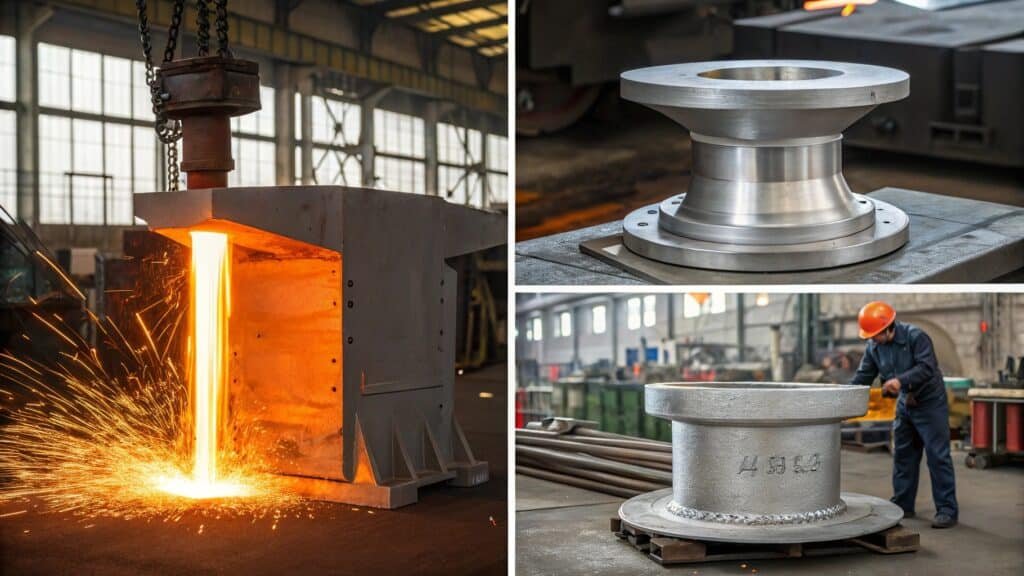
At SWA Forging, we specialize in producing large-diameter rings and discs, which primarily utilize advanced techniques derived from or akin to Ring Rolling and Seamless Rolled Ring Forming, alongside aspects of closed-die precision for critical features. This focus allows us to expertly manage the material flow and grain structure of aluminum alloys, ensuring our custom forgings possess superior strength, integrity, and the precise dimensions required by our global clientele for their most critical applications.
What is the highest quality aluminum?
Are you trying to identify the top-tier aluminum materials, considering factors like purity, strength, corrosion resistance, and overall performance for high-end applications? Quality is often application-specific.
The term "highest quality aluminum" is nuanced because the ideal material depends entirely on the intended application and the specific properties required. For applications where maximum purity is paramount, such as in electrical conductors or some chemical processing, the highest quality would be achieved with highly pure aluminum from the 1xxx series (99% or more pure aluminum). However, for applications demanding exceptional strength, such as in aerospace or high-performance racing components, alloys like 7075 (a 7xxx series aluminum-zinc alloy) or 6061 (a 6xxx series aluminum-magnesium-silicon alloy) in their specific heat-treated tempers (like T6) are considered the "highest quality" because they offer superior mechanical performance. These alloys are chosen not for their purity, but for their engineered combination of strength, toughness, and fatigue resistance, achieved through alloying and heat treatment. Therefore, the "highest quality" is a functional descriptor, meaning the alloy that best meets the stringent performance criteria of a particular, demanding application.
| Type of Quality | Aluminum Material Example | Key Properties | Ideal Application Example |
|---|---|---|---|
| Highest Purity | 1xxx Series (e.g., 1145, 1370) | High electrical conductivity, excellent corrosion resistance, high formability, low strength. | Electrical wiring, foil for packaging, reflectors. |
| Highest Strength (Heat Treatable) | 7xxx Series (e.g., 7075) and 6xxx Series (e.g., 6061) in T6 Temper | Very high tensile strength, fatigue resistance, good toughness. | Aircraft structures, critical automotive parts, high-stress components. |
| Highest Corrosion Resistance | 5xxx Series (e.g., 5083, 5086) | Excellent resistance to saltwater and general corrosion. | Marine components, boat hulls, offshore structures. |
| Good Balance of Properties | 6xxx Series (e.g., 6061) | Good strength, excellent corrosion resistance, superb weldability and formability. | General structural components, bicycle frames, extrusions. |
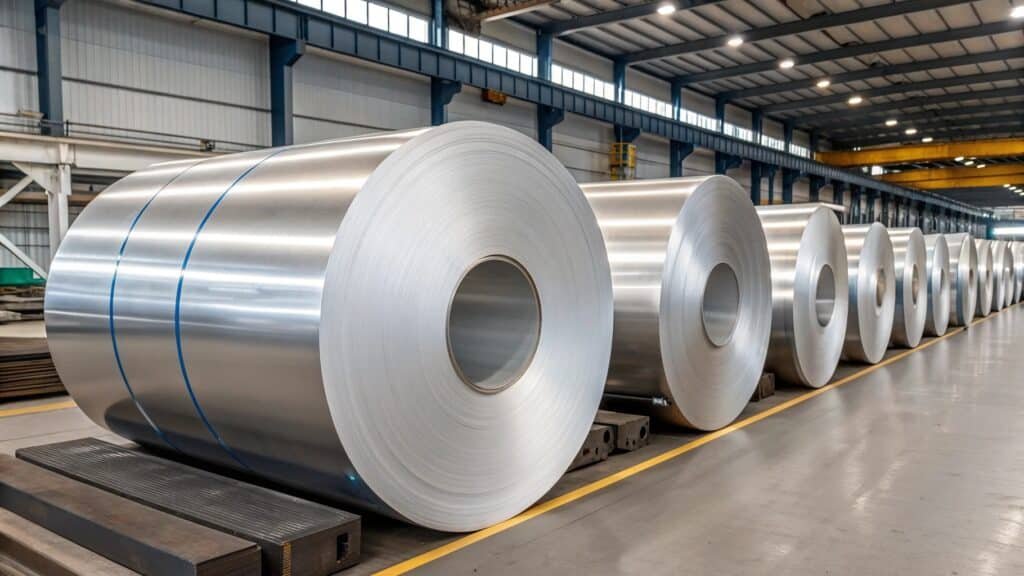
At SWA Forging, we are dedicated to delivering what can be considered the "highest quality" aluminum forgings for demanding applications. We achieve this by specializing in alloys like 6061 and 7075, and employing precision forging techniques that maximize their strength, toughness, and fatigue resistance. Our global delivery of custom large-diameter rings and discs ensures that whether you require supreme purity or unparalleled performance under stress, SWA Forging provides the optimal, high-value aluminum forged solution tailored precisely to your project's specific needs.
Conclusion
Choosing the right aluminum alloy—whether for purity, strength, or corrosion resistance—is crucial. SWA Forging masterfully handles these alloys to deliver custom, high-quality forged rings and discs globally.
-
Learn about the most effective aluminum alloys for forging and their unique properties. ↩