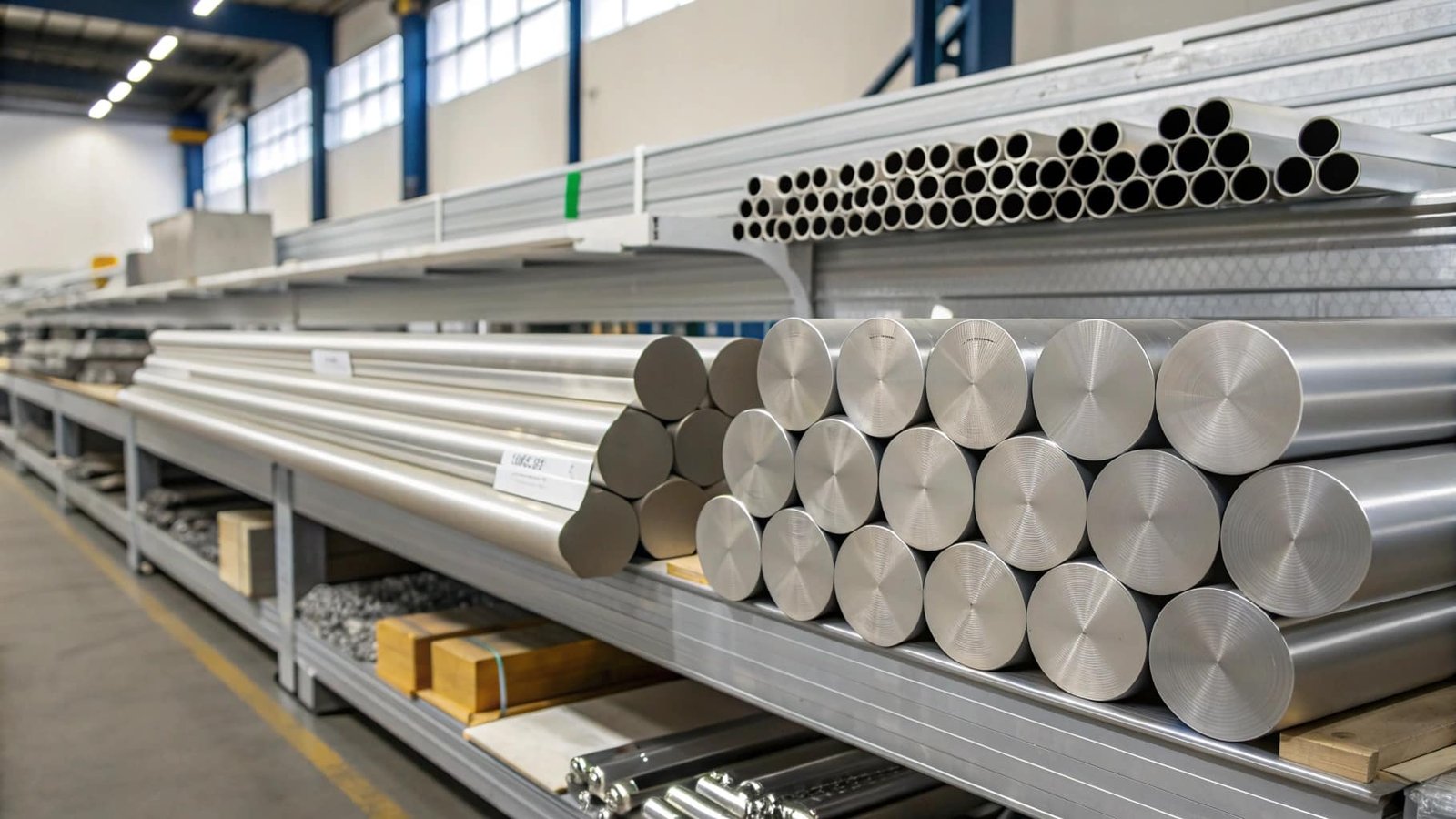
You want to source high-quality forged aluminum from China. But you dread the mountain of paperwork, complex logistics, and dealing with multiple contacts, turning a simple purchase into a major headache.
Simplify sourcing by choosing a manufacturing partner who manages the entire export process for you. This means one point of contact, one consolidated invoice, and complete handling of all technical, quality, and customs documentation.
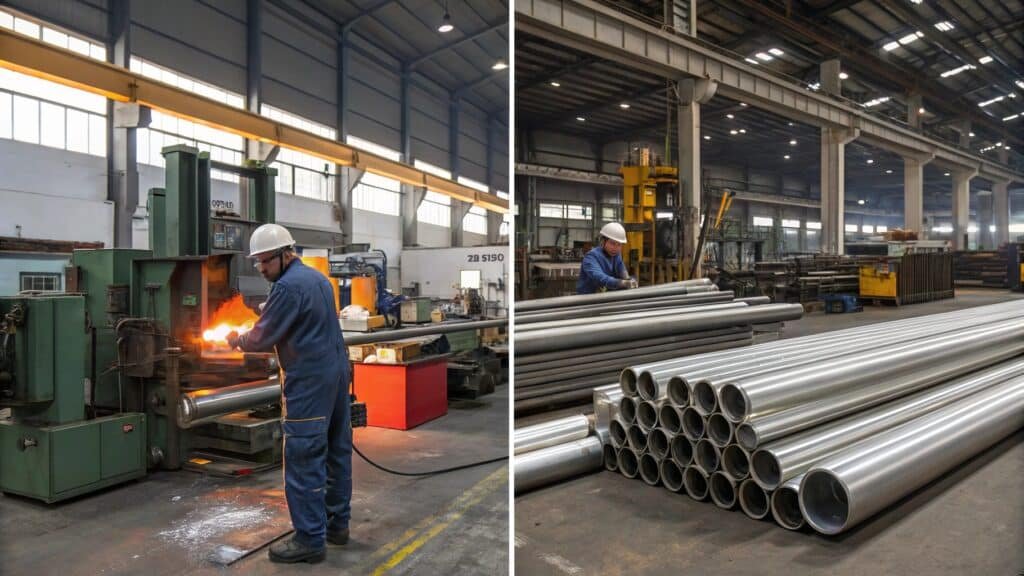
For our global clients, the word "seamless" is a promise that we absorb all the complexity. I once worked with a new customer who was trying to manage a Chinese purchase on their own. They were coordinating with the factory, a separate quality inspection agency, a freight forwarder, and a customs broker. It was a nightmare of emails and time zones. When they partnered with us, we took all of that off their plate. We manage everything—from the initial material certificate and our ISO 9001 compliance to the third-party SGS report and final customs clearance documents. We consolidate the entire international purchase into a single point of contact and a single invoice. That's what a seamless process really is.
What is the Process of Aluminum Forging?
You hear that "forged aluminum" is superior, but the term is just a buzzword. You don't know what you are actually paying for or why it is better than a standard machined part.
Aluminum forging is a process where a solid aluminum billet is heated to a specific temperature and then shaped under immense pressure using a die. This refines the internal grain structure, creating a part that is significantly stronger and more durable.
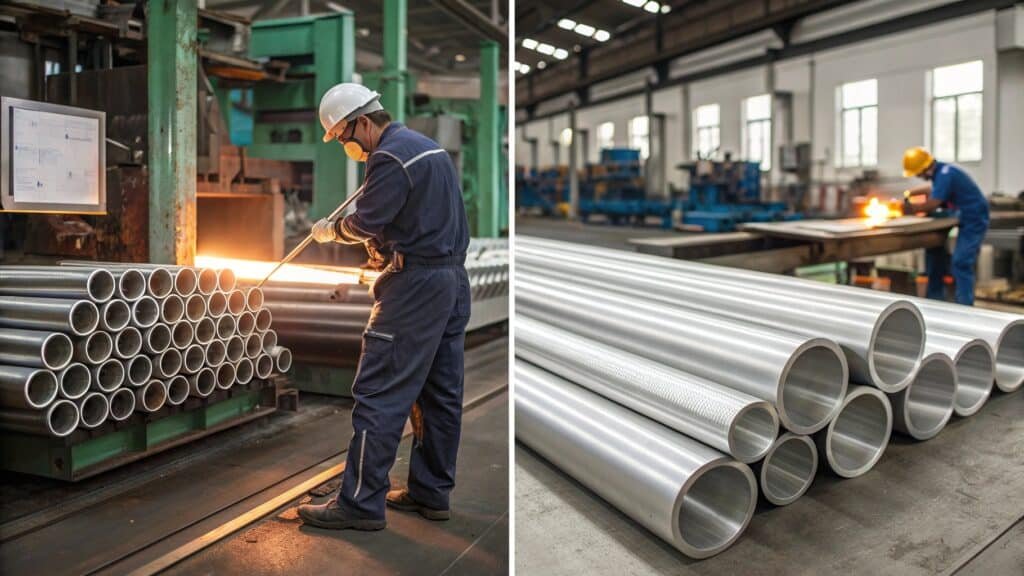
The forging process is what gives our products their incredible strength. It's not just about shaping the metal; it's about fundamentally improving it. First, we take a high-quality aluminum billet and heat it in a furnace to a precise temperature, making it malleable but not molten. Then, we place it on a die and use our powerful forging press to apply immense pressure. This forces the aluminum to take the shape of the die, for example, a large ring or disc. The most critical change happens on a microscopic level. The pressure realigns and refines the material's internal grain structure. Imagine the random fibers in a piece of cotton being combed into a single, strong thread. This continuous grain flow eliminates the porosity and internal defects found in cast parts, resulting in a final product with unmatched structural integrity and fatigue resistance.
What Are the Superior Properties of Forged Aluminum?
You need a strong, reliable aluminum part for a critical application. But you worry that a standard cast or extruded product might have hidden weaknesses that could lead to failure under stress.
Forged aluminum offers superior strength, fatigue resistance, and structural integrity. The process creates a refined, non-porous grain structure, eliminating internal defects and resulting in parts that are tougher and more reliable than cast or machined-from-bar alternatives.
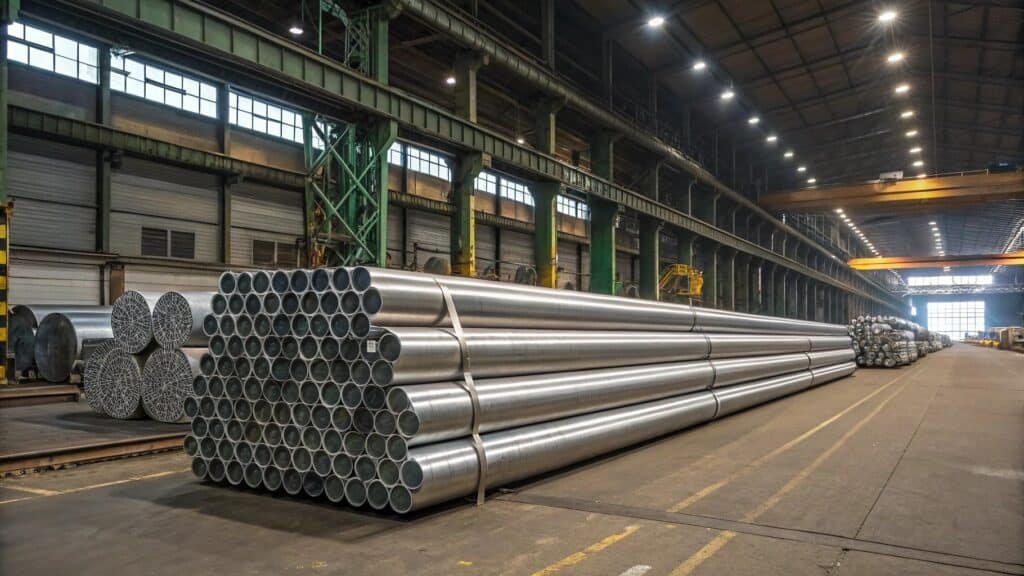
The properties of forged aluminum are why engineers choose it for the most demanding applications. When compared to casting, the difference is night and day. A cast part is made from molten metal poured into a mold. As it cools, it can develop pockets of gas and shrinkage, creating porosity. These are tiny, hidden voids that act as weak points. A forged part has zero porosity. The intense pressure compacts the material, creating a dense and uniform structure. This gives it significantly higher tensile strength and impact toughness. Compared to a part machined from standard extruded bar stock, a forged part has a superior grain flow that follows the component's contour. This provides much greater fatigue resistance, meaning it can withstand more cycles of stress without breaking. For our clients, this means a longer service life and greater safety for their final product.
| Property | Forged Aluminum | Cast Aluminum |
|---|---|---|
| Grain Structure | Fine, uniform, and directionally aligned | Coarse, non-uniform, random orientation |
| Porosity | None. Fully dense material | Can contain hidden voids and gas pockets |
| Tensile Strength | High | Lower |
| Fatigue Resistance | Excellent | Poor to Fair |
| Reliability | Very High. Consistent from part to part. | Lower. Properties can vary. |
What Are the 4 Main Types of Forging?
You need a forged part but are presented with different forging methods. You are unsure which process is right for your part's complexity, the quantity you need, and your budget.
The four main types are open-die forging1, closed-die forging2, press forging, and ring rolling. Each method offers a different balance of tooling cost, part complexity, and production speed, tailored to specific applications.
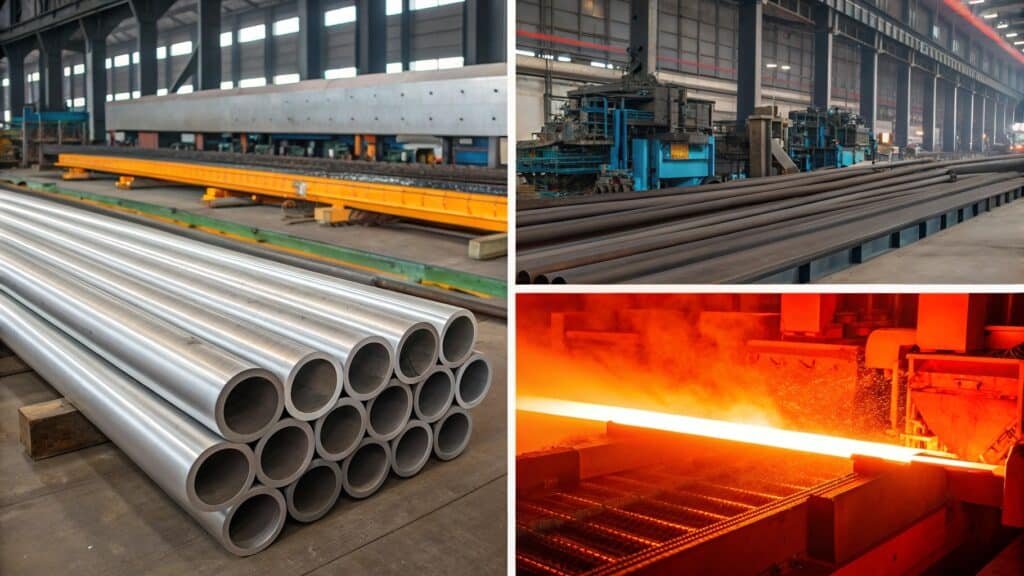
At SWA Forging, we specialize in the methods best suited for large aluminum components. Understanding the types helps you know what you're getting. Open-die forging is like a blacksmith with a hammer, using simple dies to shape the workpiece. It's great for very large, simple shapes and one-off parts. Closed-die forging (or impression-die forging) uses two custom dies that completely enclose the workpiece, like a mold. This is for creating complex, near-net shapes in high volumes. Press forging, which is our primary method, uses a slow, continuous pressure to shape the part. This is ideal for large parts and ensures the grain refinement penetrates deep into the material. Finally, ring rolling is a specialized process we use for our large-diameter rings. It starts with a donut-shaped preform, which is then heated and rolled between mandrels to expand its diameter and reduce its wall thickness, creating a perfectly seamless ring with an excellent circumferential grain structure.
What is the Future of Forging?
You are investing in a long-term supply chain. You need to know that your manufacturing partner is using modern technology and is prepared for the future of industrial production.
The future of forging is in precision, automation, and data. Advanced process simulation, robotic handling, and integrated digital quality control will lead to stronger, lighter, and more consistent parts with shorter lead times and less waste.
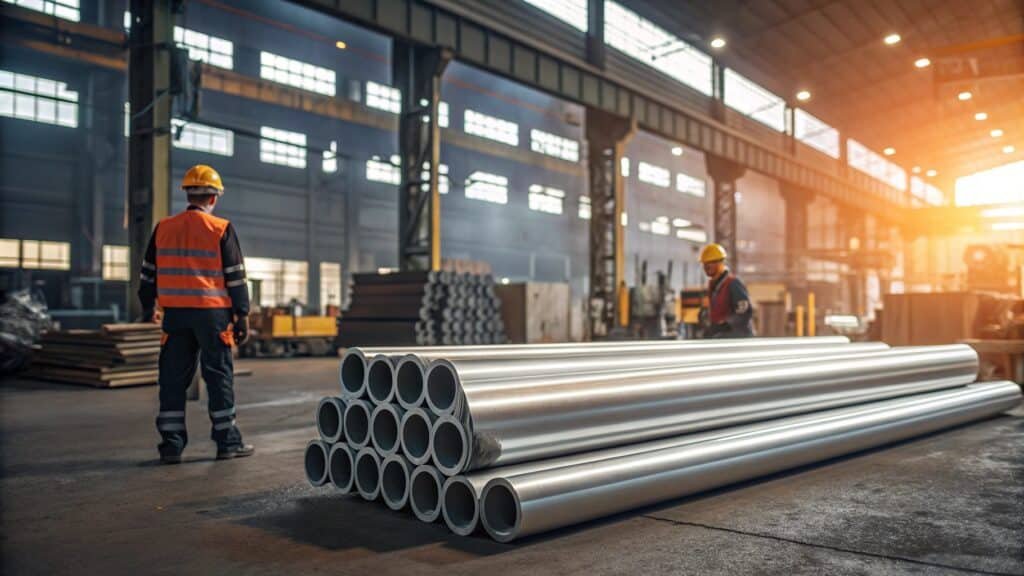
The future of our industry is incredibly exciting. It's moving away from being a "black art" and becoming a precise science. At SWA Forging, we are already embracing this. We use advanced simulation software to model the forging process before we even cut the steel for a die. This allows us to predict the metal flow and optimize the process to achieve the best possible grain structure. The next steps are increased automation and data integration. Imagine robotic arms handling the hot billets, ensuring perfect placement and timing for every single part. Imagine sensors embedded in the forging press that provide real-time data on pressure and temperature, which is then fed into a quality control system. This "Industry 4.0" approach will allow us to produce even more complex and lightweight components with unparalleled consistency. For our clients, this means better parts, delivered faster and more reliably.
Conclusion
A seamless export process means we absorb the complexity. We manage all documentation and logistics, consolidating your international purchase into a single point of contact and a single, clear invoice.