Choosing an aerospace alloy1 from a spec sheet is a high-stakes decision. A material failure isn't an option, putting immense pressure on your selection process and risking catastrophic consequences.
The selection is not about the alloy with the highest strength, but the process with the highest reliability. True airworthiness is achieved through a certified, forged blank with guaranteed internal soundness—a level of assurance that standard products cannot provide.
I often speak with engineers from machining companies that serve the aerospace sector. They are incredibly knowledgeable about alloys like 7075 or 2024. But our most important conversations are not about the alloy's chemistry; they're about its history. Where did the metal come from? How was it formed? A standard rolled plate has a hidden secret: its strength is not the same in every direction. For a part that will be subjected to complex, multi-directional stress in flight, this is an unacceptable risk. At SWA Forging, our entire process is designed to eliminate that risk by providing a solid, forged foundation for these critical components.
What Is the Best Aluminum Alloy for Aircraft?
You're tasked with finding the single best aluminum for aircraft. Choosing one from the many options feels like a gamble when safety is on the line, and there isn't one simple answer.
There is no single "best" alloy. High-strength alloys like 7075 are used for critical structures like wing spars, while alloys like 2024 are used for fuselage skins due to their fatigue resistance. The best choice depends on the specific part's function.
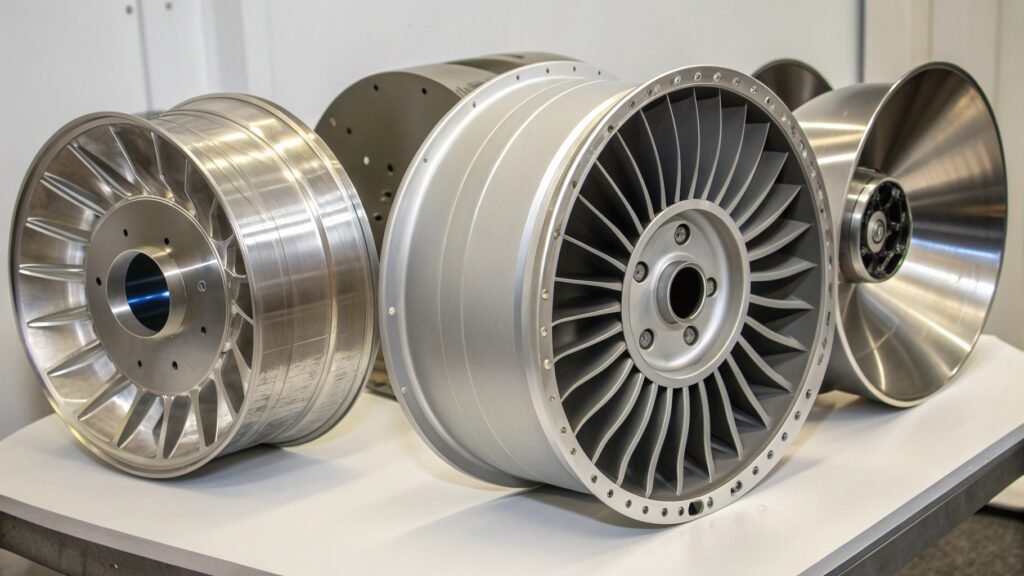
The modern aircraft is a masterpiece of material science, with different alloys chosen for very specific jobs. The 7000 series, with zinc as its primary alloying element, offers the highest strength, making it perfect for the main structural components that handle the most stress during flight. The 2000 series, alloyed with copper, doesn't have the same ultimate strength, but it has exceptional fatigue resistance. This makes it ideal for the fuselage and lower wing skins, which need to withstand thousands of cycles of pressurization and flex. As a supplier of forged rings and discs, we at SWA Forging understand these requirements intimately. We provide the certified, high-purity starting material for these alloys. But more importantly, our forging process refines the grain structure of these alloys, enhancing their natural properties and ensuring they perform reliably under the extreme conditions of flight.
Which Is Better, 6061 or 7075 Aluminum?
You need a high-strength aluminum for a demanding application. You see that 7075 is stronger on paper, but you wonder if the much more common 6061 is "good enough."
For aerospace structural parts, 7075 aluminum2 is far superior to 6061. With nearly double the tensile strength, 7075 provides the critical strength-to-weight ratio3 required for parts that must be both lightweight and incredibly strong.
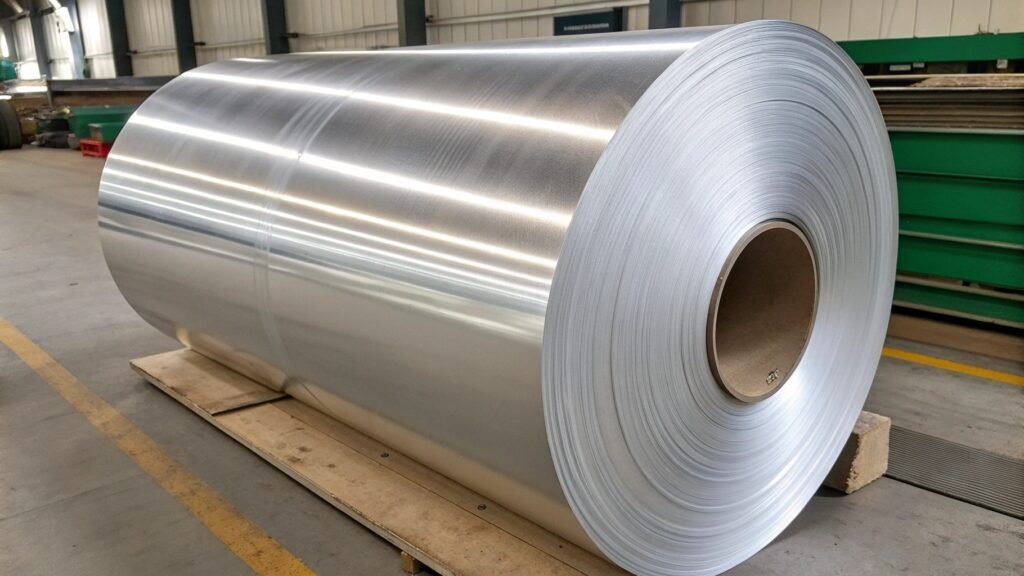
While 6061 is an excellent, versatile structural alloy, it is generally considered a general-purpose material. It's fantastic for industrial machinery, automotive parts, and structural components where weight is not the absolute number one priority. In aerospace, every gram counts. 7075 aluminum was specifically designed to meet this challenge. Its high zinc content allows it to be heat-treated to strength levels that approach those of steel, but at a fraction of the weight. However, this brings us back to the most critical point. That incredible strength is useless if it's not uniform. A part machined from a standard 7075 rolled plate will have a directional weakness. For a landing gear component or a wing attachment fitting, this is an unacceptable risk. This is why aerospace specifications demand forged blanks. The forging process guarantees that the full strength of the 7075 alloy is available in every direction, providing the reliability that airworthiness requires.
How Do You Choose an Aluminum Alloy?
You are faced with a wall of technical data for various alloys. The process of choosing the right one feels overwhelming, and you're worried about missing a critical detail.
First, define the primary requirement: strength, corrosion resistance, or fatigue life. Second, consider the manufacturing process (machining, forming). Finally, prioritize the material form; for any critical part, specify a forged blank before selecting the final alloy.
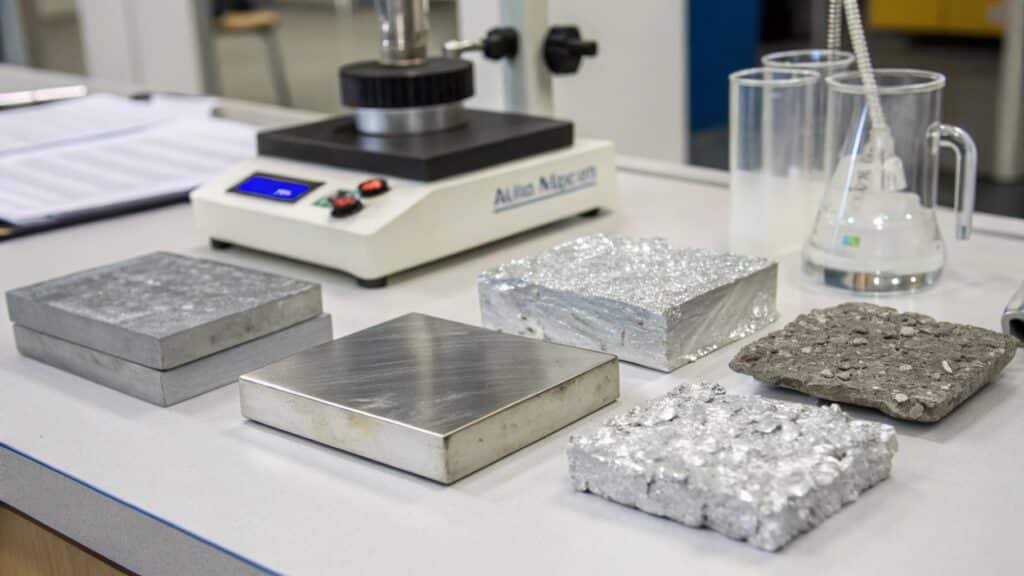
This is the exact methodology we walk through with our clients. The conversation must start with the application. What does this part have to do? Will it be under constant tension? Will it be exposed to corrosive elements? Once we understand the performance needs, we can narrow down the alloy families. For a high-strength machined part, we immediately look at the 6000 or 7000 series. But the most important step comes next. Before we finalize the alloy, we establish that the part requires the integrity of a forging. This is non-negotiable for critical components. By starting with a forged disc or ring from SWA Forging, our clients know they are building on a foundation of internal soundness. This process-first approach simplifies the final alloy choice and, more importantly, guarantees the performance and safety of the finished component.
Aerospace Alloy Selection Factors
| Factor | Key Question | Common Aerospace Choice |
|---|---|---|
| Ultimate Strength | Does this part handle the primary structural loads? | 7075, 7050 |
| Fatigue Resistance | Will this part undergo thousands of stress cycles (e.g., flex)? | 2024 |
| Damage Tolerance | Can the part resist crack propagation? | 2024, 7050 |
| Internal Soundness | Is uniform, non-directional strength absolutely required? | Forged Blank (Process) |
What Grade of Aluminium Is Used in Aerospace?
You hear the term "aerospace-grade aluminum" and want to know what it really means. Understanding this distinction is key to sourcing materials that meet the industry's incredibly high standards.
"Aerospace-grade" refers to high-performance alloys, primarily from the 2000 and 7000 series, like 2024 and 7075. More importantly, it refers to material that comes with full traceability, rigorous testing, and certification of its manufacturing process.
The term "aerospace-grade" is about much more than just the alloy's chemical formula. It's about assurance. It means the material has a complete paper trail, from the initial billet casting to the final forging process. At SWA Forging, we live by this standard. Every forged ring and disc we produce for our aerospace clients comes with a full product quality certificate. We are certified with ISO 9001, a quality management system that is the foundation of aerospace manufacturing. When a client requests it, we also facilitate third-party inspections from globally recognized bodies like SGS, BV, or TUV. This is what "aerospace-grade" truly means. It's not just a strong piece of metal; it's a piece of metal whose strength, purity, and internal integrity have been proven and documented at every step. It’s a guarantee of reliability.
Conclusion
For aerospace, choose reliability over simple strength. True airworthiness comes from a certified, forged blank with guaranteed internal soundness—an assurance that standard products simply cannot provide.