Choosing the right aluminum feels confusing. You see lists of numbers and codes. Pick the wrong one, and your project could fail, costing you time and money.
To decode aluminum specifications, you must look beyond the grade number. Focus on the chemical composition, mechanical properties, and relevant standards like ISO. This ensures the material's strength, durability, and performance will match your exact requirements, from forging to final application.
At SWA Forging, we've helped hundreds of traders and machining companies navigate these specifications since 2012. We know that a spec sheet is more than just data; it's a promise of performance. The difference between a successful component and a costly failure often comes down to understanding the details. Let's break down the most common questions we get, so you can choose your aluminum with total confidence.
What is the ISO Standard for Aluminium?
You are sourcing aluminum for a global market, but the standards seem to change everywhere. Using the wrong standard can lead to rejected parts and major compliance headaches. Knowing the key ISO standards simplifies everything.
There is no single ISO standard for all aluminum. Instead, ISO provides a family of standards that cover different aspects. These include chemical composition (ISO 209), temper designations, and specific product forms. The correct standard depends entirely on the alloy and your application.
Think of ISO not as one single rulebook, but as a library of documents. Each document gives a clear, internationally-accepted guideline for a specific part of the aluminum manufacturing process. This creates a common language for suppliers like us and clients like you. For traders and machining shops, a few standards are especially important. We manage our entire process according to these global benchmarks, which is why we are certified with ISO 9001, ISO 14001, and ISO 45001.
Key ISO Standards to Know
This table breaks down the standards we work with every day to guarantee quality for our clients.
| Standard | What It Defines | Why It's Crucial for You |
|---|---|---|
| ISO 209 | The chemical composition of wrought aluminum and its alloys. | This guarantees you get the exact alloy mix you ordered, whether it's 6061, 7075, or another grade. |
| ISO 2107 | Temper designations, like T6 or H14. | Temper dictates the material's final mechanical properties, such as hardness and tensile strength. |
| ISO 6361-2 | Tolerances on shape and dimensions for wrought products. | This is vital for machining customers who need high-precision materials for their CNC machines. |
Which is better, 6061 or 7075 aluminum?
You need a strong aluminum alloy1 but are stuck choosing between 6061 and 7075. Making the wrong choice can mean your part fails under stress or that you've overpaid for performance you don't need. The "better" choice depends entirely on your application.
7075 aluminum2 is significantly stronger and harder than 6061, making it perfect for high-stress applications like aerospace components. However, 6061 offers better corrosion resistance3, is easier to weld, and is more cost-effective. This makes 6061 an excellent, versatile choice for general-purpose projects.
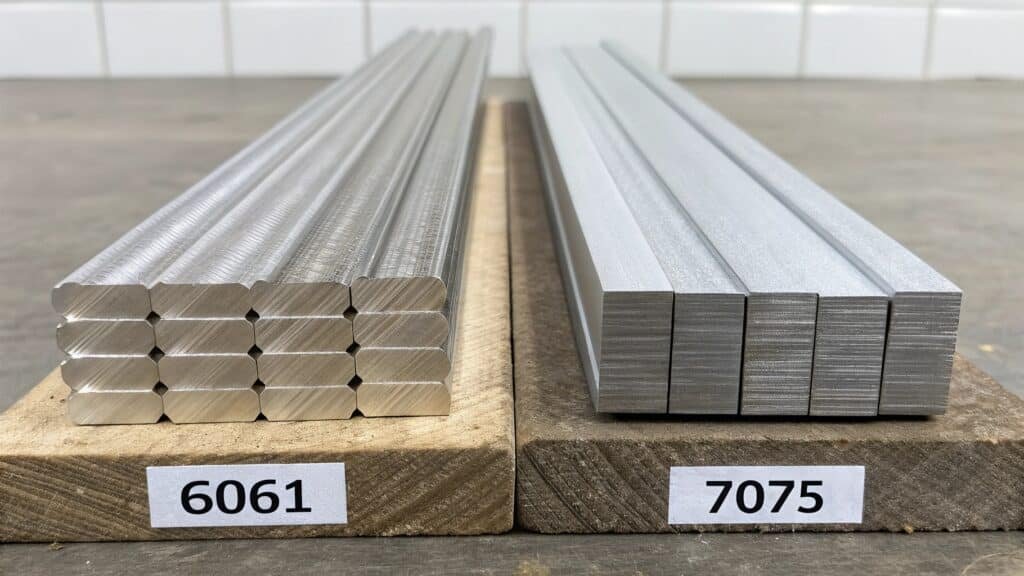
I remember a client, a machining company, who was making parts for high-performance automotive suspensions. They initially quoted with 6061 to save on costs. After discussing the intense stresses the parts would face, we recommended switching to 7075-T6. The higher strength was not a luxury; it was a necessity for safety and performance. Conversely, we often advise traders stocking material for general fabrication to focus on 6061. Its versatility and lower cost make it a much faster-moving and profitable product for a wider range of customers.
Comparing 6061 and 7075
The best way to decide is to compare their key properties directly.
| Property | 6061 Aluminum | 7075 Aluminum | Which Is Better for You? |
|---|---|---|---|
| Strength-to-Weight | Good | Excellent (similar to some steels) | 7075 for applications where maximum strength at minimum weight is critical. |
| Cost | Lower | Higher | 6061 for most projects where budget is a key factor. |
| Corrosion Resistance | Excellent | Fair (often requires an anodized or protective coat) | 6061 for parts exposed to moisture or outdoor environments. |
| Weldability | Very Good | Poor (not recommended for welding) | 6061 is the clear winner for any component that needs to be welded. |
What is the standard grade of Aluminium?
You hear the term "standard grade" aluminum, but it's not clear what that means. This uncertainty can make it hard to specify a basic, reliable material for your project. You need a dependable, all-around performer.
The most common and widely used "standard" grade of aluminum is 6061. It offers an excellent combination of strength, corrosion resistance, machinability, and weldability at a reasonable cost. This balance makes it the go-to choice for a huge range of structural and machining applications.
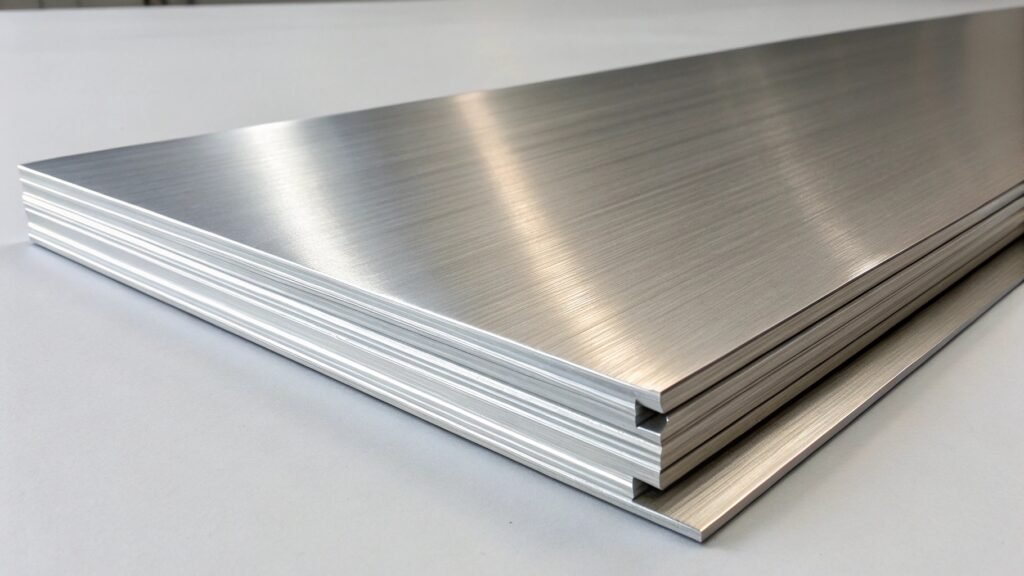
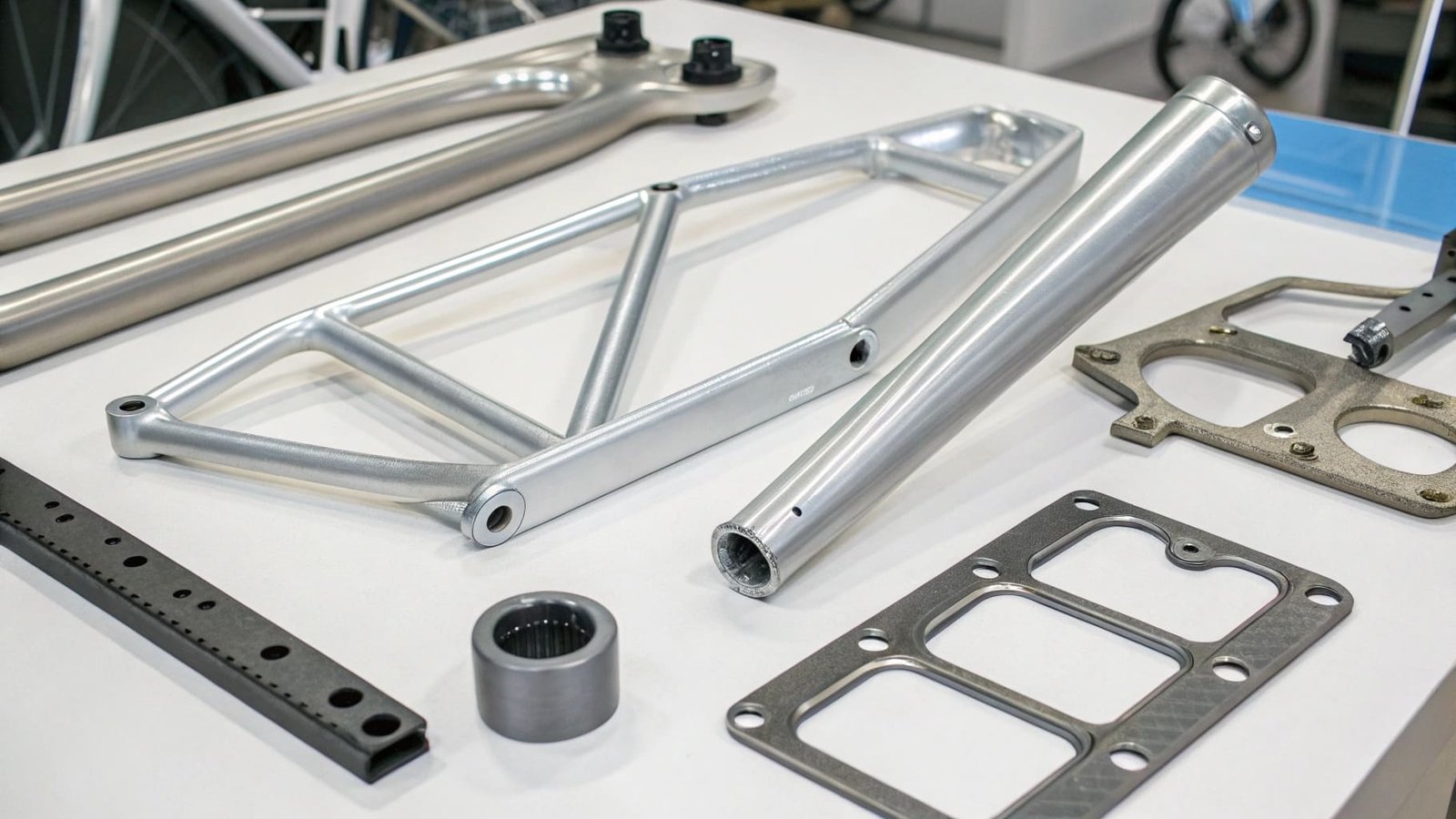
When a new trader contacts us, they often ask, "What should I stock?" My first answer is almost always 6061-T6. It's the bread and butter of the aluminum world. From bicycle frames and automotive parts to structural building components and machine mounts, 606İ is everywhere. Its versatility is its greatest strength. While other alloys offer superior performance in one specific area (like 7075's strength or 5052's formability), no other grade provides such a strong all-around package. For machining shops, 6061 is a reliable and predictable material to work with, which helps keep production running smoothly.
Common Aluminum Grades and Their Uses
While 6061 is the most common standard, other grades are "standard" for specific industries. Understanding their roles helps you source material more effectively.
| Alloy Series | Primary Alloying Elements | Key Characteristics | Common "Standard" Grade(s) | Typical Applications |
|---|---|---|---|---|
| 1xxx | 99%+ Pure Aluminum | Excellent corrosion resistance, very ductile | 1100 | Chemical tanks, food packaging, electrical busbars |
| 3xxx | Manganese | Good workability, moderate strength | 3003 | Cooking utensils, heat exchangers, chemical equipment |
| 5xxx | Magnesium | Excellent corrosion resistance in saltwater | 5052, 5083 | Marine parts, boat hulls, unfired pressure vessels |
| 6xxx | Magnesium & Silicon | Good strength, weldability, machinability | 6061 | Structural components, machine parts, bike frames |
| 7xxx | Zinc | Highest strength | 7075 | Aerospace structures, high-performance sports gear |
Is 7075 aluminum an alloy?
You see materials listed as "aluminum" and others as "aluminum alloy." This can be confusing, especially when dealing with high-performance grades. You wonder if 7075 is pure aluminum or something else entirely.
Yes, 7075 aluminum is absolutely an alloy. It is not pure aluminum. It is a specific formulation within the 7000 series, where zinc is the primary alloying element. Additional elements like magnesium and copper are added to achieve its exceptionally high strength.

Pure aluminum (from the 1xxx series) is actually quite soft. On its own, it's not useful for structural applications. We create alloys to give aluminum the specific properties our clients need, like strength, hardness, or corrosion resistance. Think of it like baking a cake. Pure aluminum is the flour, but it's the other ingredients—the "alloying elements"—that turn it into a high-performance product. For 7075, we add zinc to dramatically increase its strength. Then we add magnesium and copper to further refine its properties. This precise recipe, combined with a specific heat treatment (like the T6 temper), is what makes 7075 one of the strongest aluminum alloys available.
Understanding Aluminum Alloys
When we forge a custom ring or disc, we are not just shaping metal. We are guaranteeing a specific, engineered material. This table shows how alloying works.
| Term | Definition | Example |
|---|---|---|
| Pure Aluminum | Aluminum with 99.0% or higher purity. It is soft, ductile, and highly corrosion-resistant. | 1100 Aluminum, used for electrical wiring or food-grade foil. |
| Alloying Element | A metal or non-metal added to pure aluminum to enhance or change its properties. | Zinc, Magnesium, Copper, Silicon, Manganese. |
| Aluminum Alloy | A material where aluminum is the predominant metal, but it has been mixed with other elements. | 7075 Aluminum (Aluminum + Zinc + Magnesium + Copper). |
| Series | A classification system (e.g., 1xxx to 7xxx) based on the primary alloying element in the aluminum alloy. | 7xxx series alloys all use Zinc as their primary alloying element. |
Conclusion
Understanding aluminum specifications is key to your project's success. It ensures you get the exact performance you need, guaranteed by certified chemical and mechanical properties that we can verify.
-
Understanding the distinction helps in selecting the right material for specific performance needs. ↩
-
7075 aluminum's strength and hardness make it ideal for demanding environments like aerospace. ↩
-
Corrosion resistance is vital for longevity and performance, especially in outdoor or marine environments. ↩