Your design specifies a high-strength aluminum alloy1 for a critical aerospace part. But a hidden flaw inside the material could lead to catastrophic failure, jeopardizing safety and your reputation.
To ensure aluminum is aircraft-safe, you must verify its internal structure. The forging process is critical because it eliminates the microscopic voids where fatigue cracks begin, providing the certified, flaw-free material integrity that aerospace applications demand.
At SWA Forging, we understand that aerospace clients don't just buy an alloy's chemistry; they buy its certified fatigue life. A spec sheet for an alloy is a promise of potential performance. But at 30,000 feet, you need a guarantee, not a promise. I've worked with many clients in the aerospace supply chain, and their primary concern is always reliability. They know that a cast or extruded part, even if it's the right alloy, can harbor hidden internal defects—tiny pockets of gas or impurities. These are the starting points for failure. Our forging process transforms a high-strength formula into a component you can trust by creating a uniform, dense internal structure that eliminates those failure points from the very beginning.
Is 7075 Aluminum Considered Aircraft Grade?
You hear "7075" and "aircraft grade" used together all the time. But simply choosing it without knowing its specific strengths and weaknesses can lead to component failure.
Yes, 7075 is a premier aircraft-grade aluminum alloy. Its exceptional strength-to-weight ratio, one of the highest available, makes it essential for high-stress structural components like wing spars, fuselage frames, and landing gear where performance is critical.

The designation "aircraft grade" is earned, and 7075 has certainly earned it. Its primary alloying element is zinc, which gives it strength comparable to many types of steel, but at only about one-third of the weight. This single characteristic is the reason it is so dominant in aerospace design. However, this extreme strength comes with important trade-offs. 7075 has relatively poor corrosion resistance and is generally considered non-weldable. This is why you will almost always see 7075 components with a protective surface, like anodizing or paint, to prevent corrosion. For our clients who machine these critical parts, the starting material's quality is everything. Forging 7075 is not just beneficial; it's essential. The process refines the grain structure, maximizing its fatigue resistance and ensuring the part can withstand the immense cyclical stresses of flight without fail.
Is 6061 Aluminum Considered Aircraft Grade?
You have a part that requires good strength and easy fabrication. You know 6061 is a versatile alloy, but you wonder if it's truly suitable for aerospace applications.
Yes, 6061-T6 is also considered an aircraft-grade aluminum, though it is used for different applications than 7075. It is typically found in secondary structural parts, such as aircraft fuselages, wings, and landing field mats, where its excellent corrosion resistance is valued.
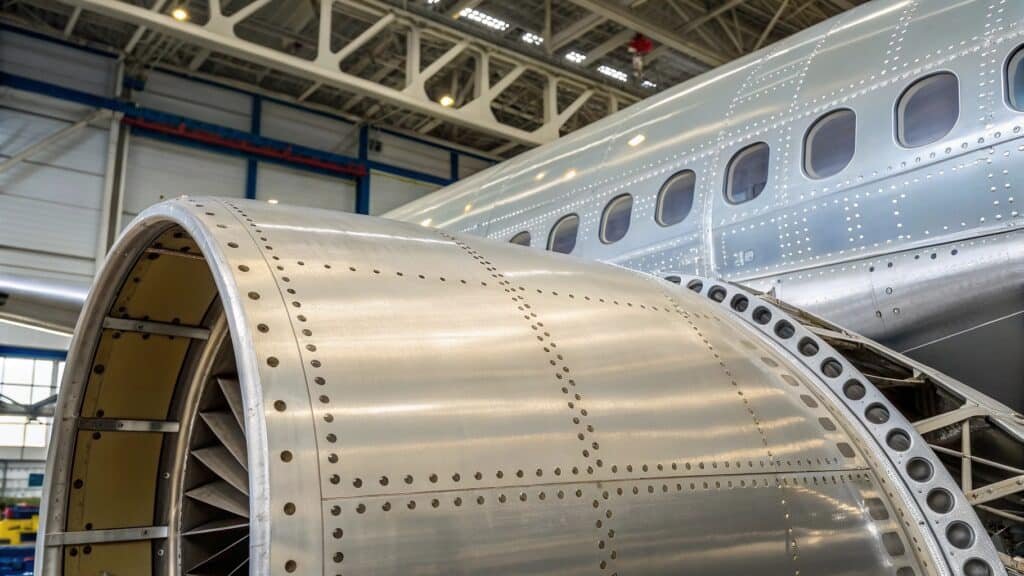
If 7075 is the high-performance specialist, then 6061 is the reliable workhorse of the aerospace industry. While it doesn't have the ultimate tensile strength of 7075, it brings a fantastic all-around package of properties. Its biggest advantages are its excellent corrosion resistance, good machinability, and good weldability. This makes it much easier and more cost-effective to fabricate complex structures. You will often find it used for aircraft fuselages and wings, especially in smaller general aviation aircraft. At SWA Forging, we produce many large 6061 forged rings and discs for clients who need a reliable, certified base material for less critically stressed applications. Even in these parts, the dense, uniform structure created by forging is a significant advantage. It eliminates the risk of internal defects and ensures the material behaves exactly as the engineers designed it to.
Is 5052 Aluminum Considered Aircraft Grade?
You need to build a component that will be exposed to fuel, oil, or a marine environment. You need excellent formability and durability, but not extreme strength.
Yes, 5052 aluminum2 is an aircraft-grade alloy used where formability and high fatigue strength are more important than high tensile strength. It is commonly used for aircraft fuel tanks, oil lines, and non-structural sheet metal applications due to its excellent workability.

5052 carves out its own important niche in the aerospace world. It belongs to the 5xxx series of alloys, which are alloyed with magnesium. This gives it several unique and valuable properties. First, it has excellent resistance to corrosion, especially in marine environments, which is why it's also a primary boat-building alloy. Second, it has fantastic workability, meaning it can be bent and formed into complex shapes without cracking. Finally, it has very high fatigue strength. While it's not as strong as 6061 or 7075 in terms of sheer tensile strength, it holds up exceptionally well under vibration and repeated stress cycles. This combination makes it the perfect choice for aircraft fuel and oil tanks. The material needs to be formed into complex shapes and must contain fluids reliably without cracking from engine vibration. It's another example of choosing the right tool for the right job in aircraft design.
Conclusion
Aerospace buys certified fatigue life, not just chemistry. Our forging process delivers the uniform internal structure that eliminates failure points, creating a component you can trust at 30,000 feet.