Relying on a catalog number for tensile strength is a gamble. Your parts can fail under real-world stress, costing you dearly. Forging delivers a certified performance guarantee, ensuring total reliability.
You guarantee tensile strength by specifying an engineered process, not just a material. Forging refines the grain structure, dramatically increasing strength over standard aluminum. This engineered strength is then verified through testing and delivered with a quality certificate for your specific application.
At SWA Forging, "tensile strength" isn't a theoretical number on a chart; it's a performance promise we deliver. For over a decade, I've worked with machining companies and traders who can't afford guesswork. They need to know the material they receive will handle the forces their components will face. Standard aluminum is unpredictable. Forged, certified aluminum is a guarantee. Let's break down the common questions about strength to show you what really matters.
What Is the Tensile Strength of Aluminum, Really?
Seeing a single number for "aluminum strength" is misleading. This causes confusion and leads to choosing the wrong material for a critical job, risking failure.
The tensile strength of aluminum varies widely, from around 90 MPa for pure aluminum to over 570 MPa for high-performance alloys like 7075-T61. The exact strength depends entirely on the specific alloy and its heat treatment (temper). There is no single answer.
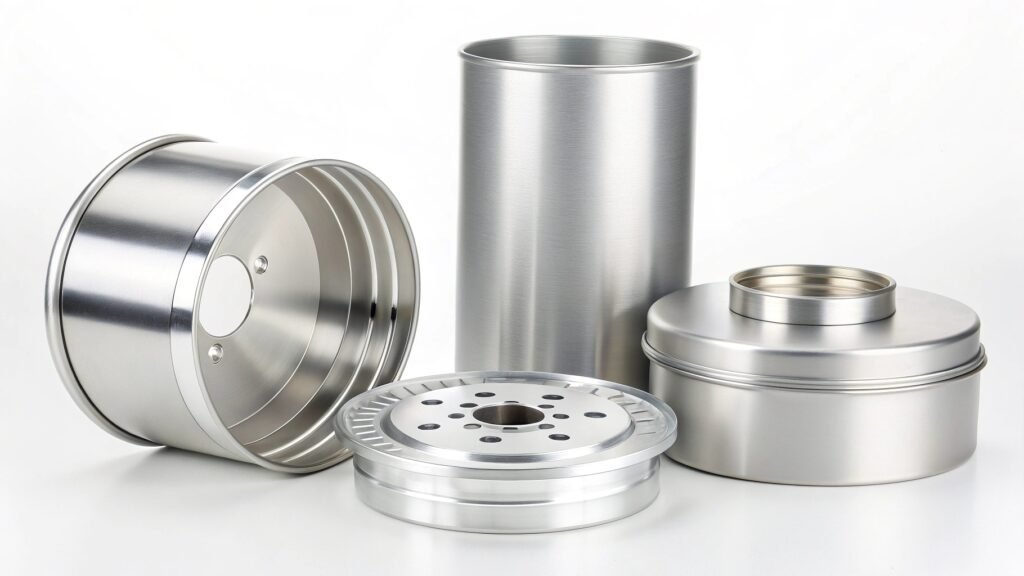
Tensile strength is the maximum pulling force a material can withstand before it starts to break. When a new customer asks for "strong aluminum," my first question is always, "How strong?" The answer is in the alloy and the temper. For instance, the 1100 alloy is almost pure aluminum and very soft, suitable for packaging. But the 7075 alloy, when given a T6 temper (a specific heat treatment), becomes one of the strongest aluminum alloys2 available, used in aircraft frames. Our job at SWA Forging is to not only provide the right alloy and temper but also to ensure through forging that the material's internal structure is perfect, so it reliably delivers that promised strength every time.
Why Alloy and Temper Matter Most
This table shows how strength changes dramatically based on the material's recipe and treatment.
| Aluminum Grade | Typical Tensile Strength (MPa) | Common Use Case |
|---|---|---|
| 1100 (Pure) | ~90 MPa | Sheet metal, foil, low-strength applications |
| 5052-H32 | ~228 MPa | Marine parts, tanks (good corrosion resistance) |
| 6061-T6 | ~310 MPa | Structural parts, machine components, bike frames |
| 7075-T6 (Forged) | ~572 MPa | Aerospace structures, high-stress components |
Can Forged Aluminum Be as Strong as Steel?
You might assume steel is always the stronger choice. This can lead you to use a much heavier material than needed, adding unnecessary weight and cost to your project.
For its weight, yes. High-strength aluminum alloys have a superior strength-to-weight ratio compared to many steels. While steel has higher absolute strength, forged aluminum provides "steel-like" performance at only one-third the weight, making it the ideal choice for modern engineering.
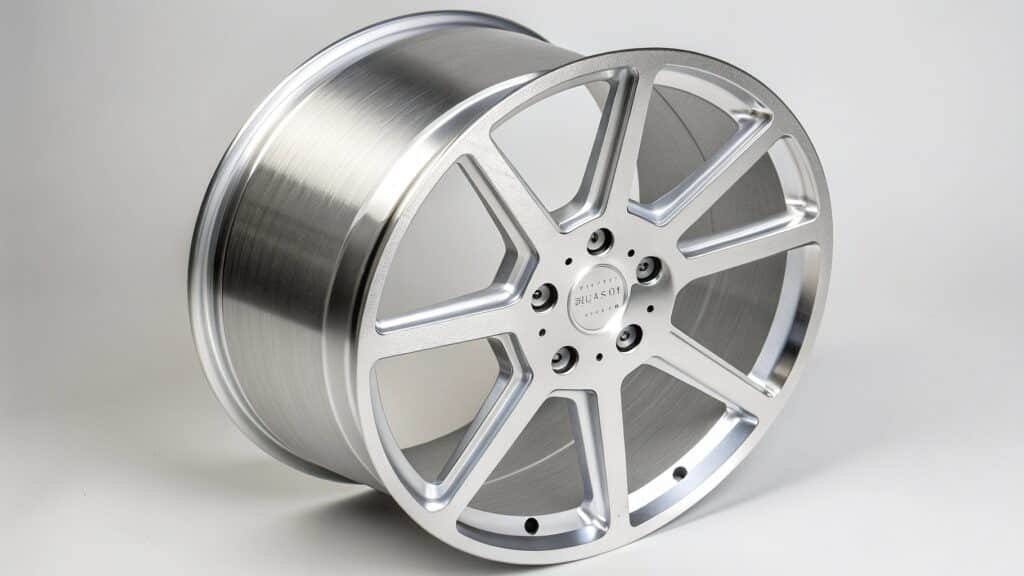
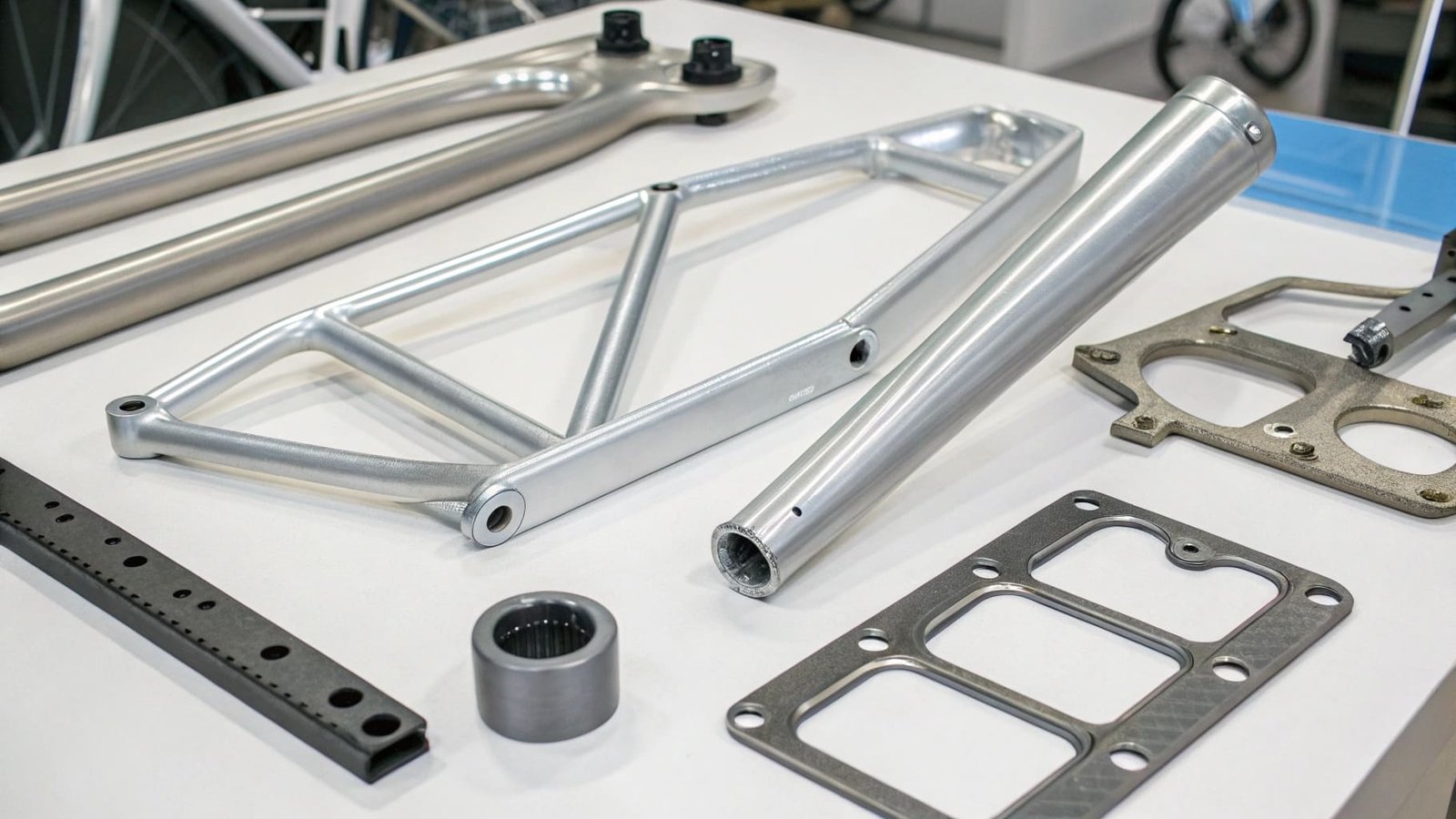
This is a critical concept for industries like aerospace and automotive. Absolute strength isn't always the goal; performance-per-kilogram is. I've helped countless clients in the Middle East replace steel components with forged 7075 aluminum parts. They reduce the overall weight of their final product, which can improve fuel efficiency or increase payload capacity, without compromising on safety or strength. Forging is essential here because it creates a defect-free internal structure that can handle the fatigue and stress that was previously reserved for steel. It's not about being stronger pound-for-pound; it's about being smarter.
Strength vs. Strength-to-Weight
Let's look at the numbers. It's not just about strength; it's about strength without the weight penalty.
| Material | Density (g/cm³) | Tensile Strength (MPa) | Strength-to-Weight Ratio (Strength/Density) |
|---|---|---|---|
| Forged 7075-T6 Aluminum | ~2.81 | ~572 | ~204 |
| 1018 Carbon Steel | ~7.87 | ~440 | ~56 |
Which Is Stronger for My Application: 6061 or 5052?
Choosing between two common alloys like 6061 and 5052 can be confusing. Making the wrong choice impacts your part's final strength, machinability, and corrosion resistance.
Generally, 6061 is significantly stronger than 5052. 6061 is a heat-treatable alloy, allowing its strength to be greatly increased. 5052 is a non-heat-treatable alloy that gets its strength from work-hardening, excelling in formability and corrosion resistance.
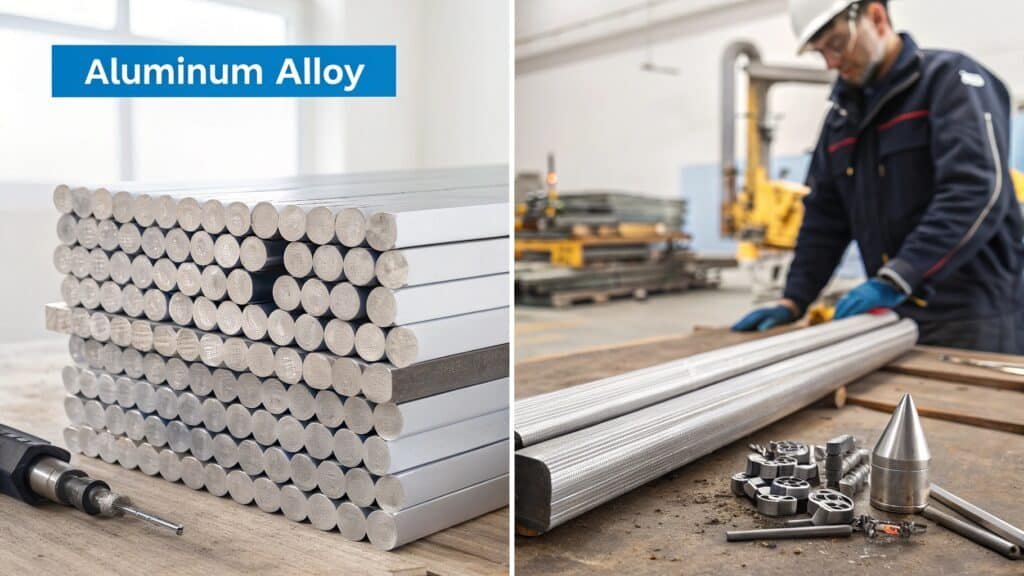
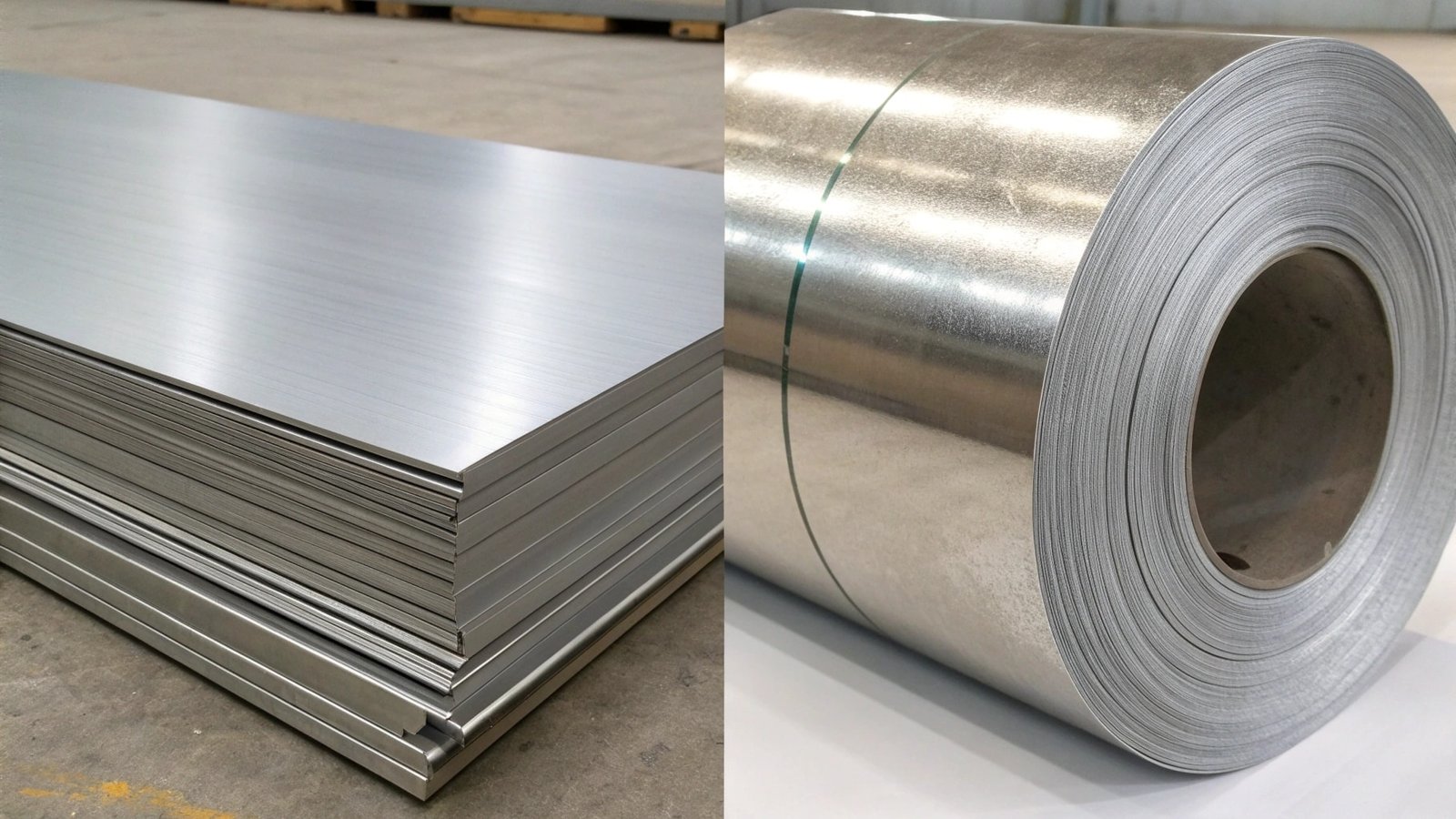
This is a very common question from our machining clients. The answer depends on the job. If you need to build a structural frame, a machine base, or any part that needs to bear a significant load, 6061-T6 is the clear choice. Its tensile strength is nearly double that of 5052. However, if you are making a fuel tank, a marine part, or a component that requires complex bending without cracking, 5052 is superior. Its excellent formability and resistance to saltwater corrosion are its key selling points. We supply both, but I always advise clients to choose 6061 for strength and 5052 for formability and durability in corrosive environments.
Choosing Between the Two Workhorses
Here's a simple guide to help you decide.
| Feature | 6061 Aluminum | 5052 Aluminum |
|---|---|---|
| Strength (Tensile) | Much Stronger (Heat-treatable to ~310 MPa) | Lower Strength (Work-hardened to ~228 MPa) |
| Main Advantage | High strength, good machinability, weldable. | Excellent formability, high corrosion resistance. |
| Best For | Structural parts, forged rings, machine components. | Sheet metal work, marine parts, tanks, enclosures. |
| Our Common Supply Form | Forged Rings, Forged Discs, Bars | Sheets, Plates |
Conclusion
Tensile strength isn't a fixed number; it's an engineered and certified guarantee. By forging and heat-treating specific alloys, we deliver the exact performance your high-stress application demands.