You see alloy numbers like 6061 and 7075 on a spec sheet. But these numbers don't tell the whole story, and choosing based on them alone can lead to unexpected failures.
An alloy's name, like 7075, is only its potential. The manufacturing process—casting, extruding, or forging—determines its actual performance. Forging is what makes the datasheet's promise a reality by delivering that potential strength in every single direction.
As a manufacturer of high-integrity forged components, this is a topic I discuss with clients every day. A trader or a machining company will come to us with a request for a specific alloy, and my first question is always about the application. That's because the number on the page is just a starting point. The real performance of a component comes from its internal grain structure, which is a direct result of how it was made. You can have two parts made from the exact same 7075 aluminum1, but if one is machined from a standard rolled plate and the other from one of our forged rings, their reliability under stress will be worlds apart.
How Do You Read Aluminum Alloy Designations?
You see a four-digit number like 6061-T6, but you're not sure what it means. This confusion can lead you to specify a material that isn't right for your application.
You read aluminum alloys by their first digit, which identifies the main alloying element (e.g., 6xxx is Magnesium and Silicon). The following digits and the temper designation (like -T6) describe the exact composition and heat treatment process.

Understanding these numbers is the first step. The system is quite logical once you see it broken down. The first digit is the most important, as it tells you the alloy's family and its primary characteristic. For example, our clients in the machinery and aerospace sectors often work with the 6000 and 7000 series because they are heat-treatable for high strength. But knowing the alloy series is only half the battle. This information only tells you the material's chemical makeup. It says nothing about its internal structure. A cast 6061 part will have a coarse, weak grain structure. An extruded 6061 part will have a long, stringy grain structure. A forged 6061 part from SWA Forging will have a fine, uniform, and re-aligned grain structure. This is the difference that matters for performance.
Aluminum Alloy Series Guide
| Series | Primary Alloying Element | Key Characteristic |
|---|---|---|
| 1xxx | (99% Pure Aluminum) | Excellent corrosion resistance, soft |
| 2xxx | Copper | High strength, but lower corrosion resistance |
| 3xxx | Manganese | Good workability, moderate strength |
| 4xxx | Silicon | Lower melting point, used in welding wire |
| 5xxx | Magnesium | Good weldability, saltwater resistance |
| 6xxx | Magnesium & Silicon | Good strength, formability, machinability |
| 7xxx | Zinc | Highest strength, used in aerospace |
Which Is Stronger, 6061 or 7075 Aluminum?
You need maximum strength for a critical component. Choosing the wrong alloy between these two very popular options could lead to a part failing under load.
7075 aluminum is significantly stronger than 6061 aluminum2. With a tensile strength nearly double that of 6061, 7075 is the clear choice for high-stress applications where the strength-to-weight ratio is the most important factor.
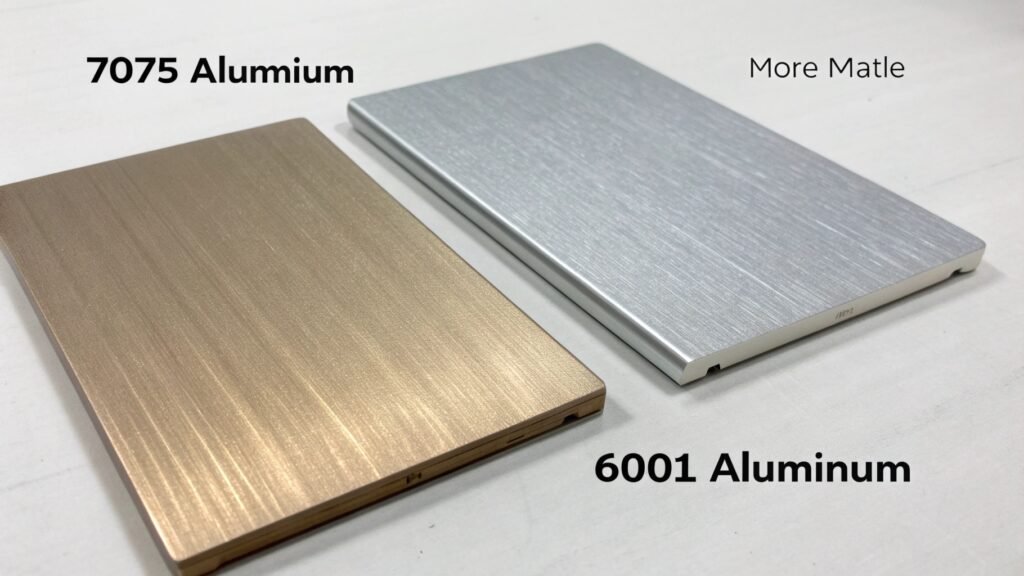
On paper, the choice is obvious. 7075 is the king of strength. Its zinc-based chemistry allows it to be heat-treated to levels that rival some steels. We recommend it for the most demanding aerospace and industrial machinery applications. However, here is the crucial point that we always emphasize to our clients: that superior strength is only useful if it's available where you need it. When 7075 is made into a rolled plate, its grain structure is stretched in one direction. This means the plate is very strong along its length but significantly weaker across its width. If you machine a part and the real-world forces are applied across that weak direction, you are not getting the strength you paid for. This is why a forged 7075 ring from us is a superior solution. Our forging process creates a uniform grain structure, ensuring that the full strength of the 7075 alloy is delivered in every direction.
Which Aluminum Is Stronger, 5052 or 6061?
You're trying to choose between a formable alloy and a structural one. Making the wrong trade-off between the ability to bend the material and its overall strength can ruin your project.
6061-T6 aluminum is much stronger than 5052-H32. 6061 is a heat-treatable structural alloy designed for machining, while 5052 is a non-heat-treatable, strain-hardened alloy prized for its excellent formability and corrosion resistance.
This is a classic "right tool for the job" comparison. 5052 is strengthened by work-hardening, which is why it's a favorite for sheet metal applications like boat hulls or tanks that need to be bent and welded. You would not use it for a heavy-duty machined part. 6061, on the other hand, gets its strength from a heat-treatment process, making it ideal for structural applications like base plates and machine components. For our machining customers, 6061 is the standard. But even with 6061, the manufacturing process is key. A part machined from a standard 6061 plate still has to deal with directional weakness. By starting with a forged 6061 disc from SWA Forging, you eliminate that variable. The forging process enhances the material's natural properties, giving you a predictable, reliable component that performs exactly as it should, which is what all our clients demand.
What Is the Difference Between 4000 and 5000 Aluminum?
You see these two alloy series and wonder about their uses. Knowing the difference helps you understand the specific roles each type of aluminum plays in the manufacturing world.
The main difference is their primary alloying element. 4000 series aluminum uses silicon, which lowers the melting point. 5000 series aluminum uses magnesium, which provides excellent corrosion resistance3 and good weldability.
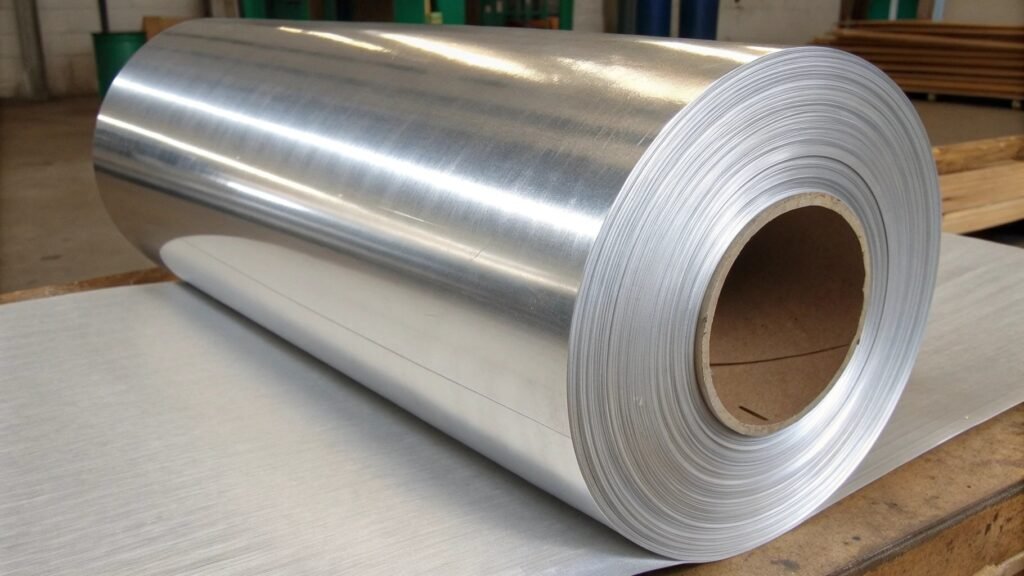
These two series illustrate perfectly how a single alloying element can completely change an aluminum's properties. The silicon in the 4000 series makes it ideal for use as welding and brazing wire. When you need to join two pieces of 6061, you often use 4043 filler wire because it melts at a lower temperature. You would never use it to build a structure. The 5000 series, with its magnesium content, is the complete opposite. It’s known for its toughness and exceptional performance in corrosive environments, especially saltwater. That’s why it is the go-to material for shipbuilding and chemical tanks. At SWA Forging, we primarily focus on the high-strength, heat-treatable alloys like 6061 and 7075, as our process is designed to maximize the structural integrity needed for demanding machining applications. We provide the strong foundation for our clients to build upon.
Conclusion
An alloy's name is just its potential. True understanding comes from knowing that the manufacturing process unlocks that potential, and forging makes the datasheet's promise a reality in every direction.
-
Explore the unique properties of 7075 aluminum, known for its high strength, making it ideal for aerospace and industrial applications. ↩
-
Learn about 6061 aluminum's versatility and strength, perfect for structural applications and machining. ↩
-
Discover how aluminum's natural properties offer excellent corrosion resistance, making it suitable for various environments. ↩