You have a piece of aluminum, it looks like many others, but you need to know if it's the versatile 6061. Without knowing, you risk using the wrong material for your project, leading to potential failure or over-engineering.
Identifying 6061 aluminum without lab tests can be tricky, but you can look for markings, consider its typical applications and machining characteristics, or, for definitive proof, use chemical analysis or consult the material certificate if available.
At SWA Forging, we've been manufacturing custom aluminum alloy forged rings and discs since 2012. We handle various grades daily, and accurate material identification is the cornerstone of our quality. While every order we ship comes with a product quality certificate detailing the exact alloy, like 6061, we understand you might encounter aluminum from other sources. Let's explore some ways you might try to identify if that piece of aluminum in your hand is the popular 6061.
How to tell if aluminum is 6061 or 7075?
You're choosing between two strong aluminum types, 60611 and 7075, but their visual similarity is confusing. Pick the wrong one, and your high-stress part might fail, or you might overpay for strength you don't need.
Differentiating 6061 from 7075 without markings can be tough. 7075 is generally harder, has a slightly higher density, and machines differently (often producing smaller, more brittle chips). Price and typical aerospace applications for 7075 can also be clues.
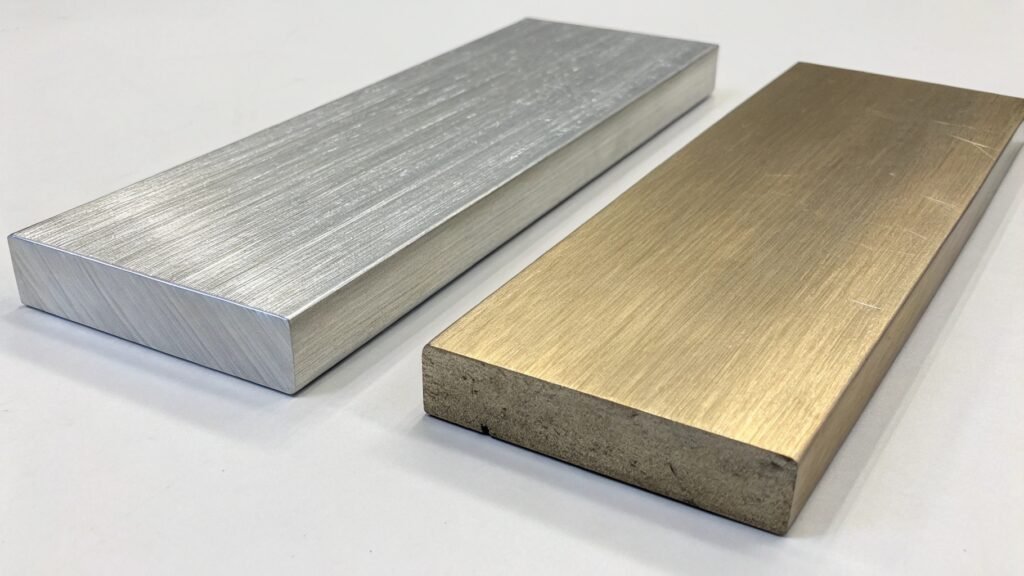
Distinguishing between 6061 and 7075 aluminum alloys without proper documentation or lab testing is challenging because they can look very similar. However, there are some differences. 7075 is one of the highest strength aluminum alloys, significantly stronger and harder than 6061. If you have a known sample of 6061, a simple file test might reveal that the 7075 is harder to mark. Density-wise, 7075 is slightly denser (approx. 2.81 g/cm³) than 6061 (approx. 2.70 g/cm³), but this difference is too small to notice by hand.
When machining, 7075 tends to produce smaller, more brittle chips, while 6061 can be a bit "gummier" and produce stringier chips, especially if not in a T6 temper. Corrosion resistance also differs; 6061 generally has better overall corrosion resistance than 7075, unless the 7075 is clad or specifically treated. Cost is another indicator; 7075 is typically more expensive due to its alloying elements (primarily zinc) and processing.
At SWA Forging, we often produce large forged rings and discs from both 6061 for its versatility in industrial applications, and 7075 for demanding aerospace or high-performance parts. Our machining clients, who process these forgings, become familiar with these subtle differences, but for any critical application, relying on the material certification we provide (or requesting third-party verification from SGS, BV, or TUV) is essential.
| Feature | 6061 Aluminum | 7075 Aluminum |
|---|---|---|
| Primary Alloying | Magnesium, Silicon | Zinc, Magnesium, Copper |
| Strength (Typical T6) | Good (e.g., ~290-310 MPa UTS) | Very High (e.g., ~510-570 MPa UTS) |
| Hardness (Typical T6) | Moderate (e.g., ~95 HB) | High (e.g., ~150 HB) |
| Density | ~2.70 g/cm³ | ~2.81 g/cm³ |
| Machinability | Good, can be slightly gummy | Good, produces smaller, brittle chips |
| Corrosion Resistance | Good | Fair (better if clad or treated) |
| Cost | Moderate | Higher |
| Typical Uses | Structural, marine, automotive | Aerospace, high-stress components |
How do I tell what kind of aluminum I have?
You've got an unknown piece of aluminum. Is it pure, or an alloy? Strong, or soft? Using unidentified aluminum is risky, potentially compromising your project's integrity or safety.
To identify an unknown aluminum type, look for stamped markings or color codes. Consider its source and known application. Simple tests like hardness, density, or even bending can give clues. For certainty, lab analysis (e.g., XRF) is best.
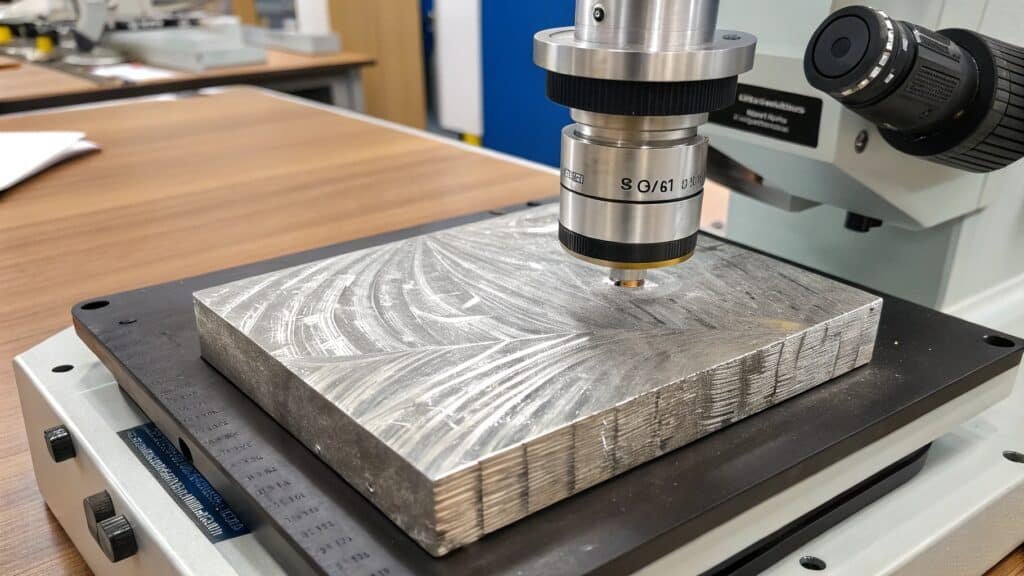
If you have a piece of aluminum and no information about it, identification can be a bit of detective work. First, carefully inspect the material for any stamped markings, numbers, or color codes. Sometimes, manufacturers mark the alloy grade directly on the material, especially on larger plates or extrusions.
Consider the source and its original application. Was it part of an aircraft? It might be a 2xxx or 7xxx series alloy. Is it an architectural window frame? It could be 6063. Is it a boat hull? Likely a 5xxx series. Knowing its history provides strong clues.
You can perform some simple physical tests. Aluminum is non-magnetic, so a magnet will help distinguish it from steel. A hardness test, even a crude one like trying to scratch it with known materials or a file, can help. Softer alloys like 1100 will scratch easily, while harder alloys like 7075 will be more resistant. A bend test can also be indicative: softer, more ductile alloys will bend easily, while very hard, high-strength alloys might crack.
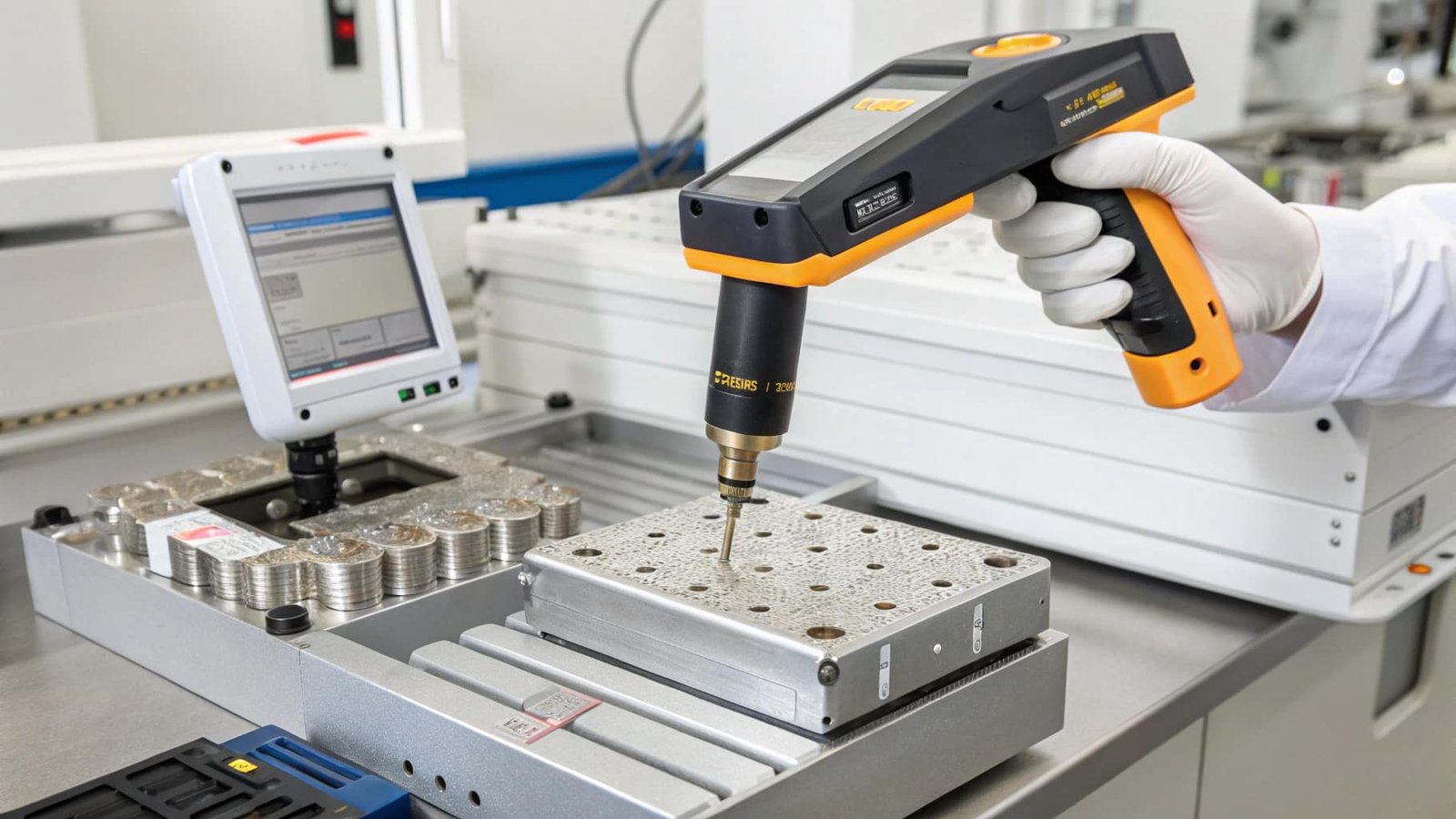
For more definitive identification without sophisticated lab equipment, comparing its density (by weighing a precisely measured volume) to known densities can narrow it down. However, for absolute certainty, especially for critical applications, a Positive Material Identification (PMI) test using an X-Ray Fluorescence (XRF) analyzer is the most reliable method. This instrument provides a chemical breakdown of the alloy. At SWA Forging, we ensure every batch of raw material we use for our forged rings and discs is certified. If a client has an unknown sample or needs verification, we can facilitate third-party testing through accredited labs like SGS, BV, or TUV to ensure they know exactly what they are working with.
How can you tell if aluminum is 6061 or 6063?
6061 and 6063 aluminum2 look almost identical, but their properties differ. Choosing incorrectly could mean a part isn't strong enough (if 6063 used for 6061 needs) or you've over-engineered with a less formable alloy.
Distinguishing 6061 from 6063 visually is very difficult. 6061 is generally stronger and harder than 6063. 6063 is often used for architectural extrusions with finer finishes, while 6061 is for more structural applications.
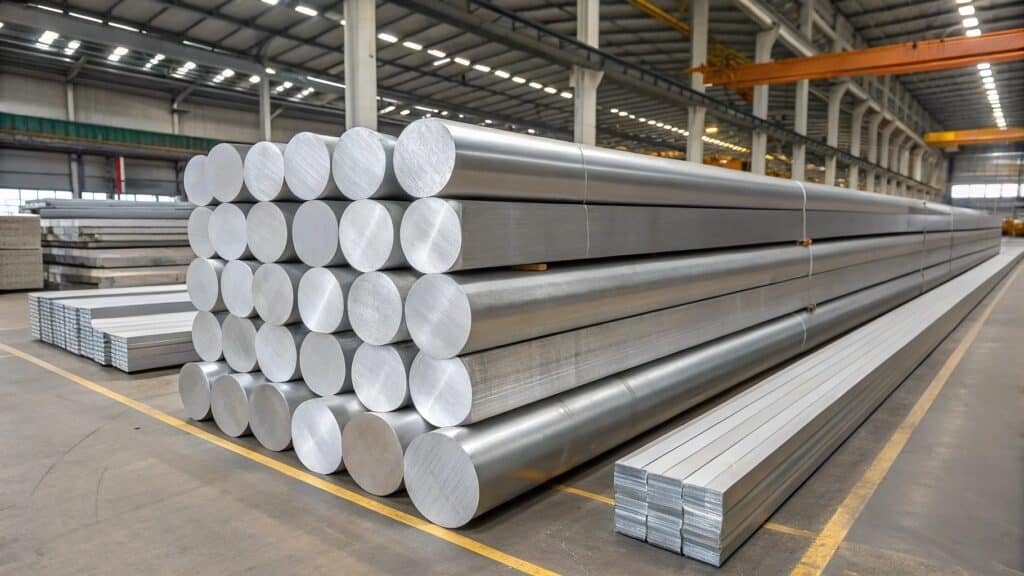
Telling 6061 from 6063 aluminum without markings is particularly challenging because both are from the 6xxx series (alloyed with magnesium and silicon) and can appear very similar. However, their typical applications and slight property differences can offer clues.
6063 is often referred to as "architectural aluminum." It's known for its excellent surface finish, good corrosion resistance, and high extrudability, making it ideal for complex shapes like window frames, door frames, decorative trim, and intricate heat sinks. It typically has slightly lower strength than 6061.
6061 is a more general-purpose structural alloy. It has higher strength and hardness than 6063, especially in the T6 temper. It's used for applications requiring more robustness, such as structural beams, plates, machine parts, bicycle frames, and, of course, many of the forged rings and discs we produce at SWA Forging for industrial machinery and components.
If you can perform a hardness test (even a simple file test), 6061-T6 will feel noticeably harder than 6063-T5 or T6. In terms of machinability, 6061 generally machines a bit cleaner than 6063, which can sometimes be softer and "draggier."
Consider the form: if it's a very intricate extrusion with a smooth, fine finish designed for appearance, 6063 is a strong candidate. If it's a thicker plate, bar, or a part that looks like it's designed to bear a significant load, 6061 is more likely. I once had a client who brought in a bent component from a trade show display. Its sleek finish and complex profile immediately suggested 6063, which we confirmed would be suitable for its relatively light load. For heavier-duty structural applications, we'd always guide them to 6061 or stronger alloys.
| Feature | 6061 Aluminum | 6063 Aluminum |
|---|---|---|
| Typical Strength | Higher | Lower |
| Hardness | Higher | Lower |
| Primary Use | Structural, machine parts | Architectural, decorative, complex shapes |
| Surface Finish | Good | Excellent, often for anodizing |
| Extrudability | Good | Excellent |
| Machinability | Good | Fair (can be softer) |
Is 6061 aluminum light?
You're considering 6061 aluminum for its strength, but weight is also a concern. Is it truly a lightweight option, or will it add too much bulk to your design?
Yes, 6061 aluminum is considered a lightweight material. It has a density of approximately 2.70 g/cm³, which is about one-third the density of steel, making it excellent for applications where weight reduction is important.
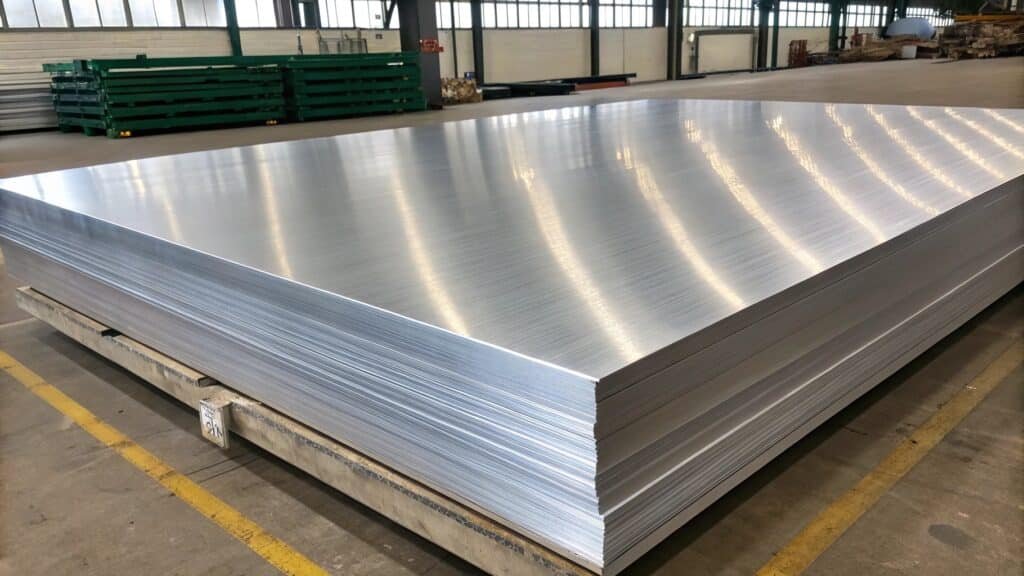
Absolutely, 6061 aluminum is a lightweight material. Its density is approximately 2.70 grams per cubic centimeter (g/cm³), or about 0.0975 pounds per cubic inch (lb/in³). To put this into perspective, steel has a density of around 7.85 g/cm³, making aluminum roughly one-third the weight of steel for the same volume. This low density is a primary reason why aluminum alloys, including 6061, are so widely used.
The real advantage often comes from its excellent strength-to-weight ratio. While some steels might be stronger in absolute terms, 6061-T6 offers good mechanical strength for its low weight, allowing engineers to design parts that are both strong and light. This is critical in many industries. For example, in transportation (automotive, aerospace, marine), reducing weight directly translates to improved fuel efficiency and performance. In portable equipment, it means easier handling. Even in static structures, lighter components can reduce foundation requirements and make assembly easier.
At SWA Forging, many of our clients, particularly those in the Middle East involved with trading or machining components for various industries, specify 6061 aluminum for our forged rings and discs precisely because of this beneficial combination of strength and low weight. I recall a project where we supplied large 6061 forged rings for a robotic arm assembly. The original design used steel, but the switch to aluminum significantly reduced the arm's inertia, allowing for faster movements and the use of smaller, more energy-efficient motors. The client was thrilled with the performance improvement, all thanks to the lightweight nature of 6061.
Conclusion
Identifying unmarked 6061 aluminum can be tricky; markings or certs are best. It offers great strength-to-weight, making it versatile, but differentiating it from similar alloys often requires more than a visual check.