Your components need to be durable, but hidden defects in raw materials create risk. This can lead to unexpected failures, costing you time, money, and your reputation.
Yes, forged aluminum1 is truly superior. The forging process optimizes the metal's internal grain structure, aligning it for maximum strength and fatigue resistance. This creates a level of durability that other manufacturing methods cannot match.
I've built my career on the reliability of forged parts. That reliability isn't magic; it comes from specific, measurable improvements in the material's properties. Forged aluminum provides unmatched durability by optimizing the metal's grain structure. This process results in superior strength and reliability, making it the ideal choice for any demanding application. Let's break down exactly what makes forged aluminum so tough and how that benefits your final product.
How strong is forged aluminum?
Datasheet strength values can be misleading. A part's real-world performance under stress is what truly matters, and raw material often falls short, creating risk for your applications.
Forged aluminum is exceptionally strong, often rivaling the strength of some steels at a fraction of the weight. For example, forged 7075-T62 can achieve ultimate tensile strengths over 570 MPa, making it ideal for high-stress applications.
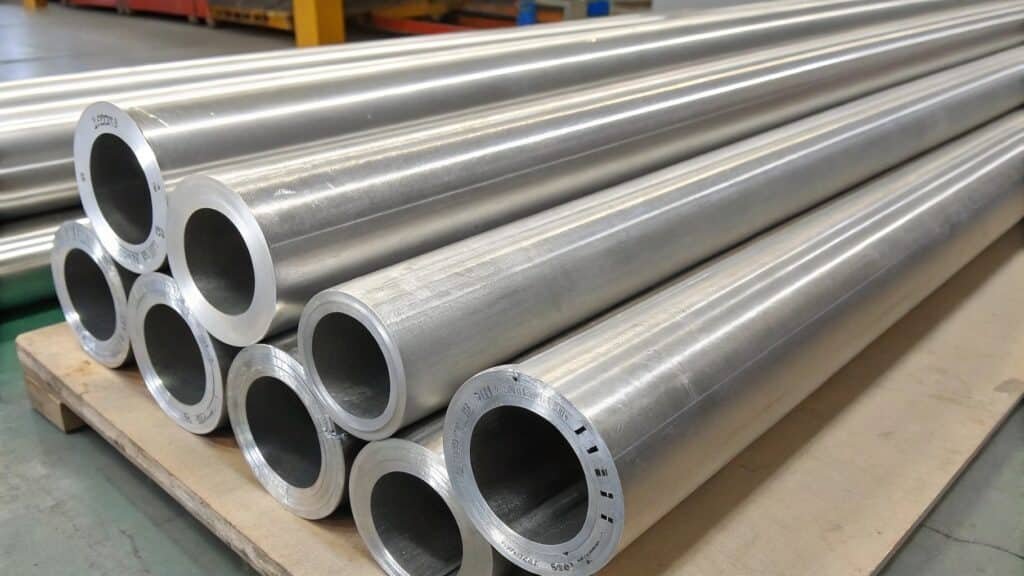
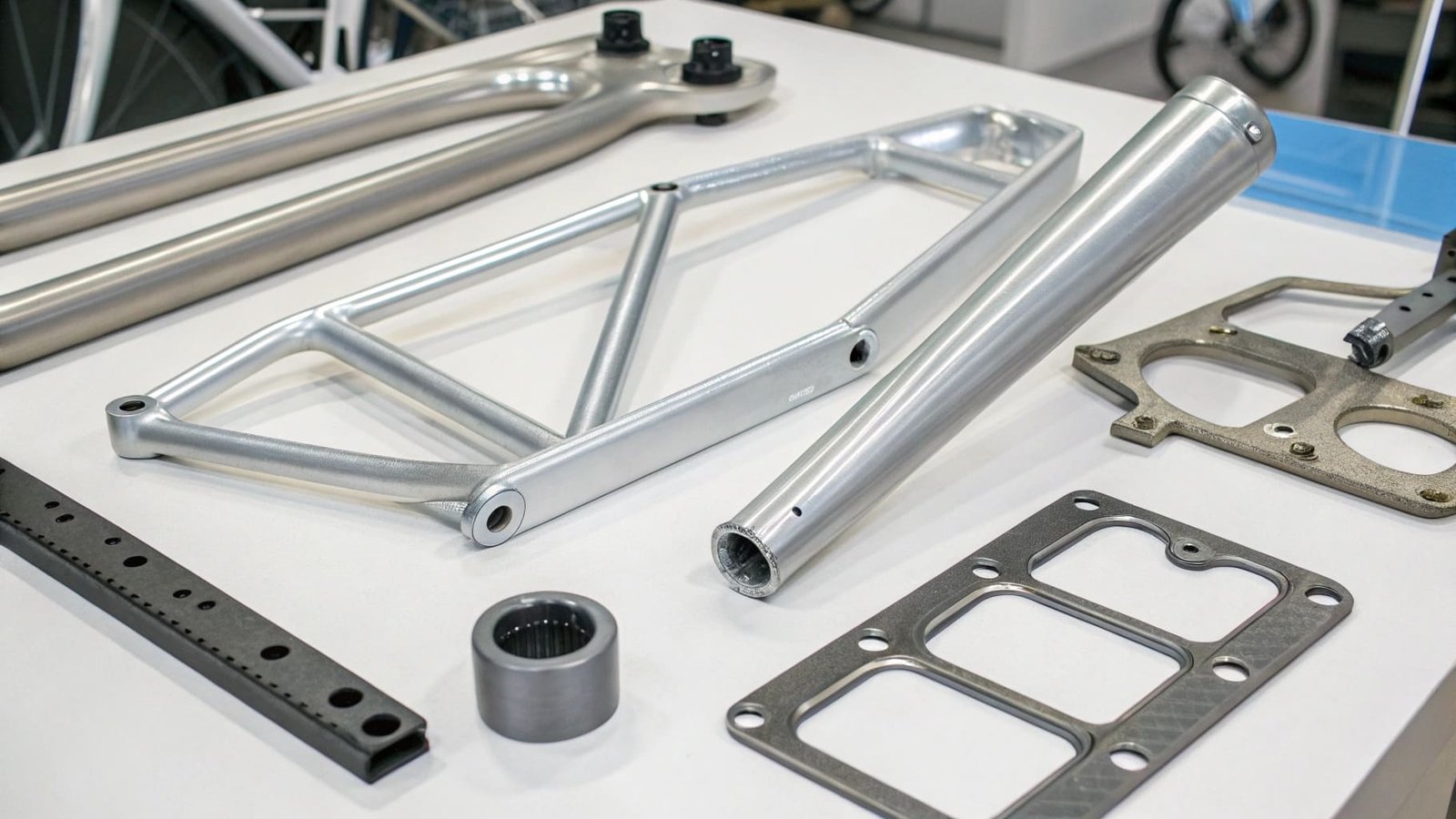
The strength of a forged part comes from its incredibly dense and uniform microstructure. Processes like casting can leave behind tiny internal pores or voids. These are built-in weak spots that act as starting points for failure under load. Machining from a solid billet doesn't introduce porosity, but it does nothing to improve the grain structure; it simply cuts through it. Forging is different. The immense pressure we apply physically closes any voids, creating a fully dense material. It also refines and reorients the grain structure, aligning it to the shape of the part. This grain flow is like the fibers in a muscle, providing strength exactly where it's needed most. It turns a standard alloy into a high-performance, fully optimized component.
Does forged aluminum crack?
The fear of a critical component cracking under pressure is a major concern. Any hidden weakness can lead to catastrophic failure, endangering equipment and personnel.
While any metal can crack under extreme overload, forged aluminum is far more resistant to cracking than cast or billet parts. Its refined grain structure and absence of porosity eliminate the internal weak spots where cracks typically start.
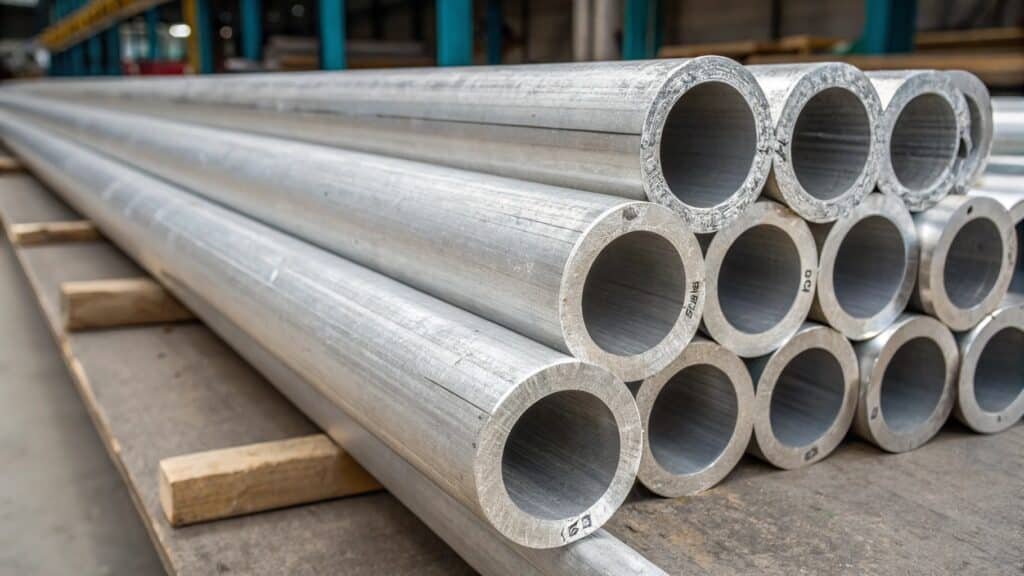
This is a critical point for reliability. Cracks almost always begin at a stress concentration point—a sharp corner, a surface scratch, or an internal defect like a void or inclusion. A cast part is full of microscopic voids from the cooling process. Each one is a potential starting point for a crack. When we forge aluminum, the intense pressure eliminates these voids, creating a solid, homogenous structure. More importantly, the aligned grain flow helps to distribute stress evenly across the component. Instead of stress concentrating at one point and starting a crack, it is shared along the continuous grain fibers. This property, known as fracture toughness, is dramatically higher in a forged part. It means the component can absorb more impact and resist fatigue far better, providing a safety margin that other processes simply cannot deliver.
What is the best aluminum for forging?
Choosing from dozens of aluminum alloys can be confusing. Selecting an alloy that isn't suited for forging can result in poor performance and wasted investment.
Heat-treatable alloys like 6061 and 7075 are the best for forging high-strength components. 6061 offers a great balance of strength and versatility, while 7075 provides one of the highest strength-to-weight ratios available.
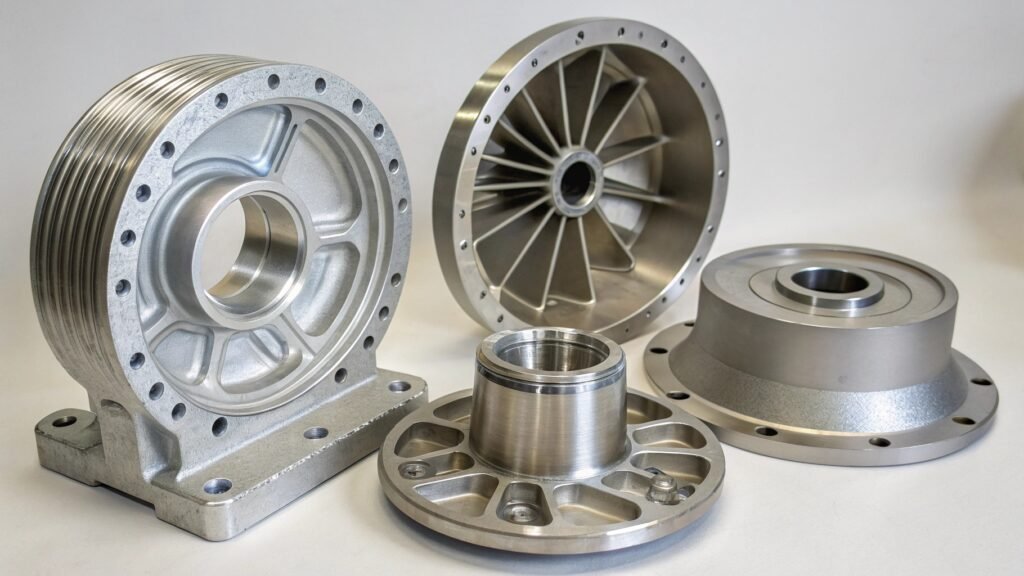
The "best" alloy always depends on the specific needs of your application. However, for the high-performance components our customers require, we almost always recommend alloys from the heat-treatable series. These alloys are designed to have their strength "unlocked" by a thermal treatment process after forging.
Key Forging Alloys We Recommend
| Alloy | Primary Characteristics | Typical Application |
|---|---|---|
| 6061 | Excellent all-around choice. Good strength, corrosion resistance, and machinability. | Industrial machinery, structural components, automotive parts. |
| 7075 | Very high strength, superior to many steels by weight. Excellent fatigue resistance. | Aerospace structural parts, high-stress industrial components. |
Our process is tailored to these materials. We use the forging process to create the optimal grain structure, and then we apply a precise heat treatment (like the T6 temper) to bring the material to its peak strength potential. This combination ensures you get a part that is not just strong, but reliably strong.
Is forged aluminum stronger than billet aluminum?
You might think a solid block of billet aluminum is the strongest starting point. But simply cutting a shape from it leaves its inherent structural weaknesses completely unaddressed.
Yes, unequivocally. A forged component is significantly stronger than the same part machined from a billet. Forging rearranges the grain structure to follow the part's contours, enhancing strength and fatigue resistance where it is needed most.
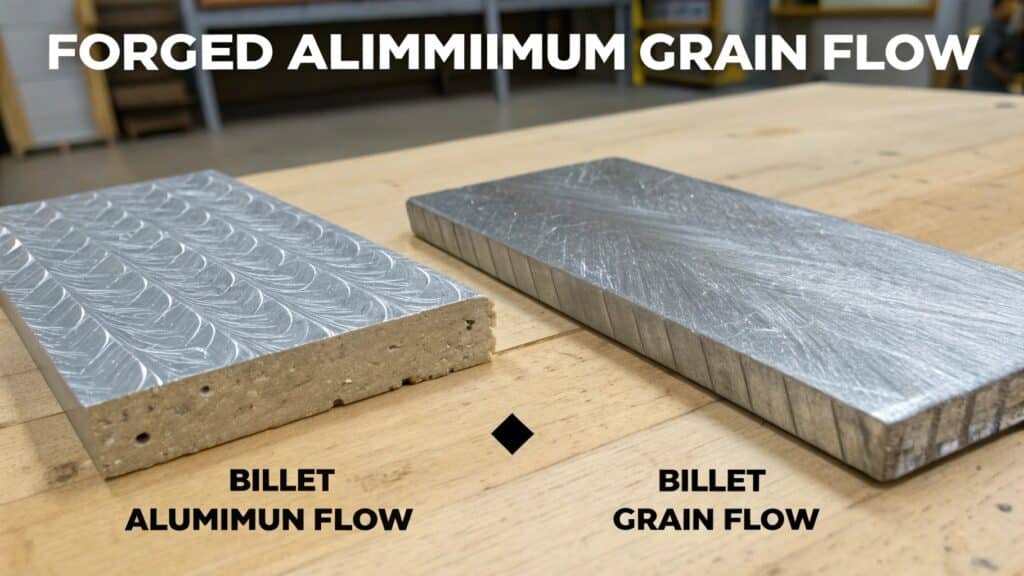
This is the most important concept I explain to my customers. Imagine a block of wood. If you need a strong L-shaped bracket, you wouldn't cut it so the corner goes against the grain; it would snap easily. You would want the grain to flow around the corner. Forging does exactly that for metal. When you machine a part from a billet, you are slicing right through the metal's natural grain structure. These severed grain ends become stress risers—weak points where fatigue cracks can form. Forging, on the other hand, is a process of deformation. We use pressure to make the metal's grain flow and conform to the shape of the die. This creates a continuous, unbroken grain structure that is oriented for maximum strength. The final part is stronger, tougher, and has a much longer service life.
Conclusion
Forging provides unmatched durability by optimizing the metal's grain structure. This results in superior strength and reliability, making it the ideal choice for any demanding application you have.