You hear the word "aluminum" and think it's one simple material. This leads to confusion when selecting the right grade, risking component failure and performance issues.
Virtually all aluminum products are actually alloys. Pure aluminum is a soft metal; an alloy is a mixture with other elements to drastically improve its strength, durability, and performance for specific applications.
I get this question a lot, and it gets to the very heart of what we do. People see a shiny metal part and call it "aluminum." But in my world, that's just the starting point. It’s aluminum with a purpose. Pure aluminum is a base ingredient; an alloy is an engineered solution, precisely formulated to create specific properties like extreme strength or corrosion resistance1. We don't just work with aluminum. We take these engineered solutions and forge them into components with guaranteed performance. Let's break down what that really means for your products.
Is aluminum an alloy or metal?
The terms "metal" and "alloy" are often used interchangeably. This creates confusion and makes it hard to understand material specifications and their real-world impact on your parts.
Aluminum is a pure metal, an element on the periodic table (Al). However, the aluminum used in any structural or industrial product is an alloy, which is a metal mixed with other elements.
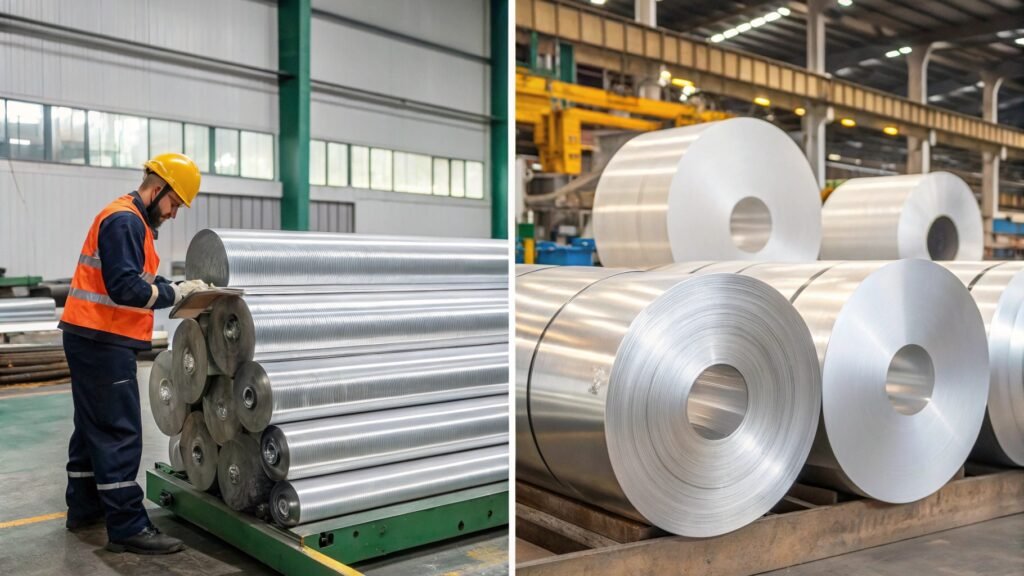
This is the most fundamental distinction. Think of aluminum as a basic ingredient, like flour. On its own, flour is just a powder. It's not very useful for building anything. But when you mix it with other ingredients—eggs, sugar, water—you create a cake or bread, something with structure and specific characteristics. Aluminum is the flour. It is a pure, naturally occurring metallic element. But it's also very soft and not very strong. To make it useful, we add other elements like magnesium, silicon, zinc, and copper. This new mixture is an "alloy." Each recipe, or alloy grade, is designed to produce a specific set of properties. So, while aluminum is a metal, the material you rely on is always an alloy.
Metal vs. Alloy: A Simple Breakdown
| Category | Pure Aluminum (The Metal) | Aluminum Alloy (The Solution) |
|---|---|---|
| Composition | Single element (Al) | A mixture of aluminum and other elements. |
| Strength | Low | Can be extremely high, depending on the alloying elements. |
| Primary Use | Electrical wiring, foil, chemical applications. | All structural, industrial, and high-performance uses. |
| Our Focus | The base material. | The engineered solution we forge into your components. |
Which is better, aluminium or aluminium alloy?
The word "pure" often sounds superior, leading you to believe it might be better. This misconception could lead to specifying a material that is completely unsuitable for your application's strength requirements.
For any application that requires strength, durability, or structural integrity, an aluminum alloy is always better. Pure aluminum is far too soft and weak for almost any practical engineering use.
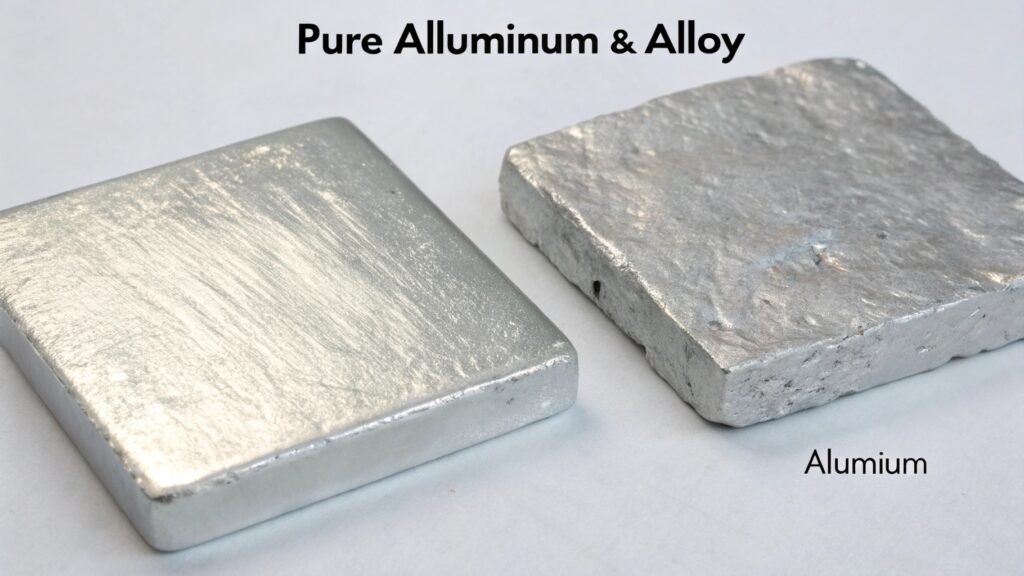
This is a question where the answer is completely one-sided. An alloy isn't just better; it's the only choice for the kind of work we do. Pure aluminum has a tensile strength of around 90 MPa. That’s very low. A common alloy like 6061-T62 has a strength of over 300 MPa, and a high-performance alloy like 7075-T6 can exceed 570 MPa. That’s over six times stronger than pure aluminum. Using pure aluminum for a structural part would be like building a bridge out of modeling clay. It simply wouldn't work. The purpose of creating an alloy is to take the beneficial properties of aluminum—its light weight and corrosion resistance—and add the one thing it lacks: strength. So, for any part that has to bear a load, resist impact, or hold its shape under stress, the alloy is not just better; it's essential.
Can aluminium be alloyed?
You know you need something stronger than basic aluminum. But you're not sure if it can be modified to meet the extreme performance demands of your industry, like aerospace or automotive.
Yes, absolutely. Alloying is the primary method used to make aluminum useful for engineering. By adding elements like copper, zinc, and magnesium, we create a vast range of materials with tailored properties.
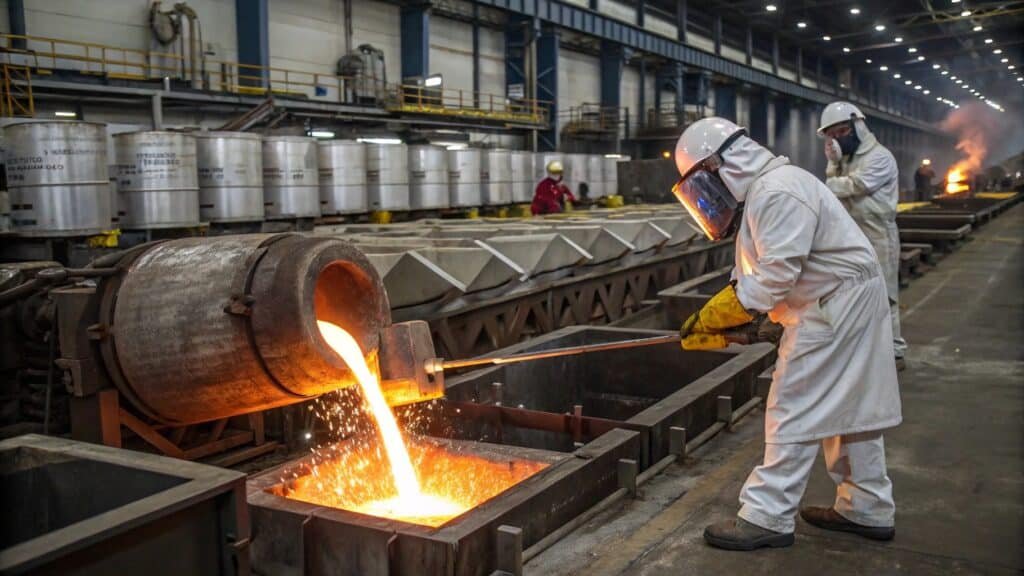
Alloying isn't just possible; it's the foundation of the modern aluminum industry. The entire system of aluminum grades—the 5xxx, 6xxx, 7xxx series numbers you see—is a classification of these different alloy recipes. Each series gets its primary characteristics from its main alloying element. For example, the 7xxx series, which we use for the highest-strength applications, uses zinc as its main ingredient. The 6xxx series uses magnesium and silicon to create a versatile, heat-treatable material perfect for a wide range of industrial parts. This ability to be alloyed is aluminum's greatest strength. It allows us metallurgists and engineers to act like master chefs. We can create a recipe that is perfect for a specific need, whether that's for a lightweight automotive suspension component or a massive, high-strength forged ring for industrial machinery.
Is an aluminum can an alloy?
You look at a simple, everyday object like a beverage can. It seems so basic and disposable, making you wonder if it's made from a "real" engineered material or just plain aluminum.
Yes, an aluminum can is a sophisticated product made from two different alloys. The body is an alloy designed for formability (like 3004), and the lid is a stronger alloy designed to withstand pressure (like 5182).
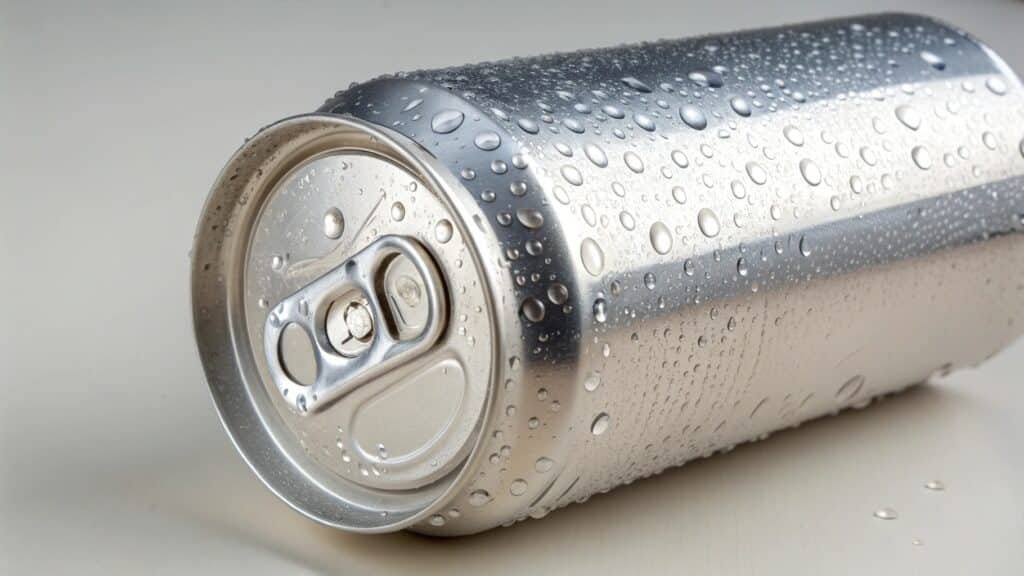
The humble aluminum can is a perfect example of high-volume, precision engineering. It looks simple, but it's a product of very specific material science. It is absolutely an alloy. In fact, it's typically made from two different alloys carefully chosen for their specific jobs. The main body of the can needs to be incredibly formable. It starts as a flat disc and is drawn up into its can shape in a fraction of a second without tearing. This requires an alloy from the 3xxx series, like 3004. The lid, however, has a different job. It needs to be much stronger to handle the pressure from the carbonation inside and to allow the tab to pop open cleanly. For this, a stronger 5xxx series alloy, like 5182, is used. This shows that even for the most common products, "just aluminum" is never the answer. It's always a specific alloy, or multiple alloys, engineered for the task.
Conclusion
Pure aluminum is a starting point; an alloy is an engineered solution. We take these precisely formulated alloys and forge them into components with the guaranteed performance and reliability your application demands.