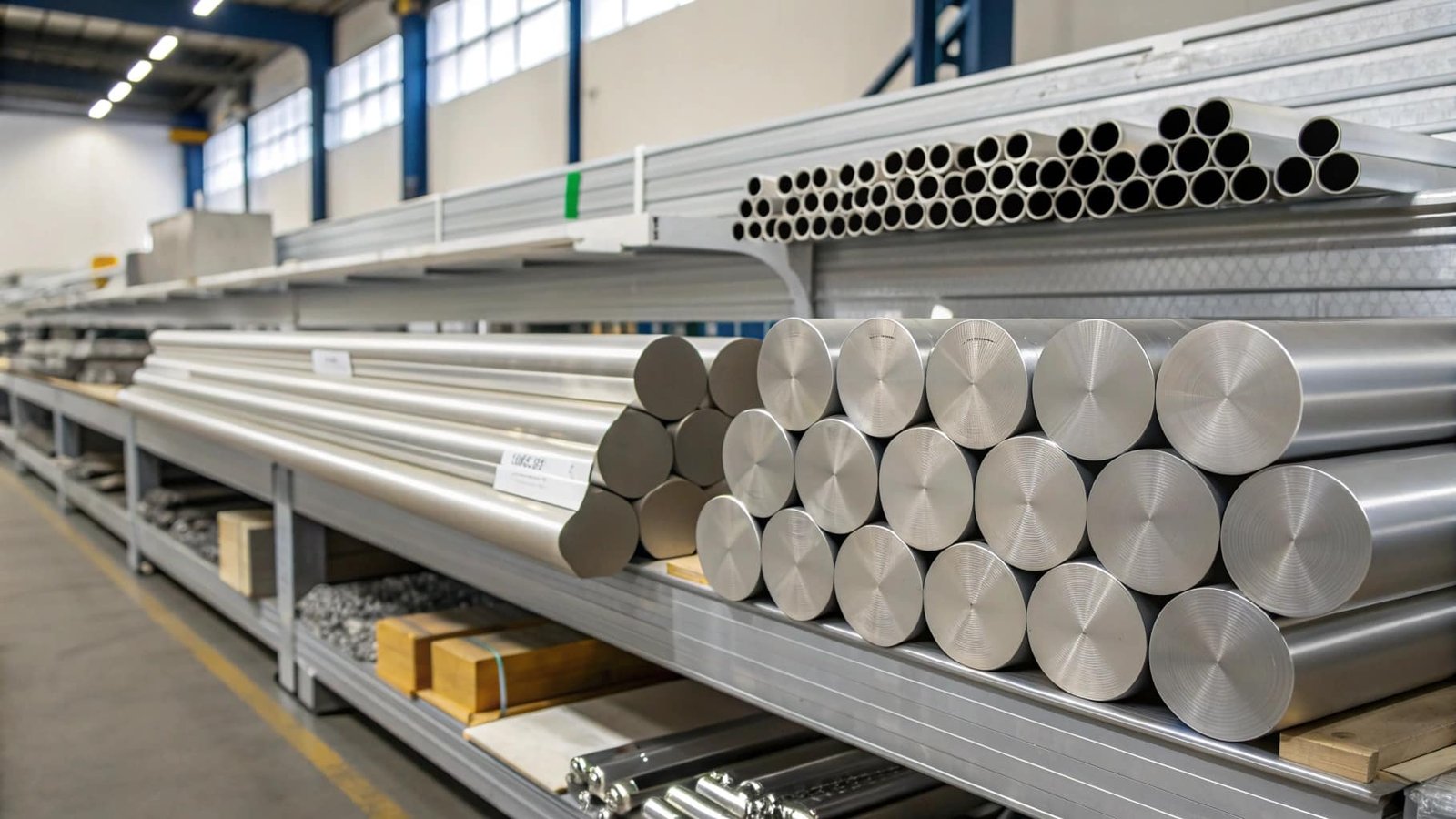
The 6000 series aluminum alloys are the workhorses of the aluminum world, offering a winning combination of strength, durability, and workability.
The 6000 series aluminum alloys are a highly versatile group characterized by their primary alloying elements of magnesium and silicon. These elements combine with aluminum to create heat-treatable alloys that offer a good balance of moderate strength, excellent corrosion resistance, and good formability. This blend of properties makes them incredibly adaptable to a wide range of applications, from architectural extrusions to automotive components and general engineering parts. Their natural corrosion resistance, coupled with their ability to be easily fabricated through processes like extrusion and forging, makes them a preferred choice for many industries. SWA Forging effectively utilizes the exceptional versatility of 6000 series aluminum, providing custom forged solutions for the construction, automotive, and general engineering sectors, where their reliable strength and corrosion resistance are highly valued.
At SWA Forging, we recognize the unique strengths of the 6000 series alloys. We harness their excellent combination of properties to create custom forged components, especially large-diameter rings and discs, tailored for industries like construction, automotive, and general manufacturing. Our expertise ensures that these reliable, corrosion-resistant materials are transformed into precision parts that meet the exact demands of your specific application, allowing us to build versatility into every forged piece.
What is 6000 series aluminum?
The 6000 series is a prominent designation in the world of aluminum alloys, known for a specific set of characteristics. What defines this particular series?
6000 series aluminum is a category of heat-treatable aluminum alloys where magnesium and silicon are the primary alloying elements. These additions allow the alloy to gain strength through heat treatment processes, specifically solution heat treatment followed by artificial aging. This makes them stronger than non-heat-treatable alloys like the 1xxx, 3xxx, and 5xxx series, while still maintaining good workability and excellent corrosion resistance. Commonly known alloys in this series include 6061 and 6063. 6061 is often considered a general-purpose alloy, famed for its combination of strength, corrosion resistance, weldability, and formability. 6063 is renowned for its excellent extrudability and superior surface finish after anodizing, making it ideal for architectural applications. The series provides a crucial balance of mechanical properties that makes it highly adaptable to diverse manufacturing needs.
| Characteristic | Description | Significance |
|---|---|---|
| Primary Alloying Elements | Magnesium (Mg) and Silicon (Si). | These elements form magnesium silicide (Mg2Si) in the aluminum matrix, which is key to their heat-treatable strengthening mechanism. |
| Heat Treatable | Yes. Can be significantly strengthened through processes like solution treatment and aging. | Allows for achieving a range of mechanical properties suitable for demanding structural and engineering applications. |
| Strength Level | Moderate to high strength, offering a good balance. Stronger than non-heat-treatable alloys but generally not as strong as high-end 7000 series alloys. | Provides sufficient strength for many structural components without the weight or cost penalties of higher-strength, more specialized alloys. |
| Corrosion Resistance | Excellent. Generally very good, especially compared to 7000 series and some 2000 series alloys. | Makes them suitable for outdoor applications, architectural uses, and environments where durability is key. |
| Formability & Weldability | Good. Can be easily formed, extruded, and welded. Weldability is good, though post-weld heat treatment may be needed to restore full strength. | Facilitates manufacturing processes and the creation of complex shapes and assemblies. |
| Common Alloys | 6061, 6063, 6082. | These specific alloys offer slight variations in properties, catering to different nuances in application requirements. |

At SWA Forging, we leverage the balanced profile of 6000 series alloys. We take these highly formable and corrosion-resistant materials and, through our forging expertise, enhance their strength and mechanical properties to create custom components that are reliable for construction, automotive, and a multitude of general engineering tasks, embodying the true versatility of this series.
What is the versatility of aluminum?
Aluminum's widespread use is a testament to its remarkable adaptability. What are the key characteristics that contribute to aluminum's exceptional versatility across so many industries?
Aluminum's versatility stems from a unique combination of physical and chemical properties that make it suitable for an astonishing array of applications. First and foremost is its low density, making it significantly lighter than steel, which is crucial for fuel efficiency in transportation and ease of handling in many products. It boasts excellent corrosion resistance1, forming a protective oxide layer that shields it from many environmental elements, contributing to longevity and low maintenance. Furthermore, aluminum is highly conductive, both thermally and electrically, finding use in heat sinks and power transmission lines. Its excellent formability allows it to be easily extruded, rolled, cast, and forged into complex shapes, enabling intricate designs. While not as strong as steel in its pure form, alloying aluminum creates variants with remarkable strength, rivaling some steels (like the 7000 series), while still maintaining a low density. Lastly, aluminum is highly recyclable without losing its properties, making it an environmentally conscious choice. This spectrum of traits allows aluminum to be tailored for everything from delicate packaging to robust aerospace components.
| Versatile Property | Description | Impact on Applications |
|---|---|---|
| Lightweight (Low Density) | Aluminum is about one-third the density of steel. | Essential for fuel-efficient vehicles (cars, planes), portable electronics, and products requiring easy manual handling. |
| Corrosion Resistance | Forms a passive aluminum oxide layer (Al2O3) that protects against oxidation and chemical attack. | Ideal for outdoor applications, marine environments, building facades, window frames, and food packaging, ensuring long-term durability. |
| Good Conductivity | Exhibits good thermal and electrical conductivity. | Used in cookware for even heating, heat sinks in electronics for efficient heat dissipation, and electrical power transmission lines due to its conductive and lightweight nature compared to copper. |
| Excellent Formability | Can be easily extruded, rolled, cast, and forged into complex shapes without significant loss of properties. | Enables the creation of intricate designs such as window frames, automotive parts, aircraft structures, and beverage cans through various manufacturing processes. |
| Strength (with Alloying) | While pure aluminum is soft, alloying significantly enhances its strength, with some alloys rivalling steel in strength-to-weight ratio. | Allows for structural applications in aerospace, automotive chassis, and heavy machinery where both lightness and strength are critical. |
| Recyclability | Aluminum can be recycled repeatedly with significant energy savings (up to 95%) compared to primary production. | Promotes sustainability and reduces environmental impact, making it a preferred material for eco-conscious manufacturing and products. |
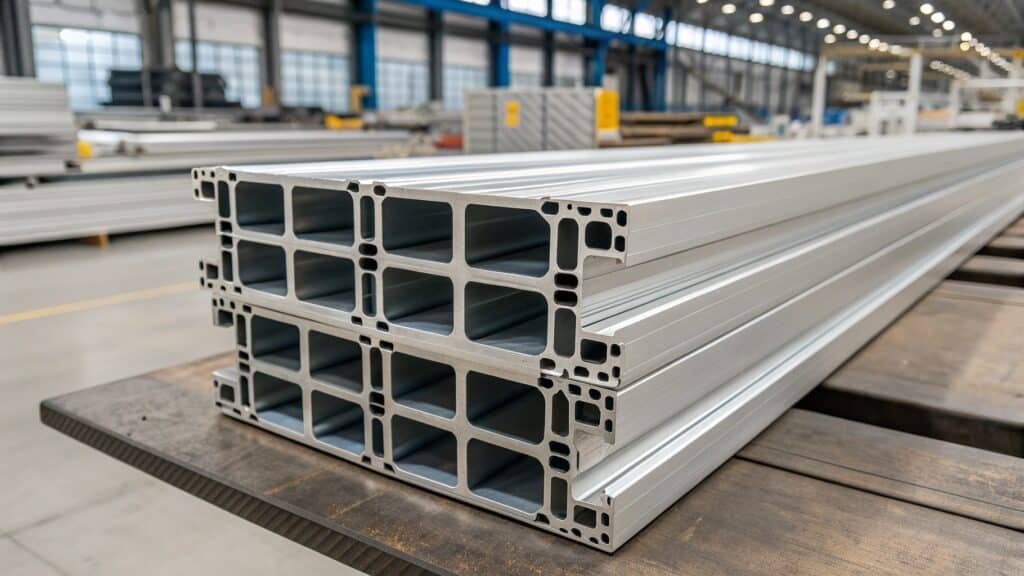
At SWA Forging, we focus on maximizing aluminum's versatility through precision forging. Whether it's leveraging the formability and corrosion resistance of the 6000 series or the extreme strength of the 7000 series, our goal is to tailor components that precisely meet the unique demands of diverse industries. We transform the inherent versatility of aluminum into robust, custom-engineered forged parts, contributing to its widespread industrial utility.
What alloying elements are added to aluminium to create a 6000 series?
The specific composition of an aluminum alloy dictates its properties. For the 6000 series, which elements are key to defining its characteristics?
The defining alloying elements added to aluminum to create the 6000 series are magnesium (Mg) and silicon (Si). These two elements are crucial because when alloyed with aluminum, they form magnesium silicide (Mg2Si). This compound is the basis for the heat-treatability of the 6000 series alloys. Through a process called precipitation hardening (or age hardening), the Mg2Si particles become finely dispersed within the aluminum matrix during heat treatment, significantly increasing the alloy's strength. Aluminum 6061, for instance, typically contains around 0.8-1.2% magnesium and 0.4-0.8% silicon. Other trace elements like copper, iron, and manganese may also be present in small amounts, fine-tuning specific properties such as strength, machinability, or corrosion resistance, but magnesium and silicon remain the defining additions for this series.
| Primary Alloying Element | Secondary Alloying Element | Resulting Strengthening Mechanism | Typical Addition Levels (Weight %) | Key Series Characteristics Enabled |
|---|---|---|---|---|
| Magnesium (Mg) | Silicon (Si) | Formation of Mg2Si precipitates upon heat treatment. | Mg: 0.4-2.0% Si: 0.3-2.0% |
Heat treatability, moderate to high strength, excellent corrosion resistance. |
| Copper (Cu) - Trace | Iron (Fe) - Trace | Can slightly influence strength and machinability. | Cu: ≤ 0.4% Fe: ≤ 0.7% |
Fine-tuning properties for specific applications. |
| Manganese (Mn) - Trace | Chromium (Cr) - Trace | Aids in grain refinement and corrosion resistance. | Mn: ≤ 0.15% Cr: ≤ 0.25% |
Improved mechanical properties and environmental durability. |
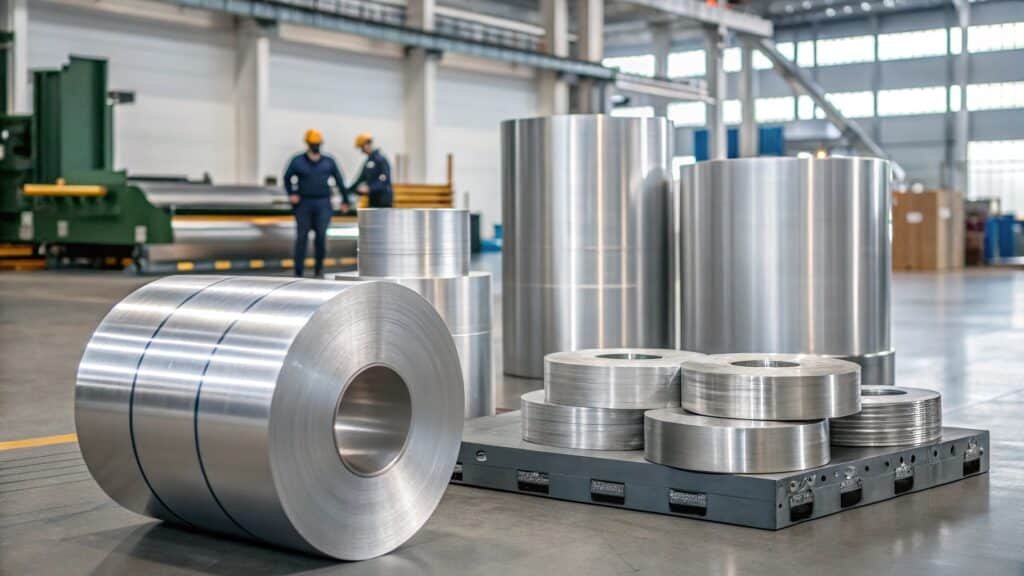
At SWA Forging, we understand the precise chemical makeup behind each aluminum alloy. For the 6000 series, we know that the specific ratios of magnesium and silicon, along with trace elements, dictate the material's response to heat treatment and forging. This understanding allows us to precisely control our processes to achieve the optimal strength and corrosion resistance required for your custom forged components in construction, automotive, and engineering applications.
What is the difference between 6000 series and 7000 series aluminium?
While both are heat-treatable and offer good strength, the 6000 and 7000 series aluminum alloys cater to different performance needs. What are their fundamental distinctions?
The primary difference between 6000 series and 7000 series aluminum alloys lies in their principal alloying elements and the resulting mechanical properties, particularly strength and corrosion resistance. The 6000 series alloys, like 6061 and 6063, are primarily alloyed with magnesium and silicon. This combination results in alloys with a good balance of moderate strength, excellent corrosion resistance, good weldability, and excellent formability, making them highly versatile for general engineering, automotive, and architectural applications. In contrast, the 7000 series alloys, such as 7075, are primarily alloyed with zinc, often with magnesium and copper also present in significant amounts. This composition is designed to achieve exceptionally high tensile and yield strength, positioning them as the strongest aluminum alloys available. This superior strength, however, typically comes at the cost of reduced corrosion resistance and more challenging weldability compared to the 6000 series alloys. Therefore, 6000 series is chosen for its balanced properties and durability, while 7000 series is selected for applications demanding the absolute highest strength and fatigue resistance, often in aerospace and high-performance equipment.
| Feature | 6000 Series Aluminum | 7000 Series Aluminum | Key Distinction & Application Focus |
|---|---|---|---|
| Primary Alloying Elements | Magnesium (Mg) and Silicon (Si). | Zinc (Zn), often with Magnesium (Mg) and Copper (Cu). | Different alloying elements lead to distinct strength and corrosion profiles. |
| Strength | Moderate to High strength (e.g., 6061-T6 UTS ~310 MPa). | Very High to Ultra-High strength (e.g., 7075-T6 UTS ~570+ MPa). | 7000 Series offers significantly higher strength, targeting applications where weight savings at extreme load conditions are critical. |
| Corrosion Resistance | Excellent. | Fair to Good (generally lower than 6000 series). | 6000 Series is preferred for outdoor or corrosive environments due to its superior natural resistance without extensive coatings. |
| Weldability | Good (can be welded, though post-weld heat treatment might be needed). | Poor (welding significantly weakens the alloy). | 6000 Series is easier to fabricate in welded assemblies; 7000 Series typically relies on mechanical fasteners for joining. |
| Formability | Excellent. | Moderate. | 6000 Series is easier to shape and extrude, making it popular for complex architectural and automotive profiles. |
| Primary Applications | Construction (architectural extrusions), Automotive parts, General engineering, Bicycle frames. | Aerospace structures, high-stress sporting goods, defense equipment, critical structural components. | 6000 Series for balanced performance and ease of fabrication; 7000 Series for ultimate performance in critical, high-stress applications. |
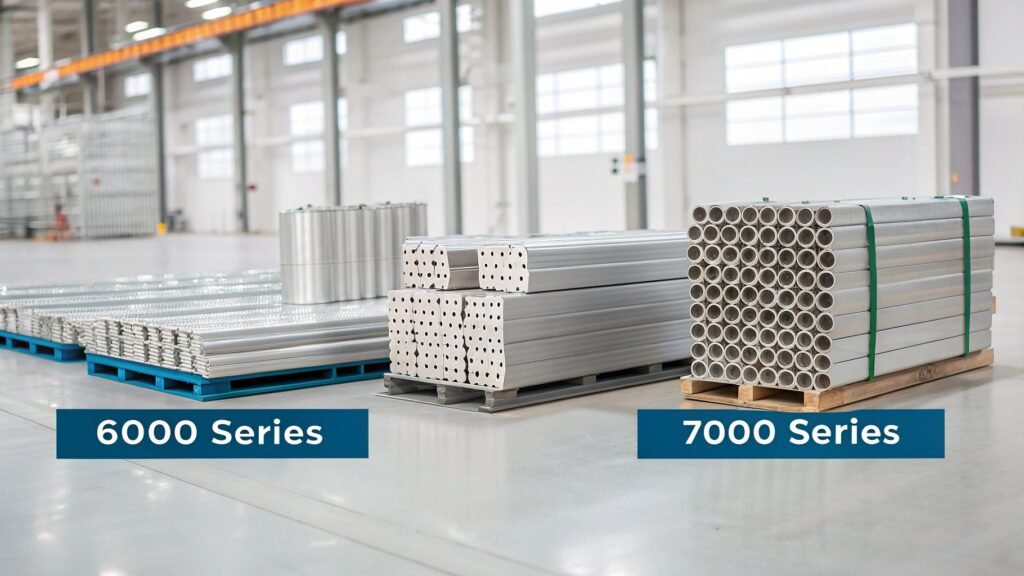
At SWA Forging, we understand when to deploy the dependable versatility of the 6000 series and when the extreme demands call for the unparalleled strength of the 7000 series. We apply our forging expertise to optimize the specific properties of each series, whether it's ensuring reliable strength and corrosion resistance for a 6000 series component in construction or maximizing the fatigue resistance of a 7000 series part for aerospace, always providing the right material for the critical job.
Conclusion
6000 series aluminum offers a versatile balance of strength, corrosion resistance, and formability due to magnesium and silicon alloying, making it ideal for construction and automotive uses, distinct from the high-strength, lower-corrosion 7000 series, with SWA Forging expertly forging both.
-
Understand the significance of corrosion resistance in aluminum alloys for durability and longevity in applications. ↩