
1. Material Composition & Manufacturing Process
5052 aluminum alloy (ASTM B209, AMS 4015) is a non-heat-treatable Al-Mg alloy optimized for exceptional corrosion resistance and good formability. The forged plate variant offers enhanced mechanical properties through controlled deformation processing:
- Alloy Chemistry:
- Magnesium (Mg): 2.2-2.8% (solid solution strengthening)
- Chromium (Cr): 0.15-0.35% (corrosion resistance enhancer)
- Iron (Fe): ≤0.40% max
- Silicon (Si): ≤0.25% max
- Base Material:
- Aluminum (Al): ≥96.5% (balance)
- Controlled Impurities:
- Copper (Cu): ≤0.10% max
- Zinc (Zn): ≤0.10% max
- Manganese (Mn): ≤0.10% max
Specialized Forging Process:
- Cast Ingot Production: 650-690°C melt temperature
- Homogenization: 540-560°C for 10-18 hours
- Preheating: 400-450°C for 1.5-2.5 hours
- Open Die Forging:
- Initial Deformation: 425-450°C
- Final Passes: 350-400°C
- Deformation Ratio: 3:1 to 5:1
- Controlled Cooling: 30-50°C/hour to ambient
- Stress Relief: 290-315°C for 1-2 hours
- Precision Machining: Custom tolerances
Produced under ISO 9001:2015 quality system with full material traceability.
2. Mechanical Properties of Forged 5052 Plate
| Property | Minimum | Typical | Test Standard | Advantage Over Rolled Plate |
| Ultimate Tensile Strength | 215 MPa | 230-260 MPa | ASTM B557 | 10-15% higher strength |
| Yield Strength (Rp0.2) | 170 MPa | 180-210 MPa | ASTM B557 | Improved through-thickness properties |
| Elongation (50mm gauge) | 12% | 16-20% | ASTM B557 | Better isotropic ductility |
| Shear Strength | 140 MPa | 150-170 MPa | ASTM B769 | Enhanced edge properties |
| Fatigue Strength (10⁷) | 130 MPa | 140-150 MPa | ASTM E466 | 15-20% superior fatigue resistance |
| Hardness (Brinell) | 60 HB | 68-75 HB | ASTM E10 | Uniform hardness profile |
| Impact Energy (Charpy) | 22 J | 25-30 J | ASTM E23 | Improved toughness |
| Modulus of Elasticity | 70.3 GPa | 71-72 GPa | ASTM E111 | Consistent elastic response |
| Compressive Yield | 180 MPa | 190-215 MPa | ASTM E9 | Better bearing capacity |
3. Forging Microstructure Control
Precision Forging Parameters:
- Forging Ratio (Total Reduction):
- Minimum: 3:1
- Optimal: 4.5:1
- Maximum: 6:1
- Forging Direction Control:
- Multi-directional deformation
- Minimum 15% reduction in secondary direction
- Temperature Profile:
- Starting: 425-450°C
- Final: 350-380°C
- Cooling Rate: Controlled air cool
Microstructural Characteristics:
- Grain Size: ASTM 6-8 (20-45μm)
- Grain Structure: Equiaxed with minimal elongation
- Intermetallic Phases:
- Al₃Fe dispersoids
- Al₈Mg₅ particles (controlled size)
- Dislocation Density: 5-7×10¹⁰/cm²
- Recrystallization Fraction: 90-100%
- Texture: Randomized crystallographic orientation
- Grain Boundary Engineering: Enhanced high-angle boundaries
4. Dimensional Specifications & Tolerances
| Parameter | Standard Range | Premium Tolerance | Commercial Tolerance |
| Thickness | 10-200 mm | ±0.5 mm | ±1.0 mm |
| Width | 600-2500 mm | ±3 mm | ±5 mm |
| Length | 1000-4000 mm | ±5 mm | ±10 mm |
| Flatness | N/A | 0.2% of diagonal | 0.5% of diagonal |
| Surface Roughness | N/A | 3.2 μm Ra max | 6.4 μm Ra max |
| Corner Radius | 2-5 mm | ±1 mm | ±2 mm |
| Edge Straightness | N/A | 0.5 mm/m | 1.0 mm/m |
Special Capabilities:
- Tapered Thickness: Up to 4:1 ratio
- Contoured Surfaces: 3D profiling available
- Near-Net Shape Options: Reduced machining allowance
- Integral Features: Bosses, pads, and ribs possible
- Weight Formula: Thickness(mm) × Width(m) × Length(m) × 2.68 = Weight(kg)
5. Corrosion Resistance Performance
| Environment | Performance | Corrosion Rate | Protection Method |
| Marine Atmosphere | Excellent | <0.05 mm/yr | Anodizing (Type II) |
| Fresh Water | Excellent | Negligible | None required |
| Salt Spray (ASTM B117) | Very Good | 1000+ hours | Chemical conversion |
| Industrial Exposure | Excellent | <0.1 mm/yr | Clear coat sealing |
| Stress Corrosion | Excellent | Immune at yield | None required |
| Galvanic Compatibility | Good | Isolation needed | Insulating washers |
| Crevice Corrosion | Good | Low tendency | Design optimization |
Surface Enhancement Options:
- Anodizing:
- Type II (Sulfuric): 10-25μm
- Type III (Hard): 25-75μm
- Boric-Sulfuric: 5-15μm
- Chemical Conversion:
- Chromate (MIL-DTL-5541)
- Trivalent chromium
- Titanium-zirconium systems
- Mechanical Treatments:
- Shot peening (8-12 Almen)
- Brush finishing
- Bead blasting
6. Machining & Fabrication Performance
| Operation | Tool Material | Recommended Parameters | Surface Quality |
| Milling | HSS-Co, Carbide | Vc=350-450 m/min, fz=0.2 mm | Ra 0.8-2.5 μm |
| Drilling | Carbide drills | Vc=80-120 m/min, fn=0.2 mm/rev | H8 tolerance |
| Turning | PCD inserts | Vc=500-800 m/min | Ra 0.4-1.6 μm |
| Tapping | HSS-E taps | Vc=15-25 m/min | Good thread profile |
| Sawing | Carbide-tipped | 60-80 m/min, 2-4 teeth engaged | Clean edge |
| Waterjet Cutting | Garnet abrasive | 3800 bar, 0.4-0.8 kg/min | ±0.1 mm tolerance |
Forming Characteristics:
- Bend Radius (Minimum): 1.0t (t=thickness)
- Elongation Capacity: 15-20% uniform strain
- Springback Factor: 0.93-0.96
- Cold Working Limit: 15-18% strain hardening
- Hot Forming: 260-370°C recommended
- Post-Form Treatment: None required
7. Welding & Joining Technologies
Recommended Welding Processes:
- Gas Tungsten Arc Welding (GTAW):
- Filler: ER5356 or ER5183
- Shielding: 100% Argon
- Pre-weld Cleaning: Essential
- Gas Metal Arc Welding (GMAW):
- Filler: ER5356
- Shielding: Argon + 30% Helium
- Mode: Pulse spray transfer
- Friction Stir Welding (FSW):
- Tool RPM: 800-1200
- Feed Rate: 200-400 mm/min
- Tool Material: H13 steel
Mechanical Joining Methods:
- Self-Piercing Rivets: Excellent compatibility
- Flow-Drill Screwing: Good for thin sections
- Adhesive Bonding: Excellent with epoxy systems
- Clinching: Good formability allows successful joints
Post-Weld Treatment:
- Stress Relief: 175-200°C for 1 hour
- PWHT: Not required (non-heat treatable)
- Dressing: Recommended for fatigue applications
- Inspection: Dye penetrant for critical joints
8. Physical Properties for Engineering Design
| Property | Value | Application Significance |
| Density | 2.68 g/cm³ | Lightweight structural design |
| Melting Range | 605-650°C | Process temperature limitation |
| Thermal Conductivity | 138 W/m·K | Heat sink applications |
| Electrical Conductivity | 35% IACS | Electrical enclosures |
| Specific Heat | 880 J/kg·K | Thermal management design |
| CTE (20-100°C) | 23.8 ×10⁻⁶/K | Expansion joint calculation |
| Modulus of Elasticity | 70.3 GPa | Deflection analysis |
| Poisson's Ratio | 0.33 | FEA simulation parameter |
| Damping Capacity | 0.002-0.003 | Vibration control applications |
9. Quality Control & Certification
Testing Protocol:
- Chemical Analysis: Optical emission spectroscopy
- Mechanical Testing:
- Full tensile test suite (L, LT, ST directions)
- Hardness mapping across section
- Microstructure Evaluation:
- Grain size determination
- Inclusion rating
- Intermetallic phase analysis
- Non-Destructive Testing:
- Ultrasonic per ASTM B594
- Dye penetrant for surface defects
- X-ray for critical applications
- Dimensional Inspection:
- CMM verification of critical dimensions
- 3D laser scanning for complex geometries
- Surface profile measurement
Available Certifications:
- ISO 9001:2015 Quality Management
- AS9100D Aerospace Standard
- NORSOK M-650 for Marine Applications
- NACE MR0175/ISO 15156 Compliance
- PED 2014/68/EU for Pressure Equipment
- Lloyd's Register Material Certification
- DNV-GL Material Approval
- Material Test Certificate EN 10204 3.1/3.2
10. Industrial Applications & Handling
Primary Applications:
- Marine components and fittings
- Chemical processing equipment
- Transportation structures
- Food processing equipment
- Architectural components
- Pressure vessel nozzles and flanges
- Semiconductor manufacturing equipment
- Military hardware components
- Valve bodies and pump housings
- Railway vehicle structures
Material Handling Guidelines:
- Lifting & Transport:
- Use wide nylon slings
- Avoid chain contact with surface
- Support large plates fully
- Prevent moisture accumulation
- Storage Requirements:
- Store in dry environment (<65% RH)
- Avoid contact with steel materials
- Use neutral pH packing materials
- Store vertically when possible
- Surface Protection:
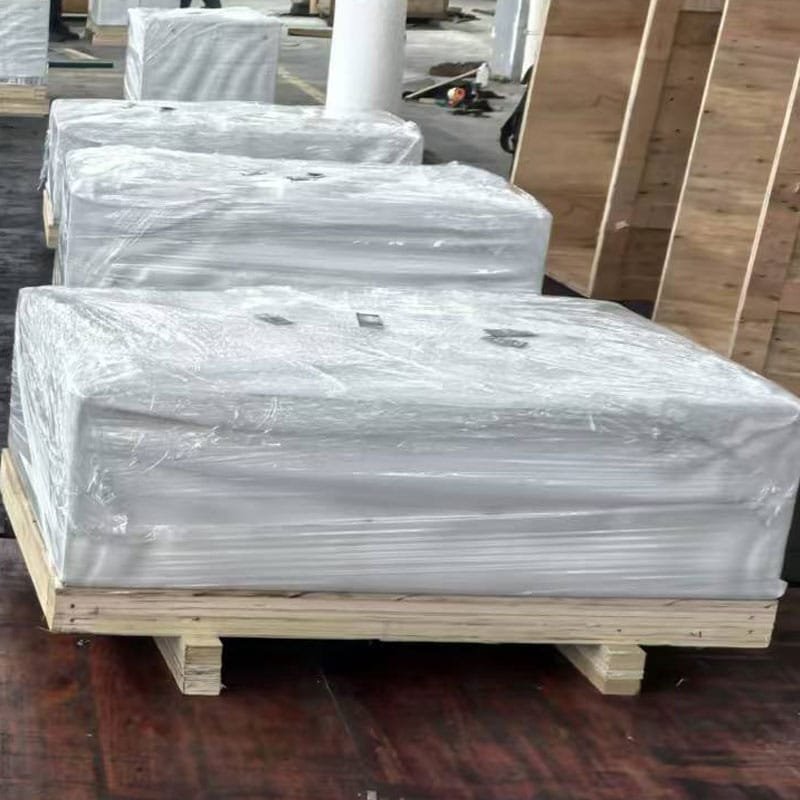
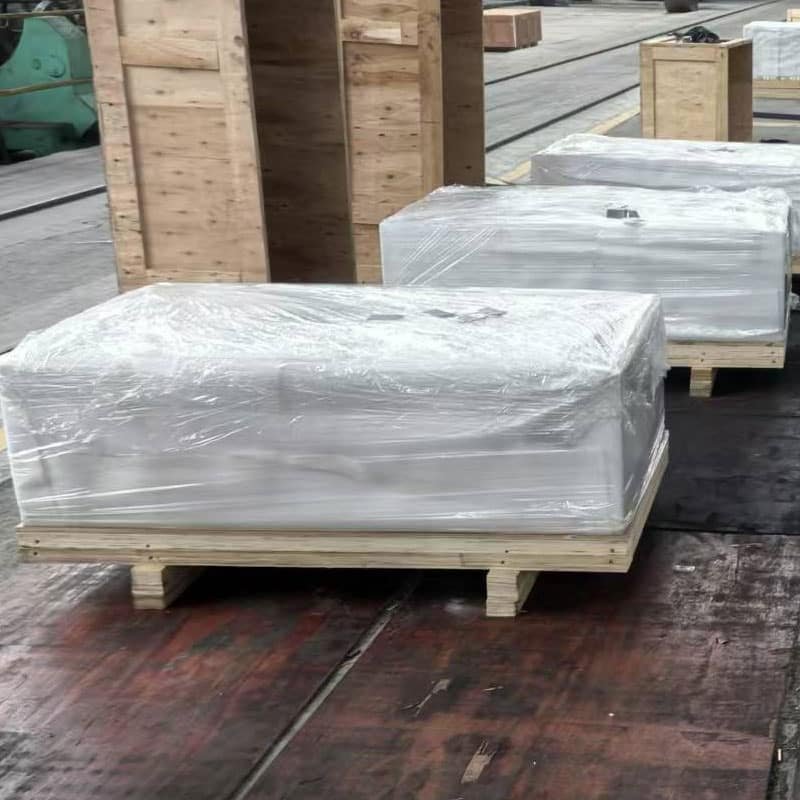
- Protective film application
- Interleaving with pH-neutral paper
- VCI (volatile corrosion inhibitors)
- Edge protectors during transport
- Machining Preparation:
- Acclimatize to shop temperature
- Clean with non-alkaline detergents
- Use dedicated aluminum tooling
- Apply cutting fluid specifically for aluminum
11. Forged vs. Rolled Plate Comparison
Mechanical Property Advantages:
- Improved through-thickness properties
- Reduced directional variation (anisotropy)
- Enhanced fatigue performance (15-20%)
- Superior machinability and tool life
- Better dimensional stability in service
Microstructural Benefits:
- Refined grain structure
- Reduced porosity (<0.5%)
- Controlled intermetallic distribution
- Minimized segregation effects
- Favorable crystallographic textures
Performance Differentiators:
- Higher damage tolerance
- Improved stress corrosion resistance
- Enhanced dynamic load capacity
- Better high-temperature property retention
- Superior resistance to cyclic deformation
12. Sustainability & Environmental Considerations
Material Production Metrics:
- Embodied Energy: 165-180 MJ/kg
- Carbon Footprint: 9.5-11 kg CO₂e/kg
- Recycled Content: Up to 75% available
- Water Usage: 11-15 m³/metric ton
- Recyclability: 100% with no degradation
- RoHS Compliance: Full compliance certified
- REACH Status: No SVHC substances
Life Cycle Considerations:
- Service Life: 25-40+ years in marine environments
- Maintenance: Minimal requirements
- End-of-Life: High scrap value and recycling efficiency
- Energy Recovery: 95% energy saving vs. primary production
- Disposal Impact: Non-toxic, non-hazardous classification