
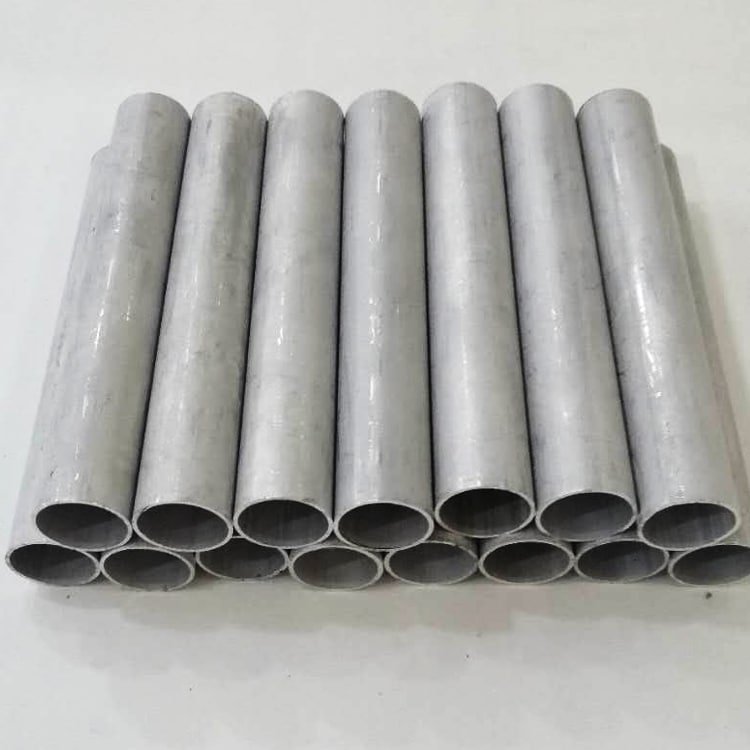
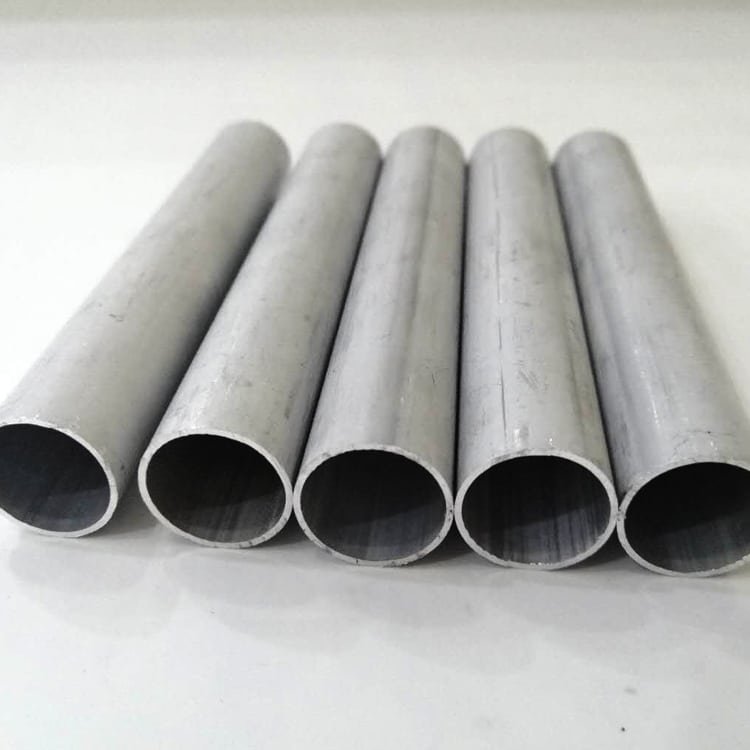
1. Material Composition & Standards
Conforming to ASTM B210, AMS 4151, and ISO 6361-2 standards, 6061-T6 aluminum tubing features a magnesium-silicon alloy formulation optimized for structural applications:
- Primary Elements:
- Magnesium (Mg): 0.8-1.2% (forms Mg₂Si precipitates)
- Silicon (Si): 0.4-0.8% (enhances strength and fluidity)
- Copper (Cu): 0.15-0.40% (improves machinability)
- Base Material:
- Aluminum (Al): ≥97.0% (balance)
- Impurity Limits:
- Iron (Fe): ≤0.70%
- Chromium (Cr): 0.04-0.35%
- Zinc (Zn): ≤0.25%
- Manganese (Mn): ≤0.15%
Third-party verification per NADCAP AC7117 ensures chemical consistency with max 5% deviation in key elements. The balanced Mg:Si ratio (1.73:1) enables optimal precipitate formation during T6 heat treatment. Complies with SAE J454, AMS-QQ-A-200/2, and ASTM B241 for pressure applications.
2. Strength Performance
6061-T6 demonstrates superior structural efficiency for load-bearing applications:
| Property | Value | Test Standard |
| Tensile Strength (Rm) | 310-330 MPa | ASTM E8 |
| Yield Strength (Rp0.2) | 275-290 MPa | ASTM E8 |
| Elongation at Break (%) | 10-15% | ASTM E8 |
| Shear Strength | 207 MPa | ASTM B769 |
| Compressive Yield | 285 MPa | ASTM E9 |
| Fatigue Endurance (10⁷ cycles) | 95-110 MPa | ISO 1099 |
| Fracture Toughness | 29 MPa√m | ASTM E399 |
| Hardness (Rockwell B) | 60-65 HRB | ASTM E18 |
Maintains 85% room temperature strength at 150°C and exhibits excellent impact toughness of 20J at -40°C.
3. Heat Treatment Process
The T6 temper sequence follows precisely controlled parameters:
Solution Treatment:
- 530°C ±10°C for 60-90 minutes (homogenization)
- Atmosphere: Nitrogen-protected furnace (±5°C uniformity)
Rapid Quenching:
- Water quenching at >200°C/sec cooling rate
- Quench delay: <15 seconds maximum
Artificial Aging:
- 175°C ±5°C for 8-10 hours
- Cooling method: Forced air (≥10°C/min rate)
Microstructural Features:
- Grain size: ASTM 5-6 (20-50μm)
- Precipitate distribution: β" (Mg₅Si₆) phase dominant
- Dislocation density: 10⁸/cm²
- Secondary phase particles: <0.5% volume fraction
Reheating above 250°C causes overaging with 15% strength reduction. Stress relief required after severe forming: 345°C for 1 hour + re-aging.
4. Dimensions & Customization
Manufactured to structural engineering tolerances:
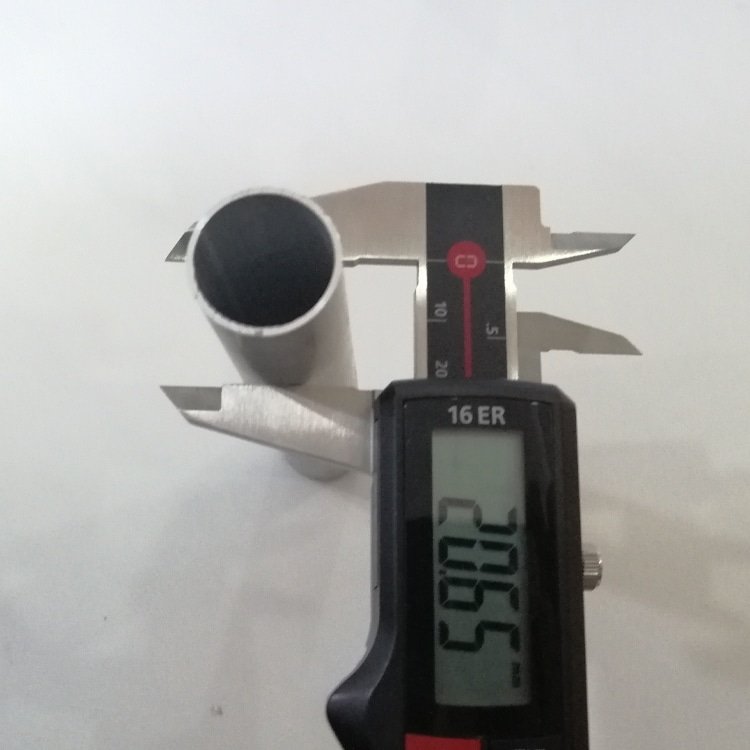
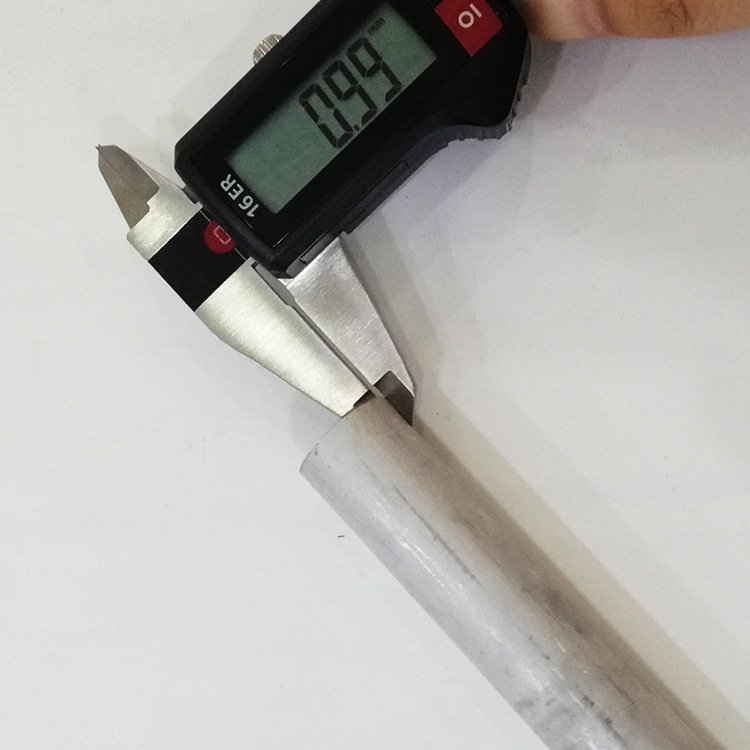
| Parameter | Standard Range | Precision Tolerance | Custom Options |
| Outer Diameter | 6-500 mm | ±0.1% OD | Rectangular profiles |
| Wall Thickness | 0.8-25 mm | ±7% WT | Variable wall transitions |
| Length | 1-12 m | +0/-3 mm | Up to 20m lengths |
| Straightness | - | 0.5 mm/m max. | ±0.2 mm/m |
| Ovality | - | ≤0.75% TIR | ≤0.3% TIR |
| Bend Radius (min) | 2.0× OD | - | Tight radius: 1.2× OD |
Fabrication Services:
- Precision rotary draw bending (max 180°)
- CNC end forming for complex joints
- Hydroforming for non-circular sections
- Notching and coping for truss systems
- Anodizing per MIL-A-8625 Type II
5. Corrosion Resistance Properties
Environmental Performance Data
| Environment | ISO 9223 Rating | Corrosion Rate (μm/yr) | Protection Recommendation |
| Rural Atmosphere | RC2 (Good) | <3 μm/yr | Architectural anodizing |
| Coastal Exposure | RC3 (Fair) | 10-15 μm/yr | PVDF coating systems |
| Industrial Area | RC4 (Moderate) | 15-30 μm/yr | Ceramic-epoxy lining |
| Alclad 6061 | RC1 (Excellent) | <1 μm/yr | 10% clad layer |
Protection Methods:
- Anodizing:
- Sulfuric acid (Type II): 15-25μm thickness
- Hard anodizing (Type III): 50-70μm (>60 HRC)
- Organic Coatings:
- Fluoropolymer coatings: 25-50μm DFT
- Polyester powder coating: 60-80μm
- Chemical Treatments:
- Chromate conversion (MIL-DTL-5541)
- Plasma electrolytic oxidation (PEO)
6. Machinability Characteristics
Optimization Parameters
| Operation | Tool Material | Speed (m/min) | Feed (mm/rev) | Notes |
| Turning | Carbide K10 | 300-500 | 0.15-0.30 | 7° positive rake |
| Milling | Carbide K20 | 250-450 | 0.06-0.18 | Climb milling |
| Drilling | TiAlN Coated | 60-100 | 0.05-0.12 | 140° point angle |
| Tapping | HSS-Co8 | 10-15 | Pitch matched | 70% thread depth |
Machining Performance:
- Machinability rating: 80% (baseline: 2011-T3=100%)
- Surface finish achievable: Ra 0.4μm
- Built-up edge tendency: Low (Grade 2 per ISO 3685)
- Chip characteristics: Continuous chips requiring breakers
- Coolant requirements: Soluble oil 5-8% concentration
- Dimensional stability: <0.02mm thermal expansion at 100°C
7. Weldability & Joining Methods
Gas Tungsten Arc Welding (GTAW) Recommended
Requires strict heat control to preserve properties:
Fusion Welding Parameters
- Filler alloys: ER4043 (AlSi5) or ER5356 (AlMg5)
- Interpass temperature: <65°C
- Preheat: Optional for >6mm thickness
- Post-weld aging: 175°C/4hrs to restore properties
Alternative Joining
- Friction Stir Welding:
- Rotation: 800-1200 RPM
- Traverse: 50-200 mm/min
- Adhesive Bonding:
- Epoxies: FM73 (22-28 MPa shear)
- Surface prep: Chromate conversion
- Mechanical Fastening:
- Blind rivets: Stainless steel mandrel
- Flow drill screws: Up to 800N axial load
- Joining sleeves: 150% tube strength retention
8. Physical Properties
| Property | Value | Test Standard |
| Density | 2.70 g/cm³ | ASTM B311 |
| Thermal Conductivity (25°C) | 167 W/m·K | ASTM E1461 |
| CTE (20-100°C) | 23.6 μm/m·°C | ASTM E228 |
| Electrical Resistivity | 42 nΩ·m | ASTM B193 |
| Modulus of Elasticity | 68.9 GPa | ASTM E111 |
| Fatigue Strength Coefficient | 0.56 | ASTM E739 |
| Specific Heat (100°C) | 960 J/kg·K | ASTM E1269 |
| Recrystallization Temp | 290°C | ASTM E112 |
9. Surface Quality Standards
- Surface finishes:
- As-drawn: Ra 0.8-1.6μm
- Cold-finished: Ra 0.4-0.8μm
- Mirror polish: Ra <0.1μm achievable
- Inspection criteria (ASTM B241):
- Scratch depth: <0.5% WT
- Surface inclusions: <0.25mm
- Discoloration: None
- Die lines: <0.1mm height
- Cleaning protocols:
- Alkaline degreasing to AMS 2646
- Acid etching for adhesives
- Electropolishing for sanitary applications
10. Certifications & Testing
Quality Assurance Protocols
- Chemical Analysis:
- Spectrometry per ASTM E1251
- ICP verification for trace elements
- Mechanical Testing:
- Transverse tensile testing (ASTM E8)
- Flattening test to 75% OD reduction
- NDT Methods:
- Ultrasonic testing: 5-10MHz probes
- Hydrostatic testing: 2× working pressure
- Eddy current per ASTM E309
Industry Certifications
- AS9100 Aerospace Quality
- ISO 9001:2015 Quality Management
- PED 2014/68/EU Annex I Category II
- TÜV SÜD Pressure Vessel Certification
- Lloyds Register Type Approval
- FDA CFR 21.177.1500 (Food contact compliant)
Structural Applications: Roll cages, space frames, hydraulic cylinders, robotic arms, structural trusses, and architectural elements where strength/weldability balance is critical.
Packaging: VCI paper interleaving + shrink-wrap bundles, wooden crates with desiccant. Standard lead time: 6 weeks.