
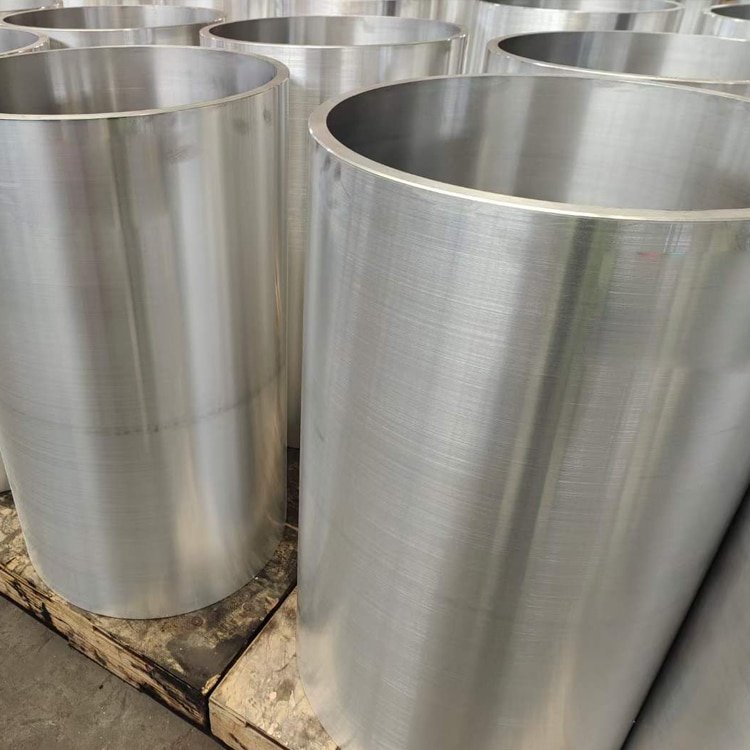
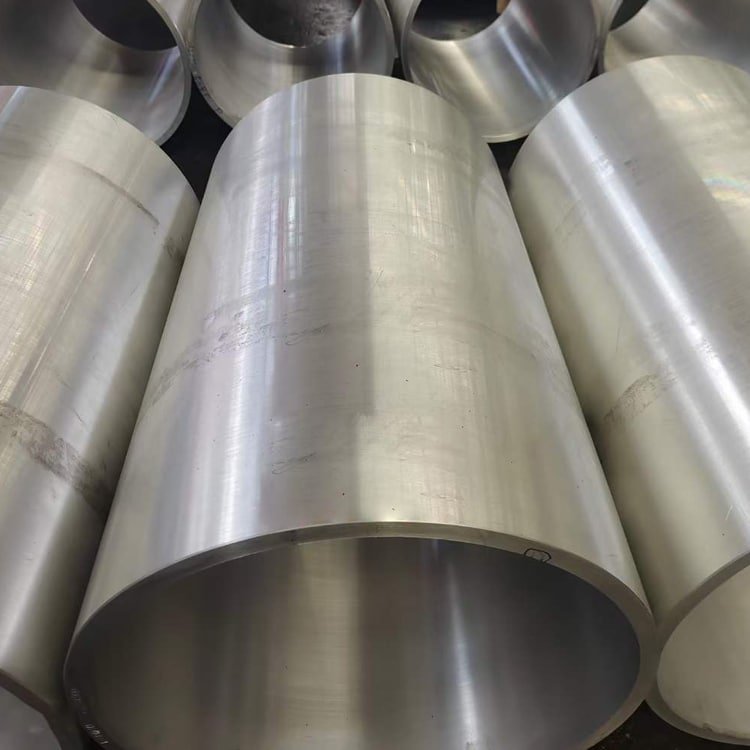
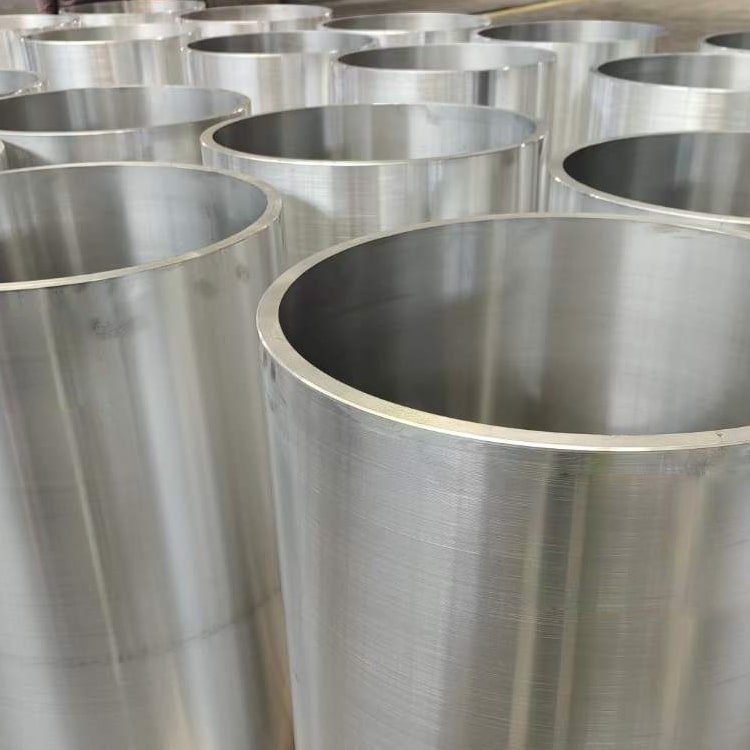
1. Material Composition & Forging Process
Forged 7075-T6 pipes conform to AMS 4148, ASTM B247, and ASME SB247 standards, featuring optimized zinc-copper-magnesium composition for ultra-high strength applications:
- Alloy Composition:
- Zinc (Zn): 5.1-6.1% (primary strengthening element)
- Magnesium (Mg): 2.1-2.9% (forms MgZn₂ precipitates)
- Copper (Cu): 1.2-2.0% (enhances stress corrosion resistance)
- Base Material:
- Aluminum (Al): ≥88.0% (balance)
- Trace Elements:
- Chromium (Cr): 0.18-0.40% (grain refinement)
- Iron (Fe): ≤0.50% max
- Silicon (Si): ≤0.40% max
Forging Process Specifications:
- Preform heating: 370-420°C
- Forging temperature: 340-380°C
- Reduction ratio: 4:1 to 6:1 minimum
- Grain flow orientation: Longitudinal alignment (±10°)
- Press capacity: 10,000-50,000 ton hydraulic
- Forging strain rate: 0.5-5 sec⁻¹
Third-party verification per NADCAP AC7101 confirms homogeneity with <3% elemental deviation. Complies with MIL-F-7216 for aerospace applications and ISO 6363-2 for extruded precision tubes.
2. Strength Performance
Forged 7075-T6 demonstrates superior mechanical properties compared to standard extrusions:
| Property | Forged Pipe | Standard Extrusion | Test Standard |
| Ultimate Tensile Strength | 560-580 MPa | 525-550 MPa | ASTM E8/E21 |
| Yield Strength (Rp0.2) | 490-510 MPa | 460-480 MPa | ASTM E8/E21 |
| Elongation at Break (%) | 8-12% | 5-9% | ASTM E8/E21 |
| Fracture Toughness | 36 MPa√m | 28-32 MPa√m | ASTM E399 |
| Shear Strength | 325 MPa | 300 MPa | ASTM B769 |
| Fatigue Strength (10⁷) | 160-180 MPa | 140-155 MPa | ISO 1099 |
| Stress Rupture (100hr/150°C) | 260 MPa | 220 MPa | ASTM E139 |
| Compression Strength | 540 MPa | 500 MPa | ASTM E9 |
Improved directional properties provide 12-15% higher transverse strength and superior damage tolerance under cyclic loading.
3. Heat Treatment Process
Specialized T6 treatment sequence for forged components:
Solution Treatment:
- 465-485°C (±5°C) for 2-3 hours
- Controlled atmosphere: Argon gas blanketing
Rapid Quench:
- Polyalkylene glycol solution (30% concentration)
- Quench speed: >200°C/sec core cooling
- Agitation: 1.0-1.5 m/sec flow velocity
Stress Relief:
- Cryogenic treatment at -70°C for 2 hours
Artificial Aging:
- 120-125°C for 24 hours + 165-170°C for 8 hours
- Double-stage aging for optimized η' phase precipitation
Microstructural Features:
- Grain size: ASTM 7-8 (15-30μm)
- Precipitate density: 10¹⁷/m³ η' phase (MgZn₂)
- Forging texture intensity: 4.5-5.5 multiples random
- Inclusion rating: A0.5/B0.5 per ASTM E45
- Recrystallization: <10%
4. Dimensions & Customization
Precision-forged pipe specifications:
| Parameter | Standard Range | Precision Grade | Custom Options |
| Outer Diameter | 25-600 mm | ±0.05% OD | Oval/hex profiles |
| Wall Thickness | 3-50 mm | ±5% WT | Tapered walls |
| Length | 1-12 m | +0/-1.5 mm | Up to 20m |
| Straightness | - | 0.25 mm/m | ±0.1 mm/m |
| Wall Concentricity | ≤0.5% TIR | ≤0.2% TIR | ≤0.1% TIR |
| Surface Roughness | Ra 1.6μm | Ra 0.4μm | Mirror finish |
Advanced Fabrication:
- Radial forging for seamless reduction
- Rotary piercing for hollow blooms
- Mandrel-assisted forging for thin walls
- Isothermal forging for complex geometries
- Flow forming for high-precision bores
- Pilger milling for nuclear applications
5. Corrosion Resistance Properties
Environmental Performance Data
| Environment | Forged 7075-T6 Rating | Corrosion Rate (μm/yr) | Protection Systems |
| Marine Atmosphere | Fair | 25-40 μm/yr | HVOF WC-17Co coating |
| Industrial SO₂ | Poor | 100-150 μm/yr | Electroplated Ni-Cd |
| Stress Corrosion | Moderate | SCC threshold 150MPa | Shot peening + anodizing |
| Alclad 7075 | Excellent | <1 μm/yr | 5% clad layer |
| Forged vs Wrought | +30% SCC resistance | - | Optimized grain boundaries |
Protection Technologies:
- Plasma Electrolytic Oxidation (PEO):
- Thickness: 50-100μm
- Hardness: >1500 HV
- Ion Vapor Deposition (IVD):
- Aluminum coating: 20-50μm
- Salt spray resistance: >3000hrs
- Electroless Nickel:
- Ni-P (9-12%): 25-75μm
- Phosphorous content control
6. Machinability Characteristics
Specialized Machining Parameters
| Operation | Tooling | Speed (m/min) | Feed (mm/rev) | Notes |
| Turning | PCD inserts | 800-1200 | 0.1-0.25 | 7° positive rake |
| Drilling | Coated carbide (TiAlN) | 50-80 | 0.03-0.08 | 135° split point |
| Milling | SiAlN ceramic inserts | 400-600 | 0.05-0.12 | Trochoidal paths |
| Threading | TiCN coated taps | 10-15 | Pitch matched | 75% thread depth |
| Boring | Cubic boron nitride | 200-350 | 0.04-0.10 | Dampened bars |
Machining Performance:
- Machinability index: 50% (baseline: 6061-T6=100%)
- Tool life improvement: 200% with cryogenic cooling
- Surface finish: Ra 0.2μm achievable
- Chatter resistance: +40% vs extruded pipes
- Residual stress control: Post-machining stabilization at 120°C
- Chip formation: Segmented chips requiring power-thru toolholders
7. Weldability & Joining Methods
Requires specialized joining techniques due to heat-affected zone (HAZ) sensitivity:
Friction Welding Preferred:
- Inertia drive welding parameters:
- RPM: 2500-5000
- Axial pressure: 250-400 MPa
- Burn-off length: 2-6mm
- Upset force: 400-700 MPa
- Dissimilar welding compatibility:
- To titanium: ER4043 filler
- To steel: Explosive welding transition joints
Alternative Joining:
- Adhesive Bonding:
- Epoxy-novolac systems: 45 MPa shear
- Surface prep: Piranha etch solution
- Mechanical Fastening:
- Hi-Lok pins: 220-260 ksi strength
- Lock bolts: Vibration resistant to 50g
- Diffusion Bonding:
- Temperature: 510-530°C
- Pressure: 10-15 MPa
- Time: 60-90 minutes
8. Physical Properties
| Property | Value | Test Standard |
| Density | 2.81 g/cm³ | ASTM B311 |
| Thermal Conductivity (25°C) | 130 W/m·K | ASTM E1461 |
| CTE (20-100°C) | 23.6 μm/m·°C | ASTM E228 |
| Electrical Conductivity | 33% IACS | ASTM B193 |
| Modulus of Elasticity | 71.0 GPa | ASTM E111 |
| Specific Heat (200°C) | 1050 J/kg·K | ASTM E1269 |
| Thermal Diffusivity | 55 mm²/s | ASTM E1461 |
| Solidus Temperature | 477°C | ASTM E228 |
| Magnetic Permeability | 1.00002 | ASTM A342 |
9. Surface Quality Standards
- Surface integrity requirements (AMS 2772):
- No forging laps or cold shuts
- Surface discontinuities: ≤0.1mm depth
- Tool marks: ≤0.01mm height
- Heat tint control: Max ΔE=1.0
- Finishing processes:
- Chemical milling: 0.05-0.5mm stock removal
- Electropolishing: 20-100μm removal
- Vibratory finishing: Surface compression
- Inspection methods:
- Fluorescent penetrant: Level 3 sensitivity
- White light interferometry: 0.1μm resolution
- Barkhausen noise analysis for residual stress
10. Certifications & Testing
Quality Assurance Protocols
- Material Verification:
- Optical emission spectrometry
- Ultrasonic spectroscopy for inclusions
- Mechanical Testing:
- Through-thickness tensile tests
- Charpy V-notch at -40°C (>15J required)
- Creep testing to 10,000 hours
- NDE Requirements:
- Phased array UT: 10MHz probes
- Digital radiography: ASTM E2662 compliance
- Thermographic inspection: 5μm resolution
Industry Certifications
- AS9100 Aerospace Quality Management
- NADCAP AC7117 for forgings
- PED 2014/68/EU Category IV
- NORSOK M650 for offshore systems
- ITAR compliance for defense
- ABS Type Approval for marine systems
Primary Applications: Aircraft landing gear components, missile launch tubes, racing suspension systems, helicopter drive shafts, high-pressure hydraulic cylinders, and structural components requiring superior strength-to-weight ratio.
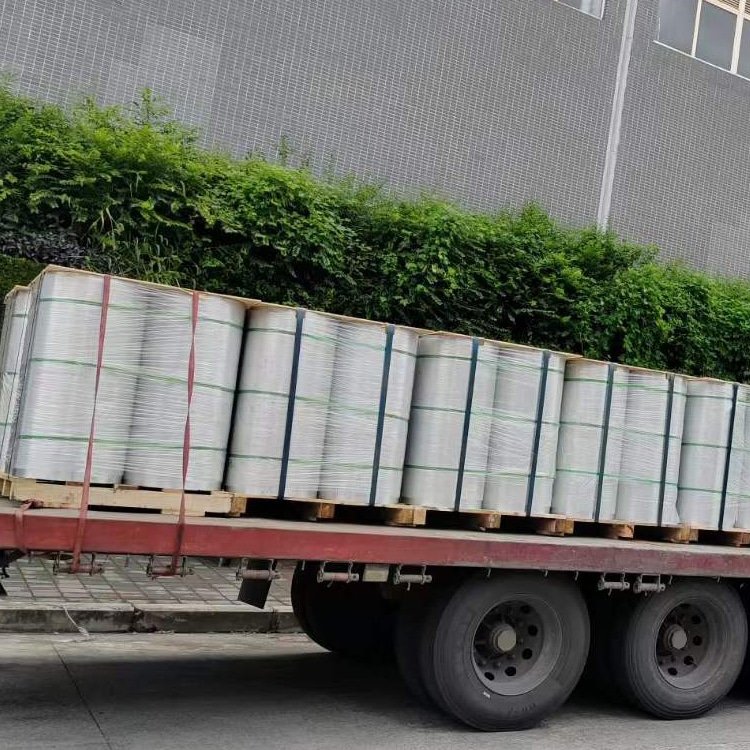
Delivery Specifications: Vacuum-sealed desiccated packaging, wooden crates with anti-vibration suspension. Standard lead time: 12-16 weeks.