Are you designing critical components that need to withstand extreme pulling forces without failing? Understanding aluminum's ultimate tensile strength is fundamental to ensuring safety and performance.
The ultimate tensile strength of aluminum varies significantly based on its alloy composition and temper. Pure aluminum (1xxx series) has a relatively low ultimate tensile strength, typically between 70 and 130 N/mm² (or MPa). However, engineered aluminum alloys offer much higher strengths. For instance, the popular 6061 alloy1 in its T6 temper boasts an ultimate tensile strength of around 310 N/mm². The high-strength 7075 alloy2, in its T6 temper, can exceed 570 N/mm². SWA Forging masters this property of aluminum by optimizing forging processes. This ensures we provide reliable, strong components that meet precise client specifications, making them ideal for high-stress applications where exceeding the ultimate tensile strength must be avoided.
At SWA Forging, we expertly control aluminum's ultimate tensile strength through our precision forging processes. This mastery allows us to create components that not only meet but often exceed client specifications for strength and reliability, ensuring they can handle high-stress applications where resisting the ultimate breaking point is paramount for product integrity and user safety.
What is the tensile strength of aluminum?
When engineers talk about how much pulling force a material can handle before it breaks, what is the typical range for aluminum, considering its various forms?
The tensile strength of aluminum, specifically its ultimate tensile strength (UTS), is highly dependent on its alloy composition and heat treatment (temper). Pure aluminum, belonging to the 1xxx series, has a low UTS, generally ranging from about 70 to 130 N/mm². This makes it suitable for applications where ductility and conductivity are more important than strength. However, aluminum alloys3 are engineered to achieve significantly higher strengths. For example, common alloys like 6061-T6 have an UTS around 310 N/mm², while high-strength aerospace alloys like 7075-T6 can achieve UTS values exceeding 570 N/mm². Therefore, the answer to "what is the tensile strength of aluminum" is: it depends entirely on the specific alloy and its condition.
| Aluminum Product Type | Typical UTS Range (N/mm²) | Approximate UTS (ksi) | Primary Use Cases |
|---|---|---|---|
| Pure Aluminum | 70 - 130 | 10 - 19 | Electrical conductors, foil, chemical containers |
| Common Alloys | 110 - 180 | 16 - 26 | General sheet metal, cookware, household items |
| Medium-Strength Alloys | 210 - 310 | 30 - 45 | Structural components, bike frames, automotive parts |
| High-Strength Alloys | 450 - 580+ | 65 - 84+ | Aerospace structures, automotive chassis, high-stress machinery |
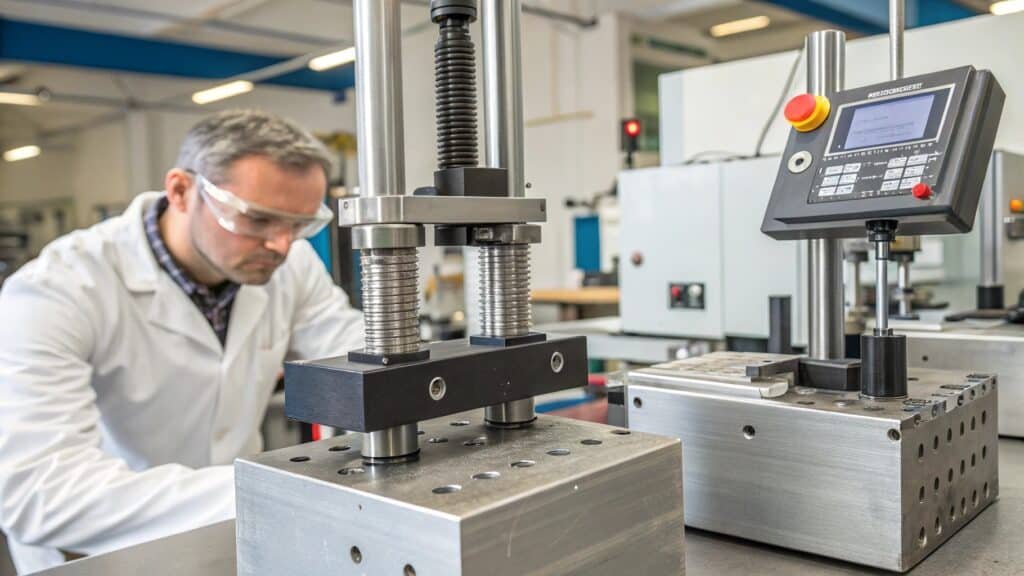
At SWA Forging, we understand that each application demands a specific level of tensile strength. We work with a range of precisely engineered aluminum alloys, not pure aluminum, to deliver components with superior tensile properties. Our focus is on achieving the required ultimate tensile strength through our advanced forging techniques, ensuring that our large-diameter components are robust and reliable for high-stress industrial use.
What is the tensile strength of aluminium in N m2?
When specifying material properties, especially for international engineering standards, understanding values in N/m² (Pascals) is essential. How does aluminum's tensile strength translate into this unit?
The unit N/m² is equivalent to the standard pressure unit Pascal (Pa). Therefore, when asking for the tensile strength of aluminum in N/m², you are essentially asking for its value in Pascals. To convert from N/mm² (which is the same as MPa) to Pascals, you multiply by 1,000,000. For example, pure aluminum with a tensile strength of 70 N/mm² would have a tensile strength of 70,000,000 N/m² (or 70 x 10⁶ Pa). Similarly, 6061-T6 aluminum, with a tensile strength of 310 N/mm², has a tensile strength of 310,000,000 N/m² (or 310 x 10⁶ Pa). The high-strength 7075-T6 alloy, at 570 N/mm², has a tensile strength of 570,000,000 N/m² (or 570 x 10⁶ Pa). While N/mm² (MPa) is more commonly used in material specifications for aluminum alloys due to the large numbers involved otherwise, understanding the conversion is important for broader engineering calculations and comparisons with other international standards.
| Aluminum Alloy/Temper | Typical UTS (N/mm²) | Typical UTS (MPa) | Typical UTS (N/m² or Pa) | Typical UTS (in ksi) |
|---|---|---|---|---|
| Pure Aluminum (1100) | ~95 | 95 | 95,000,000 | ~14 |
| 6061-T6 Aluminum | ~310 | 310 | 310,000,000 | ~45 |
| 7075-T6 Aluminum | ~570 | 570 | 570,000,000 | ~83 |
| 5083-H116 Aluminum | ~350 | 350 | 350,000,000 | ~50 |
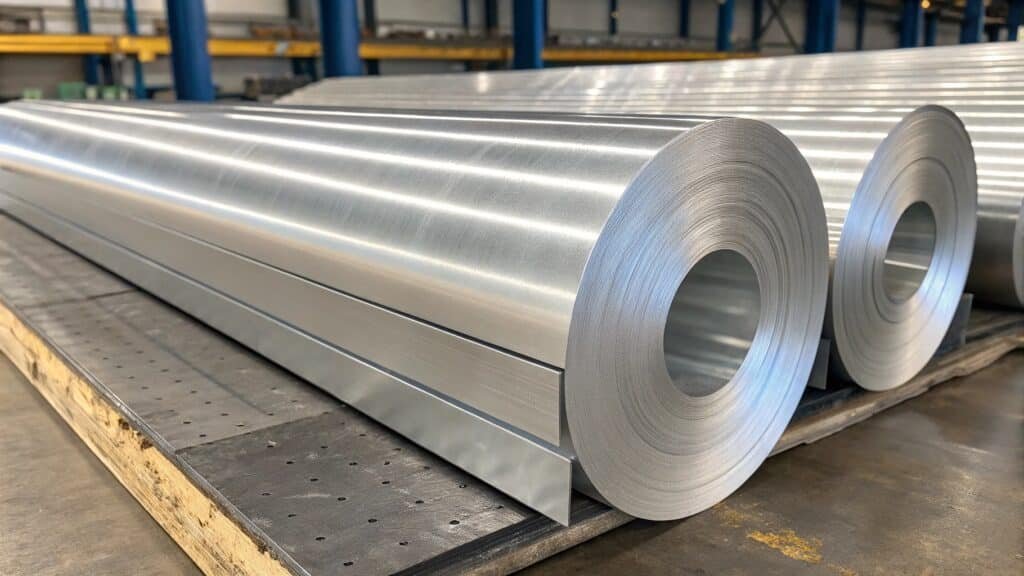
At SWA Forging, precision engineering is our credo. While we often specify tensile strength in N/mm² for clarity, we understand the importance of the N/m² (Pascal) unit for global applications. Our forged aluminum alloy components are engineered to meet rigorous tensile strength requirements, and we can provide specifications in any required unit, ensuring clarity and compatibility with diverse engineering standards and calculations for every critical part we deliver.
What is the tensile strength of Al 6061?
For the workhorse aluminum alloy, 6061, what are its specific ultimate tensile strength values, and why is this metric so important for its common applications?
The ultimate tensile strength (UTS) of the Al 6061 alloy is a key indicator of its performance capabilities. In its most widely used temper, 6061-T6, the typical ultimate tensile strength is approximately 310 N/mm² (which is equivalent to 310 MPa or about 45,000 psi). This value signifies the maximum stress the material can withstand under a stretching load before it starts to deform permanently and eventually fractures. For the lower-strength but more ductile T4 temper, the UTS is around 210 N/mm². The T6 temper's tensile strength makes 6061 suitable for a broad range of structural applications, providing a robust balance between resisting breakage under tension and offering good formability, weldability, and corrosion resistance. This means that components made from 6061-T6 can handle significant pulling forces, making it a popular choice for everything from bicycle frames to architectural components and automotive parts.
| Temper | Heat Treatment Process | Typical UTS (N/mm²) | Typical Yield Strength (N/mm²) | Key Applications Driven by Strength |
|---|---|---|---|---|
| T4 | Solution Heat-Treated, Naturally Aged | ~210 | ~120 | Moderate strength needs, high formability. |
| T6 | Solution Heat-Treated, Artificially Aged | ~310 | ~240 | General structural, moderate-high stress. |
| T651 | Solution Heat-Treated, Artificially Aged, Stress Relieved | ~310 | ~240 | Similar to T6 with reduced internal stress. |
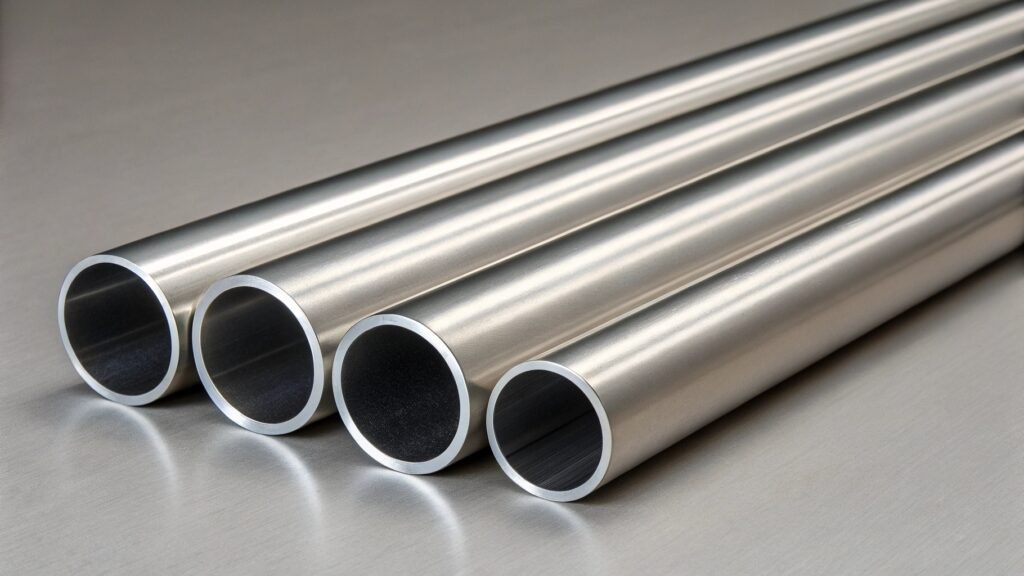
At SWA Forging, we routinely work with Al 6061, especially in its T6 temper, recognizing its valuable ultimate tensile strength of around 310 N/mm². Our forging process enhances this inherent property, ensuring that our large-diameter rings and discs made from 6061 offer exceptional performance and reliability under tensile loads. This makes them ideal for the demanding requirements of various industrial sectors that rely on strong, durable aluminum alloy components.
Is 6061 or 7075 aluminum stronger?
When comparing two of the most commonly used aluminum alloys, which one offers superior resistance to ultimate fracture under tensile stress? There is a clear distinction in their strength.
The 7075 aluminum alloy is considerably stronger than the 6061 aluminum alloy when considering ultimate tensile strength. In their common T6 tempers, 7075-T6 typically exhibits an ultimate tensile strength of over 570 N/mm² (approximately 83,000 psi), while 6061-T6 has an ultimate tensile strength of around 310 N/mm² (approximately 45,000 psi). This significant difference is due to the different alloying elements; 7075 is alloyed primarily with zinc, providing exceptionally high strength, whereas 6061 is alloyed with magnesium and silicon, offering a good balance of properties but with lower maximum strength. Therefore, for applications demanding the highest possible resistance to tensile fracture with minimal weight, 7075 is the superior choice. However, for more general applications where a balance of strength, corrosion resistance, weldability, and cost is important, 6061 remains an excellent option.
| Comparison Point | 6061 Aluminum Alloy (T6) | 7075 Aluminum Alloy (T6) | Who is Stronger? |
|---|---|---|---|
| Ultimate Tensile Strength | ~310 N/mm² (~45 ksi) | ~570+ N/mm² (~83+ ksi) | 7075 |
| Yield Strength | ~240 N/mm² (~35 ksi) | ~500+ N/mm² (~72+ ksi) | 7075 |
| Alloying Elements | Mg, Si | Zn, Mg, Cu | Different |
| Corrosion Resistance | Very Good | Fair to Good | 6061 |
| Weldability | Good | Poor | 6061 |
| Cost | Lower | Higher | 6061 |
| Primary Application | Moderate Strength Needs | Very High Strength Needs | Depends on need |
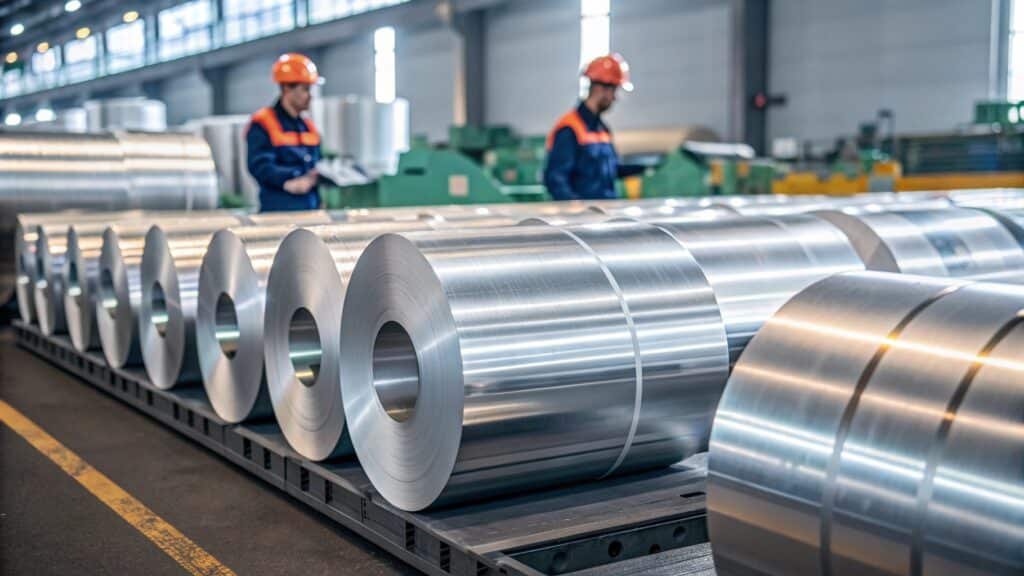
At SWA Forging, we engineer components designed for ultimate performance. We know that 7075 aluminum offers significantly higher ultimate tensile strength compared to 6061. For clients requiring the absolute maximum load-bearing capacity in their critical parts, we expertly forge 7075 alloy. Our commitment is to provide components that not only meet but surpass the stringent strength requirements, ensuring reliability even under the most demanding conditions where maximum tensile strength is absolutely essential.
Conclusion
Aluminum's ultimate tensile strength varies widely, from pure aluminum's lower values to high-strength alloys like 7075 exceeding 570 N/mm², with 7075 being significantly stronger than the versatile 6061 alloy.