Are you looking to push the boundaries of design and performance in your manufactured components? Understanding the capabilities of forged aluminum bar is key to unlocking complex shapes requiring unparalleled strength and precision. This article illuminates its potential.
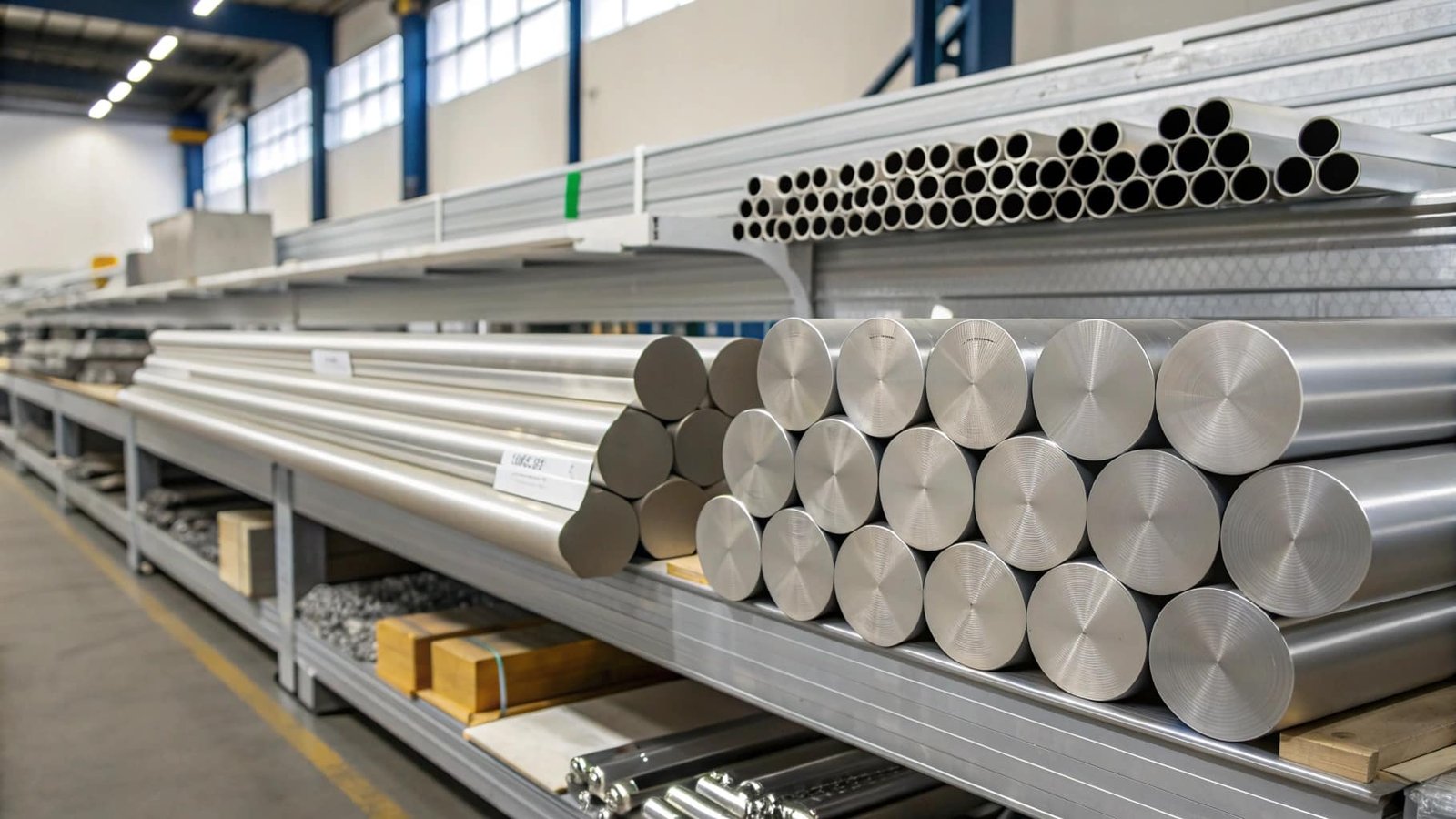
Forged aluminum bar is a high-quality, semi-finished aluminum product with a refined grain structure and superior mechanical properties, created by shaping aluminum material through controlled plastic deformation, often using heat. It serves as an ideal starting material for manufacturing high-performance forgings, offering enhanced strength, toughness, and fatigue resistance compared to castings or machined stock, enabling complex geometries and demanding applications.
From my experience at SWA Forging1, working with premium materials to create custom aluminum solutions, I can attest that forged aluminum bar is like a sculptor's finest clay for engineers. It starts with superior inherent qualities, allowing us to achieve forms and performance levels that other methods simply cannot match.
What is forged aluminum?
Are you curious about what makes "forged aluminum" stand out from other aluminum products like cast or machined parts? The forging process itself imparts unique advantages.
Forged aluminum refers to aluminum parts that have been shaped by applying compressive forces, typically with heat, to a solid block of aluminum. This plastic deformation refines the material's grain structure, aligning it with the contours of the part, which results in significantly enhanced strength, toughness, ductility, and fatigue resistance compared to cast or wrought forms, making it ideal for critical applications.
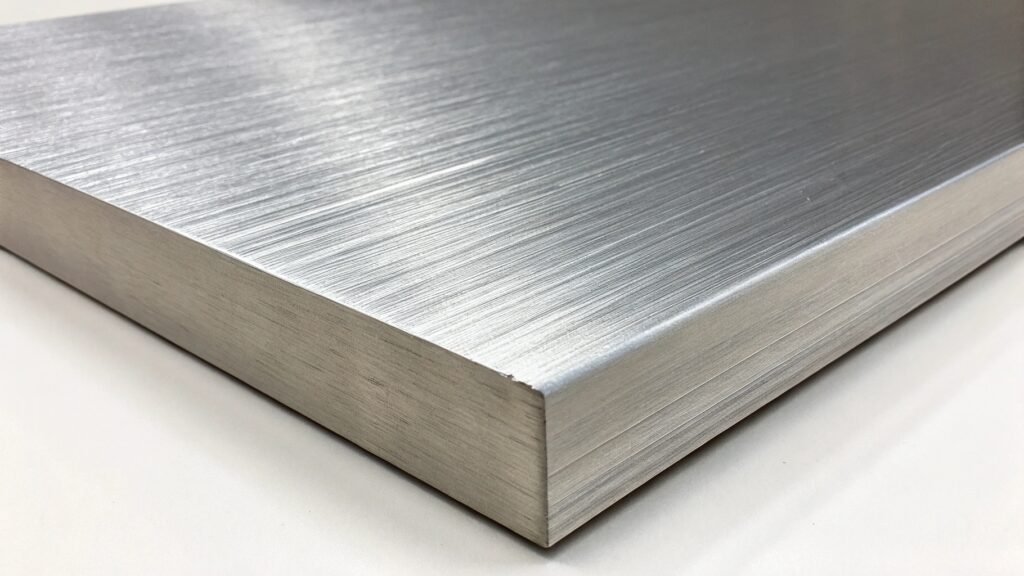
In my work at SWA Forging, the term "forged aluminum" signifies a material that has undergone a transformative process. It's not just aluminum; it's aluminum that has been engineered for superior performance from the atomic level up. This means we are working with a material that inherently possesses enhanced properties for your most critical applications.
The key characteristics that define forged aluminum include:
- Refined Grain Structure: The forging process aligns the aluminum's grain structure with the shape of the component. This continuous grain flow strengthens the material, particularly in critical stress areas, and eliminates the weaknesses found in cast structures where grains can be irregular.
- Enhanced Mechanical Properties: Forged aluminum typically exhibits higher tensile strength, yield strength, and ductility than cast aluminum of the same alloy. This is because the process eliminates internal voids and imperfections that are often present in castings.
- Superior Fatigue Strength and Toughness: The uniform grain structure and lack of porosity in forged parts make them far more resistant to fatigue failure under repeated stress cycles. They also possess greater toughness, meaning they can absorb more energy before fracturing.
- Dimensional Accuracy: While forging can create near-net shapes, it often results in more precise dimensions and better surface finishes than rough casting, reducing the need for extensive subsequent machining.
- Design Flexibility: The process allows for the creation of complex, integrated designs that might otherwise require multiple parts to be assembled. This can lead to lighter, stronger, and more efficient final products.
When we start with quality forged aluminum bar, we are already beginning with a material that has undergone a crucial strengthening process. This provides a robust foundation for creating even more complex and high-performance forgings, whether they are rings, discs, or custom shapes for demanding industries like aerospace, automotive, or defense.
What is the forging method of manufacturing?
Are you trying to understand the fundamental principles behind the forging method to appreciate its advantages in manufacturing? This process has been shaping metal for millennia.
The forging method of manufacturing is a metalworking process where a workpiece is shaped by localized compressive forces, often using a hammer or die. This deformation is typically carried out while the metal is heated (hot forging) or at room temperature (cold forging), resulting in a workpiece of improved mechanical strength, toughness, and grain structure, making it highly suitable for critical components.
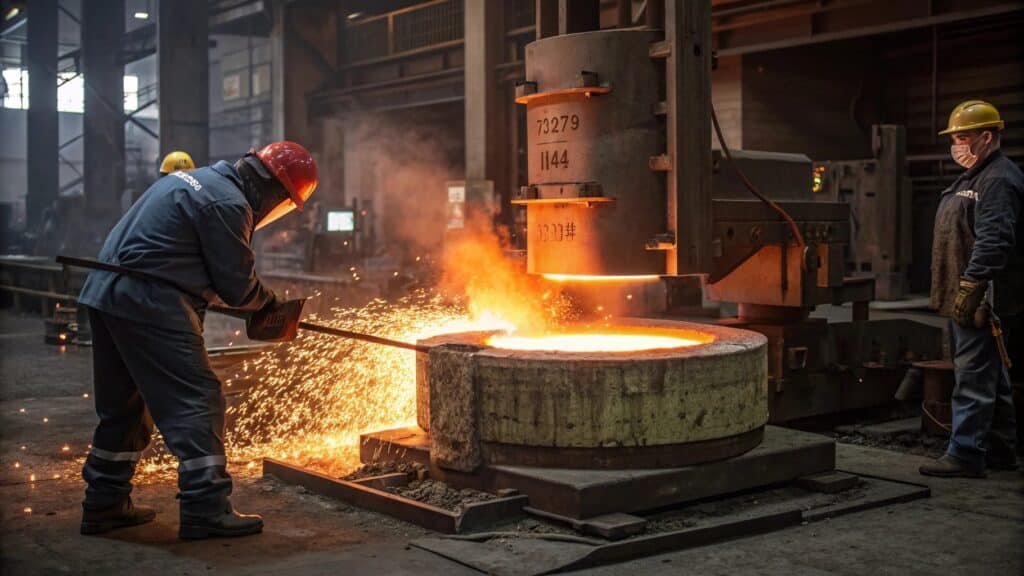
At SWA Forging, the forging method is at the heart of what we do. It’s a systematic approach to metal forming that leverages controlled force to manipulate aluminum into precise and robust shapes. This isn't just about hammering metal; it's about strategically shaping it to optimize its inherent properties.
Here's a breakdown of the forging method:
- Starting Material: Forging begins with a solid piece of metal, which can be in the form of a billet, bar, or pre-form. For aluminum, this can include high-quality aluminum bar that we select for its inherent properties and uniformity.
- Application of Force: This is the core of forging. Force is applied to the workpiece using one of several methods:
- Hammer Forging (Open-Die): This involves using a falling weight (hammer) to strike the aluminum. The aluminum can be manipulated and turned between blows, allowing for a high degree of shape control, particularly for components that don't require extremely tight tolerances.
- Press Forging (Closed-Die or Open-Die): A mechanical or hydraulic press exerts pressure. Closed-die forging uses shaped dies that enclose the workpiece, forcing the metal to fill the die cavity. This provides excellent precision and repeatability. Open-die press forging is similar to hammer forging but uses steady pressure rather than impact.
- Ring Rolling: This specific method is used to create seamless rings. A heated blank is pierced and then rolled and squeezed between rollers to achieve the desired diameter, thickness, and cross-sectional shape. This is how we often produce our large-diameter forged rings at SWA Forging, ensuring grain continuity around the circumference.
- Controlled Deformation: The force is applied in a controlled manner to deform the metal plastically. This means the metal changes shape permanently without fracturing. The force is carefully managed to ensure the metal flows into the desired contours.
- Heat (Often): For aluminum alloys2 that require significant deformation or have higher strength at room temperature, the process is often performed hot. Heating softens the metal, making it more malleable and reducing the force required. It also allows the grain structure to reform favorably.
- Resulting Properties: The critical outcome of the forging method is the physical transformation of the metal's internal structure. The grain flow becomes continuous and aligned with the part’s geometry, minimizing internal defects and significantly enhancing mechanical properties like strength, toughness, and fatigue resistance.
This method is chosen when the performance requirements of a component are high, and the reliability offered by the refined material structure is essential.
What is the concept of forging?
Are you looking to grasp the fundamental idea behind forging and why it's such a powerful manufacturing technique? At its core, forging is about shaping metal through controlled force to enhance its properties.
The core concept of forging is to shape metal by applying localized compressive forces, often while the metal is hot, to plastically deform it into a desired shape. This process realigns and refines the metal's internal grain structure, resulting in superior strength, toughness, and fatigue resistance compared to other forming methods, with the grain flow following the contours of the final part.
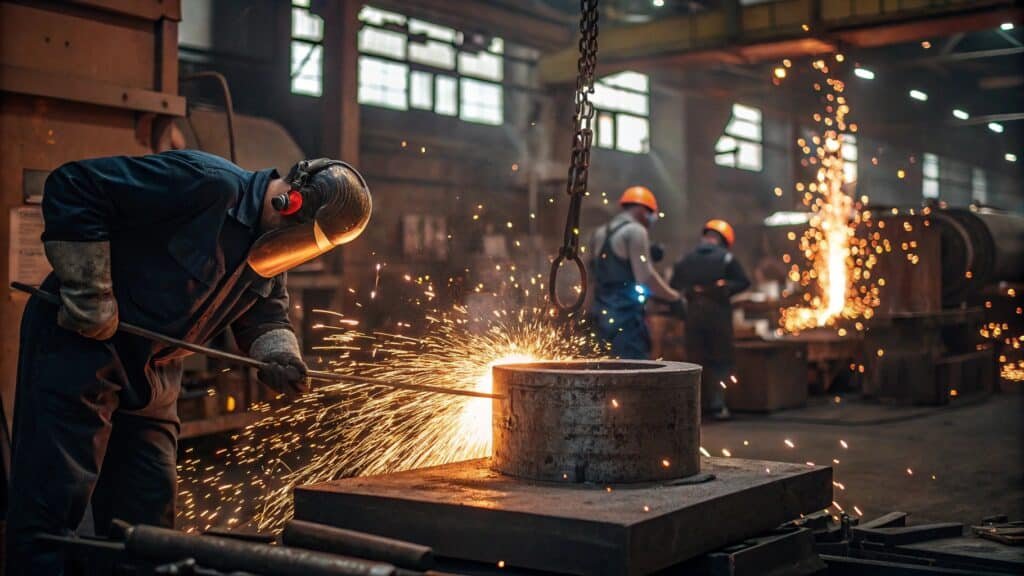
The fundamental concept of forging, as we practice it at SWA Forging, is quite elegantly simple, yet profoundly effective: to improve the metal through force. We take a malleable material, like high-quality aluminum bar, and by applying pressure in a controlled manner, we don't just change its shape; we fundamentally enhance its internal structure and its capabilities.
Here’s the core idea broken down:
- Deformation, Not Removal: Unlike machining, where material is cut away, forging is a process of shaping. We take a solid piece and coax it into a new form. This means we retain all of the original material’s integrity.
- Plastic Flow: The key is plastic deformation. We apply enough force to make the metal flow and change shape permanently, without breaking or fracturing. This flow is guided by dies or tools.
- Grain Structure Alignment and Refinement: This is the real magic of forging. Metals have crystalline grains. When we deform them, these grains stretch and realign. In forging, this grain flow follows the shape of the part. This continuity of grain flow is crucial because it means there are no sharp breaks or weak points in the material's internal structure. It’s like knitting fibers together instead of just stacking them.
- Elimination of Defects: The pressure applied during forging squeezes out internal voids, porosity, and other imperfections that can weaken castings or wrought products. This creates a denser, more homogeneous material.
- Enhanced Properties: As a direct result of grain refinement, elimination of defects, and directional grain flow, forged parts achieve higher strength, better toughness (ability to withstand impact), and significantly improved fatigue resistance (ability to withstand repeated stresses).
- Near-Net Shape: Forging often produces parts that are very close to their final desired shape, minimizing the need for extensive subsequent machining. This saves material and manufacturing time.
Essentially, forging is about leveraging the inherent plasticity of metals to create parts that are not only shaped precisely but are also fundamentally stronger and more reliable due to their optimized internal structure.
What is the hot forging process?
Are you trying to understand the details of "hot forging" and how it differs from other forging methods, particularly concerning its benefits for aluminum? This process is key to achieving optimal material properties.
The hot forging process involves heating aluminum material to a temperature range above its recrystallization point (typically 400-500°C for aluminum alloys) before applying compressive forces using dies or hammers. This heating softens the metal, significantly reducing the force required for deformation, allowing for extremely complex shapes, and promoting favorable grain refinement and property enhancement while minimizing internal defects.
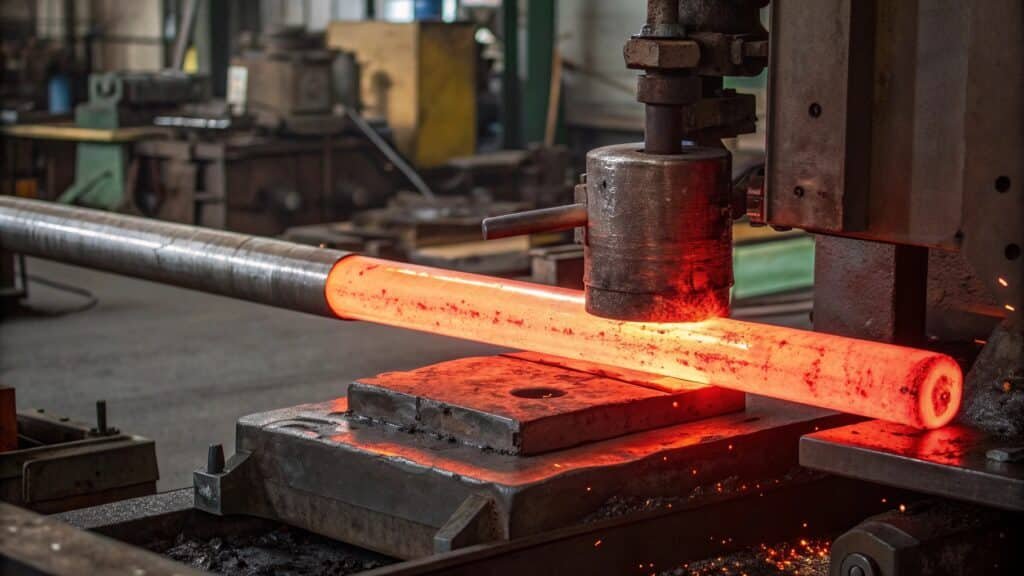
In my day-to-day work at SWA Forging, hot forging is frequently the method of choice for creating the high-performance aluminum components our clients demand. This process is fundamental to achieving the superior material properties that set forged parts apart.
Here’s a closer look at the hot forging process:
- Heating the Material: The starting aluminum billet or bar is heated in specialized furnaces to a specific temperature range. For aluminum alloys, this is typically above their recrystallization temperature (where new, strain-free grains are formed) but below their melting point. For common alloys, this is often between 400°C and 500°C (750°F - 930°F). Precise temperature control is critical to soften the metal sufficiently without causing it to melt or degrade its properties.
- Tooling Preparation: The dies or tools used for shaping are prepared. They are often made from high-strength, heat-resistant steels designed to withstand repeated impacts or pressure at elevated temperatures.
- Deformation at Temperature: Once the aluminum reaches the target temperature, it is quickly transferred from the furnace to the forging press or hammer. The force is then applied to shape the hot metal.
- Plasticity: At these elevated temperatures, aluminum is much more ductile and malleable. This means it can be deformed significantly with less force than when cold.
- Metal Flow: The hot metal flows readily to fill the contours of the die or tooling. This allows for the creation of intricate shapes and undercuts that would be impossible or very difficult to achieve with cold forging.
- Grain Refinement: As the hot metal deforms, its internal grain structure recrystallizes, forming new, fine, equiaxed grains. This process effectively refines the grain structure, contributing to the increased strength and toughness of the final part.
- Cooling and Finishing: After forging, the part is allowed to cool. Depending on the alloy and final desired properties, further heat treatment steps (like artificial aging, e.g., T6 temper) may be performed to achieve peak strength. Subsequent machining may be required to achieve final tolerances, though hot forging often produces parts close to their final dimensions.
The advantages of hot forging for aluminum are significant:
- Complex Shapes: It allows for greater design freedom, enabling the creation of intricate geometries.
- Reduced Force Requirements: Less force is needed compared to cold forging, simplifying tooling and machinery.
- Improved Material Properties: Enhanced strength, toughness, ductility, and fatigue resistance due to recrystallization and refined grain structure.
- Near-Net Shape: Reduces post-forging processing and material waste.
This is why, for many high-performance applications, hot forging from quality aluminum bar is the preferred method.
Conclusion
Utilizing forged aluminum bar unlocks complex designs by providing a superior starting material for high-performance forgings. This exploration clarified what forged aluminum means, the fundamental forging method, its core concept, and the benefits of hot forging. At SWA Forging, our mastery of these processes allows us to transform quality bar stock into exceptional components, meeting the most demanding engineering requirements.