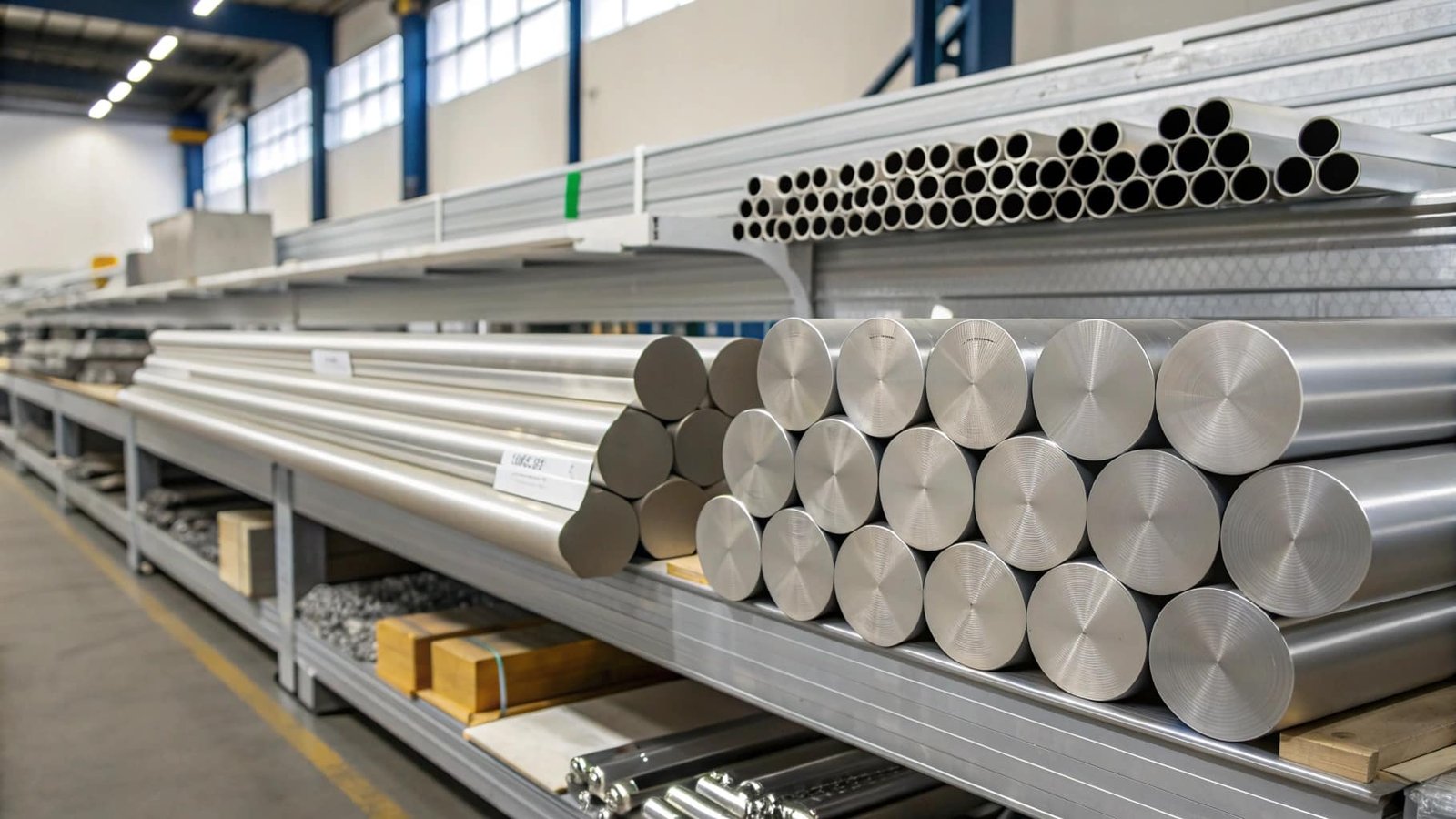
Have you ever encountered a situation where a tubing application demands absolute integrity, consistent strength, and a flawless interior for critical fluid or gas flow? That's precisely where aluminum seamless tubes1 come into play.
Aluminum seamless tubes are hollow cylindrical products manufactured without any welded seam, ensuring a continuous, uniform structure throughout their entire length. They are typically produced through extrusion or drawing processes, which involve forming a solid billet or preform over a mandrel. This seamless construction provides superior structural integrity, higher pressure containment capabilities, enhanced corrosion resistance2 due to the absence of a weld line, and better overall material consistency, making them ideal for high-pressure, hydraulic, aerospace, and critical fluid transfer applications where reliability and performance are paramount.
While SWA Forging specializes in forged rings and discs, our clients often integrate these components with seamless tubes in their final assemblies. Understanding the nature and benefits of seamless aluminum tubes helps us appreciate the full scope of high-performance aluminum applications in their industries.
What are seamless tubes used for?
Are you curious about the specific applications that demand the superior integrity and performance of seamless tubes over their welded counterparts? The uses of seamless tubes are directly tied to their inherent advantages.
Seamless tubes are predominantly used in applications requiring high pressure resistance, structural integrity, and excellent corrosion resistance, where the absence of a weld seam is critical for safety and performance. Common uses include hydraulic and pneumatic systems, aerospace fluid lines, automotive braking systems, chemical processing and refinery piping, heat exchangers, boiler tubes, and structural components in environments where fatigue, stress, or corrosive media could compromise a welded seam, ensuring reliability and preventing leakage or structural failure.
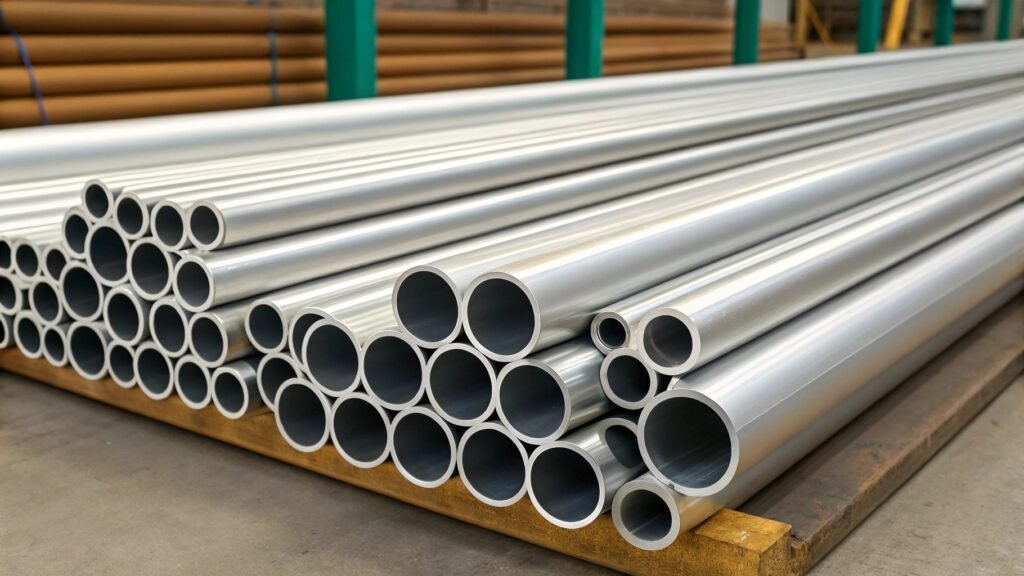
Though our focus at SWA Forging is on large forged components, we recognize that our clients often incorporate seamless tubing into their final designs for complex systems, highlighting the demand for high-integrity components across the supply chain.
Why Seamless Tubes are Chosen for Specific Applications
The decision to use seamless tubes over welded tubes is driven by a need for enhanced performance and reliability in demanding conditions.
-
High-Pressure Applications:
- Reason: The absence of a weld seam eliminates a potential weak point. Welded seams can introduce stress concentrations, porosity, or inconsistent material properties, making them more susceptible to failure under high internal pressure or fluctuating pressure cycles. Seamless tubes offer uniform strength around the circumference.
- Examples: Hydraulic lines (e.g., in heavy machinery, aircraft landing gear), pneumatic systems, high-pressure gas cylinders, power steering lines in automotive.
-
Corrosive Environments:
- Reason: Weld seams can be more susceptible to localized corrosion (e.g., crevice corrosion, intergranular corrosion) due to changes in microstructure or residual stresses introduced during welding. Seamless tubes present a uniform surface to corrosive media, improving overall resistance.
- Examples: Chemical processing plants, oil and gas pipelines (though often steel, the principle applies), food processing equipment.
-
High-Temperature Applications:
- Reason: At elevated temperatures, material properties can degrade, and residual stresses from welding can exacerbate this. Seamless tubes maintain better structural integrity and creep resistance.
- Examples: Heat exchangers, boiler tubes, superheaters (often steel, but aluminum is used where weight is critical and temperatures are within its range).
-
Structural Integrity and Fatigue Resistance:
- Reason: For components subjected to dynamic loads, vibrations, or repeated stress cycles, the uniform strength and absence of stress risers in seamless tubes lead to superior fatigue life.
- Examples: Aerospace structural components (e.g., wing spars, fuselage frames where tubing is integrated), racing car chassis.
-
Critical Fluid Transfer (Purity and Flow):
- Reason: The smooth, uninterrupted internal surface of seamless tubes can be beneficial for maintaining fluid purity and ensuring laminar flow, reducing turbulence and pressure drops.
- Examples: Medical gas lines, clean room applications, precision instrumentation.
| Feature | Seamless Tube | Welded Tube |
|---|---|---|
| Manufacturing | Extruded/drawn from solid billet; no seam | Formed from flat strip, then welded along seam |
| Pressure Rating | Higher; uniform strength | Lower; weld seam is potential weak point |
| Corrosion Resistance | Better; no heat-affected zone/stress from welding | Can be susceptible to localized corrosion at weld |
| Structural Integrity | Superior; uniform properties, consistent grain flow | Can have variations in properties at weld zone |
| Cost | Generally higher | Generally lower |
| Typical Use | High-pressure, critical applications, aerospace | General structural, low-to-medium pressure applications |
This table clearly shows why seamless tubes are selected for applications where safety, reliability, and performance are non-negotiable.
What are the different types of aluminum tubing?
Are you aware that aluminum tubing comes in various forms, each suited for different applications based on its manufacturing method, wall thickness, and material properties? Understanding these types is key to selecting the right one.
Aluminum tubing can be broadly categorized by its manufacturing process, leading to two primary types: seamless and extruded (which can be seamless or have a seam). Seamless aluminum tubing is produced without any longitudinal weld, typically by extruding a solid billet over a mandrel, resulting in superior strength and integrity. Extruded tubing, while often seamless, can also refer to non-seamless products formed by forcing aluminum through a die. Other classifications include drawn tubing (for tighter tolerances), structural tubing (for load-bearing applications), and specialized tubing for specific purposes like heat exchange or intricate profiles, each offering unique advantages in terms of strength, formability, and cost.
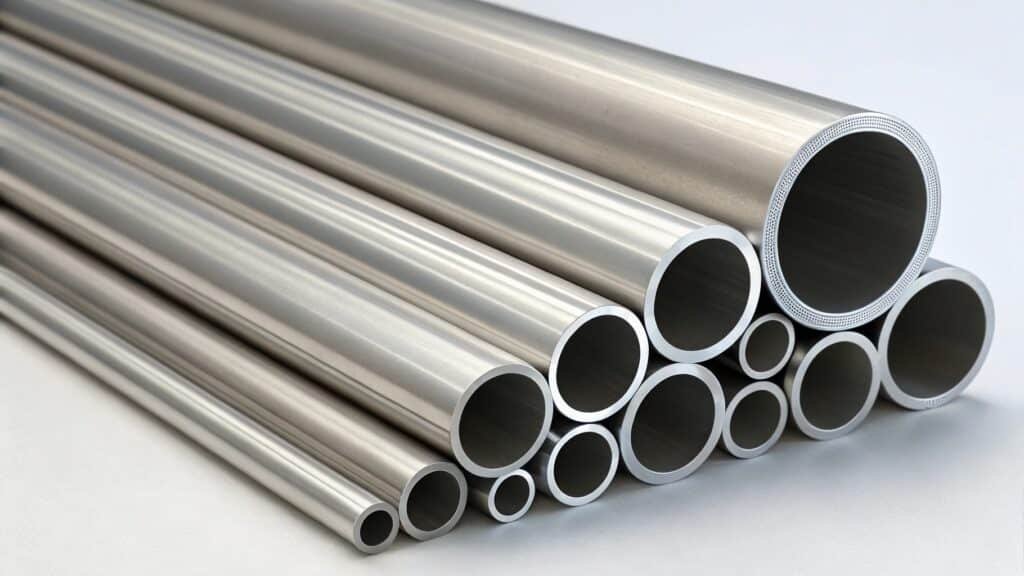
At SWA Forging, while we produce solid forged components, we often see our customers using a variety of aluminum tubing alongside our products. This comprehensive view helps us understand the broader needs of the industries we serve.
Categorizing Aluminum Tubing
Aluminum tubing can be differentiated in several ways, often overlapping.
-
By Manufacturing Method (Primary Classification):
- Seamless Tubing:
- Description: As discussed, this type has no longitudinal weld. It's usually produced by hot extrusion of a solid billet over a piercing mandrel or by hot drawing.
- Advantages: Superior strength, high pressure rating, excellent integrity, uniform wall thickness, smooth internal and external surfaces.
- Disadvantages: Generally higher cost, limited in very large diameters or complex shapes compared to welded.
- Common Alloys: 2xxx, 6xxx, 7xxx series (e.g., 6061-T6, 7075-T6).
- Welded Tubing (Structural/Non-Seamless Extruded):
- Description: Made from aluminum sheet or strip that is roll-formed into a tube shape and then welded along its seam (e.g., electric resistance welding, laser welding).
- Advantages: More cost-effective, can be produced in very large diameters, allows for thin walls, good for applications where weld integrity is less critical.
- Disadvantages: Weld seam can be a weak point (lower pressure rating, potential for corrosion), less uniform properties.
- Common Alloys: Often 3xxx, 5xxx, and some 6xxx series (e.g., 3003, 5052, 6063).
- Seamless Tubing:
-
By Post-Extrusion Processing:
- Drawn Tubing:
- Description: Both seamless and welded tubing can undergo a drawing process (pulling the tube through a die) to reduce its diameter, refine its wall thickness, and improve surface finish and dimensional accuracy. It can also impart strain hardening.
- Advantages: Tighter tolerances, smoother surface, increased strength (due to cold work), reduced wall thickness.
- Applications: Precision instrumentation, hydraulic lines, aerospace components requiring high accuracy.
- Drawn Tubing:
-
By Application or Profile:
- Standard Round Tubing: The most common form, used widely across industries.
- Square/Rectangular Tubing: Often used for structural frames, architectural applications, and general fabrication due to ease of assembly.
- Structural Tubing: Designed for load-bearing applications, often with thicker walls and made from high-strength alloys.
- Heat Exchanger Tubing: Typically has thin walls for efficient heat transfer, often seamless for integrity.
- Fin Tubing: Specialized tubing with external fins to increase surface area for heat dissipation.
- Custom Extruded Profiles: Aluminum's extrudability allows for highly complex and custom hollow profiles, which can act as integrated tubing or structural elements.
| Type of Tubing (Primary) | Manufacturing Method | Key Characteristics | Typical Applications |
|---|---|---|---|
| Seamless | Extrusion/Drawing from billet | No weld, high pressure, structural integrity | Aerospace, hydraulics, critical fluids |
| Welded | Roll-forming & welding strip | Weld seam, cost-effective, larger sizes | General fabrication, structural, lower pressure |
| Drawn | Post-extrusion drawing | Tighter tolerances, smoother finish, stronger | Precision instruments, specific aerospace components |
Choosing the correct type of aluminum tubing depends heavily on the performance requirements (pressure, temperature, structural load), desired dimensions, and cost considerations.
What is the difference between extruded and seamless tubing?
Have you ever heard the terms "extruded tubing" and "seamless tubing3" used interchangeably and wondered if they are the same, or if there's a subtle but important distinction? It's a common point of confusion in the world of metal fabrication.
While all seamless tubes are typically produced via extrusion (or drawing), not all extruded tubes are seamless. The key difference lies in the absence or presence of a weld seam. Seamless tubing is specifically manufactured to have no longitudinal weld, ensuring uniform material integrity throughout its circumference, usually by pushing a solid billet over a piercing mandrel. Conversely, "extruded tubing" can broadly refer to any tube created by pushing aluminum through a die, which might include methods that produce a seam or hollow profiles that are not necessarily circular, or even solid extruded profiles that are then machined to create a hollow shape. Therefore, seamless implies a specific, higher-integrity manufacturing outcome, while extruded describes the general shaping process.
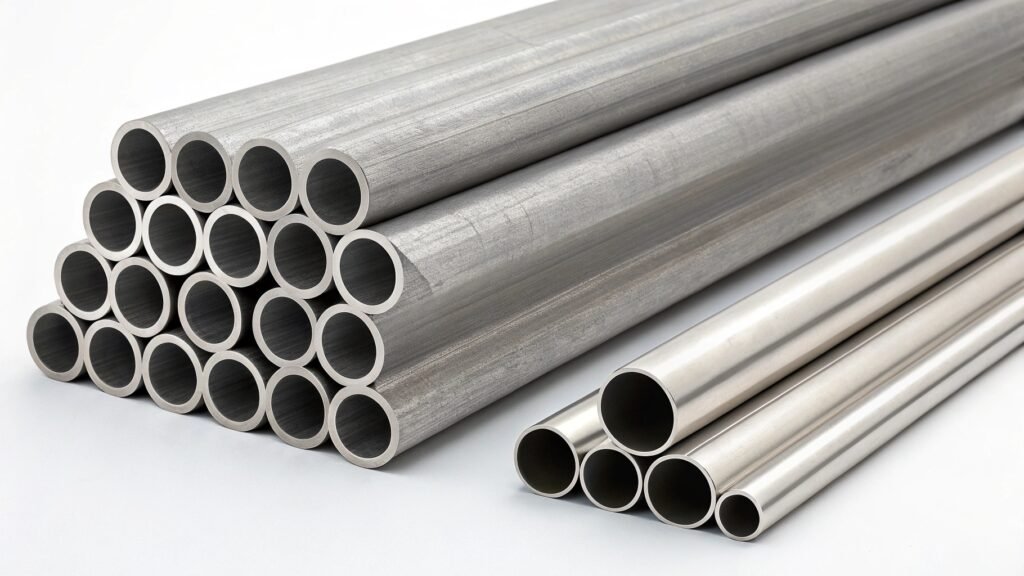
At SWA Forging, our expertise in forging solid billets often complements the needs of clients who then process their materials into various forms, including precise extruded components and seamless tubing. We recognize the importance of these distinctions for optimizing final product performance.
Clarifying the Terms: Extruded vs. Seamless
The terms "extruded" and "seamless" often cause confusion because the most common method for producing seamless tubes is indeed extrusion. However, the nuance lies in the definition of "seamless."
-
Extruded Tubing (General Term):
- Definition: Extrusion is a manufacturing process where a material (in this case, aluminum) is pushed or drawn through a die of a fixed cross-sectional profile.
- Types of Extruded Tubes/Profiles:
- Seamless Extruded Tubes: Produced using a bridge, spider, or porthole die, where the hot aluminum billet is forced around a mandrel (piercing or fixed) to create a hollow section without a weld. This is the primary method for making true seamless aluminum tubes.
- Seamed Extruded Tubes (or formed from extruded strip): Less common for aluminum tubing directly, but some extruded hollow profiles might involve re-joining sections, or more commonly, a flat extruded strip is formed and welded.
- Extruded Hollow Profiles: Not necessarily circular, these can be square, rectangular, or highly complex custom shapes with one or more hollow sections, all created by the extrusion process. These may or may not be seamless in the strictest sense of uniform circumferential integrity.
- Characteristics: Good dimensional control, ability to create complex shapes, often used for structural applications.
-
Seamless Tubing (Specific Outcome):
- Definition: A tube that has no longitudinal seam or weld line. Its structural integrity is uniform around its circumference.
- Manufacturing Method: Primarily produced by extrusion (using a piercing mandrel or bridge die) or by drawing from a larger seamless tube.
- Characteristics: Superior internal pressure resistance, better fatigue life, enhanced corrosion resistance, uniform mechanical properties, smoother internal surface.
- Key Distinction: The term "seamless" refers to the absence of a seam, which is a desired property for high-performance applications. "Extruded" refers to the manufacturing process used to achieve that property (among others).
Analogy:
Think of "extruded" as "baked" (the process) and "seamless" as "a whole bread loaf" (the result). You can bake a whole bread loaf (seamless extruded), or you can bake sliced bread (extruded, but not seamless in the same way). So, while all whole bread loaves are baked, not everything baked is a whole bread loaf. Similarly, all seamless tubes are produced by extrusion (or drawing), but not all extruded products are seamless tubes.
| Feature | Extruded Tubing (General) | Seamless Tubing (Specific) |
|---|---|---|
| Manufacturing Process | Forcing material through a die | Forcing solid billet over a piercing mandrel |
| Presence of Seam | Can be seamless or have a seam (for complex profiles or subsequent welding) | No seam (this is the defining characteristic) |
| Internal Integrity | Varies; depends on specific extrusion method | Uniform, high integrity |
| Applications | Broad range, including structural, decorative, custom profiles | High-pressure, critical fluid, aerospace, hydraulics |
| Cost | Varies greatly, can be lower for simple extruded shapes | Generally higher due to complex process control |
The distinction is crucial when specifying materials for critical engineering applications where the integrity and performance benefits of a true seamless tube are paramount.
Does aluminum tubing have a seam?
Have you ever picked up a piece of aluminum tubing and wondered if it's one continuous piece of metal, or if it's been joined together somewhere? The answer isn't always simple, as it depends on how the tubing was made.
Aluminum tubing may or may not have a seam, depending on its manufacturing process. "Seamless" aluminum tubing is explicitly manufactured without a longitudinal weld seam, ensuring a continuous, unbroken structure. Conversely, "welded" aluminum tubing is produced by forming a flat aluminum strip into a tubular shape and then joining the edges with a longitudinal weld. Therefore, while some aluminum tubing is intentionally designed to be seamless for high-integrity applications, other types of aluminum tubing do indeed have a seam.
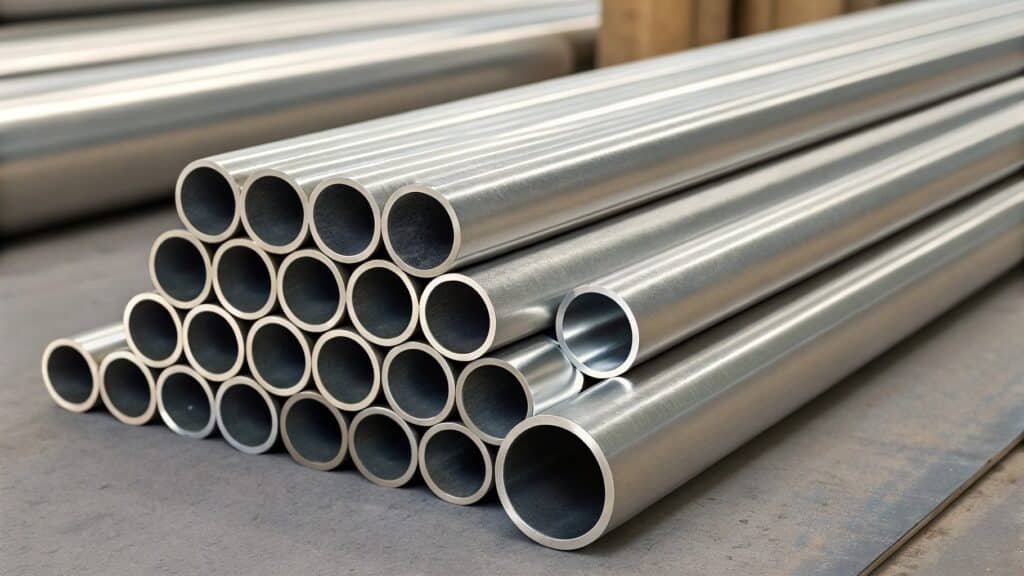
At SWA Forging, our products are inherently seamless due to the forging process which works a single piece of material. This principle of avoiding seams for superior integrity is something we appreciate in other aluminum products, like seamless tubing, that complement our forged components.
Understanding Seams in Aluminum Tubing
The presence or absence of a seam in aluminum tubing is a direct result of its manufacturing method and largely dictates its performance characteristics.
-
Seamless Aluminum Tubing:
- Process: As discussed, this is produced by hot extrusion of a solid billet over a piercing mandrel, or by drawing. The metal is displaced to form a hollow section without the need for joining two edges.
- Characteristics: No seam means no potential weak points associated with a weld, such as residual stresses, heat-affected zones (HAZ), or weld defects (porosity, inclusions). This results in uniform strength, higher pressure capabilities, and better resistance to fatigue and corrosion.
- Visual Identification: There is no visible weld line running along the length of the tube.
-
Welded Aluminum Tubing:
- Process: This type of tubing starts as a flat sheet or coil of aluminum. The strip is progressively roll-formed into a circular shape, and then the longitudinal edges are joined together by a welding process, most commonly Electric Resistance Welding (ERW) or Laser Welding.
- Characteristics: The presence of a weld seam introduces a localized area where the microstructure and properties might differ from the parent material. While modern welding techniques produce strong welds, the seam can still be a point of stress concentration, reducing the tube's overall pressure rating and fatigue resistance compared to seamless tubing.
- Visual Identification: A longitudinal weld line is typically visible, either on the inside, outside, or both surfaces of the tube. While often ground flush, it can still be detected.
Key Differences and Why it Matters:
| Feature | Seamless Aluminum Tubing | Welded Aluminum Tubing |
|---|---|---|
| Seam Presence | None | Yes, a longitudinal weld seam |
| Manufacturing Input | Solid billet | Flat strip/coil |
| Stress Concentrations | Minimal; uniform stress distribution | Potential at the weld seam |
| Material Uniformity | High; consistent properties around circumference | Varies; weld zone can have different properties |
| Pressure Rating | Higher | Lower (weld is limiting factor) |
| Cost | Generally higher | Generally lower |
| Criticality of Use | High-pressure, safety-critical, aerospace, hydraulic | Lower pressure, general purpose, structural, decorative |
When specifying aluminum tubing, it's crucial to explicitly state whether a seamless or welded product is required, as this directly impacts the performance, cost, and suitability for the intended application. For SWA Forging's clients, who often have very demanding applications, understanding this distinction is fundamental.
Conclusion
Aluminum seamless tubes, produced without a weld, offer superior integrity for high-pressure, critical applications like hydraulics and aerospace due to uniform strength and corrosion resistance. While all seamless tubes are extruded, not all extruded tubes are seamless; welded tubing, formed from a strip, does have a seam, offering a more cost-effective option for less demanding uses. The presence or absence of a seam is a key differentiator, dictating performance and suitability for various applications.
-
Explore the advantages of aluminum seamless tubes for applications requiring high integrity and performance. ↩
-
Learn how corrosion resistance influences the choice of materials in various industries. ↩
-
Discover the advantages of seamless tubing, including its structural integrity and performance in high-pressure applications. ↩